Best UPSC and MPPSC IAS Coaching Classes in Gwalior

India’s Semiconductor Push

1. India Semiconductor Mission (ISM) was launched in 2021, and the government announced a ₹76,000 crore incentive programme to build a domestic semiconductor and display ecosystem.

2. Out of the ₹76,000 crore programme outlay, nearly ₹65,000 crore had already been committed by September 2025 toward approved semiconductor initiatives.

More Details

India’s Rising Bioeconomy

1. India’s bioeconomy grew from USD 10 billion in 2014 to USD 165.7 billion in 2024, contributing 4.25 percent to national Gross Domestic Product (GDP) and targeting USD 300 billion by 2030.

2. Four major subsectors drove the 2024 bioeconomy: BioIndustrial at USD 78.2 billion or 47 percent, BioPharma at USD 58.4 billion or 35.2 percent in total value terms nationally.

More Details

India’s Fight Against Cyber Frauds

1. India observed a major rise in cybersecurity incidents, increasing from 10.29 lakh in 2022 to 22.68 lakh in 2024, showing the growing scale of cyber threats.

2. More than 86 percent of Indian households are now connected to the internet, reflecting the rapid expansion of the country’s digital ecosystem and online service access.

More Details

India’s Blockchain Governance Framework

1. National Blockchain Framework was officially launched on 4 September 2024 as India’s indigenous architecture for secure, scalable, and trusted blockchain-based governance applications.

2. The framework was initiated in March 2021 with a budget outlay of ₹64.76 crore to support blockchain adoption across governance and industry.

More Details

CERT-In and India’s Cyber Defence Framework

1. Indian Computer Emergency Response Team (CERT-In), operating under the Ministry of Electronics and Information Technology (MeitY), is India’s national agency for cyber incident response under Section 70B of the Information Technology Act, 2000.

2. In 2025, CERT-In handled more than 29.44 lakh cyber incidents, showing the scale of India’s national cyber response and threat-management capability across sectors.

More Details

Digital Public Infrastructure in India

1. India has built population scale digital public infrastructure for over 1.4 billion people through open, interoperable systems linking identity, payments and data exchange to governance, welfare delivery and inclusion.

2. The JAM trinity combined Jan Dhan accounts, Aadhaar enrolment and mobile connectivity, creating the foundational digital rails that enabled direct benefit transfers, reduced leakages and strengthened service delivery.

More Details

India’s AI Governance Framework 2026: Seven Sutras, Safety Institutions and Compute Expansion

1) India AI Governance Guidelines were released at AI Impact Summit 2026 and adopt a principle-based “techno-legal” framework built around seven Sutras for safe, trusted and inclusive AI innovation.

2) Ministry of Electronics and Information Technology (MeitY) formed the drafting committee in July 2025 to review laws, global developments, research, and public feedback.

More Details

Sarvam-Led Sovereign AI: Multilingual Models, Enterprise Stack, and Public Service Scale

1. India’s AI push is linked to building indigenous systems trained on Indian languages, local datasets, and governance contexts, so public services and citizen engagement remain relevant and reliable.

2. Sarvam AI (Artificial Intelligence) is positioned as an India-built, end-to-end platform where development, deployment, and governance occur domestically, aiming to reduce dependence on foreign AI infrastructure.

More Details

India’s AI Stack: Foundations, Infrastructure, and Population-Scale Impact

1. India’s AI vision emphasises democratisation: AI should benefit every citizen, support public welfare, and remain people centric, enabling “AI for Humanity” rather than limited elite control alone anywhere.

2. India’s AI Stack integrates tools and infrastructure to build, deploy, and operate AI reliably at population scale through five layers: applications, models, compute, data centres, networks, and energy.

More Details

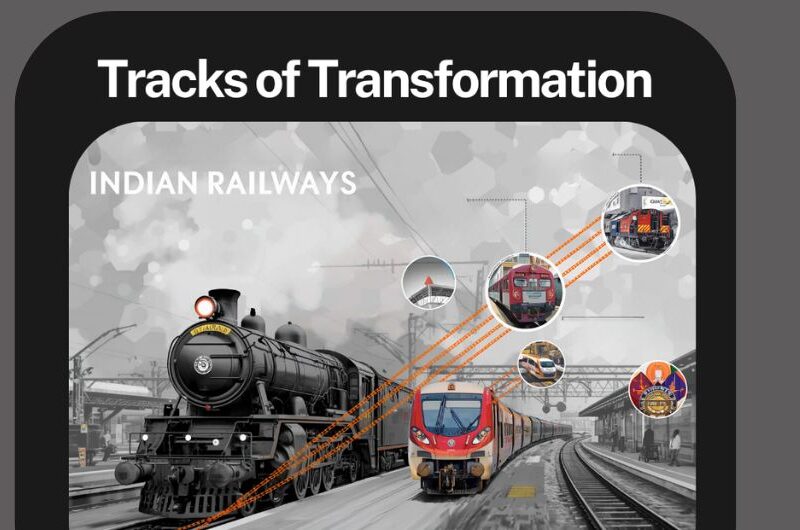
Kavach and AI-Driven Safety Transformation in Indian Railways

1. Kavach is India’s indigenously developed Automatic Train Protection system providing collision prevention, overspeed control, and Signal Passing at Danger protection through continuous monitoring and automatic braking interventions nationwide.

2. Kavach has been implemented on more than 2,200 route kilometres, reflecting large scale deployment of indigenous ATP technology across critical corridors of the Indian Railways network nationwide infrastructure.

More Details

Free IAS Guidance
Start Your Journey Today 🇮🇳

Fill out the form below, and we will be in touch shortly.