Best UPSC and MPPSC IAS Coaching Classes in Gwalior

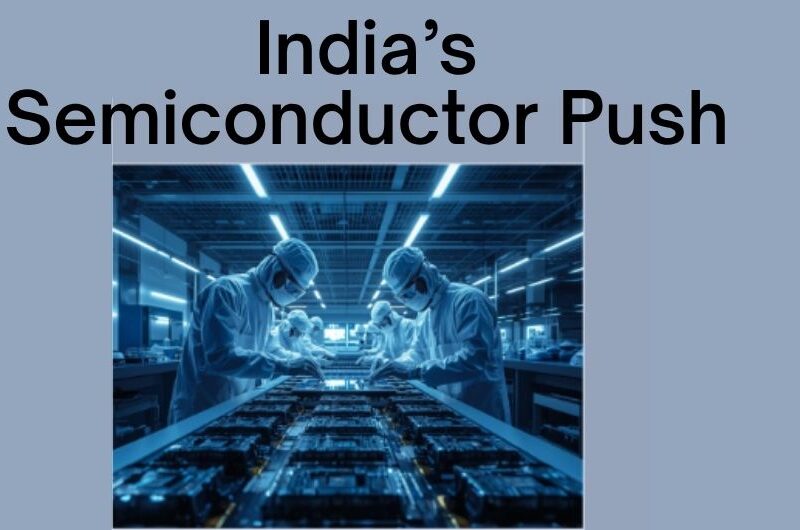
Silicon Sovereignty: India’s Semiconductor Mission 2.0 and the Road to Chip Self-Reliance

1. ISM 2.0 in Budget 2026–27 prioritises domestic semiconductor equipment and materials, full-stack Indian semiconductor IP, and stronger supply chains, backed by ₹1,000 crore for FY 2026–27 allocation nationwide.

2. India’s semiconductor market is estimated at $38 billion in 2023, $45–$50 billion in 2024–25, and projected to reach $100–$110 billion by 2030, driven by demand across value chains.

More Details

C2S Programme: Scaling Indigenous Chip Design Skills, Infrastructure, and Start-up Innovation

1. Chips to Start-up Programme is a national capacity-building initiative launched in 2022, with ₹250 crore over five years, expanding chip design education, fabrication exposure, and innovation across institutions.

2. It targets creation of 85,000 industry-ready professionals across UG, PG, and PhD levels nationwide, including 200 PhDs, 7,000 VLSI M.Tech, 8,800 allied M.Tech, and 69,000 B.Tech trainees overall.

More Details

Catalyzing Indigenous Chip Design: Key Features and Outcomes of the Design Linked Incentive (DLI) Scheme

Key Takeaways

Semiconductor chip design is the main value driver, contributing up to 50% of value addition, 20–50% of Bill of Materials cost (BOM), and 30–35% of global semiconductor sales via the fabless segment.
MeitY’s Design Linked Incentive (DLI) Scheme under the Semicon India Programme aims to build a self-reliant, globally competitive chip design ecosystem.

More Details

Sanchar Saathi: Citizen-Centric Framework for Telecom Security

Sanchar Saathi Mobile Application: Strengthening Telecom Security

The Sanchar Saathi mobile application was introduced in January 2025 to enhance transparency, safety, and citizen control within India’s expanding telecom ecosystem. With mobile phones central to banking, governance, education, healthcare, and digital services, the platform addresses growing risks related to identity misuse, device theft, and telecom-enabled fraud.

More Details

DHRUV64: India’s First 1.0 GHz, 64-bit dual-core Microprocessor

Overview of DHRUV64 Microprocessor

India has achieved an important milestone in its semiconductor journey with the development of DHRUV64, the country’s first fully indigenous 1.0 GHz, 64-bit dual-core microprocessor. Developed by the Centre for Development of Advanced Computing under the Microprocessor Development Programme, DHRUV64 provides India with a reliable domestic processor platform capable of supporting both strategic and commercial requirements. It marks a clear advancement toward technological self-reliance in advanced chip design.

More Details

India’s Solar Momentum

India’s rapid solar expansion has positioned the country as a global clean-energy leader. Solar capacity has grown from 3 GW (2014) to 129 GW (2025), helping push non-fossil power beyond 50% of India’s total installed electricity capacity. Large-scale deployment, strong policy architecture, and international cooperation continue to drive this transformation.

1. India’s Solar Growth Story

More Details

Electronics Development Fund

The Electronics Development Fund (EDF) is a flagship initiative launched by the Government of India on 15 February 2016 to strengthen India’s innovation ecosystem in electronics, nano-electronics, IT and emerging technologies. It was created under MeitY as a Fund of Funds to support early-stage startups through professionally managed venture and angel funds. EDF has become a key pillar of India’s Electronics System Design and Manufacturing (ESDM) strategy.

India’s electronics sector has grown rapidly in recent years due to policy reforms, industrial expansion and rising domestic demand. The EDF was conceptualised to accelerate this momentum by increasing risk-capital availability for high-technology entrepreneurs. By nurturing innovation at the seed and growth stage, EDF aims to reduce import dependence and enhance India’s capabilities in indigenous design and IP generation.

More Details

FOOD IRRADIATION AND COLD CHAIN INFRASTRUCTURE IN INDIA

Food irradiation is an advanced food preservation technique in which food items are exposed to a controlled dose of ionising radiation to destroy harmful bacteria, insects and moulds and to slow down spoilage processes such as ripening and sprouting. The treatment does not make food radioactive and does not reduce its nutritional value. Instead, it improves food safety and extends shelf life, making the food safer for human consumption and suitable for long-distance transport and storage.

More Details

Free IAS Guidance
Start Your Journey Today 🇮🇳

Fill out the form below, and we will be in touch shortly.