Best UPSC and MPPSC IAS Coaching Classes in Gwalior

India’s GST Reform Journey

1. Goods and Services Tax (GST) was launched on 1 July 2017, replacing multiple indirect taxes with a unified tax system based on the principle of “One Nation, One Tax.”

2. GST subsumed 17 different taxes and 13 cesses into a common indirect tax framework.

More Details

India’s Tourism Transformation

1. Between 2014 and 2025, India recorded 181.25 million International Arrivals (IAs) and 93.35 million Foreign Tourist Arrivals (FTAs).

2. International Arrivals (IAs) include both foreign nationals and Non-Resident Indians (NRIs), whereas Foreign Tourist Arrivals (FTAs) include only foreign nationals.

More Details

India’s MSME Growth Story

1. The definition of Micro, Small and Medium Enterprises (MSMEs) was revised with effect from 1 April 2025 based on investment and annual turnover.

2. As of January 2026, the MSME sector contributes about 31.1% to India’s Gross Domestic Product (GDP), 35.4% to manufacturing output, and 48.58% to exports.

More Details

Honouring India’s Young Achievers

The Pradhan Mantri Rashtriya Bal Puraskar (PMRBP) is India’s premier national award recognising exceptional achievements of children aged 5 to 18 years.

2. The award is presented annually by the President of India on Veer Bal Diwas, observed on 26 December.

More Details

India’s Technology Transformation

1. The Digital India Programme, launched in 2015, laid the foundation for India’s emerging technology ecosystem by expanding digital infrastructure and connectivity.

2. Optical fibre coverage increased from 19.35 lakh route kilometres in 2019 to 42.36 lakh route kilometres in 2025.

More Details

North-East India’s Development Transformation

1. The North-East is collectively known as Ashtalakshmi and includes eight states: Assam, Arunachal Pradesh, Manipur, Meghalaya, Mizoram, Nagaland, Tripura, and Sikkim.

2. The Ministry of Development of North Eastern Region (MDoNER) provides financial assistance to the eight North-Eastern states through five Central Sector Schemes.

More Details

India’s Counter-Terror Strategy

1. India’s counter-terrorism policy has shifted from a reactive response to a proactive prevention-based approach, with a zero-tolerance position against terrorism.

2. The counter-terrorism framework is built around stronger laws, better intelligence-sharing, modern police systems, action against terror financing, and cross-border deterrence.

More Details

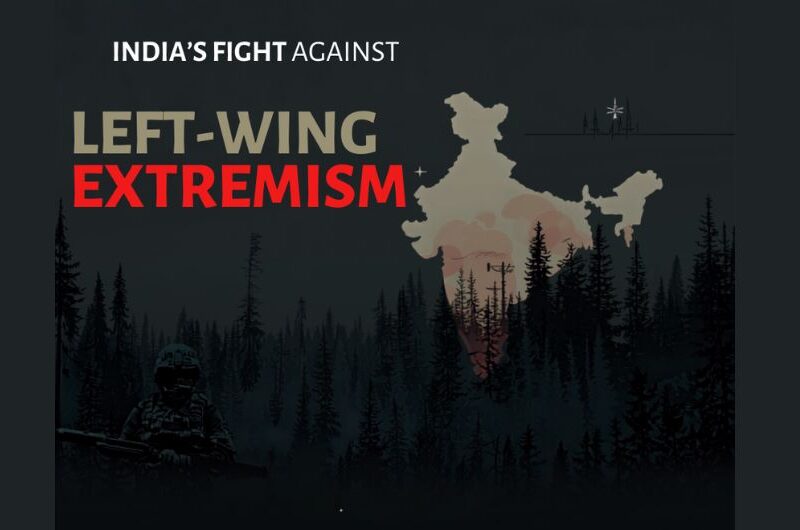
From Red Corridor to Peace Corridor

1. On 31 March 2026, India became effectively free from Left-Wing Extremism after nearly six decades of Naxal-related violence.

2. The transformation towards Naxal-Free India was guided by three pillars: Vishwaas, Nirman, and Jan Kalyan.

More Details

India–Africa Relations

1. In 2025, Africa witnessed major political, economic, security, diplomatic, and climate-related developments.

2. India intensified high-level diplomatic engagement with African countries throughout 2025.

More Details

Free IAS Guidance
Start Your Journey Today 🇮🇳

Fill out the form below, and we will be in touch shortly.