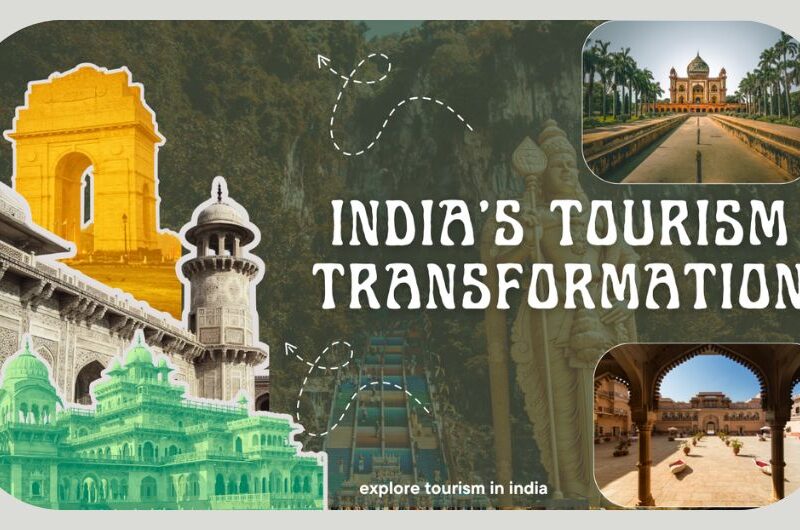
India’s Tourism Transformation
1. Between 2014 and 2025, India recorded 181.25 million International Arrivals (IAs) and 93.35 million Foreign Tourist Arrivals (FTAs).
2. International Arrivals (IAs) include both foreign nationals and Non-Resident Indians (NRIs), whereas Foreign Tourist Arrivals (FTAs) include only foreign nationals.
3. The Swadesh Darshan Scheme, launched in 2014, sanctioned 76 tourism infrastructure projects across 15 tourist circuits with an investment of over ₹5,000 crore.
4. Out of the 76 projects sanctioned under Swadesh Darshan, 75 projects have been physically completed.
5. Swadesh Darshan 2.0 was launched in 2022 with a focus on sustainable, experience-based destination development.
6. The Pilgrimage Rejuvenation and Spiritual, Heritage Augmentation Drive (PRASHAD) Scheme has sanctioned 54 projects worth more than ₹1,700 crore to improve pilgrimage destinations.
7. Under the Special Assistance to States for Capital Investment (SASCI) – Development of Iconic Tourist Centres to Global Scale, 40 projects across 23 States have been sanctioned with an outlay of ₹3,295.76 crore.
8. Mamallapuram became the first United Nations Educational, Scientific and Cultural Organization (UNESCO) World Heritage Site in South Asia to receive the Green Destinations Silver Certification.
9. Under the Challenge-Based Destination Development (CBDD) initiative, 38 projects worth ₹697.94 crore have been sanctioned under the Spiritual Tourism and Eco-Tourism categories.
10. In 2024, India recorded 20.6 million international arrivals and improved its global ranking from 25th in 2016 to 20th worldwide.
11. The e-Tourist Visa system and digital platforms such as National Integrated Database of Hospitality Industry (NIDHI) and NIDHI Plus have strengthened India’s digital tourism ecosystem.
12. Between 2014 and 2025, more than 4.5 lakh persons were trained under the Capacity Building for Service Providers (CBSP) Scheme to improve tourism service standards.
13. The Union Budget 2026–27 proposed the establishment of a National Institute of Hospitality and the upskilling of 10,000 tourist guides at iconic destinations.
14. India is ranked as the world’s 8th largest tourism economy, contributing about US$231.6 billion to the national economy.
15. The World Travel & Tourism Council (WTTC) projects India to become the world’s 4th largest tourism economy over the next decade.
Must Know Terms :
1.Swadesh Darshan Scheme: Launched in 2014 to develop tourism infrastructure across India. Under its first phase, 76 projects were sanctioned across 15 tourist circuits with an investment of over ₹5,000 crore, and 75 projects have been physically completed.
2. Swadesh Darshan 2.0: Launched in 2022 with focus on sustainable and experience-based destination development. It aims to transform tourist destinations into immersive tourism hubs with better visitor experience.
3. Pilgrimage Rejuvenation and Spiritual, Heritage Augmentation Drive (PRASHAD): This scheme focuses on improving infrastructure at pilgrimage and spiritual destinations. It has sanctioned 54 projects worth more than ₹1,700 crore across India.
4. Special Assistance to States for Capital Investment (SASCI): Under the development of iconic tourist centres to global scale, 40 projects across 23 States have been sanctioned with an outlay of ₹3,295.76 crore.
5. Challenge-Based Destination Development (CBDD): This initiative promotes focused destination development under categories such as spiritual tourism and eco-tourism. It has sanctioned 38 projects worth ₹697.94 crore.
6. e-Tourist Visa: The e-Tourist Visa system has made travel to India easier and more convenient for foreign visitors. It supports India’s global tourism competitiveness by improving ease of travel and visitor access.
MCQ :
1. With reference to tourism statistics in India, consider the following statements:
1. International Arrivals (IAs) include both foreign nationals and Non-Resident Indians (NRIs).
2. Foreign Tourist Arrivals (FTAs) include both foreign nationals and NRIs.
3. Between 2014 and 2025, India recorded more than 180 million International Arrivals.
Which of the statements given above is/are correct?
A. 1 and 3 only
B. 2 only
C. 1 only
D. 1, 2 and 3
2. With reference to the Swadesh Darshan Scheme, consider the following statements:
1. It was launched in 2014.
2. It aims to develop tourism infrastructure across the country.
3. Under its first phase, all sanctioned projects have been physically completed.
Which of the statements given above is/are correct?
A. 1 only
B. 1 and 2 only
C. 2 and 3 only
D. 1, 2 and 3
3. Swadesh Darshan Scheme sanctioned 76 tourism infrastructure projects across:
A. 10 tourist circuits
B. 12 tourist circuits
C. 15 tourist circuits
D. 18 tourist circuits
4. Swadesh Darshan 2.0, launched in 2022, primarily focuses on:
A. Border tourism
B. Adventure tourism only
C. Sustainable and experience-based destination development
D. Cruise tourism only
5. With reference to the Pilgrimage Rejuvenation and Spiritual, Heritage Augmentation Drive (PRASHAD) Scheme, consider the following statements:
1. It focuses on improving pilgrimage destinations.
2. It has sanctioned 54 projects.
3. The total sanctioned amount exceeds ₹1,700 crore.
Which of the statements given above are correct?
A. 1 and 2 only
B. 2 and 3 only
C. 1 and 3 only
D. 1, 2 and 3
6. Under the Special Assistance to States for Capital Investment (SASCI) – Development of Iconic Tourist Centres to Global Scale, how many projects have been sanctioned?
A. 23
B. 38
C. 40
D. 54
7. Mamallapuram achieved which of the following distinctions?
A. India’s first UNESCO World Heritage Site
B. First UNESCO World Heritage Site in South Asia to receive Green Destinations Silver Certification
C. India’s first Smart Tourism City
D. First Eco-Tourism Site in Asia
8. The Challenge-Based Destination Development (CBDD) initiative has sanctioned:
A. 28 projects worth ₹597.94 crore
B. 38 projects worth ₹697.94 crore
C. 40 projects worth ₹697.94 crore
D. 54 projects worth ₹1,700 crore
9. In 2024, India secured which position globally in terms of international arrivals?
A. 15th
B. 18th
C. 20th
D. 25th
10. Which of the following digital initiatives have strengthened India’s tourism ecosystem?
1. e-Tourist Visa
2. National Integrated Database of Hospitality Industry (NIDHI)
3. NIDHI Plus
Select the correct answer using the code given below.
A. 1 and 2 only
B. 2 and 3 only
C. 1 and 3 only
D. 1, 2 and 3
11. More than 4.5 lakh persons were trained between 2014 and 2025 under which scheme?
A. PM Kaushal Vikas Yojana (PMKVY)
B. Capacity Building for Service Providers (CBSP)
C. Swadesh Darshan 2.0
D. Incredible India Programme
12. Which of the following proposals was announced in the Union Budget 2026–27 for the tourism sector?
1. Establishment of a National Institute of Hospitality.
2. Upskilling of 10,000 tourist guides.
3. Development of 100 new airports exclusively for tourism.
Select the correct answer using the code below.
A. 1 only
B. 1 and 2 only
C. 2 and 3 only
D. 1, 2 and 3
13. India is currently ranked as the:
A. 4th largest tourism economy
B. 6th largest tourism economy
C. 8th largest tourism economy
D. 10th largest tourism economy
14. According to the World Travel & Tourism Council (WTTC), India is projected to become the:
A. 2nd largest tourism economy
B. 3rd largest tourism economy
C. 4th largest tourism economy
D. 5th largest tourism economy
15. Which of the following statements best reflects India’s recent tourism development strategy?
A. Exclusive focus on increasing foreign tourist arrivals
B. Development of tourism only through private investment
C. Integrated approach combining infrastructure development, sustainability, digitalisation, and skill development
D. Restricting tourism development to heritage sites only


0 comment