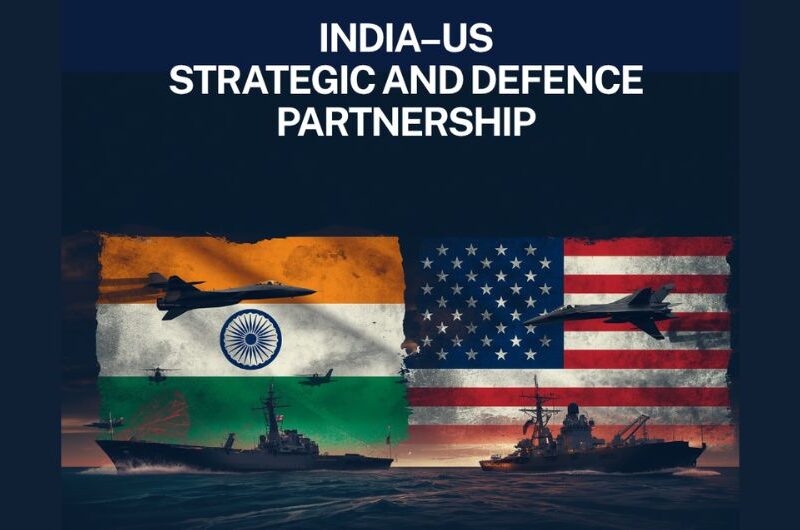
India–US Strategic and Defence Partnership
1. India–United States defence relations have developed from Cold War-era hesitation into a broad strategic and defence partnership, with growing cooperation in security, technology and industrial production.
2. The partnership is guided by a 10-year India–US Defence Framework for 2025–2035, which provides a roadmap for defence cooperation, technology sharing and military coordination.
3. India was designated as a Major Defense Partner of the United States in 2016. This status supports greater access to US defence technology and equipment.
4. The 2+2 Ministerial Dialogue is the highest institutional mechanism for India–US foreign policy and defence discussions. It brings together the foreign and defence ministers of both countries.
5. India received Strategic Trade Authorization-1 (STA-1) status in 2018. It allows licence-free access to a wider range of dual-use and military technologies from the United States.
6. The General Security of Military Information Agreement (GSOMIA), signed in 2002, enables the protection and exchange of classified military information between the two countries.
7. The Logistics Exchange Memorandum of Agreement (LEMOA), signed in 2016, allows reciprocal use of military facilities for refuelling, supplies, repairs and other logistical support.
8. The Communications Compatibility and Security Agreement (COMCASA), signed in 2018, enables India to receive encrypted and secure communication equipment from the United States.
9. The Industrial Security Annex (ISA), signed in 2019, facilitates the sharing of classified defence information with private industries involved in defence production and research.
10. The Basic Exchange and Cooperation Agreement (BECA), signed in 2020, enables the exchange of high-end geospatial, satellite and maritime data for defence purposes.
11. India and the United States are cooperating on local defence production, including the GE F-414 engine agreement for manufacturing advanced aircraft engines in India with technology transfer.
12. The Initiative on Critical and Emerging Technology (iCET) promotes cooperation in Artificial Intelligence (AI), quantum computing, space, semiconductors and other strategic technologies. INDUS-X supports defence innovation and connects start-ups and industries from both countries.
13. Major US defence platforms operated by India include P-8I maritime patrol aircraft, Apache attack helicopters, MH-60R naval helicopters and MQ-9B remotely piloted aircraft systems.
14. Important bilateral military exercises include Yudh Abhyas between the armies, Vajra Prahar between special forces and Cope India between the air forces. India also participates in the Malabar naval exercise with the United States, Japan and Australia.
15. The partnership supports stability in the Indo-Pacific and helps India strengthen self-reliance in defence. However, challenges remain due to India’s defence ties with Russia and S-400 systems, possible Countering America’s Adversaries Through Sanctions Act (CAATSA)-related concerns, US export controls on critical technologies and occasional differences over US engagement with Pakistan.
Must Know Terms :
1.Major Defense Partner
India received this status from the United States in 2016. It supports greater access to US defence technology, equipment and industrial cooperation.
2. LEMOA
Logistics Exchange Memorandum of Agreement was signed in 2016. It allows both countries to use each other’s military facilities for refuelling, repairs, supplies and logistics support.
3. COMCASA
Communications Compatibility and Security Agreement was signed in 2018. It enables India to receive secure and encrypted communication systems from the United States.
4. BECA
Basic Exchange and Cooperation Agreement was signed in 2020. It allows sharing of high-end geospatial, satellite and maritime data for defence operations.
5. iCET
Initiative on Critical and Emerging Technology promotes India–US cooperation in Artificial Intelligence, quantum computing, space, semiconductors and other advanced technologies.
6. INDUS-X
India–United States Defence Acceleration Ecosystem supports defence innovation by connecting start-ups, industries, investors and research institutions of both countries.
MCQ :
1. With reference to India–United States defence relations, consider the following statements:
1. India was designated as a Major Defense Partner of the United States in 2016.
2. This status supports greater access to US defence technology and equipment.
3. It makes India a formal military ally of the United States.
Which of the statements given above are correct?
(a) 1 and 2 only
(b) 2 and 3 only
(c) 1 and 3 only
(d) 1, 2 and 3
2. The 2+2 Ministerial Dialogue between India and the United States involves:
(a) Finance and Commerce Ministers of both countries
(b) Foreign and Defence Ministers of both countries
(c) Home and External Affairs Ministers of both countries
(d) Chiefs of Army and Navy of both countries
3. Strategic Trade Authorization-1 (STA-1) status enables India to:
(a) Access nuclear weapons technology from the United States
(b) Receive a wider range of dual-use and military technologies without licences
(c) Import all defence platforms free of cost
(d) Join a formal military alliance with the United States
4. Which one of the following agreements enables the protection and exchange of classified military information between India and the United States?
(a) LEMOA
(b) COMCASA
(c) BECA
(d) GSOMIA
5. With reference to the Logistics Exchange Memorandum of Agreement (LEMOA), consider the following statements:
1. It was signed in 2016.
2. It permits reciprocal use of military facilities for logistics support.
3. It establishes permanent US military bases in India.
Which of the statements given above are correct?
(a) 1 and 2 only
(b) 2 and 3 only
(c) 1 and 3 only
(d) 1, 2 and 3
6. The Communications Compatibility and Security Agreement (COMCASA) is mainly associated with:
(a) Sharing high-end geospatial data
(b) Secure and encrypted communication equipment
(c) Access to military refuelling facilities
(d) Sharing classified information with private industries
7. The Industrial Security Annex (ISA) facilitates:
(a) Joint military exercises in the Indo-Pacific
(b) Exchange of satellite data for defence operations
(c) Sharing classified defence information with private industries
(d) Reciprocal access to naval bases
8. The Basic Exchange and Cooperation Agreement (BECA) enables India and the United States to share:
(a) Agricultural data and weather forecasts
(b) Trade and investment information
(c) Maritime trade routes only
(d) High-end geospatial and satellite data
9. With reference to the GE F-414 engine agreement, consider the following statements:
1. It relates to the local manufacture of advanced aircraft engines in India.
2. It involves technology transfer.
3. It is related to submarine construction.
Which of the statements given above are correct?
(a) 1 and 2 only
(b) 2 and 3 only
(c) 1 and 3 only
(d) 1, 2 and 3
10. The Initiative on Critical and Emerging Technology (iCET) covers cooperation in:
1. Artificial Intelligence
2. Quantum computing
3. Space technology
4. Semiconductors
Select the correct answer using the code given below:
(a) 1 and 2 only
(b) 1, 2, 3 and 4
(c) 2, 3 and 4 only
(d) 1, 3 and 4 only
11. INDUS-X is primarily related to:
(a) Naval logistics cooperation
(b) Defence innovation and start-up collaboration
(c) Transfer of classified military information
(d) Sharing satellite navigation data
12. Which one of the following pairs is correctly matched?
(a) P-8I — Maritime patrol aircraft
(b) Apache — Naval submarine
(c) MH-60R — Main battle tank
(d) MQ-9B — Fighter aircraft
13. Consider the following pairs:
1. Yudh Abhyas — Army exercise
2. Vajra Prahar — Special Forces exercise
3. Cope India — Air Force exercise
How many of the pairs given above are correctly matched?
(a) Only one
(b) Only two
(c) All three
(d) None
14. The Malabar Exercise includes which of the following countries?
1. India
2. United States
3. Japan
4. Australia
Select the correct answer using the code given below:
(a) 1 and 2 only
(b) 1, 2 and 3 only
(c) 2, 3 and 4 only
(d) 1, 2, 3 and 4
15. Which of the following are challenges in India–United States defence relations?
1. India’s defence ties with Russia and the S-400 system
2. Possible concerns under the Countering America’s Adversaries Through Sanctions Act (CAATSA)
3. US export controls on critical technologies
4. Differences over US engagement with Pakistan
Select the correct answer using the code given below:
(a) 1 and 2 only
(b) 1, 2, 3 and 4
(c) 2, 3 and 4 only
(d) 1, 3 and 4 only




0 comment