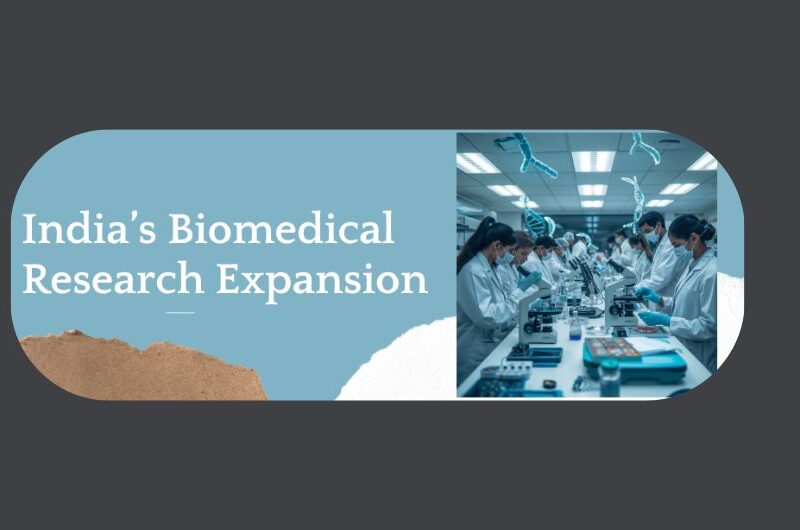
India’s Biomedical Research Expansion
1. The Union Cabinet approved Phase III of the Biomedical Research Career Programme for 2025–26 to 2030–31, with an extended service phase continuing from 2031–32 to 2037–38.
2. The total outlay for BRCP Phase III is ₹1,500 crore, of which the Department of Biotechnology will contribute ₹1,000 crore and the Wellcome Trust will contribute ₹500 crore.
3. The Biomedical Research Career Programme was originally launched in 2008–09 by the Department of Biotechnology in partnership with the Wellcome Trust through the India Alliance platform.
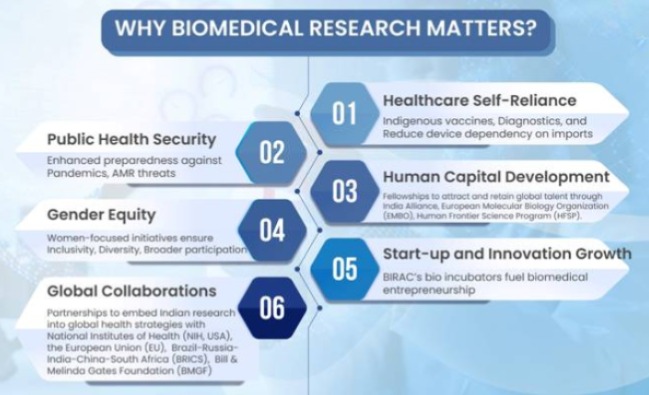
4. Phase II of the programme was implemented in 2018–19 with an expanded portfolio, continuing the earlier fellowship-based model for biomedical research careers in Indian institutions.
5. Under the first two phases, a total investment of ₹2,388 crore was made and 721 research grants were awarded in biomedical and clinical sciences.
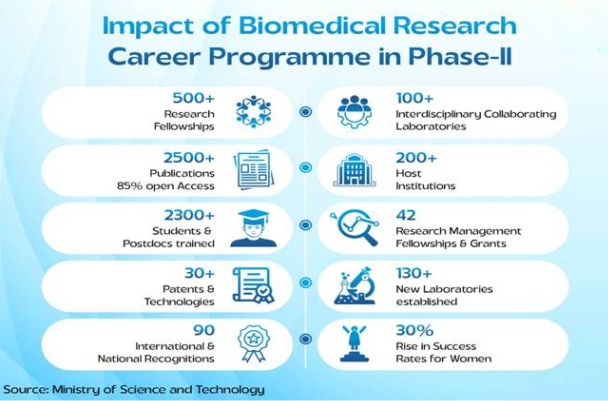
6. BRCP Phase II recorded 90 international and national recognitions, reflecting the programme’s visibility and peer recognition within the biomedical research ecosystem.
7. BRCP Phase III aims to train more than 2,000 students and post-doctoral fellows, while also supporting high-impact publications, patentable discoveries, and wider research capacity development.
8. The programme seeks to push 25 to 30 percent of collaborative programmes to Technology Readiness Level 4 and above, strengthening translational research and technology advancement.
9. Phase III plans to provide 10 to 15 percent more support for women scientists, with an emphasis on inclusion, diversity, and stronger representation in biomedical research.
10. The Collaborative Grants Programme under Phase III includes Career Development Grants and Catalytic Collaborative Grants for teams of 2 to 3 investigators with proven research track records.
11. Phase III includes Early Career and Intermediate Research Fellowships in basic, clinical, and public health research, designed to support scientists at formative career stages.
12. The programme also includes a Research Management Programme to strengthen infrastructure, administration, and management systems required for scientific projects and long-term institutional research capacity.
13. India’s COVID-19 biomedical research response under this framework included support for more than 70 projects, 10 vaccine candidates, 34 diagnostic tools, and 10 therapeutic interventions.
14. The National Institute of Biomedical Genomics developed dbGENVOC, the world’s first publicly accessible oral cancer genomic variant database, hosting over 24 million variants from Indian patients.
15. GenomeIndia has sequenced 10,000 genomes, while initiatives such as UMMID, the National AMR Mission, vaccine programmes, and biorepositories are expanding India’s biomedical research capability.
Must Know Terms :
1.BRCP
BRCP stands for Biomedical Research Career Programme, launched in 2008–09 through a partnership between the Department of Biotechnology and the Wellcome Trust. Phase III, approved for 2025–26 to 2030–31, has a total outlay of ₹1,500 crore. It supports fellowships, collaborative grants, research management, and capacity building, aiming to train over 2,000 researchers and strengthen biomedical innovation in India nationwide effectively.
2. IndiaAlliance
India Alliance is the dedicated Special Purpose Vehicle created to run the Biomedical Research Career Programme in India. It was set up through collaboration between the Department of Biotechnology and the Wellcome Trust. The platform supports biomedical fellowships, career development, and collaborative research at world-class standards. It also promotes ethical research, international competitiveness, and stronger research careers across Indian institutions nationwide.
3. dbGENVOC
dbGENVOC is the world’s first publicly accessible oral cancer genomic variant database developed by the National Institute of Biomedical Genomics. It contains over 24 million variants from Indian patients along with global data and searchable analytical tools. Updated annually with data from India and Southeast Asia, it supports research on oral cancer pathways, population-specific mutations, prevention, diagnosis, and treatment strategies.
4. GenomeIndia
GenomeIndia is a major genomics initiative that has sequenced 10,000 genomes to map India’s unique genetic landscape. The programme supports precision medicine by improving understanding of inherited conditions, disease patterns, and population-specific genetic variation. It helps reduce dependence on international databases and strengthens predictive, preventive, and personalized healthcare in India. Its findings are important for diagnosis and future treatment planning.
5. UMMID
UMMID focuses on rare disorders in children and newborns and works to improve early diagnosis and clinical response. It is part of India’s wider biomedical research effort to build predictive and personalized healthcare. By studying inherited disorders and genetic conditions, the programme supports better disease understanding and stronger medical intervention. It also complements genomics initiatives that map India’s population-specific risks.
6. BioCARe
BioCARe is a programme that offers first independent research grants to women scientists in biomedical research. It is part of the Department of Biotechnology’s effort to increase women’s participation, leadership, and long-term career growth in science. Along with awards, startup support, and women-focused bioincubators, the programme strengthens inclusivity and helps build a more diverse and innovative biomedical ecosystem in India.
Key takeaways
a) The total expenditure for Biomedical Research Career Programme Phase-III amounts to ₹1500 crore
b) The initiative targets training 2,000+ researchers, high-impact publications, patentable discoveries, and peer recognition.
c) Aims for 10–15% more support for women scientists, pushing 25–30% projects reaching Technology Readiness Level (TRL-4) andabove, and wider Tier-2/3 outreach.
d) Phase II programme had 90 international and national recognitions
MCQ :
1. Phase III of the Biomedical Research Career Programme will be actively implemented during:
A) 2023–24 to 2028–29
B) 2025–26 to 2030–31
C) 2024–25 to 2029–30
D) 2031–32 to 2037–38
2. The extended service phase of BRCP Phase III will continue from:
A) 2031–32 to 2037–38
B) 2025–26 to 2030–31
C) 2028–29 to 2033–34
D) 2030–31 to 2035–36
3. The total outlay for BRCP Phase III is:
A) ₹1,000 crore
B) ₹2,388 crore
C) ₹1,500 crore
D) ₹500 crore
4. Under BRCP Phase III, the contribution of the Department of Biotechnology is:
A) ₹500 crore
B) ₹1,500 crore
C) ₹2,388 crore
D) ₹1,000 crore
5. The Biomedical Research Career Programme was originally launched in:
A) 2018–19
B) 2008–09
C) 2025–26
D) 2023–24
6. BRCP was launched by the Department of Biotechnology in partnership with:
A) WHO
B) BIRAC
C) Wellcome Trust
D) NIBMG
7. Phase II of the programme was implemented in:
A) 2018–19
B) 2008–09
C) 2025–26
D) 2021–22
8. Under the first two phases of BRCP, the total number of research grants awarded was:
A) 700
B) 721
C) 90
D) 2,000
9. BRCP Phase II recorded how many international and national recognitions?
A) 70
B) 721
C) 90
D) 34
10. BRCP Phase III aims to train more than how many students and post-doctoral fellows?
A) 1,000
B) 1,500
C) 2,500
D) 2,000
11. The programme seeks to push what share of collaborative programmes to Technology Readiness Level 4 and above?
A) 5 to 10 percent
B) 10 to 15 percent
C) 25 to 30 percent
D) 30 to 40 percent
12. Phase III plans to provide how much additional support for women scientists?
A) 25 to 30 percent
B) 10 to 15 percent
C) 5 to 10 percent
D) 15 to 20 percent
13. The Collaborative Grants Programme under Phase III is meant for teams of:
A) 4 to 5 investigators
B) 5 to 6 investigators
C) 1 to 2 investigators
D) 2 to 3 investigators
14. India’s COVID-19 biomedical research response under this framework supported:
A) 70+ projects, 10 vaccine candidates, 34 diagnostic tools, and 10 therapeutic interventions
B) 34 projects, 10 vaccine candidates, 70 diagnostic tools, and 10 therapeutic interventions
C) 70+ projects, 34 vaccine candidates, 10 diagnostic tools, and 10 therapeutic interventions
D) 10 projects, 70 vaccine candidates, 34 diagnostic tools, and 10 therapeutic interventions
15. dbGENVOC is significant because it is:
A) India’s first vaccine trial network
B) the first Indian biorepository of resistant microbes
C) the world’s first publicly accessible oral cancer genomic variant database
D) a programme for women scientists in biomedical research



0 comment