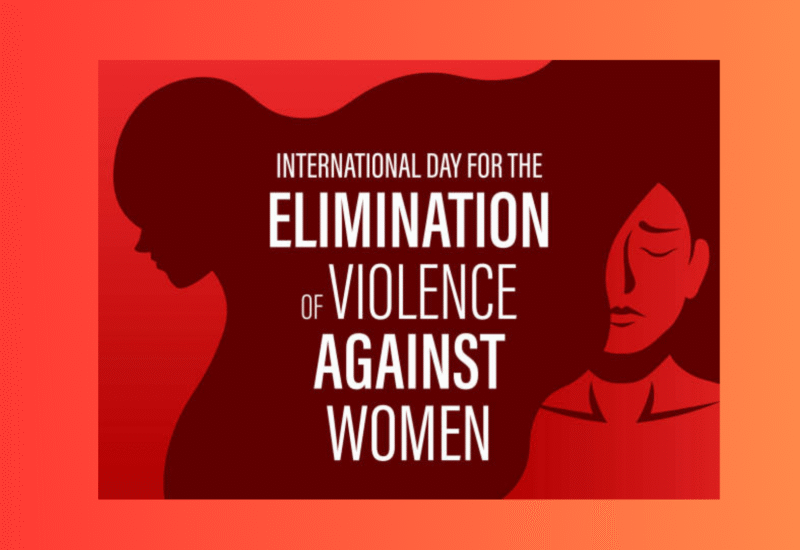
International Day for Elimination of Violence Against Women
1. The International Day for the Elimination of Violence Against Women is observed every year on 25 November and also marks the beginning of the 16 Days of Activism campaign ending on 10 December.
2. The 2025 global theme was “UNiTE to End Digital Violence Against All Women and Girls,” highlighting the rapid rise of online abuse against women and girls.
3. The 16 Days of Activism campaign is led globally under the UNiTE initiative and connects the observance on 25 November with Human Rights Day on 10 December.
4. India’s institutional response to violence against women is anchored through Mission Shakti, the integrated women empowerment programme covering safety, security, and empowerment.
5. Mission Shakti has two major verticals: Sambal for safety and security, and Samarthya for women’s empowerment and support services.
6. The National Commission for Women was established in 1992 as the main statutory body for reviewing safeguards, handling complaints, and recommending reforms related to women’s rights.
7. The National Commission for Women operates an IVR-enabled 24×7 helpline on 7827170170 to connect women with police, hospitals, counsellors, and legal support systems.
8. The Bharatiya Nyaya Sanhita came into force in July 2024 and introduced reforms in handling sexual offences, including stronger procedural safeguards and stricter punishments.
9. The Protection of Women from Domestic Violence Act, 2005 recognises physical, sexual, emotional, and economic abuse and provides protection orders, residence rights, and monetary relief.
10. The Sexual Harassment of Women at Workplace Act, 2013 mandates Internal Committees in establishments with ten or more employees, while Local Committees handle smaller workplaces.
11. SHe-Box functions as the digital complaint and tracking platform for workplace sexual harassment complaints under the Ministry of Women and Child Development.
12. One Stop Centres have been operational since 1 April 2015 and provide integrated support including police assistance, medical aid, legal aid, temporary shelter, and psycho-social counselling.
13. Women Help Desks have been established in 14,658 police stations across India, with 13,743 headed by women police officers, improving accessibility and complaint handling.
14. As of August 2025, 773 Fast Track Special Courts, including 400 exclusive POCSO courts, were functional across 29 States and Union Territories and had disposed of over 3.44 lakh cases.
15. India uses digital criminal justice tools such as ITSSO, NDSO, and Cri-MAC to improve tracking, offender monitoring, inter-state coordination, and faster response in sexual offence cases.
Must Know Terms :
1. Mission Shakti
Mission Shakti is the Government of India’s integrated women empowerment programme implemented during the 15th Finance Commission period from 2021-22 to 2025-26. It serves as the umbrella framework for women’s safety, security, and empowerment. The programme is organised under two sub-schemes, Sambal and Samarthya, and brings together shelter, legal aid, protection, support, and rehabilitation mechanisms for women.
2. NCW
National Commission for Women (NCW) is the statutory body established in 1992 to protect and promote women’s rights in India. It reviews legal safeguards, examines complaints, investigates rights violations, and recommends reforms. It also runs a 24×7 IVR-enabled helpline, 7827170170, which helps connect women in distress with police authorities, hospitals, counsellors, and legal services across the country.
3. BNS
Bharatiya Nyaya Sanhita (BNS), which came into force in July 2024, replaced the Indian Penal Code and introduced significant criminal law reforms, including those concerning sexual offences. It provides stronger procedural support such as audio-video recording of victim statements and stricter punishments in serious offences. The law is intended to make justice delivery more survivor-centric, time-bound, and procedurally responsive in gender-based violence cases.
4. One Stop Centres
One Stop Centres are district-level support facilities operational since 1 April 2015 for women affected by violence and women in distress. They provide integrated services under one roof, including medical aid, police facilitation, legal assistance, temporary shelter, and psycho-social counselling. Under Mission Shakti, One Stop Centres function as a core institutional mechanism for immediate response, coordinated care, and rehabilitation support.
5. SHe-Box
SHe-Box is the online complaint and monitoring platform for workplace sexual harassment cases managed by the Ministry of Women and Child Development. It allows women to file complaints digitally and track the progress of their cases. The platform supports implementation of the Sexual Harassment of Women at Workplace Act, 2013, and strengthens transparency, accountability, and time-bound inquiry processes across institutions.
6. FTSCs
Fast Track Special Courts (FTSCs) are dedicated courts set up for speedy trial of rape and POCSO cases. As of August 2025, 773 FTSCs, including 400 exclusive POCSO courts, were functional across 29 States and Union Territories. These courts had disposed of more than 3.44 lakh cases, reflecting a major institutional effort to improve timeliness and effectiveness in justice delivery for sexual offences.
MCQ:
1. The International Day for the Elimination of Violence Against Women is observed to:
(a) Mark global action against gender-based violence
(b) Celebrate achievements in women’s sports
(c) Promote women’s entrepreneurship only
(d) Highlight global poverty rates
2. The 16 Days of Activism campaign begins on:
(a) December 1
(b) November 25
(c) August 15
(d) December 31
3. The 2025 global theme focuses primarily on:
(a) Eliminating child labour
(b) Ending digital violence against women and girls
(c) Promoting equal pay standards
(d) Expanding women’s representation in sports
4. Digital violence includes which of the following?
(a) Cyberstalking and deepfakes
(b) Subsidy denial
(c) Water scarcity
(d) Cashless transactions
5. India’s policy framework for women’s safety is anchored by:
(a) Ministry of Corporate Affairs
(b) Ministry of Women and Child Development
(c) Ministry of Labour
(d) NITI Aayog
6. Mission Shakti primarily aims to:
(a) Promote sports training for girls
(b) Integrate protection, redressal and empowerment mechanisms
(c) Fund private security agencies
(d) Develop women’s self-help groups only
7. The National Commission for Women was established in:
(a) 1975
(b) 1992
(c) 2005
(d) 2013
8. Which helpline launched by NCW offers 24×7 IVR-enabled support?
(a) 100
(b) 155260
(c) 7827170170
(d) 1515
9. Under BNS 2023, which of the following reforms was introduced?
(a) Abolition of all sexual offence laws
(b) Mandatory audio-video recording of victim statements
(c) Replacement of all women-related laws with a single code
(d) Removal of penalties for minor offences
10. The Protection of Women from Domestic Violence Act covers:
(a) Only physical abuse
(b) Only economic disputes
(c) Physical, sexual, emotional and economic abuse
(d) Only cases registered in courts
11. SHe-Box is a platform created to:
(a) Deliver training modules for teachers
(b) Track and monitor workplace sexual harassment complaints
(c) Provide microcredit to women entrepreneurs
(d) Report domestic violence cases only
12. Swadhar Greh Scheme focuses on:
(a) Providing shelter and rehabilitation to women in difficult circumstances
(b) Giving cash transfers to all widows
(c) Building sports hostels for girls
(d) Funding women-led start-ups
13. Services provided at One Stop Centres include:
(a) Only legal advice
(b) Police facilitation, medical help, legal aid and counselling
(c) Only vocational training
(d) Agricultural support for women farmers
14. The Stree Manoraksha initiative involves:
(a) Training OSC staff in psycho-social and mental-health support
(b) Providing scholarships to girl students
(c) Developing digital literacy for rural women
(d) Funding start-ups working on women’s safety apps
15. Cri-MAC is designed to:
(a) Track global terror financing
(b) Share real-time information on inter-state crimes
(c) Promote cross-border tourism
(d) Monitor financial fraud in banks

0 comment