Inland Waterways in India
1. India has 111 National Waterways with a total length of 20,187 kilometres, spread across 23 States and 4 Union Territories under the National Waterways framework.
2. As of March 2026, 32 National Waterways were operational in India, spanning 5,155 kilometres and supporting both cargo movement and passenger transport activities.
3. The Union Budget 2026–27 announced the operationalisation of 20 new National Waterways over the next five years to expand inland water transport infrastructure.
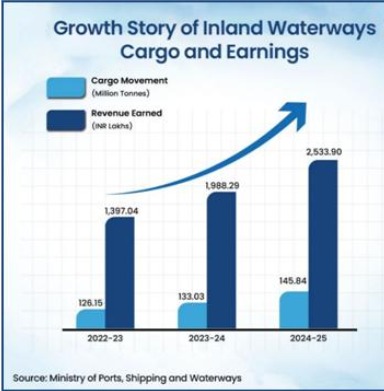
4. Cargo transportation on National Waterways reached an all-time high of 145.84 million metric tonnes in FY 2024–25 and 198 MMT till February 2026.
- Operational NWs in India (as of March, 2026)
| S. No. | State(s) | NW No. | Limits of NW |
| 1 | Andhra Pradesh | NW-4 | Krishna-Godavari River Systems |
| 2 | Assam | NW-2 | Brahmaputra River (Dhubri-Sadiya) |
| 3 | NW-16 | Barak River | |
| 4 | NW-31 | Dhansiri / Chathe | |
| 5 | NW-57 | Kopili River | |
| 6 | Bihar | NW-94 | Sone River |
| 7 | Goa | NW-68 | Mandovi River |
| 8 | NW-27 | Cumberjua River | |
| 9 | NW-111 | Zuari River | |
| 10 | Gujarat | NW-48 | Jawai-Luni-Rann of Kutch River |
| 11 | NW-73 | Narmada River | |
| 12 | NW-87 | Sabarmati River | |
| 13 | NW-100 | Tapi River | |
| 14 | Kerala | NW-3 | West Coast Canal |
| 15 | NW-8 | Alappuzha-Changanassery Canal | |
| 16 | NW-9 | Alappuzha-Kottayam-Athirampuzha Canal | |
| 17 | Maharashtra | NW-10 | Amba River |
| 18 | NW-53 | Kalyan-Thane-Mumbai Waterway, Vasai Creek and Ulhas River | |
| 19 | NW-83 | Rajpuri Creek | |
| 20 | NW-85 | Revadanda Creek-Kundalika River System | |
| 21 | NW-91 | Shastri River-Jaigad Creek System | |
| 22 | Odisha | NW-5 | East Coast Canal and Matai River/Brahmani-Kharsua-Dhamra Rivers/Mahanadi Delta Rivers |
| 23 | NW-14 | Baitarani River | |
| 24 | NW-23 | Budha Balanga | |
| 25 | NW-64 | Mahanadi River | |
| 26 | Uttar Pradesh | NW-110 | Yamuna River |
| 27 | NW-40 | Ghaghra River | |
| 28 | Uttar Pradesh, Bihar, Jharkhand, West Bengal | NW-1 | Ganga-Bhagirathi-Hooghly River System (Haldia-Allahabad) |
| 29 | West Bengal | NW-44 | Ichamati River |
| 30 | NW-47 | Jalangi River | |
| 31 | NW-86 | Rupnarayan River | |
| 32 | NW-97 | Sundarbans Waterway |
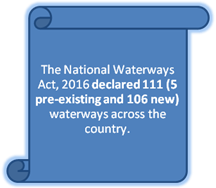
5. The National Waterways Act, 2016 declared 111 inland waterways as National Waterways, including continuation of the first five and addition of 106 new waterways.
6. India aims to raise the Inland Water Transport modal share from 2 percent to 5 percent and increase cargo volumes to above 200 MMT by 2030.
7. The Union Budget 2026–27 seeks to increase the combined share of inland waterways and coastal shipping from 6 percent to 12 percent by 2047.
8. Passenger traffic on National Waterways increased from 1.61 crore in 2023–24 to 7.6 crore in 2024–25, indicating major expansion in inland water transport usage.
9. As of November 2025, cargo operations were functional on 29 National Waterways, cruise operations on 15, and passenger services on 23 waterways.
10. A total of 11 National Waterways supported cargo, cruise, and passenger movement together, showing the emergence of multimodal inland water transport integration.
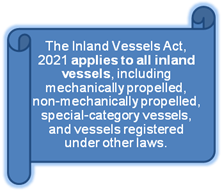
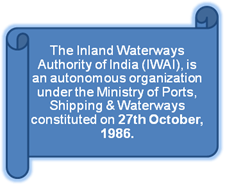
11. The Inland Waterways Authority of India Act, 1985 was enacted on 30 December 1985 and created the IWAI to regulate and develop inland waterways.
12. The Inland Vessels Act, 2021 was adopted on 11 August 2021 to ensure uniform rules, safe navigation, vessel regulation, and pollution reduction in inland waters.
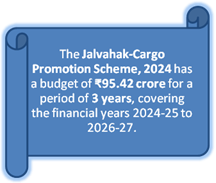
13. The Jalvahak-Cargo Promotion Scheme, introduced on 15 December 2024, reimburses up to 35 percent of actual operating cost for waterway journeys on selected routes.
| Key Provisions and Targets of the Harit Nauka Inland Vessels Green Transition Guidelines | |
| Focus Area | Key Provisions / Targets |
| Green Vessel Ecosystem | Promotion of green inland vessels, supporting infrastructure, and development of an operational ecosystem. |
| Alignment with Maritime India Vision 2030 | Supports the objectives of Maritime India Vision 2030 by promoting a higher share of inland waterways in the national transport system and encouraging greater cargo movement. |
| Alignment with Maritime Amrit Kaal Vision 2047 | Aligns with the long-term goals of Maritime Amrit Kaal Vision 2047, which aims for a complete transition to green inland vessels and a significant expansion of inland waterway cargo capacity. |
| Linkage with Sustainability | Builds upon earlier sustainability initiatives, including the Harit Sagar Guidelines 2023, by extending green practices from ports to inland vessels. |
| Complementary Programmes | Complements the Green Tug Transition Programme, ensuring a consistent approach to decarbonisation across maritime and inland water transport. |
| Carbon Intensity Targets | Targets 30% reduction in carbon intensity of inland waterway-based passenger transport by 2030 and 70% reduction by 2047 |
| State-Level Transition Roadmap | Serves as a roadmap for States to shift 50% of passenger fleet to green fuels by 2033 and 100% by 2045. |
| Vessel Greening Targets | Aims to green at least 1,000 inland vessels over the next 10 years and achieve 100% green vessels across all Indian water bodies by 2047 |
14. The Harit Nauka Guidelines launched on 8 January 2024 target a 30 percent reduction in carbon intensity by 2030 and 70 percent by 2047.
15. Under Jal Marg Vikas Project on National Waterway-1, a ₹5,061.15 crore project covers the 1,390 kilometre Varanasi to Haldia stretch and is targeted for completion by 30 June 2026.
| Waterway | Operational Stretch | Current Status of Cruise Operations |
| NW 1 | Varanasi to Haldia | River cruise services operate on this stretch; however, large cruise vessels generally operate only up to Patna due to depth limitations and pontoon bridges. |
| NW 2 | Guwahati to Neamati | River cruise operations are active on this stretch. |
| NW 3 | Entire stretch | Fully operational for passenger ferry and houseboat services. |
| NW 4 | Selected locations | Passenger ferry services operate at intermittent locations. |
| NW 8 | Alappuzha to Changanassery | Fully operational for passenger ferry and houseboat services. |
| NW 97 | Entire stretch | Fully operational for river cruise movement. |
| Indo-Bangladesh Protocol Route | Cross-border route | Technically feasible; pilot cruise movements have been carried out. |
- Initiatives for Upgrading Inland Water Transport Infrastructure in the North-Eastern States
| S. No. | Initiatives | Key Components / Details |
| 1 | NW-2 (Brahmaputra River) |
|
| 2 | Ship Repair Facility and Connectivity at Pandu |
|
| 3 | Development of NW-16 (Barak River) |
|
| 4 | NW-57
(Kopili River) |
|
| 5 | Central Sector Schemes (CSS) for IWT in NER |
|
| 6 | River Cruise Tourism Promotion |
|
| 7 | Cruise Terminal Development |
|
| 8 | Religious Tourism Circuit
(SPV-led Initiative) |
|
- Jal Marg Vikas Project
The Jal Marg Vikas Project, along with Jal Marg Vikas Project-II (Arth Ganga), is being implemented to improve navigability on National Waterway-1 and to support the socio-economic development of communities along the Ganga River banks.
| Jal Marg Vikas Project on NW-1 | Jal Marg Vikas Project II (Arth Ganga) |
|
|
Must Know Terms :
1.IWAI
IWAI stands for Inland Waterways Authority of India, created under the Inland Waterways Authority of India Act, 1985, enacted on 30 December 1985. It is the central authority responsible for development and regulation of inland waterways for shipping, navigation, and related infrastructure. It mainly works on fairways, terminals, navigational aids, and overall inland water transport development on National Waterways across India.
2. Jalvahak
Jalvahak-Cargo Promotion Scheme was introduced on 15 December 2024 to encourage cargo movement through inland waterways. It provides reimbursement of up to 35 percent of actual operating cost of a waterway journey. The scheme supports scheduled cargo services on NW-1, NW-2, and NW-16 through the Indo-Bangladesh Protocol route. It is expected to shift around 800 million tonne kilometres of cargo to waterways.
3. HaritNauka
Harit Nauka Inland Vessels Green Transition Guidelines were launched on 8 January 2024 to promote cleaner and more efficient inland water transport. The guidelines target a 30 percent reduction in carbon intensity of inland waterway passenger transport by 2030 and 70 percent by 2047. They also aim to green at least 1,000 inland vessels in 10 years and achieve 100 percent green vessels by 2047.
4. JMVP
JMVP stands for Jal Marg Vikas Project, implemented to improve navigability on National Waterway-1 along the Varanasi-Haldia stretch of the Ganga-Bhagirathi-Hooghly river system. Supported by the World Bank, it includes fairway development, terminals, jetties, and navigation facilities. A ₹5,061.15 crore project covering 1,390 kilometres is underway, with completion targeted by 30 June 2026 under this major waterway development programme.
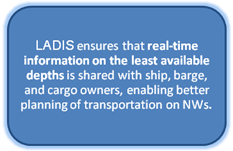
5. LADIS
LADIS stands for Least Available Depth Information System. It provides information on the minimum available water depth in navigation channels on selected National Waterways. Assured water depth is essential for safe and smooth vessel movement, voyage planning, and navigation reliability. By sharing updated depth information digitally, LADIS helps operators plan cargo and passenger transport more efficiently on inland waterways across India.
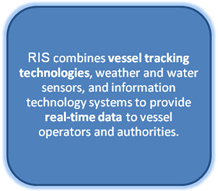
6. RIS
RIS stands for River Information Services, an integrated digital system designed to improve safety, efficiency, and traffic management on inland waterways. It enables real-time vessel tracking, monitoring of waterway conditions, and updates on weather and water levels. RIS also supports communication between vessels and control centres, reducing delays and improving voyage planning, navigation safety, and coordination among inland water transport stakeholders.
Key Takeaways
a) India has a network of 111 National Waterways, with a total length of 20,187 km spread across 23 States and four Union Territories. Of these, 32 National Waterways are currently operational.
b) The Union Budget 2026-27 has announced to operationalise 20 new National Waterways (NWs) over the next 5 years.
c) Cargo transportation on National Waterways reached an all-time high of 145.84 million metric tonnes in FY 2024-25.
MCQ :
1. India has how many National Waterways under the current framework?
A) 101
B) 111
C) 121
D) 131
2. The total length of National Waterways in India is:
A) 15,187 kilometres
B) 18,187 kilometres
C) 20,187 kilometres
D) 22,187 kilometres
3. As of March 2026, how many National Waterways were operational in India?
A) 29
B) 32
C) 52
D) 111
4. The Union Budget 2026–27 announced operationalisation of how many new National Waterways over the next five years?
A) 10
B) 15
C) 20
D) 25
5. Cargo transportation on National Waterways reached what level in FY 2024–25?
A) 125.84 million metric tonnes
B) 135.84 million metric tonnes
C) 145.84 million metric tonnes
D) 198.84 million metric tonnes
6. The National Waterways Act, 2016 provided for:
A) declaration of only 5 National Waterways
B) declaration of 111 National Waterways
C) abolition of the first 5 National Waterways
D) declaration of 32 operational waterways only
7. India aims to increase the Inland Water Transport modal share from 2 percent to:
A) 4 percent
B) 5 percent
C) 6 percent
D) 8 percent
8. The combined share of inland waterways and coastal shipping is targeted to rise from 6 percent to what level by 2047?
A) 10 percent
B) 11 percent
C) 12 percent
D) 15 percent
9. Passenger traffic on National Waterways increased from 1.61 crore in 2023–24 to:
A) 5.6 crore
B) 6.6 crore
C) 7.6 crore
D) 8.6 crore
10. As of November 2025, cargo operations were functional on how many National Waterways?
A) 23
B) 29
C) 15
D) 11
11. The Inland Waterways Authority of India was created under the:
A) National Waterways Act, 2016
B) Inland Vessels Act, 2021
C) Coastal Shipping Act, 2025
D) Inland Waterways Authority of India Act, 1985
12. The Jalvahak-Cargo Promotion Scheme provides reimbursement of up to what percentage of actual operating cost of a waterway journey?
A) 25 percent
B) 30 percent
C) 35 percent
D) 40 percent
13. The Harit Nauka Guidelines target what reduction in carbon intensity of inland waterway passenger transport by 2030?
A) 20 percent
B) 25 percent
C) 30 percent
D) 35 percent
14. The Jal Marg Vikas Project on National Waterway-1 covers which stretch?
A) Haldia to Dibrugarh
B) Varanasi to Haldia
C) Allahabad to Patna
D) Patna to Kolkata
15. The total project cost of the Jal Marg Vikas Project on National Waterway-1 is:
A) ₹4,061.15 crore
B) ₹5,061.15 crore
C) ₹6,061.15 crore
D) ₹7,061.15 crore

0 comment