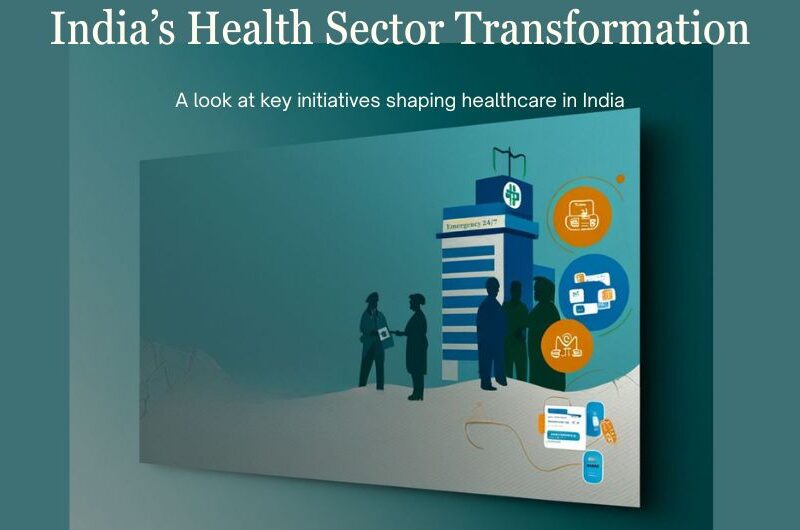
India’s Health Sector Transformation
1. Ayushman Bharat – Pradhan Mantri Jan Aarogya Yojana (AB-PMJAY), launched in 2018, is the world’s largest publicly funded health assurance scheme providing health insurance coverage of up to ₹5 lakh per family annually.
2. More than 44.14 crore Ayushman Cards have been created and over 12.03 crore hospitalisations have been covered under AB-PMJAY as of June 2026.
3. Ayushman Bharat Vay Vandana, launched in October 2024, extended health insurance coverage under AB-PMJAY to all senior citizens above 70 years of age.
4. India has operationalised more than 1.86 lakh Ayushman Arogya Mandirs, including Sub-Health Centres, Primary Health Centres, Urban Health Centres, and AYUSH centres.
5. Ayushman Arogya Mandirs have recorded a cumulative footfall of over 540 crore beneficiaries across the country.
6. The Pradhan Mantri Ayushman Bharat Health Infrastructure Mission (PM-ABHIM), launched in October 2021, has a total financial outlay of ₹64,180 crore.
7. The Ayushman Bharat Digital Mission (ABDM), launched in September 2021, introduced the Ayushman Bharat Health Account (ABHA), a unique 14-digit digital health identity.
8. More than 20.49 crore registrations have been recorded on the ABHA application, while 27,328 healthcare facilities have been connected to the ABDM platform.
9. Under Mission Indradhanush, 5.46 crore children and 1.32 crore pregnant women who had missed immunisation were vaccinated.
10. The U-WIN platform, launched nationwide in 2024, has registered 11.87 crore children and 3.96 crore pregnant women for digital immunisation tracking.
11. India administered more than 220 crore COVID-19 vaccine doses under one of the world’s largest vaccination programmes.
12. The eSanjeevani National Telemedicine Service has facilitated over 47 crore telemedicine consultations since its launch in 2019.
13. More than 18,000 Jan Aushadhi Kendras provide quality generic medicines at prices generally 50–90% lower than branded alternatives.
14. The Pradhan Mantri National Dialysis Programme (PMNDP) has provided over 4 crore haemodialysis sessions and benefited more than 31.74 lakh patients.
15. India became the first country to establish a dedicated Ministry of AYUSH in November 2014, and AYUSH services have been mainstreamed across 13,093 co-located public health facilities.
Must Know Terms :
1.ABPMJAY
ABPMJAY stands for Ayushman Bharat Pradhan Mantri Jan Aarogya Yojana, launched in 2018 as the world’s largest publicly funded health assurance scheme. It provides annual health insurance coverage of up to ₹5 lakh per family for socio-economically vulnerable families. More than 44.14 crore Ayushman Cards have been created and 12.03 crore hospitalisations have been covered.
2. AyushmanArogyaMandirs
AyushmanArogyaMandirs are primary healthcare centres created to deliver comprehensive local-level health services. They provide preventive, promotive, curative, rehabilitative, and palliative care, including screening, diagnostics, medicines, teleconsultation, mental health support, and emergency care. India has operationalised more than 1.86 lakh Ayushman Arogya Mandirs, which have recorded over 540 crore cumulative footfall.
3. PMABHIM
PMABHIM stands for Pradhan Mantri Ayushman Bharat Health Infrastructure Mission, launched on 25 October 2021. It aims to strengthen India’s pandemic preparedness and public health infrastructure with a total outlay of ₹64,180 crore. The mission supports health and wellness centres, public health units, integrated public health labs, critical care hospital blocks, disease surveillance, and bio-security preparedness.
4. ABDM
ABDM stands for Ayushman Bharat Digital Mission, launched in September 2021 to build India’s digital health ecosystem. Its core feature is ABHA, a unique 14-digit health identity that links citizens’ health records with consent. More than 20.49 crore registrations have been recorded on the ABHA app, and 27,328 healthcare facilities have been connected to the ABDM platform.
5. MissionIndradhanush
MissionIndradhanush was launched in 2014 as a catch-up immunisation programme for children and pregnant women who were unvaccinated or partially vaccinated. It supports the Universal Immunisation Programme by improving vaccine coverage in low-performing areas. Under the mission, 5.46 crore children and 1.32 crore pregnant women who had missed immunisation were vaccinated.
6. eSanjeevani
eSanjeevani is India’s national telemedicine platform launched in November 2019 to expand healthcare access through digital consultations. It connects patients, especially in remote and underserved areas, with doctors and specialists through smartphones, computers, and health centres. Since launch, eSanjeevani has recorded over 47 crore consultations and onboarded more than 2.34 lakh healthcare providers.
In past 12 years, the Government has significantly strengthened India’s health system. It has insured over 44 crore families and operationalised over 1.86 lakh primary care centres. Generic medicines are now available at rates 50–90% below market price through over 18,000 Jan Aushadhi Kendras. Over 47 crore telemedicine consultations have been delivered. Medical colleges in India have more than doubled. 12 new AIIMS are functional since 2014. Traditional medicine has been formally integrated into the public health system. Maternal and child mortality rates have dropped significantly since 2014. TB incidence has fallen and malaria mortality is down 78%. Prevalence of various other diseases is also declining. Taken together, these gains reflect India’s steady progress towards improved public health and universal health coverage.
MCQ :
Q1. Ayushman Bharat – Pradhan Mantri Jan Aarogya Yojana was launched in:
(a) 2016
(b) 2017
(c) 2018
(d) 2019
Q2. AB-PMJAY provides annual health insurance coverage of up to:
(a) ₹2 lakh per family
(b) ₹3 lakh per family
(c) ₹5 lakh per family
(d) ₹10 lakh per family
Q3. More than how many Ayushman Cards have been created under AB-PMJAY?
(a) 24.14 crore
(b) 34.14 crore
(c) 44.14 crore
(d) 54.14 crore
Q4. Ayushman Bharat Vay Vandana extended AB-PMJAY coverage to:
(a) All women above 60 years
(b) All senior citizens above 70 years
(c) All children below 14 years
(d) All unorganised workers
Q5. Ayushman Bharat Vay Vandana was launched in:
(a) October 2022
(b) October 2023
(c) October 2024
(d) October 2025
Q6. India has operationalised more than how many Ayushman Arogya Mandirs?
(a) 1.26 lakh
(b) 1.56 lakh
(c) 1.86 lakh
(d) 2.16 lakh
Q7. Ayushman Arogya Mandirs have recorded cumulative footfall of over:
(a) 340 crore
(b) 440 crore
(c) 540 crore
(d) 640 crore
Q8. PM-ABHIM was launched in:
(a) October 2019
(b) October 2020
(c) October 2021
(d) October 2022
Q9. The total financial outlay of PM-ABHIM is:
(a) ₹34,180 crore
(b) ₹44,180 crore
(c) ₹54,180 crore
(d) ₹64,180 crore
Q10. Ayushman Bharat Digital Mission was launched in:
(a) September 2019
(b) September 2020
(c) September 2021
(d) September 2022
Q11. ABHA is a unique digital health identity number consisting of:
(a) 10 digits
(b) 12 digits
(c) 14 digits
(d) 16 digits
Q12. Under Mission Indradhanush, how many children who had missed immunisation were vaccinated?
(a) 3.46 crore
(b) 4.46 crore
(c) 5.46 crore
(d) 6.46 crore
Q13. U-WIN platform is related to:
(a) Digital immunisation tracking
(b) Digital land records
(c) Online taxation
(d) Defence logistics
Q14. eSanjeevani National Telemedicine Service was launched in:
(a) November 2017
(b) November 2018
(c) November 2019
(d) November 2020
Q15. More than 18,000 Jan Aushadhi Kendras provide generic medicines at prices generally:
(a) 10–30% lower than market price
(b) 20–40% lower than market price
(c) 30–50% lower than market price
(d) 50–90% lower than market price



0 comment