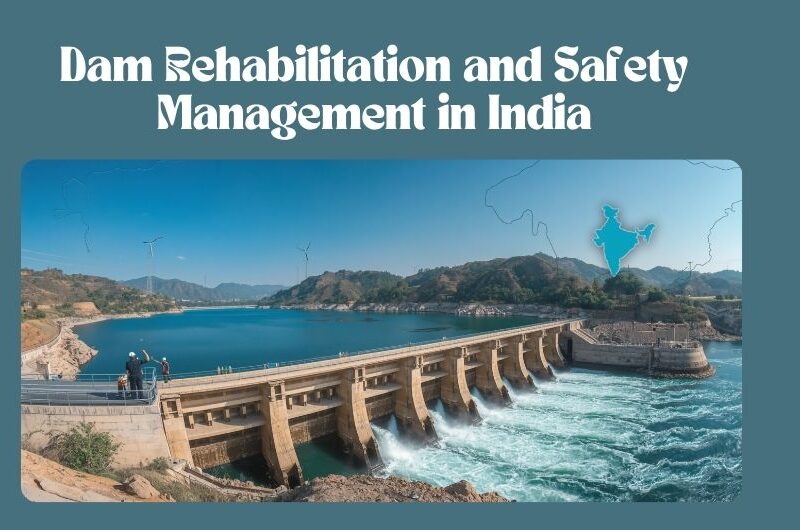
Dam Rehabilitation and Safety Management in India
1. India ranks as the world’s third-largest country in terms of large dams and currently has 6,628 specified dams, including 6,545 operational dams and 83 under construction.
2. The gross water storage capacity of India’s specified dams is approximately 330 billion cubic metres, making them vital for irrigation, hydropower, flood control, and water security.
3. Around 1,681 dams, or nearly 26% of India’s specified dams, are more than 50 years old, while 291 dams are over 100 years old.
4. The Kallanai (Grand Anicut) in Tamil Nadu is India’s oldest functioning dam and has remained operational for nearly 2,000 years.
5. State Governments own about 98.5% of India’s specified dams, accounting for 6,448 dams out of the total 6,628 specified dams.
6. Maharashtra has the highest number of specified dams in India, followed by Madhya Pradesh, Gujarat, Chhattisgarh, Rajasthan, Karnataka, and Odisha.
7. Analysis of 439 reservoirs by the Central Water Commission showed an average 19% loss in gross storage capacity due to sedimentation and ageing infrastructure.
8. The Dam Rehabilitation and Improvement Project (DRIP) Phase I was implemented from 2012 to 2021 with World Bank support and covered 223 dams across seven states.
9. DRIP Phase II and III were launched in October 2021 with a total project outlay of ₹10,211 crore and cover 736 dams across 19 states and three central agencies.
10. Rehabilitation proposals worth ₹5,053 crore have been approved under DRIP Phase II and III for 191 dams, while expenditure reached ₹2,225 crore by March 2025.
11. The Dam Safety Act, 2021 came into force on 30 December 2021 and provides a statutory framework for surveillance, inspection, operation, and maintenance of specified dams.
12. The Dam Safety Act established a four-tier institutional framework consisting of the National Committee on Dam Safety (NCDS), National Dam Safety Authority (NDSA), State Committees on Dam Safety (SCDS), and State Dam Safety Organisations (SDSOs).
13. All 6,628 specified dams in India have been registered on the Dam Health and Rehabilitation Monitoring Application (DHARMA) platform for digital monitoring and data management.
14. Around 13,000 dam inspections are conducted annually in India, and records are maintained digitally under the dam safety monitoring system.
15. Rapid Risk Screening has been completed for 5,553 specified dams, while the National Centre for Earthquake Safety of Dams has been established at MNIT Jaipur to strengthen dam safety and seismic resilience.
Must Know Terms :
1.DRIP (Dam Rehabilitation and Improvement Project)
DRIP is India’s flagship dam rehabilitation programme designed to improve the safety and operational performance of ageing dams. It focuses on structural repairs, spillway and gate modernisation, dam health inspections, Emergency Action Plans, instrumentation, and institutional capacity building. DRIP Phase I covered 223 dams, while Phases II and III cover 736 dams across 19 states and three central agencies.
2.Dam Safety Act, 2021
The Dam Safety Act, 2021 came into force on 30 December 2021 to provide a statutory framework for surveillance, inspection, operation, and maintenance of specified dams. It applies to dams above 15 metres in height and some dams between 10 and 15 metres meeting technical criteria. The Act makes dam safety compliance a legal obligation for dam owners.
3.DHARMA Platform
DHARMA stands for Dam Health and Rehabilitation Monitoring Application. It is a digital platform used for monitoring dam health, storing inspection records, and supporting data-based dam safety management. All 6,628 specified dams in India have been registered on DHARMA. The platform helps improve transparency, real-time monitoring, risk assessment, and systematic planning of rehabilitation measures.
4. National Dam Safety Authority
National Dam Safety Authority (NDSA) is the regulatory and implementing authority under the Dam Safety Act, 2021. It implements policies, guidelines, and standards framed by the National Committee on Dam Safety. NDSA supports proper surveillance, inspection, and maintenance of specified dams and helps ensure uniform safety practices across dam-owning states and institutions in India.
5. Early Warning System
Early Warning System (EWS) is an essential dam safety mechanism used to alert authorities and communities about possible dam-related risks, floods, or emergency situations. The Dam Safety Act mandates EWS installation as part of dam safety planning. It helps reduce disaster risk, supports timely evacuation, and improves preparedness against dam failure, extreme rainfall, and sudden water releases.
6. National Committee on Dam Safety
National Committee on Dam Safety (NCDS) is the apex policy body created under the Dam Safety Act, 2021. It frames policies and recommends regulations to maintain uniform dam safety standards across India. Since its constitution in February 2022, NCDS has held several meetings and has played a key role in strengthening India’s dam safety regulatory framework.
India stands 3rd in terms of Large Dams worldwide, with 6628 Specified dams. Over 26% of dams are more than 50 years old, necessitating systematic rehabilitation and safety upgrades. The Dam Rehabilitation and Improvement Project (DRIP) is being implemented in phases to improve dam safety and operational performance. The Dam Safety Act, 2021, provides surveillance, inspection, operation, and maintenance of the specified dam for the prevention of dam failure-related disasters. It also provides an institutional mechanism to ensure their safe functioning and for matters connected therewith or incidental thereto. Digital platforms such as DHARMA, along with instrumentation and Early Warning Systems, are strengthening real-time monitoring and data-driven dam safety management.
MCQ:
1. With reference to dams in India, consider the following statements:
1. India ranks third in the world in terms of large dams.
2. India has more than 6,600 specified dams.
3. More than 25% of India’s specified dams are over 50 years old.
How many of the above statements are correct?
A) Only one
B) Only two
C) All three
D) None
2. The gross water storage capacity of India’s specified dams is approximately:
A) 220 billion cubic metres
B) 330 billion cubic metres
C) 450 billion cubic metres
D) 550 billion cubic metres
3. The Kallanai (Grand Anicut), regarded as India’s oldest functioning dam, is located in:
A) Karnataka
B) Andhra Pradesh
C) Kerala
D) Tamil Nadu
4. Which state has the highest number of specified dams in India?
A) Gujarat
B) Maharashtra
C) Madhya Pradesh
D) Rajasthan
5. The average loss in gross storage capacity observed in 439 reservoirs analysed by the Central Water Commission was:
A) 9%
B) 14%
C) 19%
D) 24%
6. DRIP Phase I was implemented during:
A) 2005–2012
B) 2010–2018
C) 2012–2021
D) 2021–2026
7. DRIP Phase I covered how many dams?
A) 123
B) 223
C) 323
D) 423
8. DRIP Phase II and III together cover:
A) 536 dams
B) 636 dams
C) 736 dams
D) 836 dams
9. DRIP Phase II and III were launched in:
A) 2018
B) 2019
C) 2020
D) 2021
10. The Dam Safety Act came into force on:
A) 26 January 2021
B) 15 August 2021
C) 30 December 2021
D) 1 January 2022
11. Which of the following is the apex policy body under the Dam Safety Act, 2021?
A) NDSA
B) SDSO
C) NCDS
D) CWC
12. The National Dam Safety Authority (NDSA) functions as:
A) A financing agency for dam construction
B) A regulatory and implementing authority
C) A hydropower generation agency
D) A river basin authority
13. DHARMA stands for:
A) Dam Hazard Risk Monitoring Application
B) Dam Hydrology and Reservoir Management Authority
C) Dam Health and Rehabilitation Monitoring Application
D) Dam Hazard Rehabilitation and Monitoring Agency
14. Approximately how many dam inspections are conducted annually in India?
A) 5,000
B) 8,000
C) 10,000
D) 13,000
15. Rapid Risk Screening has been completed for approximately how many specified dams?
A) 3,553
B) 4,553
C) 5,553
D) 6,553




0 comment