Best UPSC and MPPSC IAS Coaching Classes in Gwalior

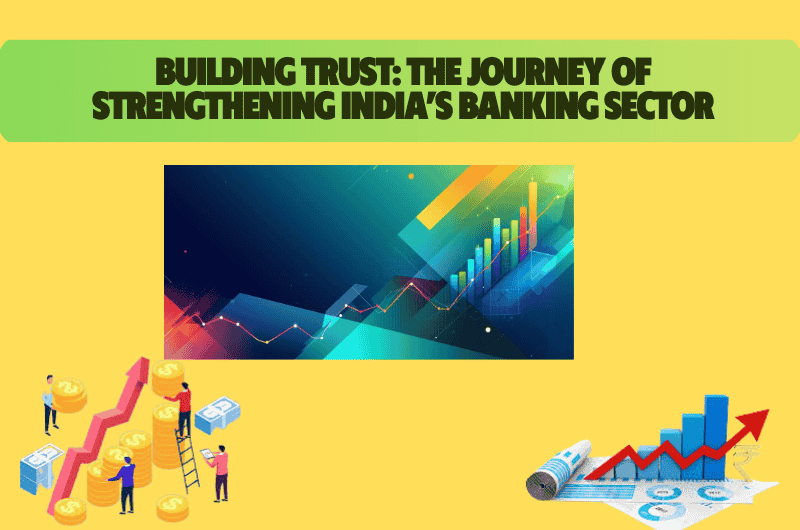
Building Trust: The Journey of Strengthening India’s Banking Sector

Building Trust: The Journey of Strengthening India’s Banking Sector     Expansion of Banking Activity Between 2015 and 2025, India’s banking system witnessed substantial expansion in both deposits and credit. Domestic deposits increased from about ₹88 lakh crore to over ₹231 lakh crore, while bank credit rose from nearly ₹67 lakh crore to more than ₹181 lakh crore. This growth reflects rising financial deepening, greater household participation, and increased flow of credit to productive sectors across the economy.   Improvement in Capital Adequacy The capital position of banks strengthened consistently over the decade. The overall Capital to Risk-Weighted Assets Ratio rose from around 13 percent in 2015 to over 17 percent by March 2025, while core equity capital also improved significantly. Higher capital buffers enhanced banks’ resilience against shocks and supported sustainable credit growth.   Correction of Asset Quality Stress The banking sector faced severe asset quality stress around 2018 following transparent recognition of stressed loans. Gross non-performing assets peaked at over 11 percent, driven by earlier aggressive lending, economic slowdown, and governance issues. Subsequently, sustained corrective measures led to a sharp decline in bad loans, with gross NPAs falling to nearly 2 percent by March 2025, marking the healthiest position in two decades.   Resolution and Structural Reforms A comprehensive approach focusing on recognition, resolution, recapitalisation, and reforms transformed balance sheets. Mechanisms such as structured asset reviews, time-bound insolvency resolution, bank recapitalisation, and consolidation reduced stressed assets substantially. The merger of multiple public sector banks improved scale, efficiency, and risk management capabilities.   Revival of Profitability With cleaner balance sheets and improved operational efficiency, bank profitability recovered strongly. Return on assets and return on equity moved from negative territory during the stress period to robust positive levels by 2024–25. This turnaround indicates stronger earnings capacity and improved internal capital generation.   Performance of Public Sector Banks Public sector banks recorded notable improvement in business volumes and profits. Total business expanded significantly, net profits rose sharply, and dividend payments increased. These trends indicate restored financial health and improved confidence in state-owned banks after years of weakness.   Overall System Performance The banking system as a whole achieved record aggregate profits in 2024–25, reflecting broad-based improvement across institutions. Early indicators for the subsequent financial year also point to sustained momentum, supported by stable asset quality and healthy credit demand.   Evolving Regulatory Framework The regulatory focus is shifting toward more forward-looking risk management. Proposed adoption of an expected credit loss–based provisioning framework aims to improve early recognition of stress and align domestic practices with international standards, strengthening long-term stability.   Future Priorities The next phase emphasizes stronger deposit mobilisation, productive corporate lending, expansion of green and renewable energy finance, deeper financial inclusion, targeted agricultural credit, global financial integration through international financial centres, and continuous improvement in customer service and digital banking experience. Multiple Choice Questions   Which trend best describes the change in domestic bank deposits in India between 2015 and 2025? Moderate growth with periodic contraction Continuous decline due to low savings Sharp expansion reflecting financial deepening Stagnation because of limited banking access   The rise in Capital to Risk-Weighted Assets Ratio mainly indicates: Reduced lending activity by banks Improved resilience and loss-absorption capacity Higher dependence on government borrowing Decline in operational efficiency   The peak in stressed assets around 2018 was primarily linked to: Sudden withdrawal of deposits Excessive exposure to household loans Earlier aggressive lending and delayed recognition Strict provisioning norms introduced earlier   Which outcome best reflects improvement in asset quality by 2025? Increase in restructured standard assets Gross NPAs falling to historically low levels Sharp rise in write-offs without recovery Reduction in credit growth   Transparent recognition of stressed assets helped mainly by: Concealing weak loans temporarily Improving reported profits immediately Cleaning balance sheets for long-term stability Eliminating the need for regulatory oversight   The approach combining recognition, resolution, recapitalisation and reforms aimed to: Reduce competition in banking Restore balance sheet health systematically Limit lending to priority sectors Replace public sector banks   Consolidation of banks primarily contributed to: Reduced branch outreach Improved scale and operational efficiency Decline in customer confidence Higher dependence on foreign capital   The revival of profitability in banks was largely due to: Higher service charges alone Improved asset quality and efficiency Sharp reduction in workforce Suspension of lending operations   Movement of return on assets from negative to positive indicates: Increased risk-taking by banks Improved earnings from core activities Higher inflation adjustment Temporary accounting gains   Growth in public sector banks’ total business reflects: Reduced private sector participation Expansion in both deposits and credit Decline in non-banking finance Exclusive focus on rural lending   Rising dividend payouts by banks generally suggest: Weak capital position Improved profitability and confidence Declining asset quality Regulatory compulsion   Record aggregate profits of the banking system indicate: Uniform performance across all sectors Broad-based recovery and stability Elimination of credit risk Complete absence of stressed assets   A shift toward expected credit loss provisioning focuses on: Backward-looking assessment of defaults Early and forward-looking risk recognition Reduction in capital requirements Elimination of loan classification norms   Strengthening deposit mobilisation is important mainly to: Reduce customer base Support sustainable credit growth Increase speculative lending Replace capital adequacy norms   Future banking priorities increasingly emphasize lending to: Only traditional manufacturing sectors Renewable and sustainable energy activities Informal money markets Short-term consumption loans  

More Details
DHRUV64: India’s First 1.0 GHz, 64-bit dual-core Microprocessor

DHRUV64: India’s First 1.0 GHz, 64-bit dual-core Microprocessor         Overview of DHRUV64 Microprocessor   India has achieved an important milestone in its semiconductor journey with the development of DHRUV64, the country’s first fully indigenous 1.0 GHz, 64-bit dual-core microprocessor. Developed by the Centre for Development of Advanced Computing under the Microprocessor Development Programme, DHRUV64 provides India with a reliable domestic processor platform capable of supporting both strategic and commercial requirements. It marks a clear advancement toward technological self-reliance in advanced chip design.     Technical Characteristics and Use Cases   DHRUV64 is built on modern processor architecture that offers higher efficiency, improved multitasking capability and enhanced operational reliability. Its design enables smooth integration with a wide range of external hardware systems. This flexibility makes it suitable for deployment in telecommunications infrastructure, automotive electronics, industrial automation, consumer devices and Internet-of-Things applications, aligning domestic processor capability with contemporary global technology standards.     Strategic Importance for India   The development of DHRUV64 strengthens India’s indigenous semiconductor ecosystem and supports national digital infrastructure security. India accounts for a significant share of global microprocessor consumption, and the availability of a domestically designed processor reduces long-term dependence on external suppliers. DHRUV64 builds upon earlier indigenous processor initiatives such as SHAKTI, AJIT, VIKRAM and THEJAS, collectively forming the foundation of a self-sustaining national processor ecosystem.     Contribution to Research and Innovation   DHRUV64 provides startups, academic institutions and industry with a cost-effective platform to design, test and scale computing systems using indigenous technology. It enables experimentation with new system architectures without reliance on foreign intellectual property. This supports innovation, strengthens research capabilities and helps expand the pipeline of skilled semiconductor professionals within the country.     Role of Open Architecture and RISC-V   The processor has been developed within the Digital India RISC-V framework, which promotes open instruction-set architecture. RISC-V eliminates licensing costs and encourages collaborative development through shared standards and tools. This approach supports the creation of a comprehensive portfolio of indigenous processors and facilitates cooperation across research organisations, startups and industry, accelerating ecosystem growth.     Institutional and Programme Support   India’s progress in processor development is backed by coordinated institutional support and national programmes focused on policy guidance, funding and long-term planning. These initiatives strengthen chip design capability, provide access to fabrication infrastructure, encourage large-scale investment and build human resource capacity. Together, they integrate research, innovation and industry participation into a sustainable semiconductor ecosystem.     Overall Significance   The rollout of DHRUV64 demonstrates India’s growing ability to design, develop and prototype advanced microprocessors using domestic expertise and resources. The transition from earlier processor designs to DHRUV64, along with the development of future processors, reflects a structured and confident pathway toward technological self-reliance. By combining open architecture, institutional backing and a strong talent base, India is steadily strengthening its position in advanced semiconductor technologies.   MCQ: DHRUV64 is best described as which one of the following? (a) A domestically assembled foreign-designed processor (b) A fully indigenous 1.0 GHz, 64-bit dual-core microprocessor (c) A graphics processing unit for consumer electronics (d) A prototype chip limited to academic research only   DHRUV64 was developed under which institutional arrangement? (a) A private industry consortium (b) A joint foreign–Indian venture (c) A defence-only classified programme (d) A national programme led by a public research organisation   Which organisation played a central role in the design and development of DHRUV64? (a) Semiconductor Lab, Mohali (b) Indian Space Research Organisation (c) Centre for Development of Advanced Computing (d) National Informatics Centre   The primary objective behind developing DHRUV64 is to: (a) Compete in low-cost consumer chip markets (b) Achieve technological self-reliance in advanced processor design (c) Replace all imported electronics immediately (d) Focus exclusively on space missions   Which of the following sectors can directly benefit from the deployment of DHRUV64? (a) Only defence manufacturing (b) Telecommunications, automotive and industrial systems (c) Agriculture extension services alone (d) Banking and insurance software platforms only   One key architectural advantage of DHRUV64 is its ability to: (a) Eliminate the need for external hardware interfaces (b) Operate without an operating system (c) Integrate smoothly with diverse hardware systems (d) Replace high-end supercomputers   The strategic significance of DHRUV64 mainly lies in: (a) Increasing software exports (b) Reducing dependence on imported microprocessors (c) Expanding consumer electronics imports (d) Replacing traditional manufacturing industries   DHRUV64 builds upon earlier indigenous processor initiatives such as: (a) PARAM, VEGA and AGNI (b) SHAKTI, AJIT, VIKRAM and THEJAS (c) BHARAT, ARJUN and NAG (d) GAGAN, IRNSS and NAVIC   Which group is most directly enabled by DHRUV64 for low-cost experimentation and innovation? (a) Only large multinational corporations (b) Foreign semiconductor manufacturers (c) Startups, academia and domestic industry (d) Financial institutions and service providers   The development of DHRUV64 particularly strengthens which aspect of the national ecosystem? (a) Chip-design skills and research capacity (b) Textile and garment manufacturing (c) Mining and raw material extraction (d) Traditional handicraft industries   DHRUV64 has been developed within a framework that promotes which type of architecture? (a) Proprietary closed-source instruction sets (b) Licensed architectures with high royalty costs (c) Open instruction-set architecture (d) Military-restricted architectures only   A major advantage of using open architecture for processor development is: (a) Complete elimination of fabrication costs (b) Freedom from licensing fees and wider collaboration (c) Automatic dominance in global chip markets (d) Guaranteed commercial success   Institutional and programme support for DHRUV64 primarily contributes to: (a) Short-term import substitution only (b) Integration of research, industry and skill development (c) Expansion of non-electronic sectors (d) Reduction of higher education enrolment   The progression from earlier processors to DHRUV64 indicates: (a) Fragmented and uncoordinated development efforts (b) Dependence on external technology providers (c) A structured and long-term technological roadmap (d) Focus on experimental prototypes without deployment   Overall, DHRUV64 reflects India’s growing capability to: (a) Manufacture consumer gadgets at scale (b) Design, develop and prototype advanced microprocessors domestically (c) Eliminate the need for global semiconductor cooperation (d) Shift entirely away from digital

More Details

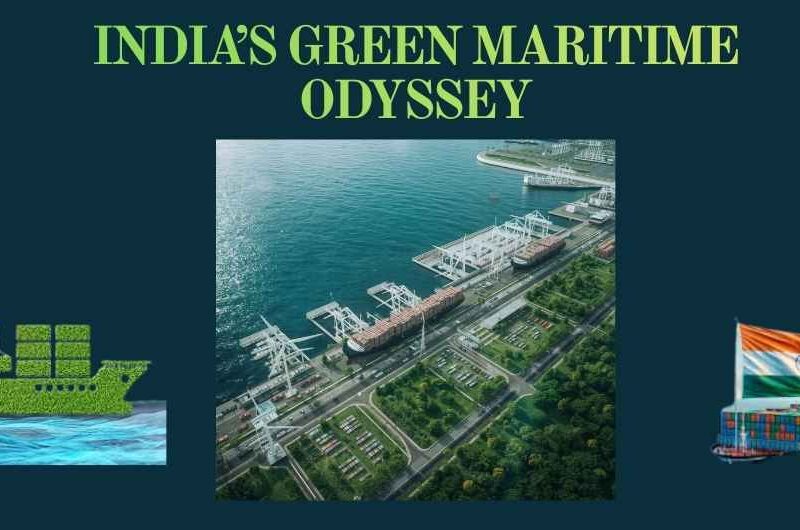
India’s Green Maritime Odyssey

India’s Green Maritime Odyssey     India is transitioning its maritime sector towards sustainability to balance economic growth with environmental protection. With a long coastline rich in mangroves, coral reefs, lagoons, and biodiversity, ports are increasingly required to operate in alignment with global health, safety, and environmental standards. Renewable energy adoption, pollution control, waste management, and ecosystem protection have become central to port development.   Strategic Vision and Investments Maritime India Vision 2030 acts as a growth catalyst, projecting ₹3–3.5 lakh crore investment across ports, shipping, and inland waterways. Maritime Amrit Kaal Vision 2047 outlines a long-term roadmap with nearly ₹80 lakh crore investment for ports, green shipping, shipbuilding, coastal shipping, and inland waterways. Cargo handling at major ports reached 855 million tonnes (FY 2024–25), with port capacity expanding by nearly 87% over a decade. Average ship turnaround time has reduced to 48 hours, matching global benchmarks. Green Energy and Clean Fuels Ports are mandated to increase renewable energy use under Renewable Purchase Obligations. Solar energy deployment includes rooftop installations, unused land, and floating solar plants. Wind energy expansion is planned through onshore, offshore, and breakwater-based projects. Pilot projects are planned for tidal energy (Gulf of Cambay/Kutch) and wave energy. Clean fuels such as green hydrogen, ammonia, biofuels, and LNG are identified as future maritime fuels. National Green Hydrogen Mission Targets 5 million tonnes annual green hydrogen production by 2030. Expected to attract ₹8 lakh crore investment, create 6 lakh jobs, and reduce fossil fuel imports. Kandla, Paradip, and Tuticorin ports identified as green hydrogen hubs. Key Flagship Initiatives Harit Sagar – Green Port Guidelines (2023): Framework for carbon neutrality, ecosystem protection, and sustainable port development. Green Tug Transition Programme (2024): Shifts harbour tugs from fossil fuels to cleaner alternatives with financial support. Harit Nauka Initiative: Promotes green technologies in inland waterway vessels. Coastal Green Shipping Corridor: First corridor planned between Kandla and Tuticorin. Sagarmala Programme: 840 projects worth ₹5.8 lakh crore targeted for completion by 2035 to reduce logistics costs and enhance trade efficiency. Cleaner Port Operations Target of 50% vehicle transition to CNG, LNG, or electric by 2030. Shore-to-ship power to reduce emissions during berthing. Electrification of port equipment in two phases covering cranes and cargo-handling vehicles. LNG bunkering promoted due to lower emissions, compliance with global sulphur norms, and cost advantages. Dust and air pollution monitoring systems being expanded across ports. Green Belts and Environmental Protection Green belts act as carbon sinks, noise barriers, and biodiversity support systems. Environmental regulations mandate 33% green cover around ports. Focus on groundwater recharge, erosion control, coastal protection, and pollution absorption. Legal and Institutional Reforms Indian Ports Bill, 2025 replaces the colonial-era framework with modern global standards. Emphasises disaster preparedness, sustainability, and international competitiveness. Nine Indian ports now feature in the World Bank Container Port Performance Index. Global Partnerships and Dialogues Platforms such as Sagarmanthan promote global cooperation on blue economy and sustainable logistics. Green & Digital Maritime Corridors Dialogue held at JNPA, Mumbai. Collaboration with Singapore on green and digital shipping corridors. Green Shipping Conclave, Mumbai focused on decarbonisation and sustainable ship recycling. Marine Pollution Control Robust oil-spill response systems with satellite monitoring. Sensitivity mapping of mangroves, corals, beaches, and aquaculture zones. Coordination with naval and environmental agencies for rapid response. Conclusion India’s maritime sector is undergoing a structural transformation driven by green technology, clean fuels, digital innovation, and modern governance. By integrating sustainability with trade efficiency and global cooperation, the country is positioning itself as a responsible maritime power and long-term steward of ocean ecosystems.         MCQ:   India’s Green Maritime strategy primarily aims to balance economic growth with which of the following? (a) Expansion of naval power (b) Environmental protection and sustainability (c) Inland industrialisation (d) Defence logistics only   Which long-term roadmap outlines nearly ₹80 lakh crore investment for India’s maritime sector? (a) Sagarmala Programme (b) Maritime India Vision 2030 (c) Maritime Amrit Kaal Vision 2047 (d) Coastal Regulation Framework   Maritime India Vision 2030 primarily functions as a catalyst for: (a) Coastal tourism only (b) Ship recycling activities (c) Trade, investment, and employment (d) Fisheries development   Which clean fuel is identified as a future cornerstone for zero-emission maritime transport? (a) Diesel (b) Furnace oil (c) Green hydrogen (d) Naphtha   Under the green energy strategy, which innovative solar installation method is proposed for ports? (a) Desert solar farms (b) Floating solar plants on calm waters (c) Nuclear-powered solar units (d) Offshore thermal plants   Which three ports have been identified as green hydrogen hubs? (a) Mumbai, Kochi, Chennai (b) Kandla, Paradip, Tuticorin (c) Visakhapatnam, Ennore, Haldia (d) Mormugao, New Mangalore, Kamarajar   The target year for producing 5 million tonnes of green hydrogen annually is: (a) 2027 (b) 2028 (c) 2030 (d) 2047   The Harit Sagar Green Port Guidelines primarily focus on: (a) Increasing port tariffs (b) Achieving carbon neutrality with ecosystem protection (c) Expanding private port ownership (d) Promoting inland shipping exclusively   The Green Tug Transition Programme aims to replace: (a) Cargo ships (b) Passenger ferries (c) Harbour tugs using conventional fuels (d) Fishing vessels   The first Coastal Green Shipping Corridor is planned between: (a) Mumbai–Kochi (b) Chennai–Kolkata (c) Kandla–Tuticorin (d) Visakhapatnam–Paradip   Under Sagarmala Programme, the total number of projects planned by 2035 is: (a) 500 (b) 620 (c) 740 (d) 840   Indian ports aim to switch at least what percentage of vehicles to cleaner fuels by 2030? (a) 30% (b) 40% (c) 50% (d) 75%   Shore-to-ship power is mainly introduced to reduce: (a) Noise pollution in cities (b) Emissions from ships at berth (c) Inland water salinity (d) Cargo handling delays   Environmental regulations mandate approximately what proportion of green cover around ports? (a) 20% (b) 25% (c) 30% (d) 33%   The Indian Ports Bill, 2025 primarily seeks to: (a) Privatise all major ports (b) Replace outdated legal frameworks with modern global standards (c) Restrict foreign investment (d) Reduce coastal shipping activity    

More Details

National Social Assistance Programme

National Social Assistance Programme   The National Social Assistance Programme is a nationwide social security initiative introduced on 15 August 1995 to provide financial and food-based support to the most vulnerable sections of society living below the poverty line. Implemented by the Ministry of Rural Development, the programme covers both rural and urban areas and reflects the constitutional commitment to social justice by ensuring minimum income support and food security for citizens lacking stable livelihoods and social protection. Components and Coverage under NSAP NSAP currently supports more than 3.09 crore beneficiaries across the country through five major components: Indira Gandhi National Old Age Pension Scheme, Indira Gandhi National Widow Pension Scheme, Indira Gandhi National Disability Pension Scheme, National Family Benefit Scheme, and the Annapurna Scheme. Each State and Union Territory is allotted a scheme-wise ceiling on beneficiaries to maintain balanced implementation and fiscal discipline. Old Age, Widow, and Disability Pension Schemes Under the Indira Gandhi National Old Age Pension Scheme, elderly persons aged 60–79 years receive ₹200 per month as central assistance, while those aged 80 years and above receive ₹500 per month. States and Union Territories supplement this amount, leading to higher effective pensions in many regions. The Indira Gandhi National Widow Pension Scheme provides ₹300 per month to widows aged 40–79 years and ₹500 per month to those aged 80 years and above. The Indira Gandhi National Disability Pension Scheme supports persons with severe or multiple disabilities aged 18–79 years with ₹300 per month, increasing to ₹500 per month for beneficiaries aged 80 years and above. National Family Benefit and Annapurna Schemes The National Family Benefit Scheme offers a one-time financial assistance of ₹20,000 to below-poverty-line families in the event of the death of the primary breadwinner aged between 18 and 59 years, helping households manage immediate economic distress. The Annapurna Scheme addresses food security by providing 10 kilograms of food grains per month free of cost to elderly persons who are eligible for old age pension but are not receiving pension benefits. Implementation, Monitoring, and Disbursement Mechanism Beneficiary identification is undertaken at the grassroots level by Gram Panchayats and Municipalities to ensure local verification and inclusion. Benefits are primarily disbursed through Direct Benefit Transfer into bank or post office accounts, with limited provision for doorstep cash delivery in exceptional circumstances. States and Union Territories implement the schemes through designated departments and submit quarterly progress reports under a monitored framework. Budget Allocation and Digitisation Initiatives For the financial year 2025–26, the total budget allocation for NSAP is ₹9,652 crore, with the largest share directed toward old age pensions. The programme has been extensively digitised, with beneficiary details linked to Aadhaar and bank accounts and integrated with the Public Financial Management System to enhance transparency and reduce leakages. A mobile-based Digital Life Certification system has also been introduced to simplify annual verification and improve ease of access for beneficiaries. Overall Significance of NSAP The National Social Assistance Programme functions as a central pillar of India’s social security framework by providing sustained income support and food security to elderly persons, widows, persons with disabilities, and families facing sudden economic shocks. Through digitisation, direct transfers, and structured monitoring, the programme strengthens inclusive welfare delivery and contributes to a more equitable social safety net. MCQ :   The National Social Assistance Programme was introduced in which year? 1989 1991 1995 2000   The National Social Assistance Programme is implemented by which Union Ministry? Ministry of Social Justice and Empowerment Ministry of Home Affairs Ministry of Rural Development Ministry of Finance   The primary objective of the National Social Assistance Programme is to provide: Employment opportunities Social security to vulnerable citizens Skill development support Housing assistance   NSAP is applicable to beneficiaries belonging to which category? Below Poverty Line households All rural households Urban informal workers Scheduled Caste households only   Which of the following is NOT a component of NSAP? Indira Gandhi National Old Age Pension Scheme Indira Gandhi National Widow Pension Scheme Pradhan Mantri Jeevan Jyoti Bima Yojana National Family Benefit Scheme   Under IGNOAPS, individuals aged 80 years and above receive central assistance of: ₹300 per month ₹400 per month ₹500 per month ₹600 per month   Under IGNWPS, widows between 40–79 years receive central assistance of: ₹200 per month ₹250 per month ₹300 per month ₹500 per month   Indira Gandhi National Disability Pension Scheme provides assistance to persons with: Any physical disability Temporary disability Severe or multiple disabilities Occupational injuries only   The age group eligible under the National Family Benefit Scheme is: 18–59 years 21–60 years 40–79 years 60 years and above   The lump-sum assistance provided under NFBS is: ₹10,000 ₹15,000 ₹20,000 ₹25,000   Under the Annapurna Scheme, eligible beneficiaries receive food grains per month: 5 kg 8 kg 10 kg 12 kg   Identification of beneficiaries under NSAP is primarily done by: District Collector State Secretariat Gram Panchayats and Municipalities Central Government agencies   The preferred mode of benefit disbursement under NSAP is: Cash payments Cheque payments Direct Benefit Transfer Smart card system   For the year 2025–26, the total budget allocation for NSAP is approximately: ₹6,500 crore ₹8,200 crore ₹9,652 crore ₹11,000 crore   Digitisation of NSAP beneficiaries primarily aims to: Increase pension amounts Reduce beneficiary numbers Improve transparency and prevent duplication Replace state governments’ role  

More Details

Culture to Pride, Progress in Every Step

Culture to Pride, Progress in Every Step     Core Vision Over the last 11 years, India has pursued a culture-led development model that combines heritage conservation, spiritual revival, infrastructure expansion, inclusivity, and global cultural outreach, while integrating modern technology, tourism, and economic growth.   Heritage Revival & Temple Infrastructure Major temple corridors and pilgrimage sites have been redeveloped to enhance access, safety, and spiritual ambience. Key projects include Kashi Vishwanath Corridor, Mahakaal Lok (Ujjain), Ram Mandir (Ayodhya), Kedarnath redevelopment, Kamakhya Temple, and Somnath–Parvati Mandir complex. These projects combine heritage conservation with urban renewal, crowd management, and pilgrim facilities.   Pilgrimage Connectivity & Religious Circuits Char Dham Highway Project: 825 km network; 616 km completed (as of July 2024). Hemkund Sahib Ropeway: 12.4 km, ₹2,730.13 crore, approved by CCEA. Buddhist Circuit developed across multiple states with focused investments: Bihar, Uttar Pradesh, Madhya Pradesh, Andhra Pradesh, Gujarat. Kartarpur Sahib Corridor inaugurated on 9 November 2019 enabling Sikh pilgrimage access.   Inclusive Heritage Development Schemes PRASHAD Scheme: Nearly ₹1,900 crore invested for multi-faith pilgrimage rejuvenation. Swadesh Darshan: ₹5,292.91 crore for 76 projects; Swadesh Darshan 2.0 approved 34 projects (2023–25). HRIDAY Scheme: Development of 12 heritage cities. Focus on inclusivity across temples, mosques, churches, shrines, and sacred landscapes.   Tourism & Economic Impact Foreign Tourist Arrivals (2024): 9.66 million. Foreign Exchange Earnings: ₹2,77,842 crore. Cultural infrastructure upgrades have directly supported tourism growth and local livelihoods.   Repatriation of Cultural Artefacts Pre-2013: Only 13 antiquities returned. Since 2014: 642 antiquities traced. USA alone returned 578 artefacts since 2016, the highest by any country. Major returns occurred during PM visits in 2016, 2021, and 2023.   Recognition of Nation Builders Azadi Ka Amrit Mahotsav (12 March 2021 – 15 August 2022): Nationwide commemoration of 75 years of Independence. Creation of museums, statues, memorials, and cultural spaces celebrating diverse contributors.   National Memorials & Cultural Landmarks Pradhan Mantri Sangrahalaya (2022). National War Memorial (2019). National Police Memorial (2018). Jallianwala Bagh Memorial (2019). Tribal Freedom Fighter Museums: 11 museums. Bharat Mandapam (2023): World’s tallest Ashtadhatu Nataraja statue. New Parliament House (2023): Sengol installation, Constitution Hall, sustainable design.   Cultural Integration & Spiritual Unity Ek Bharat Shreshtha Bharat launched on 31 October 2016. Kashi Tamil Sangamam (1.0, 2.0, 3.0) strengthened civilisational ties. Large-scale observances of Sikh Guru Prakash Parvs. Global Buddhist Summit highlighted relevance of the Eightfold Path. Mahakumbh 2025: Over 66 crore participants.   Legal & Governance Reform Waqf (Amendment) Act, 2025: Centralised digitisation. Online portal. Enhanced transparency and accountability.   Media, Innovation & Soft Power WAVES 2025 (Mumbai): Delegates from 100+ countries. ₹1,300 crore business deals. ₹8,000 crore MoUs (Maharashtra). WAVEX startup platform; global tech partnerships (Adobe, Google, NVIDIA).   Yoga & Ayurveda as Global Connectors International Day of Yoga Proposed at UNGA: 27 Sept 2014. First observed: 21 June 2015. 2023 participation: ~23.4 crore globally. 2025 Theme: “Yoga for One Earth, One Health”. Ayurveda Globalisation WHO Global Traditional Medicine Centre at Jamnagar. Traditional medicine included in ICD-11. 24 country-level & 48 institute-level MoUs. Ayush Information Cells in 35 countries. Ayush Visa and Heal in India initiatives. Ayurveda Day 2024 celebrated in 150 countries.   UNESCO Heritage Expansion India now has 43 World Heritage Sites and 62 tentative sites. Latest addition (2024): Moidams of Ahom Dynasty (Assam). Heritage preservation linked with education, tourism, and identity-building.   Conclusion India’s cultural policy over the last decade integrates heritage revival, infrastructure, inclusivity, tourism economics, global soft power, and civilisational confidence. Culture has been positioned not as a static legacy but as a dynamic driver of national unity, global engagement, and sustainable development.   MCQ:     Q1. With reference to India’s culture-led development approach over the last 11 years, consider the following components: Heritage conservation Spiritual revival Infrastructure expansion Global cultural outreach Which of the above are included in the core vision? (a) 1 and 2 only (b) 1, 2 and 3 only (c) 1, 2, 3 and 4 (d) 2 and 4 only   Q2. Which of the following projects are examples of redevelopment of major temple corridors? Kashi Vishwanath Corridor Mahakaal Lok, Ujjain Ram Mandir, Ayodhya Somnath–Parvati Mandir complex Select the correct answer: (a) 1 and 2 only (b) 1, 2 and 3 only (c) 1, 3 and 4 only (d) 1, 2, 3 and 4   Q3. The Char Dham Highway Project aims to improve connectivity to which of the following pilgrimage sites? Yamunotri Gangotri Kedarnath Badrinath Select the correct answer: (a) 1 and 2 only (b) 2 and 3 only (c) 1, 3 and 4 only (d) 1, 2, 3 and 4   Q4. The Hemkund Sahib Ropeway project is best described by which of the following features? (a) 8.6 km length and PPP model (b) 12.4 km length approved by CCEA (c) 15 km length under Swadesh Darshan (d) 10 km length funded under PRASHAD   Q5. The Buddhist Circuit development programme has received focused investments in which of the following states? Bihar Madhya Pradesh Kerala Andhra Pradesh Select the correct answer: (a) 1 and 2 only (b) 1, 2 and 4 only (c) 2 and 3 only (d) 1, 3 and 4 only   Q6. The Kartarpur Sahib Corridor is significant because it: (a) Connects India to Nepal for Buddhist pilgrims (b) Enables Sikh pilgrims to access Gurdwara Darbar Sahib (c) Is part of the Char Dham Highway Project (d) Was developed under the HRIDAY scheme   Q7. With reference to PRASHAD and Swadesh Darshan schemes, consider the following statements: PRASHAD focuses on rejuvenation of pilgrimage destinations. Swadesh Darshan supports thematic tourism circuits. HRIDAY focuses exclusively on rural pilgrimage sites. Which of the statements given above are correct? (a) 1 and 2 only (b) 2 and 3 only (c) 1 and 3 only (d) 1, 2 and 3   Q8. Which of the following correctly represents tourism outcomes in 2024? (a) 6.5 million foreign tourists and ₹1.9 lakh crore earnings (b) 9.66 million foreign tourists and ₹2,77,842 crore earnings (c) 12 million foreign tourists and ₹3.5 lakh crore earnings (d) 7.8 million

More Details

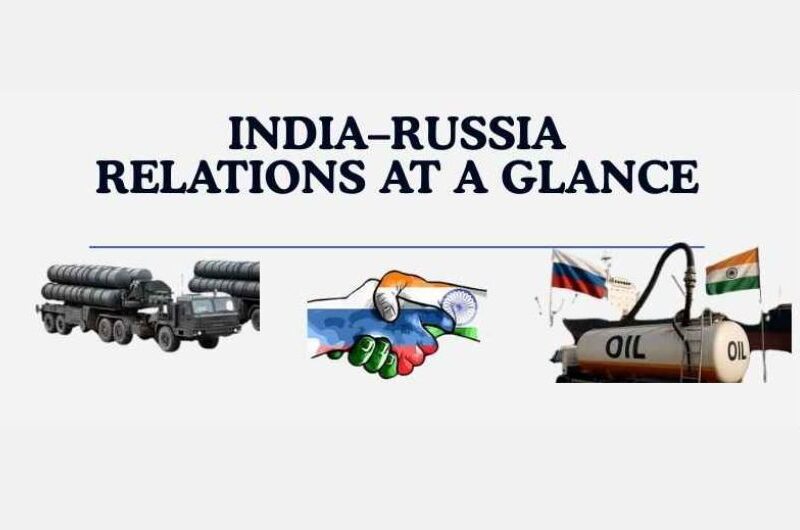
 India-Russia Relations at a Glance

 India-Russia Relations at a Glance   Overview of the Partnership India and Russia share an enduring, time-tested relationship strengthened over 78 years. The 2000 “Strategic Partnership” and the 2010 elevation to a “Special and Privileged Strategic Partnership” institutionalised cooperation across political, defence, economic, nuclear, space, science, culture and multilateral domains. The Intergovernmental Commission (IRIGC) operates at two levels: IRIGC-TEC (economic, scientific, cultural) and IRIGC-M&MTC (military & technical).   Key Developments in 2025 India and Russia pushed to accelerate the USD 100 billion bilateral trade target by 2030, including progress on the India-EAEU FTA. INDRA-2025 naval exercises (March–April 2025) reinforced operational defence cooperation. Sectoral dialogues in 2025 deepened ties, including maritime consultations (Nov 2025) and Russia’s participation in India Energy Week. Two new Indian consulates planned in Kazan and Yekaterinburg.   Political and Diplomatic Engagement Annual Summits are the highest-level mechanism (23rd Summit in Dec 2025). Frequent high-level contacts: PM–President meetings at BRICS, SCO; NSA-level strategic dialogues; multiple ministerial meetings (EAM–Lavrov). India emphasised dialogue and diplomacy on Ukraine; raised concerns over Indians recruited into Russian forces. Regular trilateral/multilateral coordination in BRICS, SCO, G20, UN; Russia consistently supports India’s UNSC permanent seat bid.   Economic Relations Bilateral Trade Record USD 68.7 billion trade in FY 2024–25. Exports (USD 4.9 bn): pharma, chemicals, iron & steel, marine products. Imports (USD 63.8 bn): crude oil, petroleum products, sunflower oil, fertilizers, coking coal, precious stones. Strategic Targets USD 100 bn trade by 2030, USD 50 bn mutual investments by 2025. Progress on India–EAEU FTA; focus on resolving tariff and logistics barriers, payment mechanisms, and promoting connectivity (NSTC, Chennai–Vladivostok corridor).   Defence and Military-Technical Cooperation Defence remains the strongest pillar of the India–Russia partnership. Framework 10-year Defence Cooperation Programme (2021–2031) covering joint R&D, production, maintenance, and technology transfer. Major Platforms and Projects BrahMos: Jointly developed supersonic cruise missile; key symbol of collaboration. Sukhoi Su-30MKI: Licensed production by HAL. T-90S Bhishma tanks: Assembled in India. S-400 Triumf system procured. INS Vikramaditya, submarines, engines and spares from Russia. AK-203 rifles manufactured under Indo-Russia Rifles Pvt. Ltd. (U.P.). Exercises INDRA-2025 (Army/Navy/Air Force) in Rajasthan and Bay of Bengal. Participation in Zapad-2025 strategic exercises. Multiple meetings under IRIGC-M&MTC.   Science, Technology and Nuclear Cooperation Cooperation spans basic sciences, materials science, mathematics, nanotechnology, space and energy. Kudankulam Nuclear Power Plant (Tamil Nadu) is India’s only foreign-assisted nuclear power project. Collaboration under the Gaganyaan human spaceflight program, including astronaut training in Russia. The 2021 STI Roadmap focuses on innovation, technology commercialization and joint R&D.   Education and Cultural Exchange Education Around 20,000 Indian students study in Russia, mostly in medicine. Cooperation mechanisms include: Educational Exchange Programme (EEP) RIN network (universities collaboration) SPARC, GIAN Indology and Hindi/Sanskrit/Pali taught in several Russian institutions. Russia participates actively in India’s ITEC scholarship programme. Culture Centuries-old cultural ties: Afanasy Nikitin’s travels, yoga popularity, Indian cinema influence. 2025 saw major cultural events: Bharat Utsav festival in Moscow (850,000 visitors) Indian Film Festival across five regions Yoga Day celebrations in 60+ Russian regions Russia hosted relics of Lord Buddha (Kalmykia, 2025)   Parliamentary Cooperation The Inter-Parliamentary Commission (Lok Sabha–State Duma) meets regularly; last major engagements in 2024–2025. Delegations exchanged views on terrorism, global politics, and bilateral cooperation.   Connectivity and Multilateral Engagement Major connectivity corridors shaping future cooperation: International North–South Transport Corridor (INSTC) Chennai–Vladivostok Eastern Maritime Corridor Northern Sea Route Russia supports India’s BRICS 2026 chairship priorities.   Conclusion India–Russia relations remain durable, diversified and strategically important. The relationship is evolving beyond traditional defence-centric ties to include energy, nuclear, space, maritime connectivity, science, technology, higher education, and cultural diplomacy. The emerging synergy aligns Russia’s pivot to the East with India’s Atmanirbhar Bharat and Make in India objectives, shaping a long-term partnership anchored in multipolarity, stability and mutual strategic trust.           In which year was the India–Russia “Special and Privileged Strategic Partnership” established? 1998 2000 2005 2010   What is the bilateral trade target set by India and Russia for 2030? USD 50 billion USD 75 billion USD 100 billion USD 150 billion   IRIGC-TEC deals with cooperation in which area? Only defence Only nuclear energy Trade, economic, scientific and cultural cooperation Only foreign policy   The INDRA-2025 exercise was conducted between which two countries? India–USA India–Japan India–France India–Russia   India–Russia bilateral trade in FY 2024–25 reached approximately: USD 18.7 billion USD 28.7 billion USD 48.7 billion USD 68.7 billion   Which of the following is the major component of India’s imports from Russia? Pharmaceuticals Marine products Crude oil and petroleum products Electronic machinery   The BrahMos missile project represents what form of cooperation? Pure procurement Joint research and development Only licensed production Only training   The 2021–2031 India–Russia defence cooperation programme focuses primarily on: Defence imports Border management Joint R&D, production and maintenance Strategic communications   Kudankulam Nuclear Power Plant in Tamil Nadu has been established with the cooperation of: Japan France Russia USA   Approximately how many Indian students study in Russia? 5,000 10,000 20,000 40,000   The “2+2 Dialogue” between India and Russia is held at the level of: Finance and Agriculture Ministers Foreign and Defence Ministers Culture and Education Ministers Energy and Science Ministers   The International North–South Transport Corridor aims to improve connectivity between: Europe and Africa India and Russia through passenger travel India–Russia–Iran freight connectivity Indian Ocean maritime security   Russia’s stance on India’s candidature for a permanent seat in the UN Security Council is: Opposed Neutral Limited support Consistent support   AK-203 rifles are produced in India through which collaboration? HAL DRDO–Mitsubishi JV Indo-Russia Rifles Private Limited BHEL–Rosatom JV   The 2025 “Bharat Utsav” cultural festival was a major success in which city? St. Petersburg Vladivostok Kazan Moscow    

More Details

Export Promotion Mission

Export Promotion Mission   Introduction The Export Promotion Mission (EPM) is a unified national framework designed to strengthen India’s export ecosystem through coordinated financial and non-financial support. With an outlay of ₹25,060 crore for 2025–26 to 2030–31, the Mission integrates multiple schemes into a single digital system to improve competitiveness, market readiness and export capacity. Purpose and Policy Rationale • Enhances access to affordable trade finance and reduces credit constraints for exporters. • Supports compliance with global standards through testing, certification and quality upgrades. • Strengthens export branding, logistics and market-access facilitation. • Addresses disadvantages faced by exporters in interior and low-export-intensity districts. • Builds a streamlined, adaptive, digitally governed system for faster and transparent delivery. Mission Structure • Anchored by the Department of Commerce with coordination across MSME, Finance and state governments. • DGFT functions as the implementing agency through a dedicated online platform. • Export Promotion Councils, Commodity Boards and financial institutions form the supporting network. Two Integrated Sub-Schemes Niryat Protsahan (Financial Enablers) Interest subvention on pre- and post-shipment credit. • Export factoring, deep-tier financing and credit cards for e-commerce exporters. • Collateral support and credit enhancement for riskier or new markets. • Financial assistance designed to ease liquidity constraints for MSMEs. Niryat Disha (Non-Financial Enablers) Assistance for quality certification, global compliance and product testing. • Branding, packaging and marketing support in international markets. • Support for participation in trade fairs and buyer–seller meets. • Logistics, warehousing help and transport reimbursements for remote districts. • Capacity-building at cluster, association and district levels. Credit Guarantee Scheme for Exporters • Provides up to ₹20,000 crore of additional credit support through 100% government guarantee. • Enables collateral-free loans and additional working capital up to 20%. • Aims to strengthen liquidity for exporters exploring new markets. RBI’s Trade Relief Measures (2025) • Moratorium on instalments and deferment of working-capital interest from September to December 2025. • Export credit tenure extended to 450 days for eligible loans. • Flexibility in working capital through reduced margins and reassessed limits. • Relief period excluded from asset-classification norms. • FEMA amendments extend export realisation to 15 months and shipment period against advance to 3 years. Sectoral and Regional Coverage • Focus on sectors facing tariff pressures: textiles, leather, gems and jewellery, engineering goods and marine products. • Emphasis on MSMEs, first-time exporters and labour-intensive industries. • Targeted support for districts with low export intensity to widen geographic participation. Digital Governance • Application, approval and disbursal fully managed through a paperless DGFT platform. • Integrated data architecture aligns with customs and trade systems. • Outcome-based monitoring ensures timely implementation and continuous adjustment to global trade developments. Expected Outcomes • Expanded access to trade finance for small and medium exporters. • Greater readiness for global markets through improved compliance and quality systems. • Stronger international visibility and branding of Indian products. • Increased export activity from interior and emerging districts. • Broader employment generation across manufacturing, logistics and allied sectors.         MCQ:   Which institution serves as the implementing agency for the Export Promotion Mission? NITI Aayog Directorate General of Foreign Trade Reserve Bank of India Ministry of MSME   The total outlay of the Export Promotion Mission for 2025–26 to 2030–31 is: ₹12,560 crore ₹20,000 crore ₹25,060 crore ₹30,500 crore   The Mission replaces multiple export-support schemes with: State-level monitoring cells A unified, digitally driven framework Private export management firms A centralised customs network   Niryat Protsahan focuses primarily on: Branding assistance Compliance training Financial enablers Export warehousing   Interest subvention and export-factoring support are part of: Niryat Disha CGSE Niryat Protsahan RBI Relief Measures   Niryat Disha provides support for: Deep-tier financing Inland transport reimbursement Credit guarantee coverage Moratorium on repayments   Under the expanded Credit Guarantee Scheme for Exporters, the government guarantee offered is: 50% 75% 90% 100%   The RBI’s Trade Relief Measures allow extension of export credit tenure to: 180 days 270 days 360 days 450 days   The FEMA amendment extended export realisation period from nine months to: 10 months 12 months 15 months 18 months   Under the Mission, priority is given to sectors affected by tariff escalations, including: Automobile components Pharmaceuticals Textiles and leather Renewable energy equipment   Niryat Disha specifically supports exporters in: Coastal zones High-export-intensity districts only Interior and low-export-intensity districts Exclusive economic zones   The digital platform for Mission implementation is aligned with: Smart Cities dashboard Customs and trade systems NREGA MIS Rail logistics portal   The RBI’s moratorium provision applies to payments due between: January–April 2025 March–July 2025 September–December 2025 December–March 2026   Exporters unable to dispatch goods under packing credit before August 31, 2025 may: Cancel all contracts Liquidate from alternate legitimate sources Apply for subsidy transfer Shift to domestic borrowing only   One expected outcome of the Export Promotion Mission is: Reduction of import duties on petroleum Expansion of agricultural subsidies Improved export-readiness through compliance support Replacement of all existing export laws  

More Details

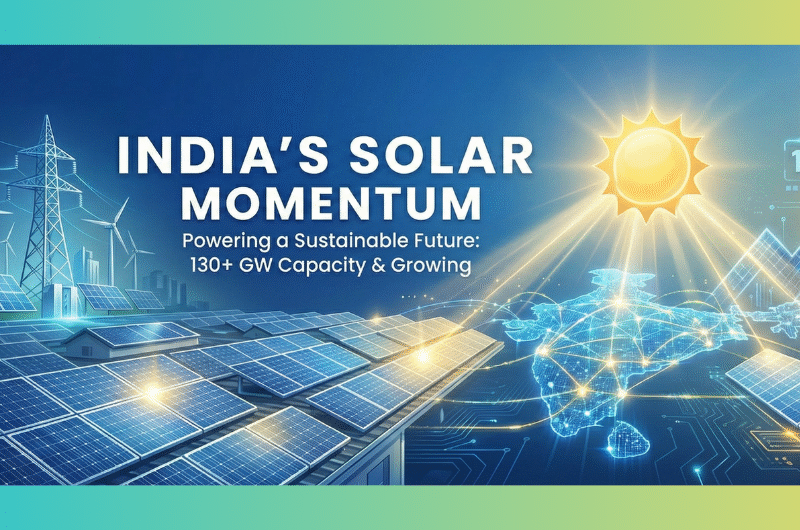
India’s Solar Momentum

India’s Solar Momentum     India’s rapid solar expansion has positioned the country as a global clean-energy leader. Solar capacity has grown from 3 GW (2014) to 129 GW (2025), helping push non-fossil power beyond 50% of India’s total installed electricity capacity. Large-scale deployment, strong policy architecture, and international cooperation continue to drive this transformation.   India’s Solar Growth Story Solar capacity reached 129 GW in 2025, contributing significantly to India’s total 259 GW non-fossil capacity. Rooftop solar adoption under PM Surya Ghar has crossed 9 lakh households, adding 7 GW and releasing subsidies worth ₹13,464.6 crore. India has set up 55 solar parks with nearly 40 GW sanctioned across 13 states. Solar installations have expanded more than 40-fold in a decade, making solar the largest contributor to India’s renewable mix.   Global Standing According to IRENA 2025 data, India ranks: 3rd in solar energy 4th in wind energy 4th in overall renewable energy capacity India’s leadership has reinforced its influence in global clean-energy markets and value chains.   Policy Framework: Panchamrit Roadmap India’s commitments from COP26 (Glasgow, 2021) guide the current energy transition: 500 GW non-fossil capacity by 2030 50% electricity capacity from non-fossil sources by 2030 Reduce emissions by 1 billion tonnes by 2030 45% reduction in carbon intensity by 2030 Net-zero emissions by 2070 These targets anchor India’s renewable energy strategy and investment priorities.   Key Government Initiatives Driving Solar Expansion PM Surya Ghar Launched in Feb 2024 with an outlay of ₹75,021 crore. Aims for 1 crore rooftop-solar households providing up to 300 units of free electricity monthly. Strong progress with nearly 24 lakh installations already completed. National Solar Mission (2010) Flagship programme enabling exponential growth in solar deployment. Current portfolio includes: 72 GW ground-mounted plants 42 GW rooftop solar 32 GW hybrid projects 45 GW off-grid systems PLI Scheme for High-Efficiency Solar PV Modules Total outlay: ₹24,000 crore. Targets Giga-scale domestic manufacturing. Has attracted ₹52,900 crore investment and generated 44,400 jobs (as of Sep 2025). Encourages local value-addition and technological upgrading. PM-KUSUM Scheme Promotes solarisation in agriculture. Achievements (as of Oct 2025): 9 lakh+ standalone pumps 10,535 solarized grid-connected pumps 74 lakh+ Feeder-Level Solarization pumps Extended till March 2026, with higher subsidies for farmers in remote areas. Solar Parks and Ultra-Mega Projects 55 approved parks, nearly 40 GW 14,922 MW already installed; remainder under development. Scheme extended till March 2029.   India’s Leadership in Global Solar Diplomacy International Solar Alliance (ISA) India co-founded ISA with France; HQ in Gurugram. ISA’s 8th Assembly (New Delhi, 2025) hosted 550+ delegates from 125+ countries. Focus areas include: Catalytic Finance Hub Global Capability & Digitisation Centre Regional & Country Engagement Technology Roadmap & Policy Promotes solar deployment, finance access, and inclusive energy transition. OSOWOG (One Sun, One World, One Grid) Vision for a global interconnected renewable energy grid. Enables solar-rich regions to supply clean power across borders. Global Recognition The International Energy Agency calls India “a major driving force in global energy trends.” G20 New Delhi Leaders’ Declaration recognised India’s LiFE vision and climate leadership.   Overall Significance India’s solar momentum reflects a successful blend of policy direction, technology adoption, manufacturing expansion, and international cooperation. Solar energy now anchors India’s long-term strategy for: Energy security Low-carbon economic growth Domestic manufacturing strength Climate resilience Inclusive development (farmers, women, villages, small islands) India’s progress demonstrates how renewable energy can become both a national development tool and a global climate solution.         India’s Solar Momentum – Summary for Learners   India’s solar expansion has transformed the national energy landscape. Installed solar capacity has risen from 3 GW in 2014 to 129 GW in 2025, pushing non-fossil capacity beyond 50% of India’s total electricity base. Strong policy support, domestic manufacturing, rooftop schemes, agricultural solarisation, and global solar cooperation together drive this clean-energy shift.   India’s solar capacity touched 129 GW in 2025, significantly contributing to the 259 GW non-fossil capacity, which now accounts for more than half of India’s total installed electricity capacity.   Under PM Surya Ghar, 23.9 lakh households have adopted rooftop solar, contributing 7 GW of capacity and receiving ₹13,464.6 crore in subsidies, demonstrating rapid residential-level clean-energy deployment.   India has approved 55 solar parks across 13 states with nearly 40 GW sanctioned capacity, providing shared infrastructure for large-scale solar power generation.   Over the last decade, solar capacity has grown more than 40-fold, making solar the largest contributor among all renewable energy sources in India.   India ranks 3rd globally in solar energy capacity, 4th in wind energy, and 4th in total renewable energy capacity according to IRENA’s 2025 statistics.   The Panchamrit commitments guide India’s energy transition: 500 GW non-fossil capacity by 2030, 50% installed capacity from non-fossil sources, and net-zero emissions by 2070.   The National Solar Mission has facilitated exponential growth in solar power through ground-mounted plants (98.72 GW), rooftop systems (22.42 GW), hybrid projects (3.32 GW), and off-grid systems (5.45 GW).   The PLI Scheme for high-efficiency solar PV modules, with an outlay of ₹24,000 crore, has attracted ₹52,900 crore investment and created more than 44,000 jobs.   PM-KUSUM has enabled agricultural solarisation, installing over 9 lakh standalone solar pumps and solarising thousands of grid-connected pumps, benefiting farmers across remote regions.   Solar park development has already installed 14,922 MW of operational capacity, with the remainder under implementation and the scheme extended till March 2029.   India leads global solar diplomacy through the International Solar Alliance (ISA), hosting its 8th Assembly with delegates from 125+ countries and advancing global solar adoption.   The OSOWOG vision aims to interconnect global renewable energy grids, allowing solar-rich regions to supply clean power across borders.   India’s climate leadership has been acknowledged by the G20 and IEA, recognising its pivotal role in shaping global energy trends and promoting sustainable lifestyles.   Rapid solar growth strengthens India’s energy security, reduces import dependence, and promotes indigenous manufacturing capability.   Solar energy serves as a catalyst for sustainable economic growth, inclusive development, job creation, and long-term climate resilience.

More Details

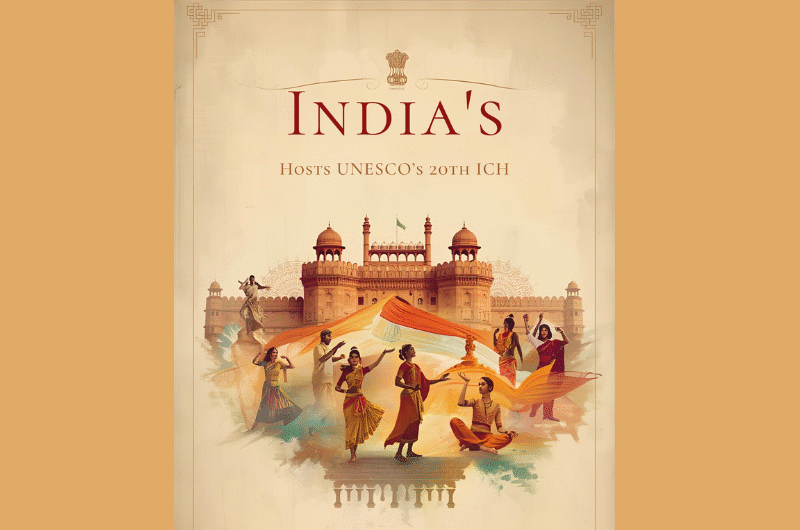
India Hosts UNESCO’s 20th ICH Session

India Hosts UNESCO’s 20th ICH Session     India will host the 20th session of the UNESCO Intergovernmental Committee for Safeguarding of the Intangible Cultural Heritage from 8 to 13 December 2025 at the Red Fort in New Delhi. This is the first time the session will be held in India, and the event aligns with the twentieth anniversary of India’s ratification of the 2003 Convention. The venue, a UNESCO World Heritage Site, symbolically brings together tangible and intangible heritage.   The 2003 Convention, adopted during UNESCO’s 32nd General Conference in Paris, was established to address global concerns about the vulnerability of living cultural traditions under pressures such as globalisation, rapid social change and limited resources. The Convention recognises that communities, including indigenous groups and traditional practitioners, play the central role in preserving and transmitting intangible heritage. It seeks to safeguard practices, rituals, performing arts, festive events, craftsmanship, oral traditions and knowledge systems that shape cultural identity.   The Intergovernmental Committee functions as the primary body responsible for ensuring the effective implementation of the Convention. Its responsibilities include promoting the objectives of the Convention, reviewing best practices, recommending safeguarding measures, overseeing the Intangible Cultural Heritage Fund, drafting operational directives, assessing periodic reports submitted by States Parties and examining requests for inscription on various heritage lists. It also evaluates requests for international assistance and prepares plans for the Fund’s utilisation. India has already served three terms on the Committee.   By hosting the 20th session, India aims to present its heritage safeguarding framework, which emphasises institutional support, sustained documentation, national inventory efforts and direct involvement of communities. The session provides a platform to strengthen international cultural cooperation through joint nominations, shared safeguarding initiatives, capacity-building programmes and technical collaboration. It also offers an opportunity to enhance global visibility for India’s traditional practices, local crafts, regional festivals and community-based knowledge systems. The event encourages domestic initiatives such as documentation, youth engagement, preparation of nomination dossiers and revitalisation of cultural expressions.   India’s intangible heritage represents a wide spectrum of traditions embedded in social customs, ritual practices, performing arts, festive celebrations, oral literature and craftsmanship. Fifteen Indian elements have been inscribed on UNESCO’s Representative List, including Kutiyattam, Chhau, Ramlila, Vedic chanting, Buddhist chanting in Ladakh, Sankirtana, Kalbelia dance, Durga Puja, Garba, Kumbh Mela, Yoga, Novruz (shared), Ramman and the metalcraft of the Thatheras of Jandiala Guru. For the current cycle, India has nominated Chhath Mahaparva and Diwali.   To strengthen preservation efforts, the Ministry of Culture has implemented the Scheme for Safeguarding the Intangible Heritage and Diverse Cultural Traditions of India. The scheme supports documentation, inventory creation, preparation of UNESCO nomination dossiers, training programmes, capacity building, workshops, performances, dissemination initiatives and integration of cultural knowledge into education. It extends assistance to practitioners, researchers, universities, cultural organisations and state institutions. The Sangeet Natak Akademi contributes significantly through awareness programmes, training workshops and promotion of performing arts traditions.   India’s intangible heritage contributes to social cohesion, cultural continuity, livelihood generation and intergenerational knowledge transmission. It sustains the crafts economy, supports performing communities, strengthens cultural identity and enhances tourism potential. It also plays a major role in cultural exchange and strengthens the nation’s cultural presence abroad. Hosting the 20th session underscores India’s long-standing commitment to heritage preservation and offers an opportunity to influence global discourse on safeguarding living traditions.   The upcoming session is expected to deepen international collaboration, highlight India’s diverse cultural expressions and reinforce efforts to ensure that traditional knowledge, practices and art forms continue to thrive for future generations.     MCQ:   The venue selected for hosting the 20th session of the UNESCO Intergovernmental Committee for Safeguarding of Intangible Cultural Heritage is: Humayun’s Tomb, Delhi Red Fort, New Delhi City Palace, Jaipur Golconda Fort, Hyderabad   The 2003 Convention for Safeguarding of the Intangible Cultural Heritage was adopted during UNESCO’s General Conference held in: Geneva Paris Rome Vienna   The 20th session of the ICH Committee coincides with: India’s independence centenary India’s first ICH inscription anniversary Twentieth anniversary of India’s ratification of the 2003 Convention Fiftieth anniversary of UNESCO’s creation   Under the 2003 Convention, safeguarding intangible heritage places primary importance on: National governments alone Private organisations Communities and practitioners Commercial sponsors   Which of the following is NOT a function of the Intergovernmental Committee? Monitoring implementation of the Convention Approving World Heritage Sites Drafting operational directives Evaluating nomination requests for ICH Lists   India has served on the UNESCO Intergovernmental Committee for Safeguarding ICH for: One term Two terms Three terms Four terms   The Scheme for Safeguarding the Intangible Heritage and Diverse Cultural Traditions of India is implemented by: Ministry of External Affairs Ministry of Culture Ministry of Education NITI Aayog   The Sangeet Natak Akademi plays a key role primarily in: Archaeological excavation Promoting capacity building and awareness for ICH Trade facilitation measures Managing national archives   Which of the following is among India’s nominations for UNESCO’s ICH List for the current cycle? Holi and Onam Chhath Mahaparva and Diwali Bihu and Pongal Rath Yatra and Guruparv   Which Indian element is included on UNESCO’s Representative List of Intangible Cultural Heritage? Kathakali murals of Kerala Garba of Gujarat Terracotta temples of Bishnupur Ajanta cave paintings   The 2003 Convention addresses threats arising from: Climate treaties Globalisation and rapid social change International trade barriers Radioactive pollution   The Intangible Cultural Heritage Fund is primarily used for: Military support Global economic reforms Safeguarding measures and international assistance Infrastructure development   The Red Fort was chosen as the session venue because it symbolises: Technological progress Convergence of tangible and intangible heritage India’s maritime strength Expansion of trade routes   The Ministry of Culture’s ICH scheme supports: Patent registration for industries Documentation, inventory creation and training for ICH practitioners Agricultural mechanisation Space technology missions   Elements such as Kutiyattam, Chhau dance, and Vedic chanting represent: Modern industrial practices Living cultural traditions inscribed under UNESCO’s ICH framework Geological formations of India Intangible assets in financial markets

More Details

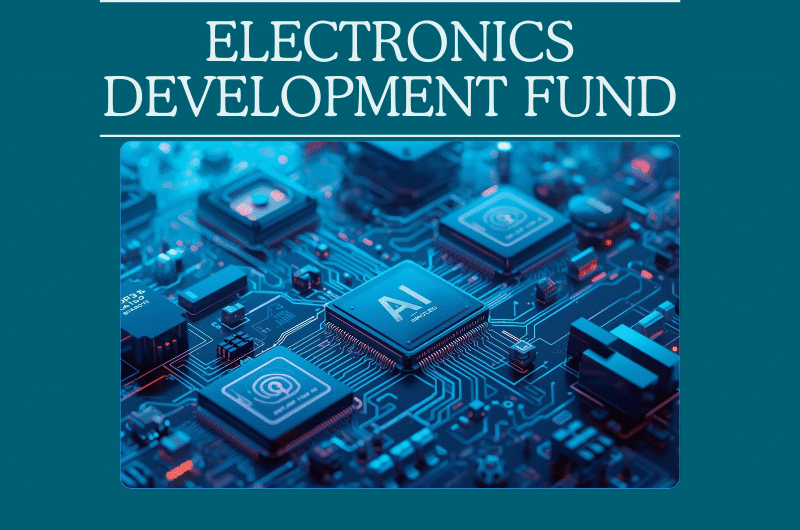
Electronics Development Fund

Electronics Development Fund   The Electronics Development Fund (EDF) is a flagship initiative launched by the Government of India on 15 February 2016 to strengthen India’s innovation ecosystem in electronics, nano-electronics, IT and emerging technologies. It was created under MeitY as a Fund of Funds to support early-stage startups through professionally managed venture and angel funds. EDF has become a key pillar of India’s Electronics System Design and Manufacturing (ESDM) strategy.   India’s electronics sector has grown rapidly in recent years due to policy reforms, industrial expansion and rising domestic demand. The EDF was conceptualised to accelerate this momentum by increasing risk-capital availability for high-technology entrepreneurs. By nurturing innovation at the seed and growth stage, EDF aims to reduce import dependence and enhance India’s capabilities in indigenous design and IP generation.   EDF invests in “Daughter Funds” such as Category I and II SEBI-registered Alternative Investment Funds (AIFs). These funds then provide capital to startups working on frontier technologies. This indirect investment model allows EDF to leverage professional fund management, attract private investors and expand overall investment in the sector.   The Ministry of Electronics and Information Technology (MeitY) is the anchor investor, while Canara Bank acts as Trustee and Sponsor. The Investment Manager is Canbank Venture Capital Funds Ltd. (CVCFL), responsible for evaluating Daughter Funds, conducting due diligence and ensuring alignment with EDF objectives.   The strategic goals of EDF include promoting innovation, creating a national pool of intellectual property, enhancing India’s ESDM design capabilities and supporting technology development driven by domestic needs. EDF also encourages acquisition of critical foreign technologies to reduce high-volume imports, strengthening national self-reliance.   EDF’s operational model is flexible. It participates in Daughter Funds on a non-exclusive basis, usually as a minority investor to stimulate greater private participation. It gives autonomy to fund managers to raise corpus, select investments and monitor portfolio companies. This ensures market-responsive decision-making.   As on 30 September 2025, EDF has invested ₹257.77 crore in eight Daughter Funds. These funds have further invested ₹1,335.77 crore across 128 startups nationwide. The supported ventures work in advanced domains such as IoT, robotics, drones, health technology, cyber security, AI and machine learning, contributing significantly to India’s tech innovation landscape.   The supported startups have created more than 23,600 high-technology jobs. A total of 368 Intellectual Properties (IPs) have been created or acquired, strengthening India’s innovation base. Daughter Funds have exited from 37 investments, and EDF has received cumulative returns of ₹173.88 crore, demonstrating financial viability alongside developmental impact.   Major Daughter Funds include Unicorn India Ventures, Aaruha Technology Fund, Endiya Seed Co-creation Fund, Karsemven Fund, pi Ventures, YourNest India VC Fund II, Ventureast Proactive Fund II and Exfinity Technology Fund. Their investments span early-stage product development, deep technology, and scalable digital solutions.   EDF contributes to national strategic capacity-building by supporting startups working on indigenous products relevant to defence, communication, healthcare and automation. Its efforts align with initiatives such as Make in India, Digital India and Atmanirbhar Bharat.   Overall, the Electronics Development Fund has emerged as a crucial enabler of India’s transition from an electronics-importing nation to a design-led manufacturing and innovation hub. With strong institutional design and measurable outcomes, EDF reinforces India’s long-term vision of technological self-reliance and global competitiveness.     MCQ: With reference to the Electronics Development Fund (EDF), consider the following statements: It was launched to strengthen innovation in electronics, nano-electronics and IT. It directly provides loans to startups developing new technologies. Which of the statements given above is/are correct? (a) I only (b) II only (c) Both I and II (d) Neither I nor II   EDF operates primarily as: (a) A direct lending agency under MeitY (b) A Fund of Funds investing in Daughter Funds (c) A public sector manufacturing enterprise (d) A sovereign wealth fund   The anchor investor of the Electronics Development Fund is: (a) NITI Aayog (b) Ministry of Electronics and IT (MeitY) (c) Reserve Bank of India (d) SIDBI   Under EDF, Daughter Funds must be registered as: (a) SEBI Category I or Category II AIFs (b) NBFC-MFIs (c) Public Trusts (d) FDI-approved financial entities   The trustee and settlor/sponsor of the EDF is: (a) State Bank of India (b) NABARD (c) Canara Bank (d) EXIM Bank   The investment manager for EDF is: (a) SIDBI Venture Capital Ltd. (b) Canbank Venture Capital Funds Ltd. (c) NITI Aayog Innovation Fund (d) Industrial Finance Corporation of India   One of the key goals of EDF is: (a) Increasing export subsidies for electronics (b) Building a strong national pool of intellectual property (c) Promoting agricultural mechanisation (d) Regulating foreign venture capital inflows   EDF generally maintains minority participation in Daughter Funds because: (a) It aims to encourage private co-investment (b) SEBI prohibits government majority ownership (c) Majority ownership reduces tax benefits (d) It lacks the mandate to invest higher equity   Which of the following sectors have received EDF-supported startup funding? Robotics Drones Cyber Security Power Transmission Lines Select the correct answer: (a) 1 and 2 only (b) 1, 2 and 3 only (c) 2, 3 and 4 only (d) 1, 2, 3 and 4   As per the report, total EDF investment in Daughter Funds is approximately: (a) ₹100 crore (b) ₹257.77 crore (c) ₹500 crore (d) ₹1,335 crore   The total number of startups funded through Daughter Funds under EDF is: (a) 37 (b) 128 (c) 256 (d) 368   The cumulative number of Intellectual Properties created or acquired by EDF-supported startups is: (a) 23 (b) 128 (c) 368 (d) 1,335   Which of the following is NOT one of the Daughter Funds supported by EDF? (a) pi Ventures Fund-1 (b) Unicorn India Ventures (c) Endiya Seed Co-creation Fund (d) National Investment and Infrastructure Fund   The cumulative returns received by EDF from exits and partial exits are closest to: (a) ₹25 crore (b) ₹75 crore (c) ₹174 crore (d) ₹500 crore   Which of the following best describes EDF’s strategic vision? (a) Promote low-technology mass manufacturing in India (b) Strengthen

More Details

Free IAS Guidance
Start Your Journey Today 🇮🇳

Fill out the form below, and we will be in touch shortly.