Best UPSC and MPPSC IAS Coaching Classes in Gwalior

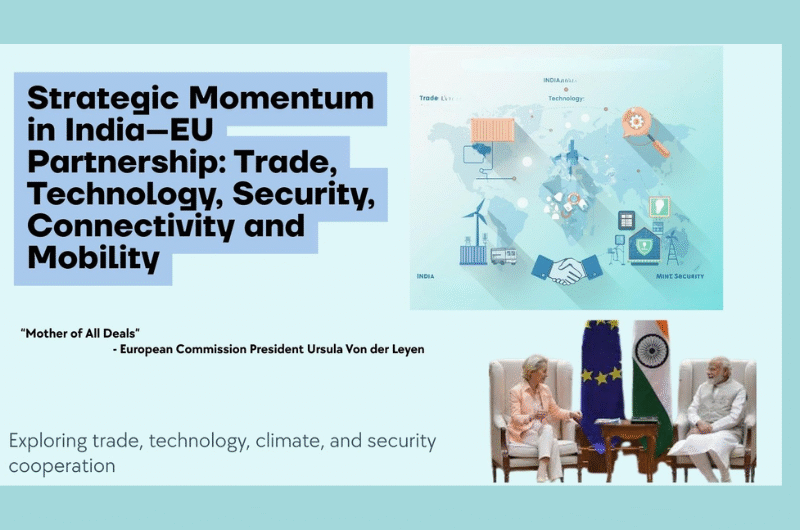
Strategic Momentum in India–EU Partnership: Trade, Technology, Security, Connectivity and Mobility

Strategic Momentum in India–EU Partnership: Trade, Technology, Security, Connectivity and Mobility     “Mother of All Deals”                                                                                                                                                                    –  European Commission President Ursula Von der Leyen       1. India–EU ties gain strategic momentum ahead of New Delhi summit, aiming for a new Joint Strategic Agenda and revival of long-pending Free Trade Agreement negotiations across sectors rapidly. 2. EU became India’s largest goods trading partner, with bilateral merchandise trade about $136 billion in 2024–25, covering machinery, transport equipment, chemicals, metals, mineral products and textiles overall strength. 3. Services trade expanded steadily from 2019 to 2024: Indian exports to the EU rose from €19 billion to €37 billion, while EU exports reached €29 billion there too. 4. Partnership is guided by the 2020 roadmap to 2025, spanning trade, investment, security, defence, climate action, clean energy, digital transition, connectivity, space, agriculture and people-to-people exchanges today widely. 5. Diplomatic links date to 1962 when India engaged the European Economic Community, later formalised through the 1993 Joint Political Statement and 1994 Cooperation Agreement strengthening political-economic cooperation frameworks. 6. The first summit in Lisbon, June 2000, began annual high-level dialogues; in 2004 at The Hague, ties were upgraded to a Strategic Partnership broadening cooperation beyond trade alone. 7. Recent acceleration includes resuming trade and investment talks in May 2021 and launching the Trade and Technology Council in April 2022 for digital and green cooperation jointly implemented. 8. The EU College of Commissioners, led by President Ursula von der Leyen, visited New Delhi in February 2025—the first such visit to a non-European bilateral partner ever recorded. 9. Leaders met alongside multilateral forums including G7 and G20, most recently June 2025 in Canada, and maintained regular telephonic contact through September 2025 calls at top levels often. 10. Security and defence cooperation advanced in 2025, with agreement to explore a Security and Defence Partnership and ministerial-level interactions on defence and space industries for shared strategic outcomes. 11. Maritime cooperation includes joint naval exercises in the Indian Ocean (June 2025), Gulf of Guinea (October 2023) and Gulf of Aden (June 2021), plus escort operations near Somalia. 12. Energy-climate ties centre on the Clean Energy and Climate Partnership launched 2016; Phase III adopted November 2024, expanding work on renewables, infrastructure, methane reduction and technology transfer initiatives. 13. EU joined the International Solar Alliance in 2018; the European Investment Bank funds sustainable transport and metro projects, while the EU joined CDRI in March 2021 for resilience. 14. Scientific cooperation includes a July 2020 Euratom R&D agreement on peaceful nuclear energy uses, and India’s associate membership of CERN since 2017, supporting frontier research links globally visible. 15. Mobility links are substantial: 931,607 Indian citizens lived in the EU by end-2024, including 16,268 Blue Card holders; over 6,000 Erasmus Mundus scholarships awarded across two decades collectively.   Must Know Terms:   1) India–EU Free Trade Agreement (FTA): Long-pending negotiations aim to reduce tariffs, align standards, and expand market access for goods and services. It matters for export growth, investment confidence, and resilient supply chains. In this topic, both sides seek to “advance” FTA talks ahead of the summit, signalling political intent to convert strategic goodwill into binding economic rules.   2) Joint Strategic Agenda: A proposed guiding document to steer India–EU cooperation beyond the existing Roadmap to 2025. It structures priorities, timelines, and deliverables across trade, technology, climate, security, connectivity, and people-to-people links. Its value is coordination: it converts multiple dialogues into measurable actions, reducing fragmentation between sectoral tracks and ensuring continuity across leadership changes.   3) Trade and Technology Council (TTC): A high-level platform launched to deepen cooperation in digital and green technologies, standards, innovation, and trusted supply chains. It matters because strategic technologies increasingly decide competitiveness and security. In this topic, TTC ministerial meetings reflect a shift from broad dialogues to implementation—working groups can drive outcomes on semiconductors, AI governance, clean-tech value chains, and regulatory alignment.   4) Clean Energy and Climate Partnership (CECP): The core framework for India–EU collaboration on climate action and energy transition, established in 2016 and expanded through successive phases. It covers renewables, methane reduction, infrastructure resilience, finance, and technology transfer. Its significance is practical support—mobilising expertise and capital to accelerate decarbonisation while balancing development needs, and linking climate goals with industrial policy.   5) India–EU Connectivity Partnership (2021): A strategic initiative to develop sustainable, inclusive, resilient connectivity across transport, digital infrastructure, and energy networks. It matters for diversification away from single-route dependencies and for creating transparent, high-standard infrastructure models. In this topic, it supports movement of goods, services, data, and capital, and complements corridor-style initiatives through coordinated planning and financing.   6) Common Agenda on Migration and Mobility (CAMM) (2016): A structured framework to manage legal migration, skilled mobility, social security issues, and orderly pathways, aligning EU demographic needs with India’s workforce advantages. It matters for people-to-people ties and economic complementarity. In this topic, dialogues propose mechanisms like a Legal Gateway Office and youth mobility frameworks to operationalise access.     Key Takeaways   India’s engagement with the EU highlights its strategic focus on Europe, aligned with the upcoming India-EU Summit and the ongoing Free Trade Agreement. Bilateral trade volume reached approximately $136 billion in 2024-25, making the EU India’s largest goods trading partner. Between 2019 and 2024, India-EU bilateral trade in services grew steadily, with Indian exports rising from €19 billion to €37 billion and EU exports to India increasing to €29 billion. As of 2024, over 931,607 Indians resided in the EU, including 16,268 Blue Card holders, and in the past 20

More Details
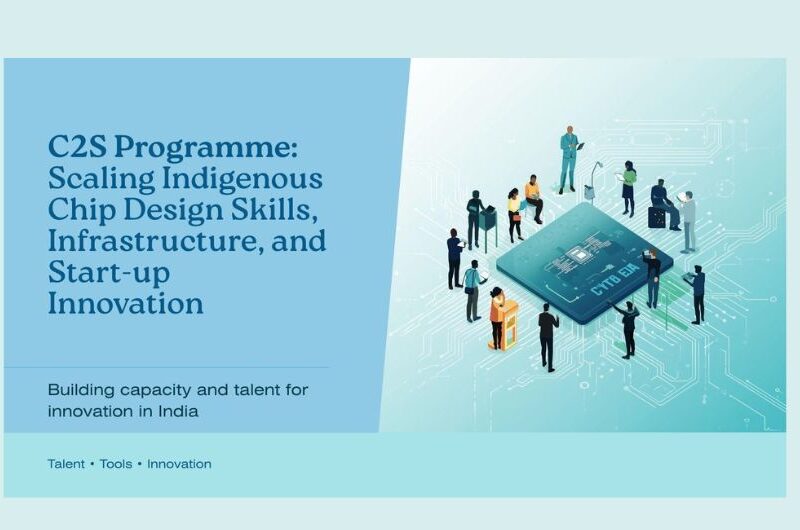
C2S Programme: Scaling Indigenous Chip Design Skills, Infrastructure, and Start-up Innovation

C2S Programme: Scaling Indigenous Chip Design Skills, Infrastructure, and Start-up Innovation       1. Chips to Start-up Programme is a national capacity-building initiative launched in 2022, with ₹250 crore over five years, expanding chip design education, fabrication exposure, and innovation across institutions. 2. It targets creation of 85,000 industry-ready professionals across UG, PG, and PhD levels nationwide, including 200 PhDs, 7,000 VLSI M.Tech, 8,800 allied M.Tech, and 69,000 B.Tech trainees overall. 3. Nearly one lakh individuals enrolled for chip design training, and about 67,000 have been trained so far, addressing global semiconductor talent shortages and strengthening domestic skill pipelines rapidly. 4. Programme ecosystem spans about 400 organisations: 305 academic institutions under C2S and 95 startups under a complementary incentive scheme, widening participation beyond elite campuses nationwide into innovation networks. 5. It aims to catalyse 25 start-ups and enable 10 technology transfers, while expanding SMART lab access, training one lakh students, generating 50 patents, and supporting 2,000 research publications. 6. Hands-on learning is delivered through industry-led training, mentorship, and access to advanced EDA software, foundry interfaces, fabrication facilities, and testing resources for designing, building, and validating chips securely. 7. Participating institutions pursue prototypes of ASICs, Systems-on-Chip, and reusable IP cores, bridging curriculum learning with full workflows from architecture and verification to tape-out, fabrication, testing, and post-silicon evaluation. Coordinating Organization Mode Area 100+ Participating Academic Institutions (Beneficiaries of project funds, EDA Tools & trainings) Implementation of R&D projects for design & fabrication (2–5 years) Instruction as part of curriculum, Short-term courses, labs, and student projects (including nearby institutions). End-to-end exposure to chip design, fabrication, and testing through R&D projects 200+ Other Organizations (Beneficiaries of EDA Tools & trainings) Instruction as part of curriculum, Short-term courses, labs, and student projects. General chip design flows using advanced EDA tools. ChipIN Centre, C-DAC Bangalore (Serving 300+ institutions) Regular training sessions with industry partners. Facilities include: Specialized design areas using advance tools.   EDA tools Synopsys, Cadence, IBM, Siemens EDA, Ansys, Keysight Technologies, Silvaco, AMD, Renesas Foundry access SCL, IMEC, MUSE Semiconductors Chip design flow ChipIN Centre, NIELIT SMART Lab, NIELIT Calicut (Pan-India institutions) Identified short-term and certification courses. General chip design flows using centralized hardware resources. 8. ChipIN Centre at C-DAC Bengaluru functions as a national shared design infrastructure hub, supporting 300+ institutions with tools, compute, IP libraries, mentoring, and structured design onboarding services nationwide. 9. ChipIN Centre conducted six shared wafer runs and 265+ training sessions, while addressing 4,855 support requests, demonstrating sustained technical assistance and operational scale for academic chip programmes nationwide. 10. Designs are collected, verified for fabrication readiness, iterated with feedback, aggregated onto shared wafers, and sent every three months to SCL Mohali for fabrication using 180 nm technology. 11. SCL Mohali enabled large-scale hands-on design: 122 submissions from 46 institutions, with 56 student-designed chips successfully fabricated, packaged, tested, and delivered back for real silicon validation for learning. 12. Shared national EDA infrastructure recorded over 175 lakh hours of tool usage by users across 400 organisations, indicating intensive practical engagement with professional-grade electronic design automation platforms nationwide. 13. Institutions filed 75+ patents and are developing 500+ IP cores, ASICs, and SoC designs, with applications spanning defence, telecom, automotive, consumer electronics, and industrial systems integration nationwide today. 14. FPGA boards were distributed through centralised and distributed models to support prototyping and design validation, complemented by high-performance computing access via the PARAM Utkarsh supercomputer resources nationally effectively. 15. Coordinated institutional framework links policy direction, funding, and oversight with infrastructure operators and fabrication facilities, ensuring equitable access, stronger academia–industry collaboration, and a steady pipeline of chip designers.   Must-Know Terms  : 1.Chips to Start-up (C2S) Programme: Chips to Start-up is a MeitY capacity-building umbrella launched in 2022 to democratise chip design. It funds training, curriculum integration, labs, and R&D projects, linking students with industry mentors and national infrastructure. Its targets include 85,000 professionals, start-up incubation, patents, technology transfers, and silicon validation, strengthening self-reliant design capability across diverse institutions nationwide, including smaller colleges too, for long-term resilience. 2.ChipIN Centre: ChipIN Centre, operated by C-DAC Bengaluru, provides shared semiconductor design infrastructure for hundreds of institutions. It offers commercial EDA tool access, compute, IP libraries, onboarding, and mentoring. It aggregates student designs, verifies fabrication readiness, and organises periodic multi-project wafer submissions. It also runs frequent training and resolves technical support tickets, accelerating hands-on learning and reproducible design outcomes consistently, nationwide regularly. 3.Shared Wafer Run: A shared wafer run pools multiple validated chip layouts from different teams onto one wafer, reducing fabrication costs per participant. ChipIN collects designs, checks rule compliance, coordinates iterations, and tapes out combined masks. SCL fabricates the wafer, then packages and returns individual dies. This approach enables students to experience real fabrication cycles, post-silicon testing, and design improvement loops quickly, repeatedly. 4.Electronic Design Automation (EDA) Tools: EDA tools are professional software suites used to design, simulate, verify, and layout integrated circuits. They support steps like RTL coding, synthesis, timing analysis, place-and-route, signoff checks, and verification. Access to commercial platforms through shared national infrastructure lets learners practice industry workflows, reduce errors before fabrication, and build reusable design blocks that meet foundry requirements reliably, at scale, and compliance. 5.Semi-Conductor Laboratory (SCL) Mohali and 180 nm: SCL Mohali provides fabrication and packaging support for student designs under the programme. Designs are manufactured using an established 180 nanometre process, suitable for training, prototyping, and many control-oriented applications. After fabrication, chips are packaged and delivered back to teams for validation. This closes the loop from design to silicon, making learning evidence-based and measurable for institutions nationwide, and confidence. 6.FPGA and PARAM Utkarsh Support: Field Programmable Gate Arrays let designers prototype digital logic and verify functionality before committing to fabrication, cutting risk and iteration time. The programme supplies FPGA boards through central and distributed modes for labs and projects. High-performance computing via the PARAM Utkarsh supercomputer supports demanding EDA workloads and simulations. Together, they enable scalable learning, faster verification, and more robust tape-outs effectively.   Key Takeaways Over 1 lakh individuals have enrolled in chip design training, with approximately 67,000 trained so far.

More Details

Mission Amrit Sarovar: Restoring Traditional Ponds, Recharging Groundwater

Mission Amrit Sarovar: Restoring Traditional Ponds, Recharging Groundwater Background and Vision   Amrit Sarovars plays an important role in increasing the availability of water, both on surface and under-ground. Development of Amrit Sarovars is also an important symbol of constructive actions, dedicated to the country on the occasion of Azadi Ka Amrit Mahotsav, that create sustainable and long-term productive assets, beneficial to both the living beings and environment. Different types of user groups could be formed based on the usage: 1. Village Water and Sanitation Committee (VWSC) / Pani Samiti (Department of Drinking Water and Sanitation, GoI) 2. Self Help Groups (NRLM) 3. Fishermen group (Department of Fisheries, GoI) 4. Van Samiti (Forest Department) 5. Aquaculture practitioners 6. Water chestnut cultivators 7. Lotus cultivators 8. Makhana cultivators 9. Duckery 10. Water for Livestock users 11. Domestic water users 12. Any other depending on the socio-economic importance of local lakes 1. Mission Amrit Sarovar was launched in 2022 to construct and rejuvenate at least 75 water bodies in every district, strengthening surface storage, groundwater recharge, and local water security. 2. The initial vision targeted creation of 50,000 Amrit Sarovars by 15 August 2023; the milestone was achieved ahead of schedule, indicating fast execution through district-level planning.3. By March 2025, over 68,000 Sarovars had been completed, expanding community water assets across regions and improving availability for domestic use, livestock, and productive activities. 4. More than 46,000 Sarovars were constructed or rejuvenated under Mahatma Gandhi NREGS, linking water conservation with wage employment and durable rural asset creation. 5. The mission was announced on 24 April 2022 during National Panchayati Raj Day at Palli Gram Panchayat, Samba district, Jammu, giving it strong Panchayat-centered positioning. State-Wise Performance Highlights The top 5 performing states under the Mission Amrit Sarovar initiative as of March 2025, ranked by the number of Amrit Sarovars completed, are:   Rank State Number of Amrit Sarovars Completed 1 Uttar Pradesh 16,630 2 Madhya Pradesh 5,839 3 Karnataka 4,056 4 Rajasthan 3,138 5 Maharashtra 3,055 6. The programme is anchored by the Ministry of Rural Development and implemented through convergence involving seven ministries to improve coordination, funding efficiency, and outcomes. 7. Each Amrit Sarovar is designed with a minimum pondage area of 1 acre (0.4 hectare) and about 10,000 cubic metres water holding capacity, creating a standardised asset specification. 8. Technology support includes extensive use of remote sensing and geospatial tools from site selection to completion, improving credibility, monitoring, and timely course-correction. 9. A centralised digital tracking system enables granular, real-time progress reporting, improving transparency and inter-departmental coordination at district and state levels. 10. Convergence funding draws from ongoing schemes such as Mahatma Gandhi NREGS, 15th Finance Commission grants, and Pradhan Mantri Krishi Sinchayee Yojana sub-components, plus state schemes. 11. Monitoring at Panchayat level includes two dedicated prabharis per Sarovar: a Panchayat Pratinidhi as citizen supervisor and a Panchayat-level officer for progress reporting with photos and videos. 12. Sustainability is built through mapped user groups, largely drawn from SHG members, with women and weaker sections represented to ensure equitable use and maintenance responsibility. 13. User groups handle ongoing upkeep, including plantation and voluntary silt removal from catchments after every monsoon, supporting long-term pond capacity and functionality. 14. Phase I (April 2022–August 2023) completed 59,492 Sarovars by May 2023; community participation included freedom fighters’ families, martyrs’ families, and Padma awardees. 15. Groundwater recharge from tanks, ponds, and water conservation structures rose from 13.98 BCM (2017) to 25.34 BCM (2024), reflecting strengthened recharge outcomes. Must-Know Terms : 1. Mission Amrit Sarovar: A nationwide initiative launched in 2022 to build and rejuvenate community water bodies at scale, targeting 75 ponds per district. It standardises pond size (minimum 1 acre) and capacity (~10,000 m³), blends heritage revival with water security, and uses convergence funding plus community-led maintenance to create long-life rural water assets. 2. Jan Bhagidari: The community-participation approach that drives the mission’s credibility and sustainability. It enables local ownership through shramdaan, local donations, and public involvement in planning, execution, utilisation, and upkeep. It also promotes celebrating national events at Sarovar sites, strengthening collective responsibility and improving protection of the asset from neglect or encroachment. 3. Convergence Mechanism: A financing-and-execution model that pools resources from multiple schemes and departments to avoid duplication and accelerate delivery. Works are taken up by states and districts using channels such as rural employment funds, finance commission grants, irrigation sub-schemes, and state programmes, enabling faster completion, better cost efficiency, and stronger alignment between water conservation and livelihoods. 4. Panchayat Pratinidhi: The citizen supervisor nominated by the Gram Panchayat for each Sarovar. This role protects community interest, monitors faithful execution, and strengthens accountability at the local level. It complements official supervision by ensuring the work remains aligned with local needs, fair implementation, and shared ownership, thereby reducing the risk of poor-quality assets or elite capture. 5. User Group: A voluntary, representative body linked to each Sarovar, largely drawn from SHG members, with adequate inclusion of women and weaker sections. The group manages efficient use, resolves local coordination issues, supports plantation, and undertakes routine maintenance such as post-monsoon silt removal. User groups can vary by use-case, including sanitation committees, fishermen, aquaculture, livestock users, and cultivators. 6. Remote Sensing and Geospatial Monitoring: A technology layer used from site selection to completion to ensure appropriate siting, credible measurement, and effective progress monitoring. By using mapping and imagery-based assessment, it improves transparency, enables early identification of delays or design issues, and supports evidence-based reporting at district and state levels, strengthening quality control and long-term outcomes. MCQ 1. Mission Amrit Sarovar was launched in: (a) 2019 (b) 2020 (c) 2022 (d) 2024 2. The mission’s district-level objective is to construct/rejuvenate at least: (a) 25 water bodies per district (b) 50 water bodies per district (c) 75 water bodies per district (d) 100 water bodies per district 3. The initial nationwide target was to build 50,000 Sarovars by: (a) 26 January 2023 (b) 15 August 2023 (c) 2 October 2023 (d) 31 March 2024 4. As on March 2025, the number of completed Sarovars

More Details

Ocean-to-Plate: Seaweed Farming and India’s Blue Economy Push

Ocean-to-Plate: Seaweed Farming and India’s Blue Economy Push   1. Seaweed is a nutrient rich marine plant containing vitamins, minerals, amino acids, and 54 trace elements, linked with reduced risks of diabetes, arthritis, heart disease, hypertension, and cancers. 2. Cultivation occurs in shallow coastal waters and needs no land, freshwater, fertilizers, or pesticides, positioning seaweed as an eco friendly crop suited for climate resilience, low input livelihoods. 3. Seaweed supplies inputs for food, cosmetics, fertilizers, medicines, and industrial hydrocolloids, enabling diversified value chains beyond fisheries and creating new employment opportunities for coastal women and youth nationwide. 4. Alginate is a thickening extract from brown seaweeds, valued around US$ 213 million, largely wild harvested, used in foods, cosmetics, and medical products for stability and texture control.5. Agar derives from red seaweeds, cultivated since the 1960s, valued about US$ 132 million, used in desserts, jams, and laboratory culture media for microbiology work and biotechnology research. 6. Carrageenan is extracted from certain red seaweeds such as Irish Moss, valued near US$ 240 million, widely used in dairy products, ice creams, and toothpaste for thickening applications. 7. Women farmers in Mandapam, Tamil Nadu began seaweed enterprise after training, investing ₹27,000 with cooperative support, overcoming cyclones and marketing hurdles, and producing 36,000 tonnes seaweed and jobs. 8. The global seaweed industry is valued near US$ 5.6 billion; a World Bank estimate suggests ten emerging markets could expand to about US$ 11.8 billion by 2030 collectively. 9. India hosts about 844 seaweed species, around 60 commercially valuable, and national agencies are promoting farming through policies, infrastructure support, and collaboration with states and research institutes actively. 10. Pradhan Mantri Matsya Sampada Yojana began in June 2020 with investment of ₹20,050 crore for fisheries development, making seaweed cultivation a priority component within sector modernization efforts nationally. 11. From 2020 to 2025, ₹640 crore is allocated for seaweed cultivation, including ₹194.09 crore for a Park in Tamil Nadu and a Brood Bank in Daman and Diu. Key Seaweed Developments in India:  12. Operational support includes approval of 46,095 rafts and 65,330 monocline tubenets, enabling farmers to scale cultivation structures and improve harvest consistency across coastal production clusters rapidly each season. 13. National targets aim to raise seaweed output to 1.12 million tonnes within five years, supporting nutrition security, green industry inputs, and alternative incomes that reduce dependence on fishing. 14. Seaweed based biostimulants, regulated under the Fertilizer Control Order 1985, enhance plant processes, nutrient uptake, and stress tolerance, complementing organic initiatives like PKVY and MOVCDNER since 2015–16 nationally. 15. CSIR CSMCRI developed tissue culture for Kappaphycus alvarezii, distributing seedlings in Tamil Nadu districts; farmers produced 30 tonnes in two cycles with 20–30% growth and improved carrageenan quality.   Must Know Terms :   1. PMMSY (Pradhan Mantri Matsya Sampada Yojana): Launched in June 2020 with an investment outlay of ₹20,050 crore, it strengthens fisheries value chains and treats seaweed as a priority livelihood. For 2020–2025, ₹640 crore is earmarked for seaweed cultivation support, infrastructure, and capacity building. A key target is scaling seaweed output to 1.12 million tonnes within five years for coastal households. 2. NFDB (National Fisheries Development Board): NFDB supports policy execution, project appraisal, and capacity building for fisheries and aquaculture, including seaweed value chains. It facilitates state partnerships, training, and convergence with research institutes to move seaweed from pilot activity to commercial enterprise. By backing inputs, post-harvest handling, and market linkages, it helps coastal communities diversify incomes beyond capture fishing at scale. 3. Multipurpose Seaweed Park (Tamil Nadu): Planned under public support, the park is designed as a hub for processing, quality testing, product development, and entrepreneurship. It can enable value addition into food, cosmetics, pharma inputs, and agricultural biostimulants, reducing raw-material wastage. The initiative is part of the larger seaweed push, with a portion of ₹194.09 crore funding allocated for key projects. 4. Seaweed Brood Bank (Daman and Diu): A brood bank maintains healthy, high-quality seaweed seed material to ensure reliable supply for farmers. It supports genetic quality, disease control, and rapid multiplication, helping stabilize production across seasons. Alongside the Seaweed Park, it is funded within a ₹194.09 crore project component. Strong seed systems reduce crop failure risks and improve commercial consistency overall. 5. Biostimulant (Seaweed-based): Seaweed is recognised among eight biostimulant categories used to enhance plant performance without acting as a direct fertiliser. It improves nutrient uptake, stress tolerance, and soil biological activity. Quality of seaweed-derived biostimulants is regulated under the Fertilizer (Control) Order, 1985, aligning formulations, labelling, and standards. This links marine biomass with sustainable agriculture and resilience gains for farmers nationwide. 6. Kappaphycus alvarezii (Elkhorn sea moss): A commercially valuable seaweed cultivated for carrageenan used in food, pharmaceuticals, and cosmetics. In Tamil Nadu, CSIR-CSMCRI introduced tissue-culture propagation to supply uniform, disease-free seedlings. Farmers in Ramanathapuram, Pudukottai, and Tuticorin reported 30 tonnes in two cycles with 20–30% higher growth and improved carrageenan quality, strengthening scalable coastal enterprises. Improves seed supply and farmer profitability.     Summary Seaweed is a nutrient-rich marine plant, packed with vitamins, minerals and amino acids. It contains 54 trace elements and essential nutrientsthat help fight diseases like cancer, diabetes, arthritis, heart problems and high blood pressure. Seaweed is a sea plant that grows in the ocean and seas. Seaweed cultivation requires no land, freshwater, fertilizers or pesticides, making it sustainable. The $5.6 billion seaweed industryis booming, with India’s production increasing steadily. Under one of its components, the Pradhan Mantri Matsya Sampada Yojana (PMMSY) aims to boost seaweed production to 12 million tonnesin five years.   MCQ   1.Seaweed cultivation is considered sustainable mainly because it requires: (a) Land and canal irrigation (b) No land, freshwater, fertilizers, or pesticides (c) Intensive pesticide schedules (d) High freshwater pumping   2.The five year production target mentioned for seaweed is: (a) 0.12 million tonnes (b) 1.12 million tonnes (c) 2.12 million tonnes (d) 11.2 million tonnes   3.The scheme launched in June 2020 with ₹20,050 crore investment is: (a) PKVY (b) PMMSY (c) MOVCDNER (d) NFDB Export Mission   4.The total budget stated for seaweed

More Details

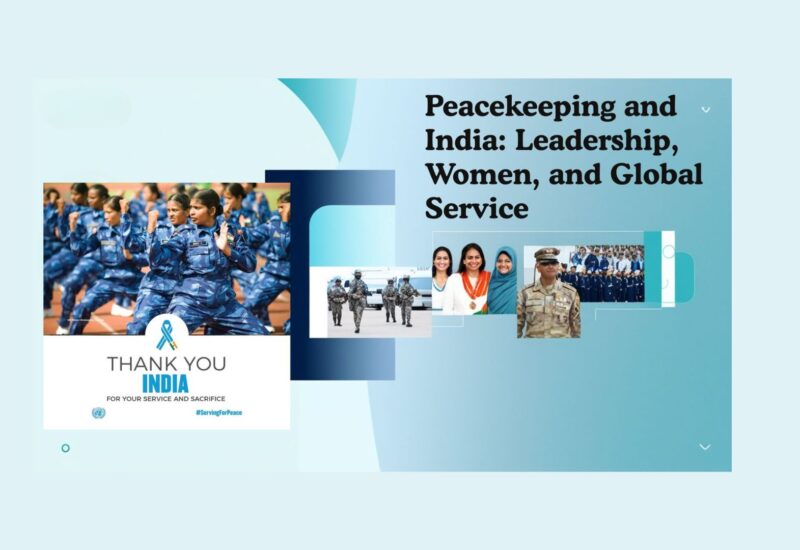
Peacekeeping and India: Leadership, Women, and Global Service

Peacekeeping and India: Leadership, Women, and Global Service       “At the heart of our foreign policy lies a commitment to peacekeeping—rooted in dialogue, diplomacy, and cooperation. Guided by the philosophy of “Vasudhaiva Kutumbakam,” the belief that the world is one family, India will continue to contribute meaningfully to the cause of UN peacekeeping.”                                                            – Dr S. Jaishankar, External Affairs Minister of India       1) UN Peacekeeping supports countries moving from conflict to peace through deployed missions under UN mandates, complementing peacemaking and peacebuilding, with tasks expanding beyond military observation into multidimensional governance support.   2) India is among the largest contributors, with over 2,90,000 peacekeepers serving in more than 50 UN missions since the 1950s, reflecting sustained operational commitment across continents.   3) Current footprint is stated as 5,000+ Indian peacekeepers deployed in 9 active missions, operating in high-risk environments to protect civilians, secure agreements, and stabilise conflict zones. 4) “Blue Helmets” derive from the UN flag’s light blue colour adopted in 1947, symbolising peace, contrasting red’s association with war, becoming an enduring visual identity of UN missions.   5) UN peacekeeping began in 1948 with UNTSO in the Middle East, initially unarmed observer missions focused on monitoring ceasefires, mediation, and reporting, before later mandate expansion. The nine UN peacekeeping missions where the Indian Armed Forces were involved as of May 29, 2024: 6) Post–Cold War 1990s saw major expansion of peacekeeping scale and scope, shifting to multidimensional missions combining military, political, and humanitarian elements in civil-conflict settings globally.   7) Mission failures in Rwanda and Bosnia triggered reforms, including the Brahimi Report (2000), emphasising clearer mandates, adequate resources, and more robust operational posture in hostile theatres.   8) Modern missions may be authorised to use force for civilian protection and mandate enforcement when host state capacity is inadequate, reflecting evolution from traditional neutrality-only observation roles.   9) Core mission functions include facilitating political processes, protecting civilians, supporting DDR, assisting elections, and strengthening human rights and rule of law to prevent relapse into violence.   10) India’s participation is traced to UN operations in Korea (1953), aligning peacekeeping with India’s non-violence ethos and “Vasudhaiva Kutumbakam” framing in foreign policy.   11) Sacrifice is highlighted with nearly 180 Indian peacekeepers stated to have died in service, underscoring operational risk and long-term commitment to international security responsibilities.   12) In 2023, Dag Hammarskjöld Medal was awarded posthumously to Indian peacekeepers Shishupal Singh and Sanwala Ram Vishnoi, plus civilian UN worker Shaber Taher Ali, for Congo sacrifice.   13) Women’s participation remains low globally, stated as under 10% of 70,000 uniformed peacekeepers; UN targets 15% military and 25% police women by 2028.   14) Women, Peace and Security agenda began with UNSC Resolution 1325 (2000), followed by resolutions 1820, 1888, 1889, 2122, and 2242 addressing participation and sexual violence.   15) India pioneered all-female Formed Police Unit deployment in Liberia (2007), and as of February 2025 has 150+ women peacekeepers across six missions, with Major Radhika Sen recognised in 2023.   The following table summarizes some of the key UN peacekeeping missions where India has been involved:   Mission Name Location Year India’s Contribution UN Assistance Mission in the Central African Republic (MINUSCA) Central African Republic 2014-Present Formed Police Units (FPUs) and military observers UN Mission in South Sudan (UNMISS) South Sudan 2012-Present Infantry battalion, medical personnel, and engineering units UN Organization Stabilization Mission in the Democratic Republic of the Congo (MONUSCO) DR Congo 2010-Present Infantry battalions, medical units, and support staff UN Mission in the Golan Heights (UNDOF) Golan Heights 2006-Present Logistics Battalion with 188 personnel for logistics security UN Mission in Sudan (UNMIS/UNMISS) Sudan/South Sudan 2005-Present Battalion groups, engineer company, Signal Company, hospitals, military observers (MILOBs) and staff officers (SOs) UN Organization Mission in the Democratic Republic of the Congo (MONUC/MONUSCO) DR Congo 2005-Present Infantry Brigade Group (three battalions, including RDB), hospital, MILOBs, SOs, and two FPUs UN Interim Force in Lebanon (UNIFIL) Lebanon 1998-Present Infantry battalion group with 762 personnel and 18 staff officers UN Mission in Liberia (UNMIL) Liberia 2007-16 Deployed both male and female FPUs UN Mission in Ethiopia and Eritrea (UNMEE) Ethiopia-Eritrea 2006-08 Contributed an infantry battalion group, an engineer company, and a force reserve company UN Stabilization Mission in Haiti (MINUSTAH) Haiti 2004-17 Contributed Formed Police Units (FPUs) from various police forces UN Mission in Sierra Leone (UNAMSIL) Sierra Leone 1999-2001 Deployed infantry battalions, engineer companies, and other support elements UN Angola Verification Mission (UNAVEM) Angola 1989-99 Provided military observers and staff officers UN Assistance Mission for Rwanda (UNAMIR) Rwanda 1994-96 Contributed medical personnel and logistical support UN Operation in Somalia (UNOSOM II) Somalia 1993-94 Deployed an Army Brigade Group and four Navy battleships UN Operation in the Congo (ONUC) Congo 1960-64 Deployed two brigades to counter secession and re-integrate the country UN Emergency Force (UNEF I) Middle East 1956-67 Contributed to an infantry battalion and other support elements Control of Indo-China Indo-China (Vietnam, Cambodia, Laos) 1954-70 Provided an infantry battalion and supporting staff for monitoring ceasefire and repatriation of prisoners of war UN Operation in Korea Korea 1950-54 Provided medical cover to UN forces, chaired the Neutral Nations Repatriation Commission   Must Know Terms :   1. UN Peacekeeping: Started in 1948 with UNTSO, it helps societies move from conflict to peace. Modern mandates combine ceasefire support, civilian protection, DDR, election assistance, human-rights monitoring, and rule-of-law institution building. Core principles remain consent of parties, impartiality, and restrained use of force, yet recent missions are multidimensional and sometimes “robust” to protect civilians and implement mandates under volatile conditions. 2. Blue Helmets: The term refers to UN peacekeepers’ distinctive light-blue headgear, adopted in 1947 from the UN flag’s colour, symbolising peace and neutrality. The visual identity helps differentiate UN personnel from belligerents, signals international legitimacy, and builds local trust. In high-risk theatres, the blue helmet becomes a practical marker for protected status, mandate authority, and disciplined conduct expected under UN rules of engagement. 3. Dag Hammarskjöld Medal: This is the UN’s highest peacekeeping honour, awarded posthumously to

More Details

India’s Expanding Global Influence

India’s Expanding Global Influence 1. Over the past 11 years, India has expanded global influence through climate leadership, AI governance, public health diplomacy, humanitarian assistance, and strategic defence, aligning international engagement with national interest and inclusivity. 2. India’s G20 Presidency (Dec 2022–Nov 2023) spotlighted the Global South, hosted 200+ meetings in 60 cities, and convened the 18th Leaders’ Summit at Bharat Mandapam. 3. The New Delhi Leaders’ Declaration was adopted unanimously despite major geopolitical divisions, highlighting India’s growing role as a consensus-builder able to deliver outcomes during global uncertainty and competing priorities. 4. The Global Biofuels Alliance was launched during the G20 Summit period, reflecting India’s leadership in energy transition coalitions and practical pathways for cleaner fuels, resilience, and sustainable growth.   5. India co-chaired the AI Action Summit in Paris on 10 February 2024, advancing discussions on responsible, inclusive AI and reinforcing India’s role in setting norms for emerging technologies. 6. Vaccine Maitri supplied 30.12 crore COVID vaccine doses to 99 countries and two UN bodies, including 1.51 crore as grants and 5.2 crore through the COVAX mechanism. 7. The International Solar Alliance, launched at COP21 on 30 November 2015, has 120 members/signatories, targets mobilising over USD 1,000 billion for solar by 2030, and is headquartered at Gurugram. 8. At the ISA 7th Session held in New Delhi (3–6 November 2024), emphasis was placed on faster solar deployment in underserved regions through innovation, financing mechanisms, and cross-border cooperation. 9. India provided humanitarian assistance and disaster relief to 150+ countries in five years and created a Rapid Response Cell in July 2021 to coordinate crisis support with agencies and foreign governments. 10. Neighbourhood First policy prioritises stronger physical, digital, and cultural connectivity with neighbouring countries, guided by respect, dialogue, peace, and prosperity, using consultative, outcome-focused, non-reciprocal cooperation. 11. Act East Policy, upgraded in 2014, deepens engagement with Southeast Asia and the Indo-Pacific, with ASEAN at its core, and emphasises connectivity plus participation in EAS, QUAD, and ADMM-Plus. 12. India’s Voice of Global South Summit held three editions (Jan 2023, Nov 2023, Aug 2024) with 100+ countries each, strengthening India’s credibility as an amplifier of developing-world priorities. 13. In March 2025, MAHASAGAR doctrine was launched in Mauritius, projecting Mutual and Holistic Advancement for Security and Growth Across Regions, aligning oceanic cooperation with development partnerships. 14. India expanded diplomatic presence by opening 39 new embassies and consulates between 2014 and 2024, taking the total to 219, strengthening trade outreach, partnerships, and citizen support abroad. 15. Relief operations include Vande Bharat Mission facilitating 3.20 crore movements, evacuations from Wuhan, and missions like Devi Shakti, Ganga, Kaveri, Ajay, and Indravati, reflecting people-first crisis response.     Key Takeaways   1.India hosted 200 G20 meetings; New Delhi Declaration adopted unanimously. 2.Sent 30.12 crore COVID-19 vaccine doses to 99 countries under Vaccine Maitri. 3.Opened 39 new embassies and consulates between 2014-24   Defence Production ₹46,429 (2014–15) ₹1.27 Lakh crore (2023–24)    Terror incidents in J&K 228 (2018) 28 (2024)   Must Know Terms : 1) G20 Presidency (1 Dec 2022–30 Nov 2023): India chaired G20 for a full year and hosted 200+ meetings across 60 cities with 1 lakh+ delegates, culminating in the 18th Leaders’ Summit at Bharat Mandapam, New Delhi (9–10 Sept 2023). The theme “One Earth, One Family, One Future” framed priorities like inclusive growth, resilient supply chains, climate action, and Global South concerns. 2) New Delhi Leaders’ Declaration (2023): The G20 declaration at New Delhi was adopted unanimously despite sharp divisions among members on geopolitical issues, including the Ukraine conflict. It is significant as an example of consensus diplomacy—getting all members to agree on common language, shared commitments, and deliverables. For prelims, treat it as a landmark outcome that enhanced India’s image as a consensus-builder. 3) Global Biofuels Alliance (GBA): Announced during the G20 Summit period, GBA is presented as a concrete deliverable to accelerate biofuel adoption through cooperation on standards, supply chains, technology pathways, and best practices. It links energy transition with rural income opportunities and fuel diversification. For objective questions, remember it is highlighted as a G20-era initiative associated with India’s presidency outcomes. 4) Vaccine Maitri: Launched from January 2021 during COVID-19, Vaccine Maitri supplied over 30.12 crore vaccine doses to 99 countries and two UN bodies, including 1.51 crore doses as grants and 5.2 crore doses via the COVAX mechanism. It is tested as an example of health diplomacy and “Humanity First” outreach, strengthening India’s credibility as a reliable Global South partner. 5) International Solar Alliance (ISA): ISA was launched at COP21, Paris, on 30 November 2015 by India and France, and is headquartered in Gurugram. It has 120 members/signatories and aims to mobilise over USD 1,000 billion in solar investments by 2030. It is a major climate institution led by India and is often asked via year, place, HQ, and target figures. 6) MAHASAGAR Doctrine (March 2025): Launched in Mauritius, MAHASAGAR stands for “Mutual and Holistic Advancement for Security and Growth Across Regions.” It is used to frame India’s ocean-focused cooperation—security, connectivity, and development partnerships—especially in the Indian Ocean Region. For students, remember the acronym expansion, launch location (Mauritius), and its positioning as a maritime cooperation doctrine aligned with wider regional growth. MCQ     1. With reference to India’s G20 Presidency, consider the following statements: 1. It ran from December 1, 2022 to November 30, 2023. 2. India hosted over 200 meetings in 60 cities with more than one lakh delegates. Which of the statements given above is/are correct? (a) 1 only (b) 2 only (c) Both 1 and 2 (d) Neither 1 nor 2 2. India’s G20 Leaders’ Summit in 2023 was held at: (a) Bharat Mandapam, New Delhi (b) Vigyan Bhawan, New Delhi (c) Hyderabad International Convention Centre (d) Jaipur Convention Centre 3. Consider the following statements regarding the New Delhi Leaders’ Declaration: 1. It was adopted unanimously. 2. It was adopted despite deep divides on issues such as the Ukraine conflict. Which of the statements given above is/are correct? (a) 1 only (b) 2

More Details

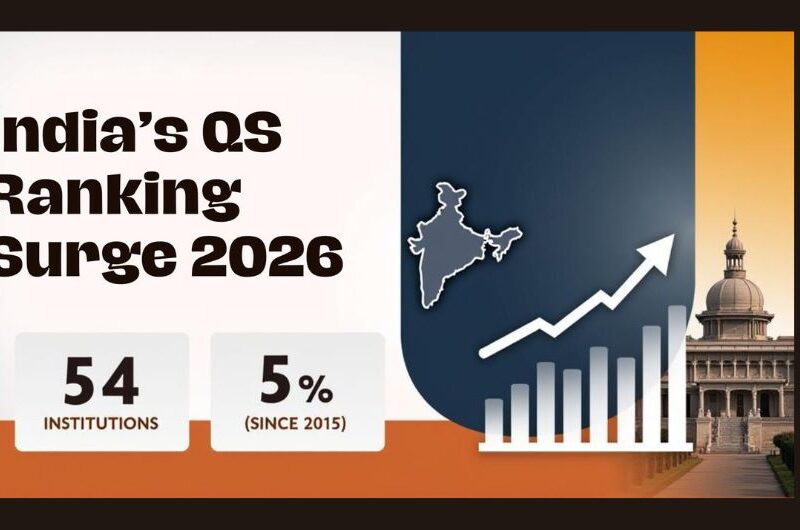
India’s QS Ranking Surge 2026

India’s QS Ranking Surge 2026     1. India placed 54 institutions in QS World University Rankings 2026, including 12 IITs and eight first-time entrants, making India the world’s fourth most represented country overall globally today. 2. Representation rose from 11 ranked Indian institutions in 2015 to 54 in 2026, a five-fold decade increase that positions India as the fastest-rising G20 nation over the decade. 3. Eight debut entrants are IIT Gandhinagar, LPU, KIIT, Ashoka University, Galgotias University, Shiv Nadar University, CHRIST Bengaluru, and MRIIRS, signalling broader public–private participation across the rankings this year. 4. About 48 percent of India’s ranked universities improved their positions compared with the previous year, indicating broad performance momentum rather than isolated gains by a handful across India. Weightings for each performance lens and indicator: 5. Six Indian institutions appear within the global top 250, highlighting a growing cluster of internationally competitive campuses across engineering, science, and multidisciplinary higher education ecosystems for India’s system. 6. IIT Delhi led India at rank 123 in 2026, improving from 150 in 2025, reflecting strengthened outcomes across the indicator mix used in QS scoring in this cycle. 7. IIT Madras recorded one of the biggest jumps, rising 47 places from 227 in 2025 to 180 in 2026, signalling rapid year-on-year advancement among Indian institutes nationwide overall. 8. Five Indian institutions feature in the global top 100 for Employer Reputation, signalling strong recruiter confidence in graduate quality, employability skills, and workplace readiness across diverse sectors nationally. 9. Eight Indian universities rank among the world’s top 100 for Citations per Faculty, posting an average score of 43.7, higher than Germany, the UK, and USA this edition. 10. QS 2026 draws on over 16 million academic papers and surveys of more than 151,000 academics and 100,000 employers, providing a large evidence base for comparative robustness overall. 11. A new indicator, International Student Diversity, was added, assessing both international student numbers and the variety of source countries; it is presently assigned zero weight within the framework. 12. International Student Ratio remains a weighted metric, while scoring was fine-tuned, meaning some indicator scores can change even when an institution’s rank stays stable across global comparisons today. 13. QS methodology is structured into lenses, indicators, and metrics: lenses group indicators by theme, indicators measure performance areas, and metrics compute precise scores for transparent cross-country score aggregation. 14. Research and Discovery carries 50% weight, comprising Academic Reputation at 30% and Citations per Faculty at 20%, making research performance the dominant driver across institutions and subject areas. 15. Employability and Outcomes weighs 20% overall, combining Employer Reputation at 15% and Employment Outcomes at 5%, linking rankings to labour-market perceptions and results for employer and reform tracking.     Key Insights from QS World University Ranking 2026 1. India has 54 universities in the QS World University Rankings 2026, making it the fourth most represented country. 2. Only the United States (192), the United Kingdom (90), and Mainland China (72) have more universities ranked than India. 3. Eight Indian institutions have entered the rankings for the first time. This is the highest number of new entrants from any country this year. 4. The number of Indian universities in the rankings has grown from 11 in 2015 to 54 in 2026. This marks a five-fold increase in just over a decade. 5. 48 percent of India’s ranked universities improved their positions compared to the previous year. 6. Six Indian institutions feature in the global top 250. 7. IIT Delhi leads the Indian contingent. It is ranked 123rd globally, rising from 150th in 2025. 8. IIT Madras recorded one of the biggest jumps, rising 47 places from 227 in 2025 to 180 in 2026. 9. A total of 12 Indian Institutes of Technology (IITs) feature in the list, highlighting their strong presence in global academia. 10. Five Indian institutions feature in the global top 100 for Employer Reputation. This reflects strong industry confidence in Indian graduates. 11. Eight Indian universities rank among the world’s top 100 for Citations per Faculty. Their average score of 43.7 is higher than that of Germany, the United Kingdom and the United States. 12. India now has a diverse mix of public and private institutions represented, including central universities, deemed-to-be universities, and technical institutes. Top Indian Institutions in QS World University Rankings 2026 (Rank vs 2025) S No. Institution Rank (2026) Previous Rank (2025) 1 Indian Institute of Technology Delhi (IITD) 123 150 2 Indian Institute of Technology Bombay (IITB) 129 118 3 Indian Institute of Technology Madras (IITM) 180 227 4 Indian Institute of Technology Kharagpur (IITKGP) 215 222 5 Indian Institute of Science (IISc) Bangalore 219 211 6 Indian Institute of Technology Kanpur (IITK) 222 263 7 University of Delhi 328 328 8 Indian Institute of Technology Guwahati (IITG) 334 344 9 Indian Institute of Technology Roorkee (IITR) 339 335 10 Anna University 465 383 11 Shoolini University of Biotechnology and Management Sciences 503 587 12 Indian Institute of Technology Indore 556 477 13 Jawaharlal Nehru University 558 580 14 Indian Institute of Technology BHU Varanasi (IIT BHU Varanasi) 566 531 15 Savitribai Phule Pune University 566 631-640 16 Chandigarh University 575 691-700 17 Indian Institute of Technology Hyderabad (IITH) 664 681-690 18 University of Mumbai 664 711-720 19 Birla Institute of Technology and Science 668 801-850 20 Jadavpur University 676 721-730 21 Vellore Institute of Technology (VIT), Vellore, India 691 791-800 22 Symbiosis International (Deemed University) 696 641-650 23 National Institute of Technology Tiruchirappalli 731-740 701-710 24 Jamia Millia Islamia, New Delhi 761-770 851-900 25 Thapar Institute of Engineering & Technology 771-780 851-900 26 University of Calcutta 771-780 751-760 27 IIT Gandhinagar 801-850 — 28 University of Hyderabad 801-850 801-850 29 Manipal Academy of Higher Education – Manipal University (MAHE) 851-900 901-950 30 O. P. Jindal Global University (JGU) 851-900 1001-1200 31 Lovely Professional University (LPU) 901-950 — 32 Panjab University 901-950 1001-1200 33 Saveetha Institute of Medical and Technical Sciences (SIMATS) 901-950 951-1000 34 University of Petroleum and Energy Studies

More Details

Global Standards Against Money Laundering and Terror Financing

Global Standards Against Money Laundering and Terror Financing       1. FATF, created at the 1989 G7 Paris Summit, is an independent inter-governmental body that sets global standards to combat money laundering, terrorist financing, and proliferation financing effectively. 2. FATF standards help authorities trace illicit funds linked to drug trafficking, illicit arms trade, cyber fraud, and other serious crimes, reinforcing coordinated national and international responses globally. 3. Through its 40-member structure, FATF has enabled more than 200 countries and jurisdictions to commit to implementing standards, strengthening global protections against organised crime, corruption, and terrorism. 4. FATF publishes two public documents three times yearly, identifying jurisdictions with weak AML/CFT measures and spotlighting strategic deficiencies requiring corrective actions by governments and financial sectors. 5. Grey list jurisdictions are under increased monitoring, working with FATF to fix deficiencies within agreed timelines; they commit to reforms against money laundering, terror, and proliferation financing. 6. On 13 June 2025, the grey list included Algeria, Nepal, and South Africa among others, indicating compliance gaps and the need for sustained monitoring and reform implementation. 7. Blacklist jurisdictions face a call for action and enhanced due diligence; on 13 June 2025, Democratic People’s Republic of Korea, Iran, and Myanmar were listed for countermeasures. 8. India became a FATF observer in 2006 and joined as the 34th member in June 2010, following an on-site mutual evaluation during November–December 2009 for compliance assessment. 9. India applies risk-based legislative frameworks under the Prevention of Money Laundering Act, 2002 and the Unlawful Activities (Prevention) Act, 1967 to deter illicit finance domestically and externally. 10. Two 2025 reports highlighted evolving threats: ‘Complex Proliferation Financing and Sanctions Evasion Schemes’ and ‘Comprehensive Update on Terrorist Financing Risks’, offering mitigation recommendations for institutions and regulators. 11. Proliferation financing tactics include obscuring beneficial ownership, misusing virtual assets and cryptocurrencies, and leveraging maritime shipping sectors to bypass sanctions and international regulatory requirements through trade-based channels. 12. India is cited for creating multiple operational and policy coordination mechanisms on proliferation financing, underscoring domestic collaboration, better detection, and stronger international cooperation to counter sanctions evasion. 13. DPRK-linked cyber operations, including a reported 2025 $1.5 billion ByBit theft, illustrate cybercrime’s nexus with proliferation financing and heighten cross-border financial intelligence demands for rapid detection. 14. A case study raised concerns about Pakistan’s state-owned National Development Complex, sanctioned in several jurisdictions; Pakistan is presented as a high-risk regional jurisdiction for proliferation financing currently. 15. Terrorist financing risks show decentralised local cells, blending cash smuggling, hawala, NPO abuse, and crypto settlements; misuse of e-commerce, social media crowdfunding, and gaming platforms persists significantly.         Key Takeaways • The Financial Action Task Force (FATF) was set up in 1989 during the G7 Summit in Paris. • India became 34th member of FATF in 2010. • India has declared zero tolerance towards terror financing and money laundering, working actively with FATF. • India has implemented risk-based legislative frameworks under the Prevention of Money Laundering Act 2002 and the Unlawful Activities (Prevention) Act 1967. • The two recent reports of FATF in June 2025 provide significant overview of evolving global threats and typologies while offering practical recommendations and mitigation strategies.     Must Know Terms:   1.FATF (Financial Action Task Force): An independent inter-governmental body established in 1989 at the G7 Summit in Paris to set global standards against money laundering, terrorist financing and proliferation financing. It issues a common policy framework and regularly monitors implementation across countries and jurisdictions. India became the 34th member in June 2010 after an on-site assessment in November–December 2009.   2. AML/CFT Frameworks: Anti-Money Laundering and Countering Financing of Terrorism regimes translate FATF standards into domestic law, supervision and enforcement. A risk-based approach prioritises higher-risk sectors, customers and transactions for controls, reporting and investigation across financial and non-financial firms. India operationalises this through legislative tools such as the Prevention of Money Laundering Act, 2002, alongside the Unlawful Activities (Prevention) Act, 1967.   3. Grey List (Increased Monitoring): A public list for jurisdictions with strategic AML/CFT deficiencies that have committed to an agreed action plan and timelines while working with FATF. It is issued in FATF public documents released three times a year. As on 13 June 2025, jurisdictions under increased monitoring included Nepal, South Africa, Nigeria, Haiti, Kenya, Vietnam, Algeria, Lebanon and Monaco.   4. Blacklist (Call for Action): A public list for jurisdictions with serious strategic deficiencies for money laundering, terrorist financing and proliferation financing, triggering calls for enhanced due diligence and counter-measures by other countries. It is updated through FATF public documents and drives stronger safeguards. As on 13 June 2025, jurisdictions subject to a call for action included DPRK, Iran and Myanmar.   5. Proliferation Financing (PF) and Sanctions Evasion: Financing linked to weapons of mass destruction and efforts to bypass international restrictions. A June 2025 report highlights tactics such as hiding beneficial ownership, misuse of virtual assets, and maritime and shipping manipulation. It stresses domestic coordination and international cooperation, stronger suspicious transaction reporting, and information-sharing across public-private stakeholders for detection and disruption effective.   6.Terrorist Financing (TF) Risks: Funding that enables terrorist acts, networks and logistics, increasingly shaped by digital channels and decentralised local actors. A July 2025 update notes continued use of cash smuggling, hawala and NPO abuse, alongside blending with crypto, e-commerce, mobile money and online crowdfunding via social media. It also flags crime–terror convergence and microfinancing by lone actors, gaming.     MCQ     1. The Financial Action Task Force (FATF) was set up in: (a) 1975 during the UN Summit in Geneva (b) 1989 during the G7 Summit in Paris (c) 1991 during the G20 Summit in Rome (d) 2001 during the UN Security Council session 2. FATF is best described as an: (a) Inter-governmental treaty court with binding judgments (b) Independent inter-governmental body setting AML/CFT and PF standards (c) UN agency regulating global banking interest rates (d) Regional forum limited to Asia-Pacific jurisdictions 3. FATF’s Standards have been committed to by: (a) Only 40 countries and no

More Details

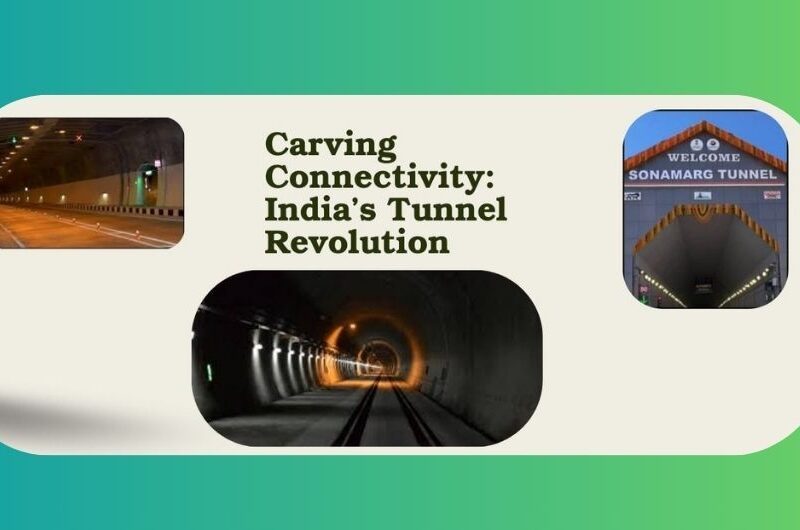
Carving Connectivity: India’s Tunnel Revolution

Carving Connectivity: India’s Tunnel Revolution     1. India’s tunnelling boom is driven by highways, strategic border roads, metros, rail corridors, bullet train plans, and all weather connectivity, strengthening mobility, security, and regional growth. 2. Atal Tunnel, 9.02 km under Pir Panjal, bypasses Rohtang Pass, enables year round Manali Lahaul Spiti travel, cuts distance 46 km, saving 4 to 5 hours. 3. World Book of Records UK recognised Atal Tunnel in 2022 as longest highway tunnel above 10,000 feet; builders overcame fragile geology, seepage, overburden, and intense snowfall. 4. Sonamarg Z Morh tunnel costs ₹2,700 crore, includes 6.4 km main tube plus egress, provides all weather Srinagar to Sonamarg access, designed for 1,000 vehicles hourly. 5. Built using NATM, Sonamarg tunnel uses integrated management systems, radio rebroadcast and information panels; with Zojila by 2028, distance drops to 43 km for faster travel. 6. Sela Tunnel on Tezpur Tawang route sits near 13,000 feet, built by BRO at ₹825 crore, ensures all weather connectivity, boosts defence reach and border livelihoods. 7. Banihal Qazigund road tunnel is 8.45 km twin tube, costs over ₹3,100 crore, reduces distance 16 km, saves about 1.5 hours, cross passages every 500 metres. 8. Dr Syama Prasad Mookerjee tunnel is 9 km twin tube, cuts Jammu Srinagar time nearly two hours, bypasses 41 km, uses integrated safety systems with automation. 9. Tunnel T50, 12.77 km under USBRL, connects Khari and Sumber; NATM construction tackled water ingress, landslides and shear zones; escape tubes link every 375 metres safely. 10. Tunnel T50 uses CCTV cameras every 50 metres, monitored from a central control room, improving security and oversight for seamless rail operations in difficult Himalayan geology. 11. In 2024, India opened its first underwater metro tunnel in Kolkata, linking Esplanade and Howrah Maidan beneath the Hooghly River, redefining mobility in a demand corridor. 12. India’s tunnelling shifted from drill and blast to advanced mapping and real time monitoring, enabling longer, deeper projects with better reliability, safety, and disaster readiness nationwide. 13. Modern tunnels include ventilation, emergency escape routes, fire suppression, LED lighting, CCTV surveillance, and centralised control rooms, integrating safety engineering into everyday operations for users daily. 14. TBMs deliver precision with reduced vibration for metros and long tunnels; NATM adapts supports in fragile Himalayan rock; integrated control systems manage ventilation, fire, and communications. 15. Zojila Tunnel, planned for 2028, uses SCADA smart systems and semi transverse ventilation; technology adoption saved over ₹5,000 crore, aiming to become India’s longest road tunnel.     Key Takeaways   • With landmark projects like the Atal Tunnel, India is rapidly expanding its tunnel infrastructure. • Record-breaking rail links led by the 12.77-km Tunnel T50 are reshaping India’s freight and connectivity network. • Upcoming mega-tunnels like Zojila will provide all-weather access to Ladakh, boosting mobility, defence reach, and regional growth.         Must-Know Terms : 1. Tunnel Infrastructure: Tunnel infrastructure is expanding across highways, border roads, metros, and new rail corridors to shorten routes, reduce gradients, and ensure all-weather mobility. Modern tunnels add ventilation, lighting, fire suppression, escape passages, CCTV, and control rooms for safety. By cutting travel time and stabilising logistics in difficult terrain, tunnelling supports regional markets, tourism, and strategic preparedness for communities and national integration.   2. Atal Tunnel: Atal Tunnel is a 9.02-km high-altitude road tunnel under the Pir Panjal range that bypasses Rohtang Pass. It enables year-round travel between Manali and Lahaul–Spiti, cutting the Manali–Sarchu route by 46 km and saving about four to five hours. Construction faced fragile geology, heavy snowfall, and major water seepage at Seri Nala. It gained record recognition for altitude-highway tunnelling globally.   3. Zojila Tunnel: Zojila Tunnel is being built as an all-weather road link on the Srinagar–Kargil–Leh highway, strengthening civilian access and defence mobility to Ladakh. The project runs at about 11,578 feet and spans over 30 km, with around 12 km reported completed. It uses NATM, SCADA-based smart systems, CCTV, UPS, and semi-transverse ventilation for steady airflow and targets completion in 2028 overall.   4. New Austrian Tunnelling Method (NATM): New Austrian Tunnelling Method (NATM) is an observational approach where rock itself becomes a load-bearing ring after controlled excavation. Engineers adjust support—shotcrete, rock bolts, steel ribs—based on real-time deformation monitoring, making it suitable for variable, fractured Himalayan geology. Many strategic mountain tunnels use NATM because it allows flexible staging, faster corrections, and safer progress under uncertain ground conditions for operations.   5. Tunnel Boring Machine (TBM): Tunnel Boring Machines (TBMs) excavate circular tunnels using a rotating cutterhead, while erecting segmental linings to stabilise the ground immediately. TBMs reduce vibration and surface disruption, making them preferred for dense cities and sensitive zones such as metro corridors. Precision guidance, slurry or earth-pressure balancing, and continuous muck removal enable long drives, consistent geometry, and improved worker safety at scale.   6. Integrated Tunnel Control Systems (ITCS): Integrated Tunnel Control Systems (ITCS) link ventilation control, smoke extraction, fire detection, emergency telephony, public address, variable message signs, CCTV, and incident management into a single control room. Sensors track air quality and visibility, automatically triggering fans, alarms, lane closures, and evacuation guidance during accidents. Continuous monitoring improves reliability, reduces response time, and supports safe operation of high-traffic road tunnels.         Multiple Choice Questions:       1. Assertion (A): Atal Tunnel reduced the Manali–Sarchu distance by 46 km and travel time by about 4–5 hours. Reason (R): It bypasses Rohtang Pass and enables year-round travel between Manali and Lahaul–Spiti. A. Both A and R are true, and R is the correct explanation of A B. Both A and R are true, but R is not the correct explanation of A C. A is true, but R is false D. A is false, but R is true2. With reference to the Sonamarg (Z-Morh) Tunnel, consider the following statements: 1. It is built at a cost of ₹2,700 crore. 2. It includes a 6.4-km main tunnel and an egress tunnel. 3. It is constructed using Tunnel Boring Machines (TBMs) for Himalayan geology. 4.

More Details

Forests, Food Security, and Community Livelihoods

1. International Day of Forests is observed on March 21 to celebrate all forest types, highlight benefits like oxygen, food, medicine, and livelihoods, and mobilize protection actions worldwide annually for awareness. 2. United Nations designated March 21 as International Day of Forests in 2012, and each year a theme is selected by the Collaborative Partnership on Forests to guide outreach and engagement. 3. The 2025 theme, “Forests and Food,” stresses forests’ role in food security through fruits, seeds, roots, and wild meat, supporting indigenous and rural communities, nutrition diversity, and resilience for families. 4. India links forest protection with culture, economy, and biodiversity, treating conservation as a responsibility and aligning schemes with nutrition, livelihoods, and sustainable resource use across districts, landscapes, and communities locally. 5. National Agroforestry Policy 2014 promotes integrating trees with crops to raise productivity, improve soils, diversify income, and build climate resilience through tree planting on farmland and sustainable farm planning systems. 6. Agroforestry implementation emphasizes quality planting material via nurseries and tissue culture units, with ICAR-CAFRI as nodal body for technical support, certification, training, coordination, and nationwide farmer advisory services, field extension. 7. Economic support includes price guarantees, buy-back options, and private participation for marketing and processing agroforestry products, while linking millet promotion with local enterprises, processing clusters, and integrated rural value chains. 8. Green India Mission under the National Action Plan on Climate Change began activities in 2015-16, aiming to protect, restore, and enhance forest cover while improving biodiversity and water resources nationally. 9. GIM targets expanding forest and tree cover by five million hectares and improving another five million hectares, while enhancing ecosystem services and raising incomes for three million rural households sustainably. 10. GIM operational design includes five sub-missions: forest cover enhancement, ecosystem restoration, urban greening, agroforestry and social forestry, and wetland restoration to create biomass, carbon sinks, and livelihood co-benefits at scale. 11. Ecosystem Services Improvement Project under GIM is World Bank-backed in Chhattisgarh and Madhya Pradesh, supporting plantation and eco-restoration actions within targeted landscapes for improved services, monitoring, and community stewardship innovation. 12. As of July 2024, ₹909.82 crore was allocated to 17 states and one Union Territory for plantation and eco-restoration over 155,130 hectares, including work in Palghar, Maharashtra, and Dahanu Division. 13. Forest Fire Prevention and Management scheme supports states and Union Territories with financial assistance, community involvement, technology use, and productivity restoration in fire-affected forest areas, strengthening preparedness and response capacities. 14. Forest Survey of India runs near real-time fire detection using remote sensing, plus a satellite-based monitoring and alert system sending SMS and email to registered users for rapid response coordination. 15. Pradhan Mantri Van Dhan Yojana, launched 2018 by Tribal Affairs and TRIFED, builds tribal livelihoods through value addition of minor forest produce via Van Dhan Vikas Kendras and market linkages.     Must-Know Terms : Agroforestry integrates trees with crops and/or livestock on the same land to raise productivity and resilience. India adopted the National Agroforestry Policy in February 2014, aiming to expand trees on farms, ease felling/transport rules, improve quality planting material, credit and insurance, and build value chains for timber, fuelwood, fodder and fruit. It also strengthens soils, biodiversity and carbon storage notably. Green India Mission (GIM) is one of eight missions under India’s National Action Plan on Climate Change. Launched by MoEFCC in 2011, it seeks to protect, restore and enhance forest and tree cover through adaptation and mitigation. Targets include increasing cover on 5 million hectares and improving quality on another 5 million hectares, strengthening biodiversity, water services and carbon sequestration. Forest fire management combines prevention, preparedness, early warning, rapid response and post-fire rehabilitation. In India, the Forest Fire Prevention and Management (FPM) scheme (MoEFCC) supports states for fire lines, equipment, training, awareness and community participation, with funding patterns that vary by state category. Remote sensing, danger-rating and real-time alerts improve detection, while restoration reduces erosion, invasive spread and habitat loss. Pradhan Mantri Van Dhan Vikas Yojana is a Ministry of Tribal Affairs initiative implemented through TRIFED, launched on 14 April 2018. It organises forest-produce gatherers into Van Dhan Vikas Kendra clusters (typically 15 SHGs, 300 members) to provide processing, packaging, quality control, branding and market linkages for minor forest produce. The model raises incomes, builds enterprises and encourages sustainable harvesting. Food security exists when all people, at all times, have physical access to sufficient, safe and nutritious food for an active, healthy life. Its pillars are availability, access, utilisation and stability. Forests support food security by supplying wild foods and medicines, sustaining pollinators, regulating water and soils, buffering climate shocks, and providing fuelwood and income options during crop failures reliably. MCQ 1. International Day of Forests is observed on: A. March 3 B. March 21 C. April 22 D. June 5 2. March 21 was declared as International Day of Forests by the United Nations in: A. 2009 B. 2010 C. 2012 D. 2014 3. The theme highlighted for 2025 is: A. Forests and Water B. Forests and Food C. Forests and Energy D. Forests and Cities 4. In the given framework, the central policy explicitly promoting trees on farmland is dated: A. 2002 B. 2012 C. 2014 D. 2018 5. The nodal technical institution named for agroforestry support, certification, and training is: A. FSI, Dehradun B. ICAR-CAFRI C. TRIFED D. NDMA 6. Activities under the Green India Mission started in: A. FY 2012-13 B. FY 2014-15 C. FY 2015-16 D. FY 2018-19 7. With reference to GIM targets, consider the following: 1. Expand forest/tree cover by 5 million hectares. 2. Improve the quality of another 5 million hectares. Which is correct? A. 1 only B. 2 only C. Both 1 and 2 D. Neither 1 nor 2 8. Which of the following is NOT listed among the five sub-missions under GIM? A. Urban Greening B. Wetland Restoration C. Coastal Shipping Modernisation D. Ecosystem Restoration 9. ESIP under GIM is described as operating in: A. Assam and Meghalaya B. Chhattisgarh and Madhya Pradesh C. Kerala and Tamil Nadu D.

More Details

Free IAS Guidance
Start Your Journey Today 🇮🇳

Fill out the form below, and we will be in touch shortly.