Best UPSC and MPPSC IAS Coaching Classes in Gwalior

DHRUV64: India’s First 1.0 GHz, 64-bit dual-core Microprocessor

Overview of DHRUV64 Microprocessor

India has achieved an important milestone in its semiconductor journey with the development of DHRUV64, the country’s first fully indigenous 1.0 GHz, 64-bit dual-core microprocessor. Developed by the Centre for Development of Advanced Computing under the Microprocessor Development Programme, DHRUV64 provides India with a reliable domestic processor platform capable of supporting both strategic and commercial requirements. It marks a clear advancement toward technological self-reliance in advanced chip design.

More Details

India’s Green Maritime Odyssey

India is transitioning its maritime sector towards sustainability to balance economic growth with environmental protection. With a long coastline rich in mangroves, coral reefs, lagoons, and biodiversity, ports are increasingly required to operate in alignment with global health, safety, and environmental standards. Renewable energy adoption, pollution control, waste management, and ecosystem protection have become central to port development.

More Details

National Social Assistance Programme

The National Social Assistance Programme is a nationwide social security initiative introduced on 15 August 1995 to provide financial and food-based support to the most vulnerable sections of society living below the poverty line. Implemented by the Ministry of Rural Development, the programme covers both rural and urban areas and reflects the constitutional commitment to social justice by ensuring minimum income support and food security for citizens lacking stable livelihoods and social protection.

More Details

Culture to Pride, Progress in Every Step

Core Vision

Over the last 11 years, India has pursued a culture-led development model that combines heritage conservation, spiritual revival, infrastructure expansion, inclusivity, and global cultural outreach, while integrating modern technology, tourism, and economic growth.

More Details

 India-Russia Relations at a Glance

1. Overview of the Partnership

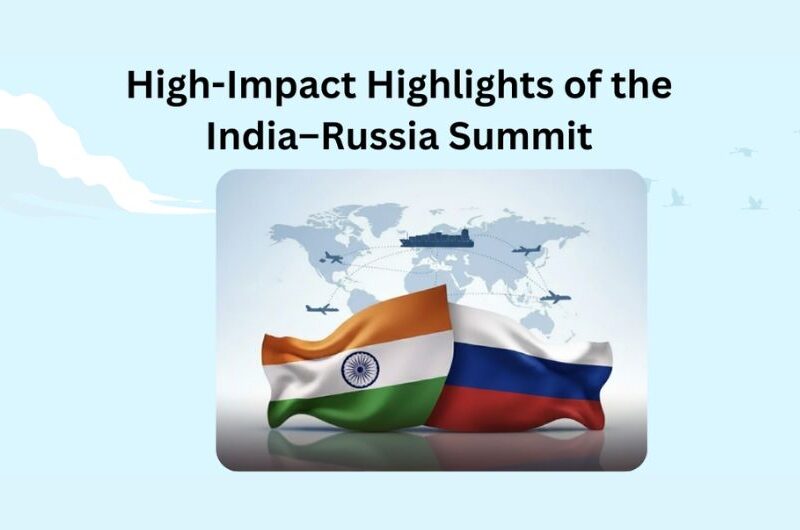
India and Russia share an enduring, time-tested relationship strengthened over 78 years. The 2000 “Strategic Partnership” and the 2010 elevation to a “Special and Privileged Strategic Partnership” institutionalised cooperation across political, defence, economic, nuclear, space, science, culture and multilateral domains. The Intergovernmental Commission (IRIGC) operates at two levels: IRIGC-TEC (economic, scientific, cultural) and IRIGC-M&MTC (military & technical).

More Details

Export Promotion Mission

Introduction

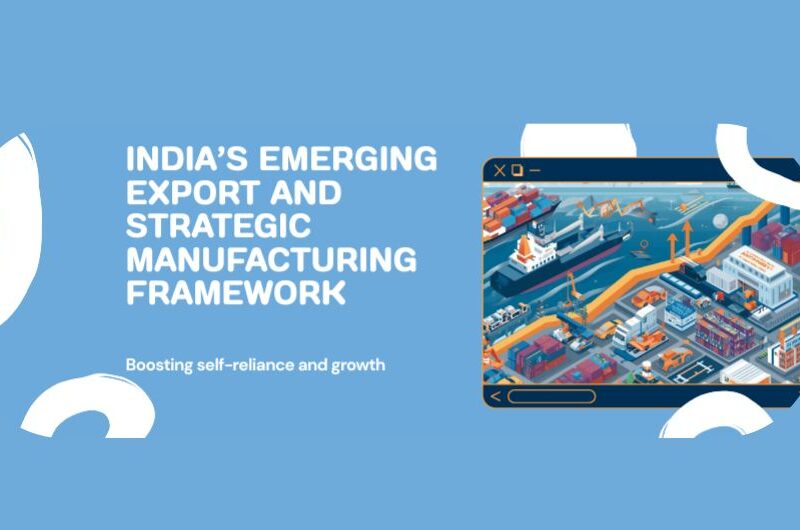
The Export Promotion Mission (EPM) is a unified national framework designed to strengthen India’s export ecosystem through coordinated financial and non-financial support. With an outlay of ₹25,060 crore for 2025–26 to 2030–31, the Mission integrates multiple schemes into a single digital system to improve competitiveness, market readiness and export capacity.

More Details

India’s Solar Momentum

India’s rapid solar expansion has positioned the country as a global clean-energy leader. Solar capacity has grown from 3 GW (2014) to 129 GW (2025), helping push non-fossil power beyond 50% of India’s total installed electricity capacity. Large-scale deployment, strong policy architecture, and international cooperation continue to drive this transformation.

1. India’s Solar Growth Story

More Details

India Hosts UNESCO’s 20th ICH Session

India will host the 20th session of the UNESCO Intergovernmental Committee for Safeguarding of the Intangible Cultural Heritage from 8 to 13 December 2025 at the Red Fort in New Delhi. This is the first time the session will be held in India, and the event aligns with the twentieth anniversary of India’s ratification of the 2003 Convention. The venue, a UNESCO World Heritage Site, symbolically brings together tangible and intangible heritage.

The 2003 Convention, adopted during UNESCO’s 32nd General Conference in Paris, was established to address global concerns about the vulnerability of living cultural traditions under pressures such as globalisation, rapid social change and limited resources. The Convention recognises that communities, including indigenous groups and traditional practitioners, play the central role in preserving and transmitting intangible heritage. It seeks to safeguard practices, rituals, performing arts, festive events, craftsmanship, oral traditions and knowledge systems that shape cultural identity.

More Details

Electronics Development Fund

The Electronics Development Fund (EDF) is a flagship initiative launched by the Government of India on 15 February 2016 to strengthen India’s innovation ecosystem in electronics, nano-electronics, IT and emerging technologies. It was created under MeitY as a Fund of Funds to support early-stage startups through professionally managed venture and angel funds. EDF has become a key pillar of India’s Electronics System Design and Manufacturing (ESDM) strategy.

India’s electronics sector has grown rapidly in recent years due to policy reforms, industrial expansion and rising domestic demand. The EDF was conceptualised to accelerate this momentum by increasing risk-capital availability for high-technology entrepreneurs. By nurturing innovation at the seed and growth stage, EDF aims to reduce import dependence and enhance India’s capabilities in indigenous design and IP generation.

More Details

International Day for Elimination of Violence Against Women

International Context and Significance

The International Day for the Elimination of Violence Against Women, observed every year on November 25, signals global resolve to combat gender-based violence across social, cultural and digital domains. Initiated by the United Nations General Assembly, it also marks the beginning of the 16 Days of Activism campaign (Nov 25–Dec 10), creating momentum for legislative, social and institutional reforms worldwide.

More Details

Free IAS Guidance
Start Your Journey Today 🇮🇳

Fill out the form below, and we will be in touch shortly.