Best UPSC and MPPSC IAS Coaching Classes in Gwalior

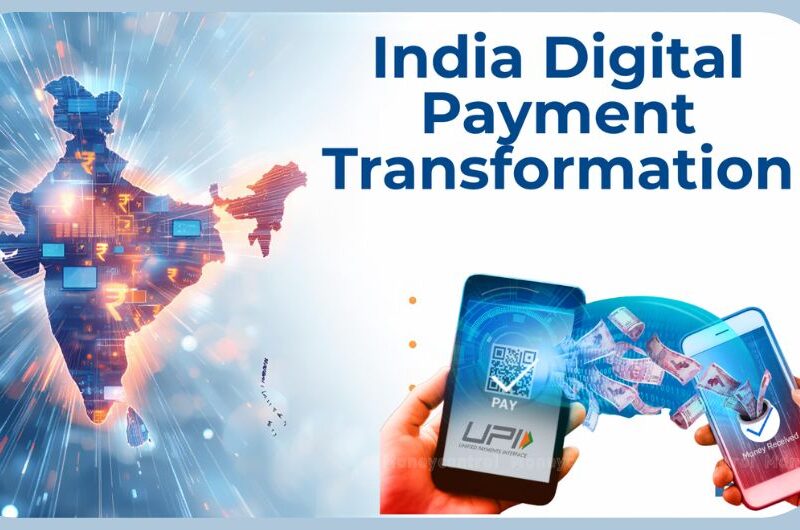
India Digital Payment Transformation

1. Unified Payments Interface (UPI) became the core of India’s fast payment ecosystem, transforming person-to-person and merchant transactions since 2016 through instant transfers, interoperability, low cost access, and widespread usability.

2. In June 2025, UPI processed 18.39 billion transactions worth ₹24.03 lakh crore, showing massive scale and reflecting about 32 percent annual growth over June 2024 levels.

More Details

India Economic Growth and Stability

India Economic Growth and Stability “In this global milieu, the Indian economy remains a key driver of global growth. Growth momentum is buoyed by strong domestic growth drivers, sound macroeconomic fundamentals and prudent policies.” ~ Sanjay Malhotra, RBI Governor   1. India recorded real Gross Domestic Product (GDP) growth of 6.5 percent in 2024–25, maintaining its position as the fastest growing major economy despite global uncertainty, trade tensions, and weakening cross-border investment conditions. 2. The Reserve Bank expects India to sustain 6.5 percent real GDP growth in 2025–26, while other estimates project similar momentum, reflecting confidence in domestic demand and macroeconomic stability. 3. India’s nominal GDP at current prices rose from ₹106.57 lakh crore in 2014–15 to an expected ₹331.03 lakh crore in 2024–25, nearly tripling within a single decade. 4. Inflation based on the Consumer Price Index (CPI) declined to 2.82 percent in May 2025, marking the lowest annual retail inflation level recorded since February 2019. 5. Consumer Food Price Index (CFPI) inflation fell to 0.99 percent in May 2025, with rural food inflation at 0.95 percent and urban food inflation at 0.96 percent. 6. The Reserve Bank’s June 2025 assessment indicated inflation would remain aligned with the 4 percent medium-term target, supported by strong crop output and subdued imported inflation pressures. 7. Retail investor participation in capital markets rose from 4.9 crore in 2019 to 13.2 crore by the end of 2024, showing broadening confidence in equity investment. 8. Between April and December 2024, India recorded 259 Initial Public Offerings (IPOs), a 32.1 percent increase over the previous year, while funds raised surged to ₹1,53,987 crore overall. 9. India’s share in global IPO listings climbed from 17 percent in 2023 to 30 percent in 2024, giving the country the highest global share recorded. 10. Foreign Direct Investment (FDI) inflows reached United States Dollar (USD) 81.04 billion in Financial Year (FY) 2024–25, registering a 14 percent rise over FY 2023–24 and more than doubling from 2013–14. 11. The services sector attracted 19 percent of total FDI in FY 2024–25, while computer software and hardware received 16 percent and trading accounted for 8 percent. 12. India’s foreign exchange reserves stood at USD 697.9 billion on 20 June 2025, sufficient to cover more than eleven months of goods imports comfortably. 13. India’s current account posted a surplus of USD 13.5 billion in Quarter 4 (Q4) of 2024–25, while the full-year current account deficit remained contained at 0.6 percent. 14. Total exports touched a record USD 824.9 billion in 2024–25, with services exports rising to USD 387.5 billion and non-petroleum merchandise exports reaching USD 374.1 billion. 15. Manufacturing Gross Value Added (GVA) at constant prices increased from ₹15.6 lakh crore in 2013–14 to ₹27.5 lakh crore in 2023–24, reflecting a significantly expanded industrial base. Must Know Terms :   1.CFPI Consumer Food Price Index (CFPI) measures changes in food prices paid by consumers and is used to track food inflation trends. In May 2025, CFPI inflation fell to 0.99 percent. Rural food inflation stood at 0.95 percent, while urban food inflation was 0.96 percent. This marked the lowest food inflation level recorded since October 2021 in India during that period. 2.Resilience Resilience describes the ability of an economy to sustain growth, absorb shocks, and recover without major instability. India’s resilience in 2024–25 was reflected in 6.5 percent real GDP growth, easing inflation, strong exports, robust foreign exchange reserves, and steady foreign investment. It also showed in stable domestic demand, active capital markets, and manageable current account and debt conditions. 3.Surplus Surplus in external accounts means receipts exceed payments during a given period. India recorded a current account surplus of USD 13.5 billion in the fourth quarter of 2024–25, equal to 1.3 percent of GDP. This was higher than the USD 4.6 billion surplus in the corresponding quarter of the previous year, indicating stronger export earnings and foreign inflows. 4.Inflows Inflows refer to money entering an economy from external sources such as Foreign Direct Investment (FDI), remittances, and portfolio investments. In FY 2024–25, India received USD 81.04 billion in FDI inflows, up 14 percent from the previous year. Strong inflows supported external stability, improved investor confidence, and contributed to a stronger overall balance of payments position. 5.Merchandise Merchandise refers to physical goods traded across borders, unlike services such as software or consulting. In 2024–25, India’s non-petroleum merchandise exports reached a record USD 374.1 billion, rising 6.0 percent from the previous year. Growth came from sectors such as machinery, chemicals, electronics, and defence equipment, showing strengthening manufacturing capacity and wider global market competitiveness. 6.Vigour Vigour in economic context means strong activity, momentum, and sustained expansion across sectors. India’s vigour in 2024–25 was visible in 9.9 percent nominal GDP growth, 6.5 percent real GDP growth, rising private investment, strong infrastructure spending, expanding exports, and increasing retail market participation. It reflected an economy growing with confidence, stability, and broad-based sectoral support throughout the year. Key Takeaways : a. India’s GDP grew 6.5% in 2024–25, the highest among major economies. b. Inflation fell to 2.82% in May 2025, the lowest level since February 2019. c. Total exports reached a record USD 824.9 billion in 2024–25.     MCQ : 1. In 2024–25, India recorded real Gross Domestic Product growth of: A) 5.8 percent B) 6.5 percent C) 7.2 percent D) 4.9 percent 2. India’s nominal Gross Domestic Product at current prices was expected to reach which level in 2024–25? A) ₹331.03 lakh crore B) ₹281.03 lakh crore C) ₹301.03 lakh crore D) ₹351.03 lakh crore 3. Consumer Price Index inflation declined to what level in May 2025? A) 3.82 percent B) 2.82 percent C) 1.82 percent D) 4.82 percent 4. Consumer Food Price Index inflation in May 2025 stood at: A) 1.99 percent B) 0.79 percent C) 0.99 percent D) 1.29 percent 5. Retail investor participation in capital markets increased to how many crore by the end of 2024? A) 10.2 crore B) 11.2 crore C) 12.2 crore D) 13.2 crore 6. Between April and December 2024,

More Details

India’s Cloud and AI Infrastructure Push

India’s Cloud and AI Infrastructure Push   1. Budget 2026–27 proposes a tax holiday till 2047 for eligible foreign cloud service providers using India-based data centres for global operations, aiming to strengthen India’s digital infrastructure position. 2. The policy targets foreign companies providing global cloud services through Indian data centre infrastructure, while ensuring domestic transactions remain taxable through Indian reseller entities under specified conditions. 3. Income from global cloud operations routed through India-based data centres will not be taxed in India for eligible foreign providers during Tax Year 2026–27 to 2046–47. 4. Eligibility requires the foreign company to be notified, data centre services to be procured from an Indian company, and the facility to be notified by MeitY [Ministry of Electronics and Information Technology]. 5. Services to Indian users must be delivered through an Indian reseller company, ensuring domestic operations continue within India’s tax framework despite the tax holiday on global operations. 6. Domestic profits remain taxable, including resident Indian data centre services to the global entity and resale of cloud services to Indian customers by resident Indian resellers. 7. Where the Indian data centre company is a related entity operating as a cost-plus centre, the Budget proposes a safe harbour margin of 15 percent. 8. UNCTAD [United Nations Conference on Trade and Development] reported that data centres accounted for more than one-fifth of global greenfield project values in 2025, with announced investments exceeding 270 billion US dollars. 9. Industry estimates indicate India’s cloud data centre capacity has reached around 1,280 megawatts and is projected to grow four to five times by 2030. 10. Nearly 70 billion US dollars of investments are underway in India’s data centre sector, while another 90 billion dollars in projects have already been announced. 11. India Semiconductor Mission 2.0 was announced in the Budget, with focus on semiconductor equipment, materials, design ecosystem expansion, talent development, and 1,000 crore rupees allocation. 12. The Electronics Components Manufacturing Scheme (ECMS) allocation was raised from about 22,000 crore rupees to 40,000 crore rupees in Budget 2026–27, and the scheme received 149 applications. 13. Budget proposals for IT services include one Information Technology Services category, 15.5 percent common safe harbour margin, 2,000 crore threshold, automation, and faster unilateral APA [Advance Pricing Agreement] processing. 14. Under Digital India, GI Cloud [Government of India Cloud] MeghRaj has been established for government cloud requirements, providing secure, scalable, and elastic cloud facilities through the NIC [National Informatics Centre]. 15. The measure aligns cloud incentives with semiconductor, electronics, and IT reforms, positioning India as a long-term destination for global cloud and AI infrastructure investment. Must Know Terms : 1. MeitY MeitY stands for Ministry of Electronics and Information Technology. In this framework, MeitY notifies eligible data centre facilities for the proposed tax holiday. This notification is a mandatory condition for foreign cloud providers seeking the exemption. MeitY also anchors wider digital infrastructure policy in India, including electronics, semiconductor, data governance, and technology ecosystem measures linked with Budget 2026–27 reforms. 2.UNCTAD UNCTAD stands for United Nations Conference on Trade and Development. It reported that data centres accounted for more than one-fifth of global greenfield project values in 2025. Announced investments exceeded 270 billion US dollars. This statistic was used to underline the rising global competition for cloud and AI infrastructure investment. UNCTAD’s assessment highlights data centres as a major driver of international capital flows. 3.MeghRaj MeghRaj is India’s GI Cloud created under the Digital India initiative to meet government cloud requirements. It provides secure, scalable, and elastic cloud services for e-governance delivery through the National Informatics Centre. It is part of India’s public digital infrastructure architecture. National Data Centres under this ecosystem operate with layered security frameworks and support wider adoption of government cloud-based digital services. 4.APA APA means Advance Pricing Agreement under the Income-tax framework. A unilateral APA is an agreement between a taxpayer and the Central Board of Direct Taxes to determine transfer pricing for specified transactions in advance for a fixed period. Budget 2026–27 proposes faster processing of unilateral APAs for IT services. This supports tax certainty, reduces disputes, and improves predictability for technology and service sector firms. 5.ECMS ECMS stands for Electronics Components Manufacturing Scheme. In Budget 2026–27, its allocation was increased from about 22,000 crore rupees to 40,000 crore rupees. The scheme received 149 applications, showing strong industry interest. ECMS is intended to strengthen domestic production of electronics components. It forms part of the wider electronics and semiconductor ecosystem that supports digital infrastructure, cloud expansion, and advanced computing systems. 6.SafeHarbour SafeHarbour refers to a specified profit margin accepted under tax rules for certain transactions if prescribed conditions are met, reducing detailed scrutiny. In this policy framework, a 15 percent safe harbour margin is proposed where an Indian data centre is a related cost-plus entity of the foreign company. Budget 2026–27 also proposes a 15.5 percent common safe harbour margin for Information Technology Services. Key Takeaways a. Tax holiday till 2047proposed for eligible foreign cloud providers using India-based data centres for global operations b. Structured eligibility framework, including notified entities, use of Indian data centres, and Indian reseller requirement for domestic services c. Domestic transactions continue under existing tax provisions, with a proposed 15% safe harbour margin for related data centre entities d. Part of a broader digital and semiconductor ecosystem push under Budget 2026–27to position India as a global cloud and AI infrastructure hub MCQ : 1. Budget 2026–27 proposes a tax holiday till which year for eligible foreign cloud service providers using India-based data centres for global operations? A) 2035 B) 2040 C) 2047 D) 2050 2. The proposed tax holiday is meant for foreign cloud service providers using India-based data centres mainly for: A) domestic retail sales only B) global operations C) defence procurement only D) state government payroll systems 3. Under the proposed framework, services to Indian users must be provided through: A) a foreign parent entity directly B) an Indian reseller company C) a state-owned telecom operator only D) any offshore branch office 4. Which ministry must notify

More Details

India U.S. Trade Breakthrough and Export Gains

India U.S. Trade Breakthrough and Export Gains   1. India secured preferential access to the United States market valued at about 30 trillion dollars, marking a major trade breakthrough across goods, technology cooperation, and multiple export-oriented sectors. 2. India’s exports to the United States stood at 86.35 billion dollars in 2024, and the agreement significantly improves competitive access across major manufacturing, agriculture, services, and technology sectors. 3. Reciprocal tariffs had reached 50 percent on several Indian products, but under the agreement tariffs on 30.94 billion dollars of exports were reduced sharply to 18 percent. 4. Tariffs on another 10.03 billion dollars worth of Indian exports were reduced from 50 percent to zero, greatly improving price competitiveness for Indian products in America. 5. Additional structural duty relief assures zero reciprocal duty access for 28.30 billion dollars under Section 232 end-use commitments, covering products where earlier duties could rise to 50 percent. 6. Textiles and apparel gained major tariff cuts from 50 percent to 18 percent, while silk secured zero-duty access, opening stronger opportunities in a United States market. 7. Leather and footwear exports from India now face tariffs of 18 percent instead of 50 percent, improving access to the 42 billion dollar United States market. 8. Gems and jewellery exports gained tariff reduction from 50 percent to 18 percent, while diamonds, platinum, and coins secured zero-duty access in a 29 billion market. 9. Home décor exports received tariff reduction from 50 percent to 18 percent, while selected products including seats, chandeliers, and illuminated signs secured zero-duty access additionally. 10. Machinery and parts exports, excluding aircraft parts, now face reduced tariffs of 18 percent instead of 50 percent, expanding opportunities in the 477 billion dollar market. 11. India maintains a 1.3 billion dollar agricultural trade surplus with the United States, with exports of 3.4 billion dollars and imports of 2.1 billion. 12. The United States will apply zero additional duty on 1.36 billion dollars of Indian agricultural exports, including spices, tea, coffee, fruits, nuts, and processed products. 13. Highly sensitive agricultural sectors remain protected, including dairy, meat, poultry, cereals, millets, pulses, oilseeds, ethanol for fuel, and various other strategically sensitive farm products. 14. The agreement also secures zero additional duty access for 38 billion dollars of industrial exports, including aircraft parts, generic drugs, pharmaceutical ingredients, machinery, and auto components. 15. India ranked fifth globally in digitally delivered services exports in 2024, recording 0.28 trillion dollars, while the agreement aims to strengthen digital trade and technology cooperation.   Must Know Terms :   1.CBAM CBAM means Carbon Border Adjustment Mechanism. It is the European Union’s border levy framework linked to carbon emissions embedded in imported goods. It is designed to reduce carbon leakage and align import costs with the EU carbon pricing system. For India, it matters because it can affect export competitiveness in carbon-intensive sectors and has been criticized as a trade-restrictive climate measure.  2.MSMEs MSMEs means Micro, Small and Medium Enterprises. In the trade agreement context, these units are expected to benefit strongly in labour-intensive sectors such as textiles, leather, footwear, toys, home décor, and processed goods. Lower tariffs improve their price competitiveness in the U.S. market, support production scaling, increase export participation, strengthen cluster-based manufacturing, and create additional employment in smaller business ecosystems.  3.TRQs TRQs means Tariff Rate Quotas. Under this mechanism, a fixed quantity of a product is allowed entry at a lower customs duty, while imports beyond that quota attract a higher tariff. In the agreement, products such as in-shell almonds, walnuts, pistachios, and lentils were placed under TRQs. This method allows limited market opening while preserving tariff protection for sensitive domestic sectors. 4.Copra Copra is dried coconut kernel used mainly for extracting coconut oil and producing related coconut-based products. It is an agricultural commodity with export importance in tropical economies. In the agreement, copra and coconut oil are among the items receiving zero additional U.S. duty treatment. Its inclusion is significant because it widens farm export access alongside spices, tea, coffee, fruits, nuts, and processed products. 5.Peptones Peptones are protein breakdown products obtained by partial hydrolysis of animal, plant, or microbial material. They are widely used in food processing, pharmaceuticals, biotechnology, microbiological culture media, and industrial formulations. In the agreement, peptones and their derivatives were placed under phased tariff elimination up to ten years. This longer phase-out period provides adjustment time to domestic users and related processing industries. 6.Abalone Abalone is a high-value edible marine mollusc considered a premium seafood product in global trade. It is often sold fresh, frozen, canned, or processed for niche consumption markets. In the agreement, abalone appears among consumer-oriented imports given limited and structured access to widen product choice without significantly disturbing domestic supply. It is grouped with berries, premium foods, select oils, and frozen fish products.     Key Takeaways :   1.India secured preferential access to a USD 30 trillion U.S. market 2. Textiles & apparel gain tariff cuts from 50% to 18%, with silk securing 0% duty access in a USD 113 billion U.S. market 3. Machinery exports see tariffs reduced to 18%, opening opportunities in a USD 477 billion U.S. market 4. USD 1.36 billion of Indian agricultural exports receive zero additional U.S. duty access 5. Key products including spices, tea, coffee, fruits, nuts and processed foods gain zero-duty treatment 6. Highly sensitive sectors such as dairy, meat, poultry and cereals remain fully protected     What India gets? a. Highly competitive rate of 18% on $ 900 bn worth of global imports of the U.S. b. Zero duty on $ 150 bn worth of global imports of the U.S. c. No additional duty on $ 720 bn worth of global imports of the U.S. d. Exemption continues $ 350 bn worth of global imports of the U.S. e. Preferential treatment on 232 tariffs     MCQ : 1. India secured preferential access to the United States market valued at about: A) 20 trillion dollars B) 25 trillion dollars C) 30 trillion dollars D) 35 trillion dollars 2. India’s exports to the United States in 2024 stood at: A) 76.35 billion

More Details
India High Growth and Resilient Economy

India High Growth and Resilient Economy   1. Real GDP and Gross Value Added are projected to grow by 7.4% and 7.3% respectively in FY26, while real GDP growth for FY27 is projected in the range of 6.8% to 7.2%. 2. Average headline inflation during April to December 2025 stood at 1.7%, the lowest since the beginning of the Consumer Price Index series. 3. The Reserve Bank of India reduced its FY26 inflation forecast from 2.6% to 2.0% in December 2025, while the IMF projected 2.8% inflation for FY26. 4. Agriculture and allied activities are estimated to grow by 3.1% in FY26, while agricultural Gross Value Added expanded by 3.6% in the first half of FY26. 5. Allied agricultural segments such as livestock and fisheries recorded steady growth of around 5% to 6%, helping diversify rural income sources. 6. The industrial sector is projected to grow by 6.2% in FY26, compared with 5.9% in FY25, while manufacturing Gross Value Added rose by 7.72% in Q1 and 9.13% in Q2 of FY26. 7. Production Linked Incentive schemes across 14 sectors attracted over ₹2 lakh crore of actual investment, generated production and sales above ₹18.7 lakh crore, and created more than 12.6 lakh jobs by September 2025. 8. India’s Global Innovation Index ranking improved from 66th in 2019 to 38th in 2025, reflecting stronger innovation-linked industrial capacity. 9. The services sector is estimated to grow by 9.1% in FY26, up from 7.2% in FY25, with its share reaching 53.6% of GDP in H1 FY26 and 56.4% of GVA. 10. India became the world’s seventh-largest exporter of services, with its share in global services trade rising from 2% in 2005 to 4.3% in 2024. 11. Total employment in Q2 FY26 stood at 56.2 crore persons, while the Labour Force Participation Rate reached 56.1%, Worker Population Ratio 53.4%, and unemployment rate declined to 4.8% in December 2025. 12. Female Labour Force Participation Rate rose to 35.3% in December 2025, and the e-Shram portal had registered more than 31 crore unorganised workers by January 2026, with women forming over 54%. 13. India’s total exports reached USD 825.3 billion in FY25 and USD 418.5 billion in H1 FY26, while services exports touched an all-time high of USD 387.5 billion in FY25. 14. Foreign exchange reserves stood at USD 701.4 billion on 16 January 2026, providing around 11 months of import cover and covering over 94% of external debt. 15. Repo rate was reduced by 100 basis points between April and December 2025 to 5.25%, Gross GST collections during April to December 2025 reached ₹17.4 lakh crore, and the Financial Inclusion Index rose from 64.2 to 67.0.     Must Know Terms : 1. Buoyancy Revenue buoyancy reflects how strongly government revenue rises when the economy expands. In recent fiscal trends, revenue receipts improved from about 8.5% of GDP during FY16–FY20 to 9.2% in FY25. Stronger non-corporate tax collections played a major role, increasing from nearly 2.4% of GDP before the pandemic to around 3.3% in the post-pandemic period across the economy. 2.Disinflation Disinflation means inflation is still positive but rising at a slower rate than before. During April–December 2025, average headline inflation fell to 1.7%, the lowest since the Consumer Price Index series began. India also recorded one of the sharpest declines among major emerging economies in 2025, with headline inflation dropping by about 1.8 percentage points over 2024 levels. 3.GVA Gross Value Added (GVA) measures the value created by different sectors after subtracting input costs. For FY26, GVA is projected to grow by 7.3%. Agriculture supported stability, manufacturing accelerated to 7.72% in Q1 and 9.13% in Q2, while services reached a 56.4% share in total GVA, showing the dominance of modern and tradable sectors in the economy. 4.SASCI SASCI stands for Special Assistance to States for Capital Expenditure. It is a central support mechanism designed to encourage states to maintain and expand productive capital spending. Under this arrangement, states were incentivised to keep capital expenditure around 2.4% of GDP in FY25. The scheme supports infrastructure creation, strengthens public investment quality, and improves long-term growth capacity across regions. 5.Intermediation Financial intermediation is the process through which banks and financial institutions move savings into loans, investments, and productive economic activity. In December 2025, the money multiplier rose to 6.21 from 5.70 a year earlier, showing improved banking efficiency. Broad money growth reached 12.1%, while scheduled commercial bank credit growth climbed to 14.5%, indicating stronger transmission of liquidity. 6.Financialisation Financialisation refers to the growing shift of household savings toward market-linked financial instruments instead of only traditional deposits or physical assets. In India, the share of equity and mutual funds in annual household financial savings rose from around 2% in FY12 to over 15.2% in FY25. Individual investors’ share in equity ownership also reached 18.8% by September 2025. Key Takeaways   A. India’s growth remains robust, with real GDP growth for FY27 projected in the range of 6.8- 7.2%. B. Inflation fell to historic lows, averaging 1.7% in April-December 2025. C. All major sectors contributed to growth, with agriculture stabilising rural demand, manufacturing gaining momentum, and services leading expansion. D.India’s total exports reached record levels of USD 825.3 billion in FY25 and USD 418.5 billion in H1 FY26 E. Fiscal position strengthened, with improved revenue buoyancy, rising capital expenditure, and enhanced credibility reflected in sovereign rating upgrades. F. Monetary conditions turned supportive, repo rate at 5.25% as of December 2025.     MCQ  : 1. Real GDP growth for FY26 is projected at: A) 7.4% B) 7.3% C) 6.8% D) 9.1% 2. Gross Value Added for FY26 is projected to grow by: A) 6.2% B) 7.3% C) 5.9% D) 7.2% 3. Real GDP growth for FY27 is projected in which range? A) 5.8% to 6.2% B) 6.8% to 7.2% C) 7.4% to 7.8% D) 4.0% to 5.0% 4. Average headline inflation during April to December 2025 stood at: A) 2.8% B) 2.0% C) 1.7% D) 2.6% 5. In December 2025, the Reserve Bank of India reduced its FY26

More Details

Strengthening India’s National Accounts and Core Economic Statistics

Strengthening India’s National Accounts and Core Economic Statistics   1. India is revising the base year for Gross Domestic Product estimates from 2011-12 to 2022-23 to better reflect current economic structure, digitalisation, and newly emerging sectors. 2. The year 2022-23 was selected as the new GDP base because it is considered the most recent normal year after disruptions caused during 2019-20 and 2020-21. 3. Real-time administrative databases such as e-Vahan, Public Financial Management System, and Goods and Services Tax system are being incorporated to improve national accounts accuracy, detail, and sectoral coverage. 4. The Consumer Price Index base year is being revised to 2024 using Household Consumption Expenditure Survey 2023-24 data for updated baskets and expenditure weights. 5. The CPI base revision began in early 2023 under an Expert Group including representatives from RBI, key ministries, academia, and senior government officials. 6. The Index of Industrial Production base year is being revised to 2022-23 to update item weights, sectoral coverage, factory representation, and consistency with national accounts. 7. The rebased GDP series with base year 2022-23 was scheduled for release on 27 February 2026 under the announced Ministry of Statistics timetable. 8. The new Consumer Price Index series with base year 2024 was scheduled for release on 12 February 2026 as part of statistical modernisation. 9. The new Index of Industrial Production series with base year 2022-23 was slated for release on 28 May 2026 under the official schedule. 10. The services sector contributes around 50 percent of India’s GDP, creating the need for improved granular statistical coverage of incorporated and unincorporated service enterprises. 11. A pilot study for the Annual Survey of Service Sector Enterprises was undertaken by the National Statistical Office to fill data gaps in incorporated services. 12. Starting 2025, Quarterly Bulletins on Unincorporated Sector Enterprises were introduced to provide quarterly estimates instead of waiting for detailed annual unincorporated sector reports. 13. The Periodic Labour Force Survey methodology was revised from January 2025 to generate monthly national estimates and quarterly rural labour market indicators. 14. From January 2025, district was made the basic sampling stratum in National Sample Surveys, enabling district-level estimates across PLFS, ASUSE, and related surveys. 15. The revamped Microdata Portal launched in 2025 recorded 88 lakh hits since January 2025, reflecting expanded public access to official unit-level datasets. Must Know Terms : 1. eVahan eVahan is a real-time administrative database related to vehicle registrations. It is being incorporated into India’s revised national accounts framework to improve GDP estimation accuracy and sectoral detail. Its inclusion reflects the wider use of digitised administrative records in official statistics. In the current statistical reforms, eVahan is cited among the new granular data sources supporting the GDP base year revision to 2022-23. 2.PFMS PFMS stands for Public Financial Management System. It is a real-time administrative database now being used in India’s statistical modernisation to strengthen national accounts compilation. PFMS provides granular public finance-related economic data and is listed among the new digital sources being incorporated into GDP estimation. Its role has gained importance in the revision of the GDP base year from 2011-12 to 2022-23 for better coverage. 3.QBUSE QBUSE stands for Quarterly Bulletins on Unincorporated Sector Enterprises. Starting in 2025, it was introduced to provide quarterly estimates instead of waiting for annual reports on the unincorporated non-agricultural sector. It uses the same framework as ASUSE while focusing on scale, composition, and employment profile. Its launch reflects the National Statistical Office’s effort to provide more timely and actionable data on informal enterprises. 4.ASSSE ASSSE stands for Annual Survey of Service Sector Enterprises. It was developed after a pilot study by the National Statistical Office to fill the gap in regular national-level data on incorporated service sector enterprises. The survey is designed to capture Gross Value Added, fixed capital, capital formation, employment, and other operational features. Its questionnaire was prepared under the guidance of the Technical Advisory Group. 5.eSIGMA eSIGMA is the digital platform through which National Sample Survey data collection is now conducted using Computer Assisted Personal Interviewing. It includes in-built validation checks, real-time data submission, multilingual interfaces, and Artificial Intelligence enabled chatbot support. These features have improved field efficiency and data quality. eSIGMA is part of the wider statistical reform aimed at faster release cycles and stronger survey design across India. 6.eSankhyiki eSankhyiki is a comprehensive official data platform launched in June 2024. It hosts more than 136 million records, 772 indicators, and 18 statistical products across nine thematic areas. It has onboarded datasets from DPIIT, Ministry of Labour and Employment, Ministry of Health and Family Welfare, and the Reserve Bank of India. It also supports API-based dissemination and integration with platforms like NDAP.     Key Takeaways A. Base year for GDP estimates being revised to 2022-23to reflect new economic structures. B. CPI base year is revised to 2024, updating the consumption basket and weights for both rural and urban households. C. IIP is being revised to 2022-23,aligned with the new national accounts series. D. Informal sector measurement has improvedwith quarterly QBUSE bulletins. E. District-level estimation has become a core design featureacross PLFS, ASUSE, and NSS surveys. F. Public access to official data has been expanded through GoIStats, e-Sankhyiki, and the revamped Microdata Portal, supporting transparency and data reuse.     MCQ : 1. India is revising the base year for Gross Domestic Product estimates from: A) 2004-05 to 2022-23 B) 2011-12 to 2022-23 C) 2014-15 to 2022-23 D) 2016-17 to 2022-23 2. The new GDP base year was chosen as 2022-23 mainly because it was considered: A) the first post-liberalisation year B) the highest growth year in the decade C) the most recent normal year after pandemic disruptions D) the base year used by the World Bank 3. Which of the following real-time administrative databases are being incorporated into revised national accounts? A) e-Vahan, PFMS and GST system B) PMJDY, UPI and Aadhaar C) GeM, ONDC and DigiLocker D) CoWIN, e-Sanjeevani and ORS 4. The Consumer Price Index base year is being revised to: A) 2022

More Details

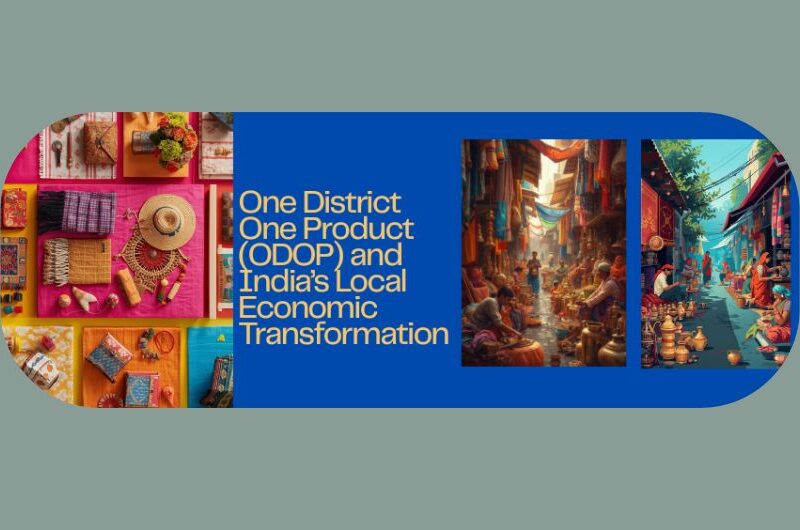
One District One Product (ODOP) and India’s Local Economic Transformation

One District One Product (ODOP) and India’s Local Economic Transformation     1. One District One Product (ODOP) began in Uttar Pradesh in 2018, where Moradabad brassware was selected as a district signature product under a state-led economic initiative. 2. As of December 2025, ODOP had been adopted nationally and scaled to over 770 districts, extending its reach to millions of artisans, entrepreneurs, farmers, and producers. 3. ODOP is spearheaded by the Department for Promotion of Industry and Internal Trade (DPIIT) to unlock district economic potential, promote balanced regional growth, and strengthen local competitiveness. 4. ODOP products are selected by States and Union Territories based on existing district ecosystems, and the final approved product list is communicated to DPIIT. 5. More than 1,200 ODOP products have been listed on the DPIIT digital portal, spanning sectors such as textiles, food products, handicrafts, minerals, and traditional district specialities. 6. ODOP expands market access through digital channels, including the Government e-Marketplace (GeM) ODOP Bazaar and other state-level e-commerce platforms for wider product visibility. 7. At Uttar Pradesh International Trade Show 2025, the ODOP Pavilion featured 466 stalls and generated business leads and deals valued at ₹20.77 crore. 8. During Mahakumbh 2025 in Prayagraj, a dedicated 6,000 square metre ODOP exhibition zone displayed crafts from across India and numerous geographically indicated district products. 9. The Mahakumbh 2025 ODOP showcase included 75 geographically indicated products from Uttar Pradesh, of which 34 belonged specifically to the Kashi region. 10. Under ODOP in Uttar Pradesh, exports increased by 76 percent, rising from ₹88,967 crore in 2017-18 to ₹1.71 lakh crore in 2023-24. 11. Projects worth ₹6,000 crore were sanctioned in Uttar Pradesh under the ODOP Margin Money Scheme, supporting enterprise expansion and district-level economic transformation. 12. More than 1.25 crore ODOP artisans in Uttar Pradesh were trained and given modern toolkits under the ODOP Skill Development and Toolkit Distribution Scheme. 13. PM Ekta Malls are planned as dedicated retail and display hubs for ODOP, geographical indication, and handicraft products, with 29 Unity Malls approved across 27 states. 14. PM Ekta Malls are supported by ₹5,000 crore interest-free assistance, with at least ₹100 crore allocated per state to strengthen artisanal visibility and entrepreneurship. 15. ODOP has gained global outreach through over 80 Indian Missions, three overseas retail stores, and inclusion of ODOP products in gifting during G20 meetings.   Must know Terms : 1. Moradabad Moradabad, in Uttar Pradesh, became one of the earliest and most visible examples of ODOP after its brassware was selected as the district’s signature product in 2018. Known for generations of brass artisans, the city gained branding, market access, and institutional support under the programme. Its selection marked the beginning of a state experiment that later expanded into a nationwide district-based economic initiative. 2.DPIIT DPIIT stands for Department for Promotion of Industry and Internal Trade. It spearheads ODOP at the national level and coordinates the effort to unlock district economic potential, promote balanced regional growth, and strengthen local competitiveness. States and Union Territories communicate their final selected ODOP products to DPIIT. More than 1,200 ODOP products have been listed on its digital portal across multiple sectors. 3.UPITS UPITS refers to Uttar Pradesh International Trade Show. At UPITS 2025, ODOP received major national and international visibility through a dedicated pavilion. The ODOP Pavilion featured 466 stalls and generated business leads and deals worth ₹20.77 crore. The event became an important platform for showcasing district-specific products of Uttar Pradesh and demonstrating how ODOP can connect local producers with wider markets and commercial opportunities. 4.GeM GeM stands for Government e-Marketplace. Under ODOP, GeM supports digital market access through the GeM-ODOP Bazaar, where district-specific products are showcased to wider buyers. This helps artisans and producers reach larger markets beyond local trade channels. In the ODOP framework, GeM serves as a public digital commerce platform that improves product visibility, expands outreach, and supports institutional access for local economic products. 5.EktaMalls EktaMalls refers to PM Ekta Malls or Unity Malls, planned as dedicated retail and display hubs for ODOP, geographical indication products, and handicrafts. They are designed to provide space for every State and Union Territory to showcase signature products. A total of 29 Unity Malls have been approved across 27 states. They are backed by ₹5,000 crore interest-free support, including at least ₹100 crore per state. 6.ODOPBazaar ODOPBazaar refers to the dedicated ODOP storefront created on GeM for showcasing district-specific products. It functions as an e-commerce access point for local artisans, producers, and small enterprises under the One District One Product initiative. Through this digital marketplace model, ODOP products gain wider visibility and buyer access. It is part of the broader effort to strengthen sales, branding, and outreach through online channels. Key Takeaways a.ODOP empowers local artisans, reviving traditional skills and creating livelihoods. b.The initiative has scaled nationwide, transforming over 770 districtsinto economic hubs. c.Started in Uttar Pradesh, it is now India’s most celebrated initiative in local economic transformation. d.E-commerce onboarding initiatives such as the Government e-Marketplace (GeM)-ODOP Bazaar showcase and feature some of India’s finest ODOP offerings.   MCQ : 1. One District One Product began in Uttar Pradesh in: A) 2016 B) 2017 C) 2018 D) 2019 2. Under the initial ODOP experiment, Moradabad was identified for: A) carpets B) brassware C) glassware D) wooden toys 3. As of December 2025, ODOP had been scaled nationally to over: A) 570 districts B) 670 districts C) 770 districts D) 870 districts 4. ODOP at the national level is spearheaded by: A) Ministry of MSME B) DPIIT C) NITI Aayog D) NABARD 5. The final approved ODOP product list from States and Union Territories is communicated to: A) RBI B) GeM C) DPIIT D) GSTN 6. More than how many ODOP products have been listed on the DPIIT digital portal? A) 800 B) 1000 C) 1200 D) 1500 7. ODOP expands digital market access through the Government e-Marketplace platform known as: A) RuralCraft Portal B) GeM ODOP Bazaar C) IndiaMart Gram Hub D) Artisan Link India 8. At

More Details

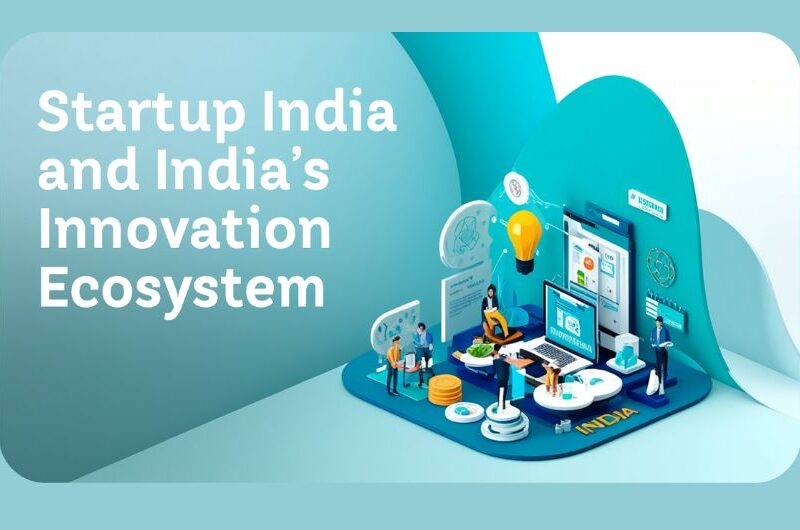
Startup India and India’s Innovation Ecosystem

Startup India and India’s Innovation Ecosystem 1. As of December 2025, India had over 2 lakh DPIIT-recognised startups, placing it among the world’s largest startup ecosystems. 2. Around 50 percent of DPIIT-recognised startups come from Tier II and Tier III cities, showing broad regional spread of entrepreneurship. 3. More than 45 percent of recognised startups had at least one woman Director or Partner as of December 2025. 4. India’s unicorn base rose from 4 firms in 2014 to over 120 by January 2026, with combined valuation above 350 billion dollars. 5. The Fund of Funds for Startups has a corpus of ₹10,000 crore and has committed support to over 140 AIFs. 6. Those AIFs collectively invested more than ₹25,500 crore in over 1,370 startups under the Fund of Funds framework. 7. Under the Credit Guarantee Scheme for Startups, more than 330 loans worth over ₹800 crore had been guaranteed for startup borrowers. 8. The Startup India Seed Fund Scheme has a corpus of ₹945 crore and approvals were given to more than 215 incubators. 9. Atal Innovation Mission, launched in 2016, has an outlay of ₹2,750 crore up to March 2028. 10. More than 10,000 Atal Tinkering Labs were operational across 733 districts, engaging over 1.1 crore students and enabling 16 lakh plus innovation projects. 11. GENESIS, launched in July 2022 by MeitY, has a budget outlay of ₹490 crore over five years to support about 1,600 technology startups. 12. As of December 2025, MeitY Startup Hub supported over 6,148 startups, more than 517 incubators, and over 329 labs nationwide. 13. TIDE 2.0, introduced in 2019, channels support through 51 incubators located in leading academic institutions and national research organisations. 14. NIDHI has supported over 12,000 startups, generated more than 1,30,000 jobs, backed over 175 Technology Business Incubators, and produced 1,100 plus IP outputs. 15. SVEP had supported 3.74 lakh enterprises by 30 June 2025, while PMEGP supports projects up to ₹50 lakh in manufacturing and ₹20 lakh in services. Must Know Terms :   1. MAARG MAARG stands for Mentorship, Advisory, Assistance, Resilience, and Growth. It is the National Mentorship Portal under Startup India. It connects startups with experienced mentors across sectors. The portal was created to provide easier mentorship access nationwide, especially for young ventures needing strategic guidance. It functions as a structured support platform within India’s startup ecosystem, strengthening advisory access beyond physical incubator networks. 2.GENESIS GENESIS means Gen Next Support for Innovative Startups. It was launched by MeitY in July 2022 as a National Deep-tech Startup Platform. It has a budget outlay of ₹490 crore over five years. The programme aims to scale about 1,600 technology startups. It focuses especially on Tier II and Tier III cities through implementing agencies, expanding deep-tech support beyond major metropolitan startup centres. 3.TIDE TIDE 2.0 stands for Technology Incubation and Development of Entrepreneurs. It was introduced in 2019 under MeitY to support ICT startups using emerging technologies such as IoT, AI, blockchain, and robotics. The scheme covers seven thematic areas including healthcare, education, agriculture, financial inclusion, infrastructure and transportation, environment, and clean tech. Support is channelled through 51 incubators in leading institutions and research organisations. 4.NIDHI NIDHI stands for National Initiative for Developing and Harnessing Innovations. It was launched in 2016 by the Department of Science and Technology. It supports knowledge-based and technology-driven ideas into startups. The programme has supported over 12,000 startups, generated more than 1,30,000 jobs, backed over 175 Technology Business Incubators, and produced 1,100 plus intellectual property outputs, showing its scale in innovation-led entrepreneurship support. 5.SVEP SVEP stands for Startup Village Entrepreneurship Program. It was implemented in May 2015 under DAY-NRLM to promote rural entrepreneurship. It helps poor households establish and expand local enterprises through financial and technical support. The programme reduces poverty through self-employment and skilled wage opportunities. As of 30 June 2025, it had supported 3.74 lakh enterprises, strengthening grassroots livelihoods, local market activity, and rural income diversification. 6.ASPIRE ASPIRE stands for A Scheme for Promotion of Innovation, Rural Industries and Entrepreneurship. It was launched by the Ministry of MSME in 2015. It promotes rural innovation through Livelihood Business Incubators, micro-enterprise creation, skilling, and re-skilling. For plant and machinery, it provides up to ₹1 crore to government agencies and ₹75 lakh to private agencies, besides operational expenditure support up to ₹1 crore. Key Takeaways • With over 2 lakh DPIIT-recognised startups as of December 2025, India stands firmly as one of the world’s largest startup ecosystems. • A decade of Startup India has built a full-lifecycle support system spanning ideation, funding, mentorship, and scale-up. • Around 50% of DPIIT-recognised startups originate from Tier-II and Tier-III cities, signalling the democratisation of entrepreneurship. • AIM 2.0 centred on piloting new initiatives to address ecosystem gaps and scaling proven models in collaboration with Governments, industry, academia, and communities. • Rural and grassroots programmes such as SVEP, ASPIRE, and PMEGP are enabling micro-enterprises, women-led ventures, and local jobs. MCQ : 1. As of December 2025, India had more than how many DPIIT-recognised startups? A) 1.5 lakh B) 2.5 lakh C) 1 lakh D) 2 lakh 2. Around what proportion of DPIIT-recognised startups originate from Tier II and Tier III cities? A) 60 percent B) 30 percent C) 50 percent D) 40 percent 3. More than what percentage of recognised startups had at least one woman Director or Partner as of December 2025? A) 35 percent B) 45 percent C) 55 percent D) 25 percent 4. India’s unicorn count increased from 4 firms in 2014 to over how many by January 2026? A) 100 B) 80 C) 140 D) 120 5. The Fund of Funds for Startups has a corpus of: A) ₹7,500 crore B) ₹5,000 crore C) ₹10,000 crore D) ₹12,500 crore 6. The Fund of Funds has committed support to over how many AIFs? A) 170 B) 110 C) 90 D) 140 7. Those AIFs collectively invested more than how much in startups? A) ₹15,500 crore B) ₹20,500 crore C) ₹30,500 crore D) ₹25,500 crore 8. Under

More Details

World Wildlife Day 2026 and Medicinal Plant Conservation

World Wildlife Day 2026 and Medicinal Plant Conservation 1. World Wildlife Day is observed on 3 March, marking adoption of CITES, while the 2026 theme focuses on medicinal and aromatic plants, health heritage, and livelihoods. 2. India is among the world’s 17 mega biodiversity rich countries and holds nearly 7 percent of global biodiversity, giving special significance to medicinal plant conservation. 3. India has 15 agro climatic regions and about 45,000 plant species, of which nearly 15,000 are medicinal plants and around 8,000 are used in medicine. 4. Nearly 70 percent of India’s medicinal and aromatic plants occur in the tropical forests of the Western Ghats, Eastern Ghats, Himalayas, and Aravalli range. 5. Botanical Survey of India has identified over 5,250 plant species and documented more than 9,567 folk medicinal claims for treating different ailments across communities. 6. The demand supply assessment estimated annual domestic demand for medicinal plants at about 5,12,000 metric tonnes in 2014 to 15, reflecting major market scale. 7. The same study documented 1,178 medicinal plant species in trade, of which 242 species were traded in high volumes exceeding 100 metric tonnes annually. 8. India supports in situ conservation through Medicinal Plants Conservation Area initiatives, with 115 MPCA sites currently representing models of indigenous health traditions and biodiversity protection. 9. Ex situ conservation includes preservation of 9,361 medicinal and aromatic plant accessions at the National Seed Gene Bank under NBPGR, New Delhi facilities. 10. The Central Sector Scheme on Conservation, Development and Sustainable Management of Medicinal Plants has an outlay of ₹322.41 crore for 2021 to 22 through 2025 to 26. 11. Under this scheme, MPCDAs are developed for natural habitat protection, while plantations on degraded and rural lands are promoted for conservation and resource augmentation. 12. e CHARAK mobile application and web portal were launched by NMPB to improve medicinal plant trade, information exchange, and market access for farmers nationwide. 13. e CHARAK regularly updates fortnightly market prices of 100 medicinal plants collected from 25 herbal markets across India, improving price visibility for stakeholders. 14. NMPB’s Integrated Component supports quality planting material, IEC activities, post harvest infrastructure, marketing systems, and quality testing certification across medicinal plant supply chains. 15. Nagauri Ashwagandha received GI tag registration under an NMPB supported project through GI Application No. 1143 on 24 November 2025 in India. Must know Terms : 1. MPCA MPCA means Medicinal Plants Conservation Area. It is an in situ conservation model for protecting medicinal plant species in natural habitats. India currently has 115 MPCA sites. These sites conserve wild medicinal species while linking biological diversity, cultural diversity, and indigenous health traditions. They function as field based conservation models within broader habitat protection systems such as parks, reserves, and sanctuaries. 2.MPCDA MPCDA means Medicinal Plants Conservation and Development Area. These are supported under the Central Sector Scheme on Conservation, Development and Sustainable Management of Medicinal Plants. The scheme has an outlay of ₹322.41 crore for 2021-22 to 2025-26. MPCDAs protect plants in natural habitats, while parallel support is provided for plantations on degraded lands and rural landscapes for resource augmentation. 3.GACP GACP stands for Good Agricultural and Collection Practices. It is a quality assurance component promoted under the National Medicinal Plants Board framework. It focuses on scientific cultivation, proper collection, handling, and quality maintenance of medicinal plant raw material. In the same scheme structure, research support and Raw Drug Repositories are also promoted, strengthening standardisation, traceability, and reliability in the medicinal plant sector. 4.AVMP AVMP stands for Aushadhi Vanaspati Mitra Program. It is run by the National Medicinal Plants Board under the Ministry of Ayush. The programme recognises and rewards individuals, communities, and institutions for significant contribution to medicinal plant conservation, cultivation, and marketing. Its practical purpose is to encourage wider participation in the sector and promote public involvement in protecting and sustaining medicinal plant resources. 5.eCHARAK eCHARAK is the digital platform launched by the National Medicinal Plants Board for medicinal plant trade and stakeholder information exchange. It is available as both a mobile application and web portal. The platform supports farmers and other stakeholders through multilingual access. It regularly updates fortnightly market prices of 100 medicinal plants collected from 25 herbal markets across India, improving transparency and market access. 6.Navara Navara is a GI tagged rice variety grown mainly in Palakkad and nearby districts of Kerala. In Ayurveda it is called Shashtikashali. It is used in the Panchakarma therapy known as Navarakizhi. The text associates it with treatment of rheumatic pain, blood circulation problems, respiratory diseases, and support in polio related disabilities, making it both a medicinal and heritage linked plant resource.       Key Takeaways A. World Wildlife Day is observed on 3 March to mark the adoption of CITES (Convention on International Trade in Endangered Species of Wild Fauna and Flora). The theme for 2026 is “Medicinal and Aromatic Plants: Conserving Health, Heritage and Livelihoods” highlighting the importance of plant resources for health and livelihoods. B. India is one of 17 mega biodiversity-rich countries with around 15,000 medicinal plant species, of which 8,000 are used in Indian medicine, making it one of the world’s most important hubs for medicinal and aromatic plants. C. India actively supports in-situ conservation through MPCDAs, ex-situ cultivation and resource augmentation under Central Sector Scheme on Conservation, Development and Sustainable Management of Medicinal Plants of NMPB Ministry of Ayush. D. As per the study “Medicinal Plants in India: An Assessment of their Demand and Supply”(Ved & Goraya, 2017), the annual domestic demand for medicinal plants was estimated at approximately 5,12,000 metric tonnes (2014–15). The study documented 1,178 medicinal plant species in trade, of which 242 species are traded in high volumes (above 100 MT per annum), indicating the scale and economic significance of the sector.   MCQ 1. World Wildlife Day is observed every year on: A) 5 June B) 22 April C) 3 March D) 16 September 2. World Wildlife Day marks the adoption of: A) Convention on Biological Diversity B) CITES C) Ramsar Convention D) Bonn Convention 3. The 2026 theme

More Details

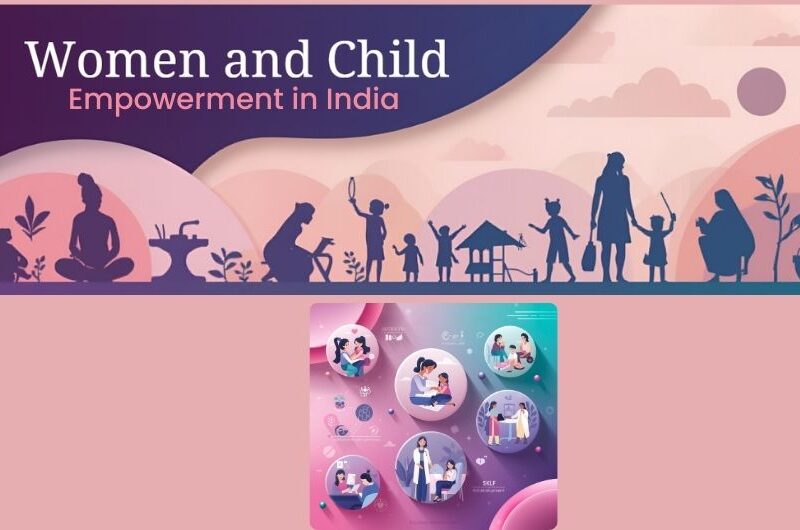
Women and Child Empowerment in India

Women and Child Empowerment in India     1. The Ministry of Women and Child Development anchors a life cycle approach through Saksham Anganwadi and Poshan 2.0, Mission Shakti, and Mission Vatsalya for women and children. 2. Saksham Anganwadi and Poshan 2.0 targets children aged 0 to 6 years, adolescent girls, pregnant women, and lactating mothers through nutrition, care, checkups, and education. 3. Anganwadi Centres provide supplementary nutrition, preschool non formal education, nutrition and health education, while immunisation, health checkups, and referral services are delivered through National Health Mission. 4. Poshan Abhiyaan was launched on 8 March 2018 as the flagship nutrition programme, using convergent service delivery and the Poshan Tracker for beneficiary monitoring. 5. Scheme for Adolescent Girls covers girls aged 14 to 18 years in all Northeastern districts and Aspirational Districts, combining nutrition support with IFA, health education, and skilling. 6. By December 2025, Poshan Bhi Padhai Bhi had trained over 8.55 lakh Anganwadi workers and 41,645 master trainers, with curricula rolled out in 12 regional languages. 7. PM POSHAN provides one hot cooked nutritious meal to students of Classes I to VIII in Government and Government aided schools under the Ministry of Education. 8. Under PMMVY 2.0, effective from 1 April 2022, eligible women receive ₹5,000 in two instalments for the first living child and ₹6,000 for second girl child. 9. India’s Maternal Mortality Ratio declined from 130 per 100,000 live births in 2014 to 16 to 93 in 2019 to 21, according to SRS. 10. Between 2015 and 2023, India’s under five mortality rate fell from 48 to 28, while neonatal mortality declined from 28 to 17 per 1,000. 11. Beti Bachao Beti Padhao, launched on 22 January 2015, improved national Sex Ratio at Birth from 918 in 2014 to 15 to 929 in 2024. 12. In 2024 to 25, ₹28,841.96 lakh was allocated for 3,564 ICT labs and 3,655 smart classrooms across 29 States and Union Territories in KGBVs. 13. Female PhD enrolment increased by 135.6 percent from 2014 to 15 to 2022 to 23, adding 64,724 women researchers in advanced academic study. 14. National Scholarship for Post Graduate Studies, launched in 2023 to 24, offers 10,000 annual slots, with 30 percent reserved for women and ₹1,50,000 yearly support. 15. NAVYA, launched on 24 June 2025, targets girls aged 16 to 18 years; by December 2025, 1,295 girls were enrolled and 671 trained. Must Know Terms : 1. Samarthya Samarthya is the empowerment focused sub scheme under Mission Shakti. It supports women’s long term independence through service and care mechanisms. Its key components include Shakti Sadan for shelter and rehabilitation, Sakhi Niwas for working women’s accommodation, Palna for daycare support, and SANKALP Hub for Empowerment of Women for convergence, skilling, capacity building, and livelihood access across institutional systems. 2. Sambal Sambal is the safety and security focused sub scheme under Mission Shakti. It includes One Stop Centres, Women Helpline 181, and Nari Adalat. One Stop Centres provide emergency medical aid, legal counselling, police assistance, psycho social support, and shelter referral for women facing violence. Women Helpline works as a 24×7 toll free crisis response mechanism linked to immediate support services and institutions. 3. SUMAN SUMAN stands for Surakshit Matritva Aashwasan. It was launched in 2019 to unify maternal and neonatal health services under one umbrella. It brings together existing schemes to provide service assurance for pregnant women and newborns. It works within the National Health Mission framework alongside Janani Suraksha Yojana and Janani Shishu Suraksha Karyakram, strengthening safer deliveries and reducing maternal and neonatal risks nationally. 4. NAVYA NAVYA was launched on 24 June 2025 by the Ministry of Women and Child Development and the Ministry of Skill Development and Entrepreneurship. It targets girls aged 16 to 18 years with at least Class 10 qualification under PMKVY 4.0. It began in 27 Aspirational and North Eastern districts across 19 states. By December 2025, 1,295 girls enrolled and 671 completed training. 5. Aadharshila Aadharshila is the curriculum designed for children aged 0 to 3 years under Poshan Bhi Padhai Bhi. It was rolled out nationwide along with Navchetana as part of the effort to convert Anganwadi Centres into joyful early learning hubs. By December 2025, over 8.55 lakh Anganwadi workers and 41,645 master trainers had been trained, with curricula introduced in 12 regional languages nationwide. 6. Navchetana Navchetana is the curriculum designed for children aged 3 to 6 years under Poshan Bhi Padhai Bhi. It supports early learning at Anganwadi Centres through play based educational methods aligned with NEP 2020 recommendations on Early Childhood Care and Education. By December 2025, it had been rolled out nationwide in 12 regional languages after large scale training of Anganwadi workers and master trainers. MCQ : 1. Which of the following umbrella programmes together reflect the life cycle approach for women and children described here? A) Mission Shakti, Mission Vatsalya, and Saksham Anganwadi and Poshan 2.0 B) Mission Indradhanush, PM POSHAN, and DigiLocker C) PMMVY, KGBV, and PM GatiShakti D) Samagra Shiksha, DIKSHA, and UPI 2. Saksham Anganwadi and Poshan 2.0 is targeted at: A) only pregnant women and lactating mothers B) children aged 6 to 14 years only C) children aged 0 to 6 years, adolescent girls, pregnant women, and lactating mothers D) only adolescent girls in urban areas 3. Which among the following services at Anganwadi Centres are delivered through the National Health Mission and public health infrastructure? A) Supplementary nutrition, pre-school education, and Poshan Vatika development B) Immunisation, health check-ups, and referral services C) Nutrition and health education, skilling, and play-based learning D) Supplementary nutrition, referral services, and pre-school education 4. Poshan Abhiyaan was launched on: A) 22 January 2015 B) 1 April 2022 C) 8 March 2018 D) 24 June 2025 5. The Scheme for Adolescent Girls, as described, covers: A) girls aged 10 to 14 years in all districts B) girls aged 14 to 18 years in all Northeastern districts and Aspirational Districts C) girls aged 14 to 21 years only in urban districts

More Details

Free IAS Guidance
Start Your Journey Today 🇮🇳

Fill out the form below, and we will be in touch shortly.