Belt and Road Initiative
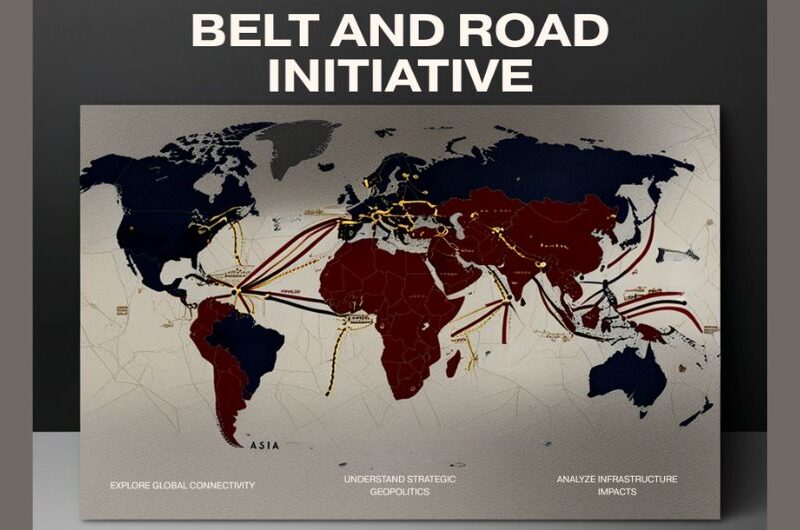
1. Belt and Road Initiative (BRI), earlier known as One Belt One Road (OBOR), was launched by China in 2013.
2. BRI was championed by Chinese President Xi Jinping as a global infrastructure and connectivity strategy.
3. The main objective of BRI is to revive ancient Silk Road trade routes and improve connectivity across Asia, Europe, and Africa.
4. BRI has two main components: the Silk Road Economic Belt and the 21st-century Maritime Silk Road.
5. The Silk Road Economic Belt is the overland component connecting China with Europe, Central Asia, and the Middle East through roads, railways, and pipelines.
6. The 21st-century Maritime Silk Road connects Chinese ports with Southeast Asia, the Indian Ocean, East Africa, and the Mediterranean region.
7. The China-Pakistan Economic Corridor (CPEC) is one of the six major economic corridors under BRI.
8. Other major BRI corridors include the New Eurasian Land Bridge, China-Central Asia-West Asia Corridor, China-Indochina Peninsula Corridor, China-Mongolia-Russia Corridor, and China-Myanmar Economic Corridor.
9. One key objective of BRI is to use China’s surplus capacity in manufacturing, steel, cement, and construction industries.
10. BRI also aims to promote economic development in China’s western regions, especially landlocked provinces such as Xinjiang.
11. China uses BRI to create alternative trade routes and reduce dependence on maritime choke points such as the Strait of Malacca.
12. India opposes BRI mainly because CPEC passes through Pakistan-occupied Kashmir, including Gilgit-Baltistan, which India considers a violation of sovereignty.
13. India has raised concerns that BRI may create debt stress for participating countries through large and financially unviable infrastructure projects.
14. Hambantota Port in Sri Lanka is often cited as an example of debt-related strategic vulnerability linked to Chinese infrastructure financing.
15. India has promoted alternative connectivity initiatives such as IMEC, INSTC, and the G7-backed Partnership for Global Infrastructure and Investment to counterbalance China’s BRI influence.
Must Know Terms :
1. Belt and Road Initiative
Belt and Road Initiative (BRI) is China’s global infrastructure and connectivity strategy launched in 2013. It was earlier known as One Belt One Road. The initiative aims to revive ancient Silk Road trade routes by building roads, railways, ports, pipelines, and economic corridors across Asia, Europe, and Africa to expand China’s economic and geopolitical influence.
2. Silk Road Economic Belt
Silk Road Economic Belt is the overland component of BRI. It connects China with Central Asia, Europe, and the Middle East through railways, highways, energy pipelines, and trade corridors. It helps China expand continental connectivity, develop western regions like Xinjiang, and reduce dependence on sea routes vulnerable to strategic chokepoints.
3. Maritime Silk Road
Maritime Silk Road is the sea-based component of BRI. It connects Chinese ports with Southeast Asia, the Indian Ocean, East Africa, and the Mediterranean. Through port development and maritime infrastructure, China seeks to strengthen trade routes, increase naval access, and expand strategic influence across the Indo-Pacific and beyond.
4. China-Pakistan Economic Corridor
China-Pakistan Economic Corridor (CPEC) is one of the most important BRI corridors. It connects China’s Xinjiang region with Pakistan’s Gwadar Port through roads, railways, and energy projects. India strongly opposes CPEC because it passes through Pakistan-occupied Kashmir, including Gilgit-Baltistan, which India considers a violation of its sovereignty and territorial integrity.
5. Debt Trap Diplomacy
Debt Trap Diplomacy refers to concerns that China funds large infrastructure projects in financially weak countries through loans that may become unsustainable. When countries fail to repay, China may gain strategic leverage or control over assets. Hambantota Port in Sri Lanka is often cited as an example of debt-related vulnerability linked to Chinese infrastructure financing.
6. India-Middle East-Europe Economic Corridor
India-Middle East-Europe Economic Corridor (IMEC) is a connectivity initiative seen as an alternative to China’s BRI. It aims to connect India with West Asia and Europe through ports, railways, energy links, and digital corridors. For India, IMEC supports trade diversification, strategic connectivity, supply-chain resilience, and reduced dependence on China-dominated infrastructure networks.
MCQ :
1. Belt and Road Initiative was earlier known as:
A. Global Silk Route Project
B. One Belt One Road
C. China Global Corridor
D. Maritime Connectivity Mission
2. Belt and Road Initiative was launched by China in:
A. 2011
B. 2012
C. 2013
D. 2015
3. BRI was championed by which Chinese leader?
A. Hu Jintao
B. Xi Jinping
C. Li Keqiang
D. Jiang Zemin
4. The main objective of BRI is to revive:
A. Ancient Spice Route
B. Ancient Silk Road trade routes
C. Trans-Siberian trade network
D. Indian Ocean naval network
5. BRI primarily aims to improve connectivity across:
A. Asia, Europe and Africa
B. Europe, North America and Africa
C. Asia, Australia and South America
D. Africa, North America and Europe
6. Which of the following are the two main components of BRI?
A. CPEC and INSTC
B. IMEC and Maritime Silk Road
C. Silk Road Economic Belt and 21st-century Maritime Silk Road
D. New Eurasian Bridge and China-Myanmar Corridor
7. The Silk Road Economic Belt is mainly associated with:
A. Overland connectivity
B. Maritime naval bases only
C. Island development projects
D. Space-based communication corridors
8. The Silk Road Economic Belt connects China with:
A. Europe, Central Asia and the Middle East
B. Africa, South America and Australia
C. Japan, Korea and Antarctica
D. North America, Europe and Africa
9. The 21st-century Maritime Silk Road connects Chinese ports with:
A. Southeast Asia, Indian Ocean, East Africa and Mediterranean
B. Central Asia, Russia, Mongolia and Eastern Europe
C. North America, Arctic Ocean and Latin America
D. Australia, Antarctica and Pacific Islands only
10. China-Pakistan Economic Corridor connects China’s Xinjiang region with:
A. Chabahar Port
B. Hambantota Port
C. Gwadar Port
D. Colombo Port
11. India strongly opposes CPEC because it passes through:
A. Aksai Chin
B. Pakistan-occupied Kashmir
C. Arunachal Pradesh
D. Siachen Glacier
12. Which region under Pakistan-occupied Kashmir is specifically linked with India’s sovereignty concern over CPEC?
A. Balochistan
B. Sindh
C. Gilgit-Baltistan
D. Khyber Pakhtunkhwa
13. Which port is often cited as an example of debt-related strategic vulnerability linked to Chinese infrastructure financing?
A. Gwadar Port
B. Hambantota Port
C. Chabahar Port
D. Duqm Port
14. Which of the following is NOT one of the major BRI economic corridors mentioned?
A. China-Mongolia-Russia Economic Corridor
B. China-Myanmar Economic Corridor
C. China-Central Asia-West Asia Economic Corridor
D. India-Middle East-Europe Economic Corridor
15. Which connectivity initiative is seen as an alternative to China’s BRI and connects India with West Asia and Europe?
A. CPEC
B. IMEC
C. CMEC
D. OBOR



0 comment