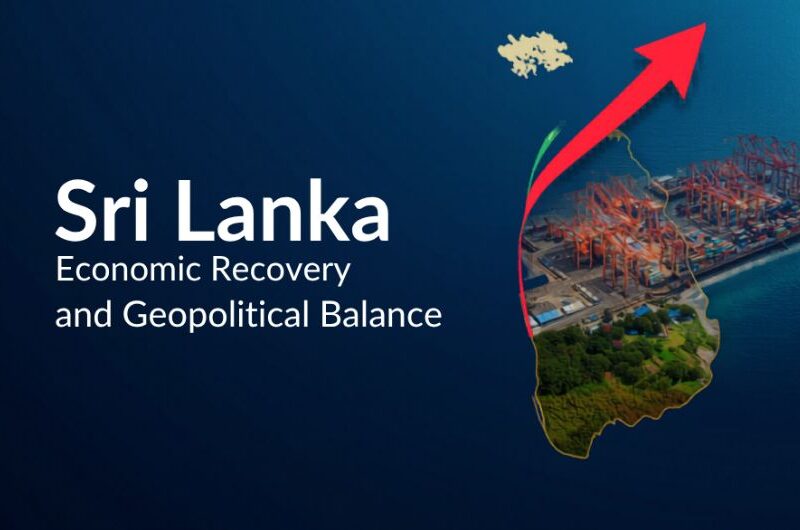
Sri Lanka Economic Recovery and Geopolitical Balance
1. In 2025, Sri Lanka’s National People’s Power government under President Anura Kumara Dissanayake consolidated political authority after major victories in national and local elections.
2. The NPP secured around 3,927 seats and approximately 43 percent of the vote in the May 2025 local government elections.
3. Promises related to anti-corruption reforms, accountability for the 2019 Easter Sunday attacks, and devolution under the 13th Amendment progressed only marginally in 2025.
4. Sri Lanka’s economy recovered significantly during 2024–25, recording growth of around 4–5 percent in 2024 and about 4.8 percent year-on-year in the first half of 2025.
5. Macroeconomic stabilisation under the IMF-supported programme pushed inflation into negative territory by early 2025, while core inflation stabilised around 1–2 percent.
6. Sri Lanka achieved a primary fiscal surplus in 2024, while debt restructuring advanced with most international bondholders agreeing to restructure claims.
7. The United States imposed a 30 percent tariff on Sri Lankan exports in 2025, creating fresh challenges for the country’s apparel sector.
8. Tourism in Sri Lanka recovered strongly in 2025, although arrivals still remained below pre-crisis levels despite government targets of three million tourists.
9. Security concerns in Sri Lanka shifted from terrorism to organised crime, with gang-related shootings increasing in early 2025.
10. Poverty levels in Sri Lanka remained nearly double their pre-crisis levels in 2025, while food insecurity and child malnutrition continued to rise.
11. Public services in Sri Lanka faced strain because more than 80 percent of government spending went toward salaries, welfare, and interest payments.
12. The UN Human Rights Council extended its monitoring mandate on Sri Lanka in 2025 because of concerns regarding reconciliation and minority rights.
13. India expanded its economic footprint in Sri Lanka through sectors such as pharmaceuticals, renewable energy, logistics, and port development.
14. The Adani-led Colombo port terminal project became a major symbol of India’s growing strategic and economic presence in Sri Lanka.
15. Sri Lanka continued balancing ties between India and China in 2025, while China remained deeply involved through Belt and Road Initiative projects such as Colombo Port City and Hambantota Port.
Must Know Terms :
1.NationalPeoplesPower
NationalPeoplesPower is the ruling political force in Sri Lanka under President Anura Kumara Dissanayake. In 2025, it strengthened authority after its 2024 national election victory and May 2025 local government performance. The party won about 3,927 seats and nearly 43 percent vote share, but progress on anti-corruption, Easter attack accountability, and 13th Amendment devolution remained limited.
2.IMFProgramme
IMFProgramme refers to the IMF-supported stabilisation framework that helped Sri Lanka recover after its economic crisis. By 2025, it contributed to lower inflation, improved reserves, fiscal consolidation, and debt restructuring progress. Inflation entered negative territory by early 2025, while core inflation stabilised around 1–2 percent. However, social pressure remained high because poverty, food insecurity, and public-service stress continued.
3.ColomboPortCity
ColomboPortCity is a major Belt and Road Initiative-linked project backed by China in Sri Lanka. It remains strategically important because it expands China’s economic presence near key Indian Ocean sea lanes. For India, the project raises long-term geopolitical concerns about Chinese influence in Sri Lanka, even as Colombo tries to balance relations between India and China while preserving strategic autonomy.
4.HambantotaPort
HambantotaPort is a major Chinese-backed infrastructure asset in southern Sri Lanka and remains central to India’s strategic concerns in the Indian Ocean. Its location near important sea lanes gives it geopolitical significance. In 2025, China continued to remain deeply involved in Sri Lanka through projects such as Hambantota Port and Colombo Port City, requiring India to monitor possible strategic or naval implications.
5.ColomboPortTerminal
ColomboPortTerminal refers to the Adani-led port terminal project in Sri Lanka, symbolising India’s growing economic and strategic footprint. The project is important for India’s maritime strategy because Sri Lanka sits near vital Indian Ocean sea lanes. It also supports port development, logistics cooperation, and regional connectivity, while helping India balance China’s presence through projects like Colombo Port City and Hambantota Port.
6.TamilRefugees
TamilRefugees refers to Sri Lankan Tamil communities living in India, especially due to past conflict and unresolved political issues in Sri Lanka. Their status remained sensitive in 2025, with India easing some penalties but many refugees still facing uncertainty. The issue affects Tamil Nadu politics, India’s humanitarian image, and broader India-Sri Lanka relations, especially amid continuing concerns over Tamil grievances and reconciliation.
MCQ :
1. In 2025, Sri Lanka’s ruling National People’s Power government was led by:
A. Mahinda Rajapaksa
B. Ranil Wickremesinghe
C. Anura Kumara Dissanayake
D. Sajith Premadasa
2. In the May 2025 local government elections, the NPP secured approximately what percentage of votes?
A. 33 percent
B. 43 percent
C. 53 percent
D. 63 percent
3. Which issue showed only marginal progress in Sri Lanka during 2025?
A. IMF withdrawal
B. NATO integration
C. 13th Amendment devolution
D. Abolition of provincial councils
4. Sri Lanka’s economic growth during the first half of 2025 was approximately:
A. 2.8 percent
B. 3.8 percent
C. 4.8 percent
D. 5.8 percent
5. Under the IMF-supported programme, inflation in Sri Lanka by early 2025:
A. Rose above 20 percent
B. Entered negative territory
C. Remained above 10 percent
D. Was completely eliminated
6. Sri Lanka achieved which of the following in 2024?
A. Trade embargo
B. Currency union
C. Primary fiscal surplus
D. Gold standard restoration
7. In 2025, the United States imposed what tariff on Sri Lankan exports?
A. 10 percent
B. 20 percent
C. 30 percent
D. 40 percent
8. Sri Lanka’s tourism recovery in 2025 remained:
A. Completely halted
B. Above all pre-crisis levels
C. Strong but below pre-crisis levels
D. Limited only to domestic tourism
9. Security concerns in Sri Lanka during 2025 shifted mainly toward:
A. Maritime piracy
B. Organised crime
C. Ethnic insurgency
D. Foreign military intervention
10. Poverty levels in Sri Lanka during 2025 were:
A. Lower than pre-crisis levels
B. Nearly double pre-crisis levels
C. Fully eliminated
D. Unchanged since 2010
11. More than 80 percent of Sri Lanka’s government spending went toward:
A. Defence imports and shipping
B. Technology and tourism
C. Agriculture and mining
D. Salaries, welfare, and interest payments
12. The UN Human Rights Council extended monitoring on Sri Lanka mainly because of concerns regarding:
A. Nuclear expansion
B. Maritime disputes
C. Reconciliation and minority rights
D. Currency manipulation
13. India expanded its economic role in Sri Lanka through sectors such as:
A. Space weapons and aviation
B. Pharmaceuticals and renewable energy
C. Arctic exploration
D. Semiconductor manufacturing only
14. Which project became a major symbol of India’s strategic presence in Sri Lanka?
A. Hambantota Port
B. Colombo Port City
C. Colombo Port Terminal
D. Trincomalee Defence Zone
15. In 2025, Sri Lanka continued balancing relations mainly between:
A. Russia and Japan
B. India and China
C. France and Germany
D. Iran and Türkiye



0 comment