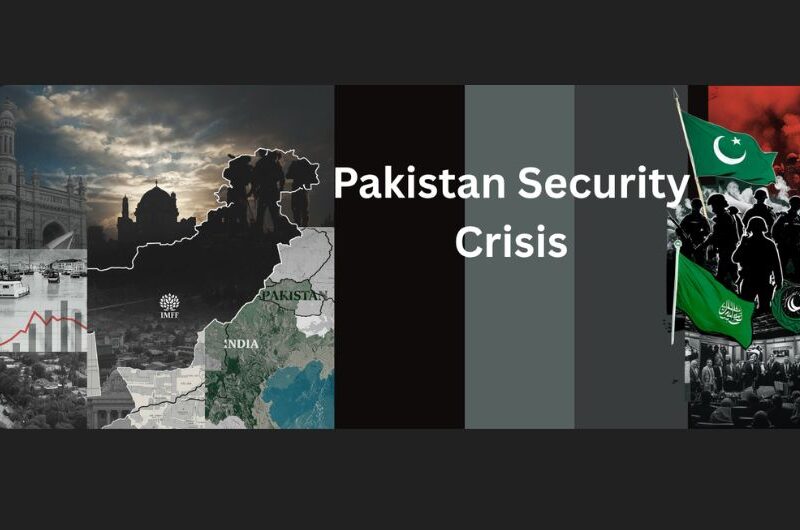
Pakistan Security Crisis
1. In 2025, Pakistan’s political trajectory was shaped by a fragile post-election government under Prime Minister Shehbaz Sharif, closely aligned with the military establishment.
2. Imran Khan’s Pakistan Tehreek-e-Insaf remained popular on the streets but was effectively excluded from formal politics, with its leadership facing criminal cases.
3. The 26th Constitutional Amendment curtailed the Supreme Court’s authority, invalidated several judicial appointments, and empowered a reshaped Federal Shariat Court.
4. The 27th Constitutional Amendment abolished the post of Chairman of the Joint Chiefs of Staff and created a powerful Chief of Defence Forces.
5. The 27th Constitutional Amendment also granted lifetime immunity to the President and top generals, strengthening military dominance within Pakistan’s constitutional framework.
6. The Pakistan government banned the far-right Tehreek-e-Labbaik Pakistan after violent sectarian rallies in October 2025.
7. Pakistan’s security situation worsened in 2025 due to repeated attacks by the Tehreek-e-Taliban Pakistan and affiliates, especially in Khyber Pakhtunkhwa and Balochistan.
8. In October 2025, Pakistan launched airstrikes near Kabul and Kandahar against suspected TTP hideouts, drawing sharp warnings from the Afghan Taliban.
9. Pakistan’s real GDP growth in FY2025 was estimated at around 3.0 percent by the World Bank, showing modest economic stabilisation.
10. Inflation in Pakistan dropped below 6 percent by mid-2025, after having approached nearly 30 percent in 2023.
11. Pakistan reported a current account surplus by mid-2025 for the first time in 14 years under IMF supervision.
12. Pakistan’s total public debt remained high at about USD 286 to 287 billion, around 70 percent of GDP.
13. In August 2025, severe monsoon rains and glacial outburst floods killed over a thousand people and displaced around 2.5 million in southern Punjab and Sindh.
14. In September 2025, Pakistan and Saudi Arabia concluded a Strategic Mutual Defence Agreement, treating an attack on one as an attack on both.
15. India–Pakistan relations remained adversarial after the April 2025 Pahalgam attack on Indian pilgrims, followed by Indian strikes on militant camps in Pakistan-administered Kashmir.
Must Know Terms :
1.ShehbazSharifGovernment
ShehbazSharifGovernment refers to Pakistan’s post-election government in 2025, led by Prime Minister Shehbaz Sharif. The government was numerically fragile but institutionally supported by the military establishment. Its rule coincided with constitutional amendments that strengthened army influence, political exclusion of PTI, economic stabilisation under IMF supervision, rising militancy, and continuing tensions with India and Afghanistan.
2.ConstitutionalAmendments
ConstitutionalAmendments refer to Pakistan’s 26th and 27th Amendments passed in late 2025. The 26th Amendment curtailed Supreme Court authority, invalidated some judicial appointments, and empowered the Federal Shariat Court. The 27th Amendment abolished the Chairman Joint Chiefs post, created a powerful Chief of Defence Forces, and gave lifetime immunity to the President and top generals, formalising military dominance.
3.TehreekeTalibanPakistan
Tehreek-e-Taliban Pakistan remained a major internal security threat for Pakistan in 2025, especially in Khyber Pakhtunkhwa and Balochistan. Repeated attacks by TTP and affiliates led officials to describe the situation as a state of war. In October 2025, Pakistan launched airstrikes near Kabul and Kandahar against suspected TTP hideouts, worsening tensions with the Afghan Taliban.
4.StrategicMutualDefenceAgreement
StrategicMutualDefenceAgreement refers to the September 2025 pact between Pakistan and Saudi Arabia. Under this agreement, both countries committed to treating an attack on one as an attack on both. Saudi Arabia also pledged more than USD 6 billion in loans and deposits, strengthening its role as Pakistan’s major external financier and giving the partnership wider strategic significance.
5.PahalgamAttack
PahalgamAttack refers to the April 2025 attack on Indian pilgrims in Pahalgam, in which 26 people were killed. The attack sharply worsened India-Pakistan relations. India responded by striking militant camps in Pakistan-administered Kashmir. The incident reinforced India’s concerns over cross-border terrorism and kept bilateral relations adversarial, with high military alert and limited prospects for meaningful dialogue.
6.CurrentAccountSurplus
CurrentAccountSurplus refers to Pakistan’s mid-2025 external account improvement under IMF supervision. For the first time in 14 years, Pakistan reported a current account surplus, along with a primary surplus. This reflected temporary stabilisation through tight fiscal and external controls. However, high public debt, weak investment, energy-sector stress, climate shocks, and security instability continued to threaten economic recovery.
MCQ :
1. In 2025, Pakistan’s post-election government was led by:
A. Imran Khan
B. Shehbaz Sharif
C. Asif Ali Zardari
D. Bilawal Bhutto
2. Pakistan Tehreek-e-Insaf in 2025 was:
A. Leading the federal coalition government
B. Fully integrated into Parliament
C. Popular on the streets but excluded from formal politics
D. Merged with the Pakistan Muslim League
3. The 26th Constitutional Amendment in Pakistan mainly:
A. Expanded provincial autonomy
B. Curtailed Supreme Court authority
C. Created a new Senate structure
D. Introduced direct presidential elections
4. The 27th Constitutional Amendment abolished the post of:
A. Prime Minister
B. Chief Justice
C. National Security Adviser
D. Chairman of the Joint Chiefs of Staff
5. The 27th Constitutional Amendment created the post of:
A. National Defence Commissioner
B. Supreme Military Coordinator
C. Chief of Defence Forces
D. Federal Security Marshal
6. Which organisation was banned by Pakistan after violent sectarian rallies in October 2025?
A. Jamaat-e-Islami
B. Tehreek-e-Labbaik Pakistan
C. Lashkar-e-Taiba
D. Majlis-e-Wahdat
7. Pakistan’s security situation deteriorated mainly because of attacks by:
A. ISIS Syria
B. Hamas
C. Tehreek-e-Taliban Pakistan
D. Houthis
8. In October 2025, Pakistan launched airstrikes near:
A. Herat and Jalalabad
B. Kabul and Kandahar
C. Mazar-i-Sharif and Herat
D. Ghazni and Bamiyan
9. Pakistan’s real GDP growth in FY2025 was estimated at around:
A. 2.0 percent
B. 3.0 percent
C. 4.0 percent
D. 5.0 percent
10. Inflation in Pakistan dropped below what level by mid-2025?
A. 4 percent
B. 5 percent
C. 6 percent
D. 7 percent
11. Pakistan reported a current account surplus in 2025 for the first time in:
A. 10 years
B. 12 years
C. 14 years
D. 16 years
12. Pakistan’s public debt in 2025 stood at approximately:
A. USD 186–187 billion
B. USD 286–287 billion
C. USD 386–387 billion
D. USD 486–487 billion
13. Severe monsoon rains and glacial outburst floods in August 2025 mainly affected:
A. Punjab and Sindh
B. Gilgit and Baltistan
C. Islamabad and Rawalpindi
D. Karachi and Quetta
14. In September 2025, Pakistan signed a Strategic Mutual Defence Agreement with:
A. China
B. Türkiye
C. Saudi Arabia
D. Iran
15. India struck militant camps in Pakistan-administered Kashmir after the:
A. Gwadar protests
B. Lahore bombing
C. Karachi attack
D. Pahalgam attack




0 comment