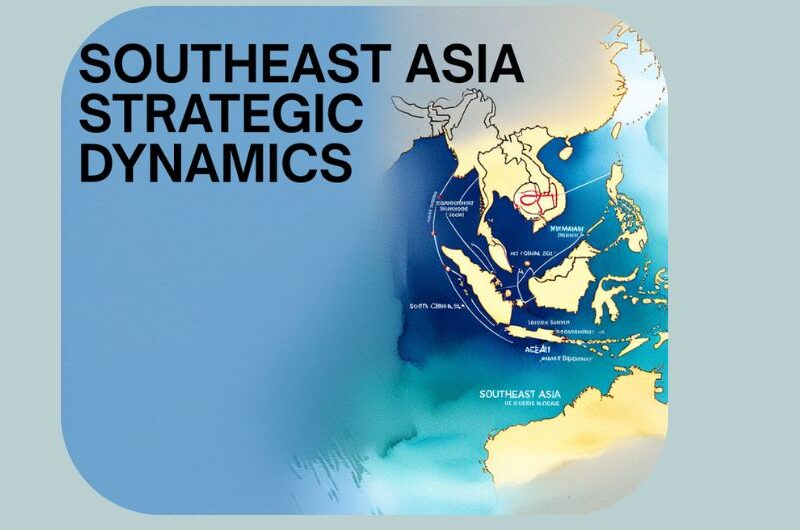
Southeast Asia Strategic Dynamics
1. In 2025, Southeast Asia faced political transitions, economic pressures, and security challenges amid growing US–China strategic rivalry.
2. ASEAN centrality faced increasing pressure due to China’s assertiveness in the South China Sea, instability in Myanmar, and Cambodia–Thailand border tensions.
3. Elections planned in Myanmar for late December 2025 were widely viewed as unlikely to restore stability because major ethnic groups and the National League for Democracy were excluded.
4. Myanmar’s weakening state control contributed to the rise of scam centres, drug smuggling, and gun running with implications for India’s security.
5. India’s connectivity projects under the Act East Policy and the Mekong–Ganga Initiative were negatively affected by instability in Myanmar.
6. Border clashes between Thailand and Cambodia escalated again in December 2025 despite earlier ceasefire claims.
7. Indonesian President Prabowo Subianto strengthened his leadership in 2025 while promoting economic modernisation and political stability.
8. Vietnam remained one of Southeast Asia’s strongest economic performers in 2025 with projected growth of around 6–7 percent.
9. Thailand’s economic growth outlook for 2025 remained weak at around 2 percent because of continuing political turbulence.
10. The Philippines, despite being a US ally, faced a 19 percent tariff under Donald Trump’s trade policies before the rate was later reduced to 17 percent.
11. China intensified coercive activities in the South China Sea during 2025, especially around the Philippines’ Scarborough Shoal.
12. ASEAN–China negotiations on a South China Sea Code of Conduct failed to conclude in 2025 because China preferred a non-binding agreement.
13. At the India–ASEAN Summit in Kuala Lumpur in October 2025, the ASEAN–India Plan of Action for 2026–2030 was unveiled.
14. The year 2026 was declared as the ASEAN–India Year of Maritime Cooperation to strengthen cooperation in maritime security and connectivity.
15. India’s trade deficit with ASEAN rose to around USD 45 billion in FY2024–25, leading India to push for stricter Rules of Origin and removal of Non-Tariff Barriers.
Must Know Terms :
1.ScarboroughShoal
ScarboroughShoal remained a major flashpoint in the South China Sea during 2025 because of China’s coercive maritime activities near Philippine-claimed waters. Harassment of fishing vessels and pressure tactics intensified regional tensions. The issue pushed the Philippines to strengthen security cooperation with the United States, Japan, and Australia, while exposing ASEAN’s limitations in responding collectively to maritime coercion.
2.ASEANCentrality
ASEANCentrality refers to ASEAN’s role as the main platform for regional dialogue and cooperation in Southeast Asia. In 2025, this centrality faced pressure from China’s South China Sea assertiveness, Myanmar’s continuing conflict, and Cambodia–Thailand border clashes. ASEAN struggled to produce decisive responses, raising questions about its ability to manage internal disputes and external strategic competition effectively.
3.ASEANIndiaPlanOfAction
ASEANIndiaPlanOfAction refers to the 2026–2030 roadmap unveiled at the India–ASEAN Summit in Kuala Lumpur in October 2025. It forms part of the Comprehensive Strategic Partnership and focuses on maritime security, digital connectivity, green energy, and resilient supply chains. The plan strengthens India’s Act East Policy and provides a structured framework for deeper cooperation with Southeast Asian countries.
4.MekongGangaInitiative
MekongGangaInitiative is a cooperation framework linking India with Mekong-region countries through culture, connectivity, education, and development projects. In 2025, instability in Myanmar negatively affected India’s connectivity ambitions under this initiative. Since Myanmar is geographically central to India’s land access to Southeast Asia, conflict there disrupted transport corridors, delayed projects, and weakened India’s broader Act East outreach.
5.SouthChinaSeaCOC
SouthChinaSeaCOC refers to the proposed Code of Conduct between ASEAN and China for managing disputes in the South China Sea. Negotiations could not be concluded in 2025 because China pushed for a non-binding arrangement that recognised its expansive claims and limited external involvement. The delay reflected deep trust deficits and continuing disagreement over rules, enforcement, and maritime rights.
6.ASEANIndiaMaritimeCooperation
ASEANIndiaMaritimeCooperation gained importance after 2026 was declared the ASEAN–India Year of Maritime Cooperation. The agenda includes maritime security, Humanitarian Assistance and Disaster Relief, blue economy, connectivity, and defence cooperation. For India, this framework supports its Act East Policy, strengthens Indo-Pacific engagement, and helps build partnerships with Southeast Asian states facing maritime coercion and regional instability.
MCQ :
1. In 2025, Southeast Asia faced growing strategic rivalry mainly between:
A. Russia and Japan
B. India and ASEAN
C. United States and China
D. Iran and Saudi Arabia
2. ASEAN centrality faced pressure primarily because of:
A. Arctic disputes
B. China’s assertiveness and instability in Myanmar
C. African migration issues
D. NATO expansion
3. Myanmar’s planned elections in late 2025 were criticised because:
A. They were postponed indefinitely
B. The military withdrew completely
C. Major ethnic groups and the NLD were excluded
D. ASEAN supervised the elections
4. Weakening state control in Myanmar contributed to the rise of:
A. Nuclear smuggling
B. Scam centres and drug smuggling
C. Arctic piracy
D. Cryptocurrency unions
5. India’s Act East Policy connectivity projects were negatively affected mainly due to:
A. Himalayan earthquakes
B. Myanmar instability
C. Gulf oil shortages
D. Sri Lankan debt crisis
6. Border clashes in December 2025 escalated between:
A. Thailand and Cambodia
B. Laos and Vietnam
C. Indonesia and Malaysia
D. Myanmar and Bangladesh
7. Which Southeast Asian leader strengthened his leadership in 2025 while promoting economic modernisation?
A. Hun Manet
B. Prabowo Subianto
C. Ferdinand Marcos Jr.
D. Anwar Ibrahim
8. Vietnam’s projected economic growth in 2025 was approximately:
A. 2–3 percent
B. 4–5 percent
C. 6–7 percent
D. 8–9 percent
9. Thailand’s weak economic outlook in 2025 was mainly linked to:
A. Oil embargoes
B. Political turbulence
C. Currency union failures
D. Agricultural collapse
10. The Philippines initially faced what tariff rate under Donald Trump’s trade policies in 2025?
A. 9 percent
B. 12 percent
C. 19 percent
D. 25 percent
11. China intensified coercive activities in the South China Sea particularly around:
A. Natuna Islands
B. Scarborough Shoal
C. Taiwan Strait
D. Gulf of Thailand
12. ASEAN–China negotiations in 2025 failed to conclude which agreement?
A. Regional Defence Pact
B. Maritime Trade Charter
C. South China Sea Code of Conduct
D. ASEAN Customs Union
13. The ASEAN–India Plan of Action for 2026–2030 was unveiled at:
A. Jakarta Summit
B. Bali Dialogue
C. Kuala Lumpur Summit
D. Manila Conference
14. Which year was declared as the ASEAN–India Year of Maritime Cooperation?
A. 2025
B. 2026
C. 2027
D. 2030
15. India’s trade deficit with ASEAN in FY2024–25 rose to approximately:
A. USD 25 billion
B. USD 35 billion
C. USD 45 billion
D. USD 55 billion




0 comment