Best UPSC and MPPSC IAS Coaching Classes in Gwalior

8.2% GDP: India’s Growth Story Strengthens

8.2% GDP: India’s Growth Story Strengthens     Introduction   India’s economy is experiencing a phase of strong and broad-based expansion, marked by high growth, easing inflation, rising production, and improving employment indicators. The country has emerged as one of the fastest-growing major economies globally, supported by domestic demand, policy reforms, and increasing integration with global markets. This growth phase reflects a combination of structural transformation, macroeconomic stability, and sustained public and private investment.   Robust GDP Performance   Economic output has shown notable acceleration, with real output growth remaining strong across consecutive quarters and half-yearly periods. Expansion has been supported by contributions from all major sectors of the economy. While agriculture has recorded moderate growth, industry and services have displayed sustained momentum, reinforcing overall output expansion. The performance indicates balanced growth rather than dependence on a single sector, strengthening the economy’s resilience to external shocks.   Inflation Moderation and Price Stability   Price levels have shown a sharp and broad-based moderation, with headline inflation easing significantly on a year-on-year basis. Food prices have played a key role in this decline, supported by improved supply conditions and policy measures. Both rural and urban inflation trends reflect stability, enhancing purchasing power and supporting consumption demand. The easing inflationary environment provides room for policy flexibility while reinforcing macroeconomic confidence.   Industrial Production and Manufacturing Revival   Industrial activity has continued to strengthen, driven primarily by growth in manufacturing. Key segments such as basic metals, electrical equipment, and transport-related industries have contributed significantly to production gains. From a use-based perspective, strong expansion in infrastructure goods, consumer durables, and intermediate goods highlights simultaneous growth in investment and consumption. This diversified industrial performance underpins sustained economic momentum.   Employment and Labour Market Trends   Labour market indicators point toward improving participation and stability. Workforce participation has increased, supported by rising employment opportunities across sectors. Female participation has also shown improvement, indicating gradual broadening of labour inclusion. Formal employment additions and hiring indicators suggest strengthening job creation, improved job quality, and growing alignment between skills and market demand.   Trade and External Sector Performance   The external sector has demonstrated resilience, with both merchandise and services exports contributing to overall growth. Services exports, particularly in knowledge-based segments, continue to be a key driver of external stability. Merchandise exports have benefited from strong demand in selected product categories and markets, even amid global trade uncertainties. Overall trade performance supports foreign exchange earnings and reinforces growth prospects.   Policy Support and Structural Reforms   Economic momentum has been reinforced by a range of policy initiatives aimed at manufacturing, trade facilitation, skill development, entrepreneurship, and tax reform. Incentive-based manufacturing policies, infrastructure development, and simplified tax structures have strengthened domestic capacity and competitiveness. Labour and skill initiatives have supported workforce readiness, while trade facilitation measures have eased export operations and market diversification.   Growth Outlook and Global Confidence   Growth projections by domestic and international institutions indicate sustained confidence in the economy’s medium-term trajectory. Upward revisions in growth estimates reflect strong domestic demand, reform momentum, and improved macroeconomic fundamentals. The outlook suggests continued expansion driven by consumption, investment, and productivity gains, positioning the economy for long-term structural growth.   Conclusion   India’s economic performance reflects a convergence of strong growth, price stability, rising production, and improving employment outcomes. Structural reforms, digital transformation, and policy coordination have strengthened the foundation for sustained expansion. With balanced sectoral contributions and growing global confidence, the economy appears well-positioned to maintain momentum while advancing toward higher productivity, resilience, and inclusive development.         Multiple Choice Questions   India’s real GDP growth in Q2 of FY 2025–26 has been estimated at: 7.2% 7.8% 8.0% 8.2%   Real GDP growth during the first half (April–September) of FY 2025–26 stood at: 6.1% 6.8% 7.5% 8.0%   India is projected to become the world’s third-largest economy by: 2027 2028 2030 2032   The nominal GDP growth rate in Q2 of FY 2025–26 was approximately: 7.5% 8.2% 8.7% 9.1%   Which sector recorded the highest real GVA growth in Q2 FY 2025–26? Primary sector Secondary sector Tertiary sector Agriculture sector   Headline CPI inflation in October 2025 eased to: 1.44% 0.88% 0.50% 0.25%   The sharp moderation in inflation during October 2025 was mainly driven by: Decline in fuel taxes Reduction in food prices Wage compression Import restrictions   India’s Index of Industrial Production (IIP) registered year-on-year growth of: 2.5% 3.2% 4.0% 4.8%   Which manufacturing segment recorded the highest growth in September 2025? Basic metals Electrical equipment Motor vehicles Intermediate goods   Infrastructure and construction goods grew by approximately: 6.5% 8.2% 9.4% 10.5%   Labour Force Participation Rate in October 2025 reached: 52.5% 54.2% 55.4% 56.8%   Net addition of EPFO members in July 2025 was about: 15.6 lakh 18.2 lakh 21.04 lakh 24.7 lakh   India’s cumulative exports (merchandise and services) during April–October 2025 grew by: 2.9% 3.7% 4.84% 6.2%   Services exports growth during April–October 2025 was approximately: 6.3% 7.8% 9.75% 11.4%   The RBI revised its GDP growth forecast for FY 2025–26 to: 6.3% 6.5% 6.7% 6.8%    

More Details
Banking Laws (Amendment) Act, 2025

Banking Laws (Amendment) Act, 2025   Introduction   India’s banking system forms the backbone of economic activity by mobilising savings, facilitating credit, enabling payments, and supporting investment. Over time, the sector has transitioned from manual, branch-centric operations to a technology-driven ecosystem that supports large-scale financial inclusion. As banking operations expand in scale, complexity, and digital intensity, regulatory frameworks require periodic updating to ensure stability, transparency, depositor confidence, and sound governance. The Banking Laws (Amendment) Act, 2025 represents a comprehensive legislative response to these evolving needs.   Evolution of Banking Regulation in India   Banking regulation in India has developed alongside the country’s institutional and economic growth. Foundational legislations such as the Reserve Bank of India Act, the Banking Regulation Act, and statutes governing public sector banks established a structured supervisory and governance framework. Subsequent amendments addressed emerging priorities such as nationalisation, liquidity management, capital adequacy, and oversight of cooperative banks. The 2025 amendment builds upon this legislative trajectory by updating provisions to reflect present-day operational realities, financial scale, and technological integration within the banking system.   Rationale for the 2025 Amendment   Rapid digitalisation, deepening financial inclusion, and increasing household reliance on banking services have highlighted limitations in existing legal provisions. Large volumes of unclaimed deposits, governance challenges in certain institutions, and procedural rigidities in reporting and compliance created the need for reform. The 2025 amendment seeks to simplify processes, improve clarity in asset succession, align statutory timelines with accounting cycles, and ensure uniform regulatory terminology. These changes aim to reduce manual burden, minimise disputes, and strengthen systemic efficiency.   Strengthening Depositor Protection   A central feature of the amendment is the modernisation of the nomination framework. Depositors are now provided greater flexibility to designate nominees in a manner aligned with their preferences. Provisions allow for multiple nominees, either simultaneously through percentage-based allocation or successively to ensure continuity in the event of a nominee’s death. This framework is designed to address delays in claim settlement, reduce legal disputes, and ensure faster access to deposits, lockers, and articles in safe custody for families.   Governance and Oversight Reforms   The amendment introduces important governance-related changes to improve regulatory oversight. The threshold defining “substantial interest” has been revised to reflect economic growth and inflation, strengthening transparency and accountability. In cooperative banks, the tenure of directors has been rationalised to align governance norms with constitutional principles of democratic functioning. These measures aim to improve board effectiveness, reduce concentration of control, and enhance institutional stability across the banking sector.   Audit and Transparency Measures   To improve audit quality and financial transparency, public sector banks have been granted greater flexibility in determining auditor remuneration, enabling them to attract qualified professionals. Additionally, unclaimed shares, interest, and bond redemption amounts are to be transferred to the Investor Education and Protection Fund, aligning banking practices with corporate sector standards. These provisions strengthen accountability, improve disclosure, and ensure better management of dormant financial assets.   Procedural and Operational Efficiency   The amendment streamlines several procedural aspects of banking operations. Statutory reporting dates have been rationalised by replacing references to specific weekdays with month-end or fortnight-end timelines. This shift facilitates automation, reduces compliance ambiguity, and improves consistency in reporting across institutions. By aligning legal requirements with modern banking operations, the Act enhances operational efficiency and regulatory clarity.   Broader Impact on the Banking System   The Banking Laws (Amendment) Act, 2025 is expected to reinforce public trust in financial institutions through stronger depositor safeguards and transparent governance norms. Enhanced audit standards, clearer succession mechanisms, and efficient reporting structures contribute to a more resilient banking system. These reforms support long-term stability, improve service delivery, and strengthen the legal foundation of India’s increasingly digital and inclusive financial ecosystem.   Conclusion   The 2025 amendment marks a significant step in aligning banking laws with contemporary economic conditions and technological advancements. By addressing depositor protection, governance standards, audit quality, and procedural efficiency, the legislation strengthens the institutional framework of the banking sector. Its implementation is likely to enhance confidence, transparency, and effectiveness within the financial system, supporting sustainable economic growth and financial stability.   Multiple Choice Questions   The Banking Laws (Amendment) Act, 2025 primarily aims to: Nationalize private banks Strengthen governance and depositor protection Reduce the role of the central bank Promote foreign ownership in banks   Under the amended nomination framework, a depositor can nominate: Only one person Up to two persons Up to three persons Up to four persons   Simultaneous nomination under the Act allows: Nominees to inherit sequentially Equal distribution only Percentage-wise allocation totaling 100 percent Transfer only after court approval   Successive nomination mainly ensures: Faster loan approval Seamless succession if a nominee dies Higher interest on deposits Automatic closure of accounts   The threshold for defining “substantial interest” has been revised to: ₹50 lakh ₹1 crore ₹2 crore ₹5 crore   The revision in “substantial interest” threshold is intended to: Encourage bank mergers Reflect inflation and growth in the economy Reduce regulatory oversight Promote foreign investment   Maximum tenure of directors in co-operative banks (excluding chairperson and whole-time directors) is now: 6 years 8 years 9 years 10 years   The revised tenure of co-operative bank directors aligns with: 42nd Constitutional Amendment 73rd Constitutional Amendment 97th Constitutional Amendment 101st Constitutional Amendment   One major audit reform introduced for public sector banks allows them to: Appoint foreign auditors only Fix auditors’ remuneration Skip statutory audits Reduce audit frequency   Unclaimed shares, interest, and bond redemption amounts will now be transferred to: Consolidated Fund of India Deposit Insurance Fund Investor Education and Protection Fund National Investment Fund   Reporting timelines under the Act have been aligned with: Weekly reporting cycles Quarterly reporting cycles Last day of the month or fortnight Financial year-end only   One key reason for introducing the 2025 amendments was: Decline in digital banking usage Rising complexity due to financial inclusion and technology Excess liquidity in banks Fall in household savings   The Banking Laws (Amendment) Act, 2025 amends how many major banking legislations?

More Details

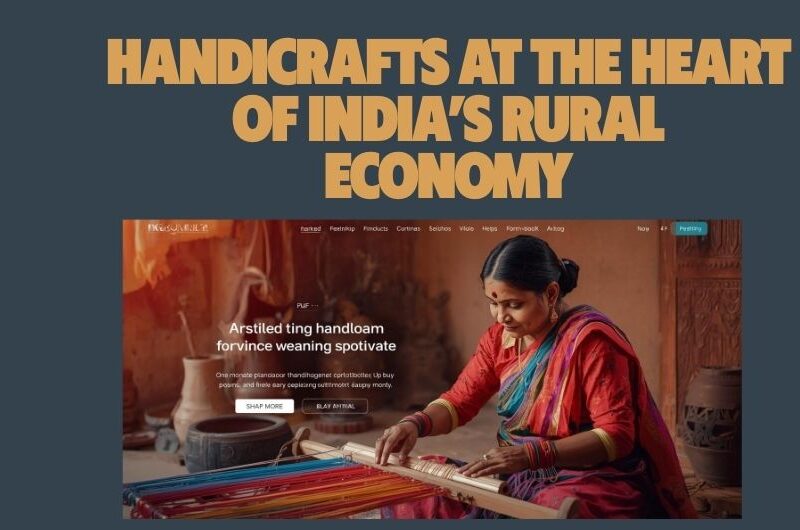
Handicrafts at the Heart of India’s Rural Economy

Handicrafts at the Heart of India’s Rural Economy Handicrafts and Rural Livelihoods   India’s handicraft sector functions as a large, decentralized livelihood system rooted in rural and semi-urban areas. It supports artisan households through home-based or small-workshop production models that require relatively low capital but generate meaningful value addition. Beyond income, handicrafts sustain community skills transmitted across generations and reinforce cultural continuity through region-specific techniques, motifs, and materials. The sector’s breadth is reflected in hundreds of formally classified craft categories and a wide range of geographically distinctive products with recognized identity value.   What Makes a Product a Handicraft   Handicrafts are predominantly hand-made goods, even when tools or limited machinery assist certain steps. Their distinctiveness arises from visual appeal, aesthetic and artistic character, and cultural attachment, which differentiates them from mechanized products of similar utility. The sector is labour-intensive and widely dispersed, with production often organized around informal networks, local supply chains, and seasonal availability of raw materials. This structure allows households—especially those tied to agriculture—to supplement incomes during lean periods while maintaining flexible work arrangements within their local context.   Workforce Profile and Inclusion   The artisan workforce is large and includes substantial participation from women and social groups that have historically relied on informal, locally anchored occupations. Women form a major share of weavers and artisans, indicating the sector’s role in expanding economic participation within households and communities. Craft work also draws participation from communities across social categories, making it an avenue of livelihood diversification and inclusion. Identification and registration initiatives strengthen visibility of artisans, improve access to formal benefits, and create a basis for targeted support, training, and market linkage interventions.   Exports, Markets, and Demand Trends   Handicrafts contribute to external demand alongside the broader textiles and apparel ecosystem, with exports spanning multiple categories such as woodwares, art metal wares, handprinted textiles, embroidered goods, and imitation jewellery. Market concentration remains significant in major importing countries, while a substantial share also goes to diversified global destinations. Demand is increasingly shaped by preferences for authentic, sustainable, and handmade products, creating space for India to expand value realization through design innovation, quality assurance, branding, and reliable supply fulfillment. Strengthening consistency in finishing, packaging, and compliance can improve unit value while sustaining artisanal character.   Institutional Support and Sector Development   Public interventions focus on cluster development, skill upgradation, tool support, marketing platforms, and social security coverage. Cluster-based models aim to bring scattered artisans into collective frameworks supported by common facilities, modern infrastructure, and structured training to improve productivity and competitiveness. Skill programmes emphasize design and technology development, apprenticeship-style transmission of traditional knowledge, structured upgradation aligned with recognized qualification frameworks, and distribution of improved toolkits to enhance output quality and efficiency. Marketing and exhibition support provides platforms for visibility, buyer linkages, and discovery of new demand segments, complementing local retail channels and emerging digital avenues.   Clusters, Collectives, and Enterprise Pathways   A cluster approach enables artisans and small enterprises to achieve economies of scale without losing craft specificity. Common facility centres, raw material banks, design support, and professional program management can reduce transaction costs and improve market readiness. Collective structures such as producer companies and artisan groups improve bargaining power, help standardize processes where appropriate, and facilitate access to finance and formal schemes. The broader objective is to shift artisans from vulnerability to resilience by building enterprise capabilities while safeguarding heritage and region-specific craft identities.   Policy Enablement and Market Competitiveness   Reforms affecting taxation, labour welfare, and export competitiveness influence the sector’s ability to scale. Rationalized tax treatment for selected craft items can reduce cost pressures, while welfare-oriented frameworks can improve dignity of work and stability for craft workers. Export support instruments and promotional missions aim to reduce embedded costs, strengthen competitiveness, and expand international presence. At the same time, the sector’s long-term gains depend on combining authenticity with modern market expectations—quality consistency, timely delivery, contemporary design adaptation, and credible branding.   Conclusion Handicrafts constitute a high-impact rural economy segment that blends livelihood creation with cultural stewardship. With rising global interest in handmade products, the sector’s growth potential is strong if support focuses on skills, infrastructure, clusters, market access, and social protection. Strengthening value chains, enhancing product innovation while preserving identity, and improving formal inclusion of artisans can raise incomes and ensure sustained expansion. The sector’s future competitiveness will be shaped by its ability to scale responsibly—protecting heritage, improving productivity, and integrating with wider domestic and global markets.     Multiple Choice Questions   Which feature best distinguishes handicrafts from mechanically produced goods? High capital investment Predominant use of machines Hand-based production with cultural and aesthetic value Standardized mass production   India’s handicraft sector is characterized mainly by: Capital-intensive factory systems Labour-intensive and decentralized production Complete dependence on urban markets Exclusive export orientation   How many GI-tagged handicraft products are associated with India? About 150 About 220 About 318 About 450   National Handicrafts Week is observed annually during: January 1–7 August 15–21 December 8–14 October 2–8   The Shilp Guru Award is best described as: A regional marketing incentive A training certification The highest honour in the handicrafts sector An export-linked subsidy   Which group constitutes the largest share of artisans in the handicrafts sector? Urban industrial workers Women artisans Foreign skilled workers Corporate designers   Approximately how many handloom and handicraft artisans are estimated to be engaged in India? 32 lakh 45 lakh 64.66 lakh 90 lakh   The handicrafts sector supports rural livelihoods mainly by: Replacing agricultural activity entirely Providing seasonal and supplemental income Promoting large-scale mechanization Eliminating household-based work   The Pehchan Artisan Identification programme primarily aims to: Promote exports directly Register artisans for taxation Formalize artisans and link them to welfare benefits Replace traditional crafts   In 2024–25, handicraft exports excluding hand-knotted carpets reached approximately: ₹18,000 crore ₹25,000 crore ₹33,122 crore ₹45,000 crore   Which country accounts for the largest share of India’s handicraft exports? United Kingdom Germany United States Japan   The National Handicraft Development Programme primarily focuses on: Import

More Details

Building Trust: The Journey of Strengthening India’s Banking Sector

Building Trust: The Journey of Strengthening India’s Banking Sector     Expansion of Banking Activity Between 2015 and 2025, India’s banking system witnessed substantial expansion in both deposits and credit. Domestic deposits increased from about ₹88 lakh crore to over ₹231 lakh crore, while bank credit rose from nearly ₹67 lakh crore to more than ₹181 lakh crore. This growth reflects rising financial deepening, greater household participation, and increased flow of credit to productive sectors across the economy.   Improvement in Capital Adequacy The capital position of banks strengthened consistently over the decade. The overall Capital to Risk-Weighted Assets Ratio rose from around 13 percent in 2015 to over 17 percent by March 2025, while core equity capital also improved significantly. Higher capital buffers enhanced banks’ resilience against shocks and supported sustainable credit growth.   Correction of Asset Quality Stress The banking sector faced severe asset quality stress around 2018 following transparent recognition of stressed loans. Gross non-performing assets peaked at over 11 percent, driven by earlier aggressive lending, economic slowdown, and governance issues. Subsequently, sustained corrective measures led to a sharp decline in bad loans, with gross NPAs falling to nearly 2 percent by March 2025, marking the healthiest position in two decades.   Resolution and Structural Reforms A comprehensive approach focusing on recognition, resolution, recapitalisation, and reforms transformed balance sheets. Mechanisms such as structured asset reviews, time-bound insolvency resolution, bank recapitalisation, and consolidation reduced stressed assets substantially. The merger of multiple public sector banks improved scale, efficiency, and risk management capabilities.   Revival of Profitability With cleaner balance sheets and improved operational efficiency, bank profitability recovered strongly. Return on assets and return on equity moved from negative territory during the stress period to robust positive levels by 2024–25. This turnaround indicates stronger earnings capacity and improved internal capital generation.   Performance of Public Sector Banks Public sector banks recorded notable improvement in business volumes and profits. Total business expanded significantly, net profits rose sharply, and dividend payments increased. These trends indicate restored financial health and improved confidence in state-owned banks after years of weakness.   Overall System Performance The banking system as a whole achieved record aggregate profits in 2024–25, reflecting broad-based improvement across institutions. Early indicators for the subsequent financial year also point to sustained momentum, supported by stable asset quality and healthy credit demand.   Evolving Regulatory Framework The regulatory focus is shifting toward more forward-looking risk management. Proposed adoption of an expected credit loss–based provisioning framework aims to improve early recognition of stress and align domestic practices with international standards, strengthening long-term stability.   Future Priorities The next phase emphasizes stronger deposit mobilisation, productive corporate lending, expansion of green and renewable energy finance, deeper financial inclusion, targeted agricultural credit, global financial integration through international financial centres, and continuous improvement in customer service and digital banking experience. Multiple Choice Questions   Which trend best describes the change in domestic bank deposits in India between 2015 and 2025? Moderate growth with periodic contraction Continuous decline due to low savings Sharp expansion reflecting financial deepening Stagnation because of limited banking access   The rise in Capital to Risk-Weighted Assets Ratio mainly indicates: Reduced lending activity by banks Improved resilience and loss-absorption capacity Higher dependence on government borrowing Decline in operational efficiency   The peak in stressed assets around 2018 was primarily linked to: Sudden withdrawal of deposits Excessive exposure to household loans Earlier aggressive lending and delayed recognition Strict provisioning norms introduced earlier   Which outcome best reflects improvement in asset quality by 2025? Increase in restructured standard assets Gross NPAs falling to historically low levels Sharp rise in write-offs without recovery Reduction in credit growth   Transparent recognition of stressed assets helped mainly by: Concealing weak loans temporarily Improving reported profits immediately Cleaning balance sheets for long-term stability Eliminating the need for regulatory oversight   The approach combining recognition, resolution, recapitalisation and reforms aimed to: Reduce competition in banking Restore balance sheet health systematically Limit lending to priority sectors Replace public sector banks   Consolidation of banks primarily contributed to: Reduced branch outreach Improved scale and operational efficiency Decline in customer confidence Higher dependence on foreign capital   The revival of profitability in banks was largely due to: Higher service charges alone Improved asset quality and efficiency Sharp reduction in workforce Suspension of lending operations   Movement of return on assets from negative to positive indicates: Increased risk-taking by banks Improved earnings from core activities Higher inflation adjustment Temporary accounting gains   Growth in public sector banks’ total business reflects: Reduced private sector participation Expansion in both deposits and credit Decline in non-banking finance Exclusive focus on rural lending   Rising dividend payouts by banks generally suggest: Weak capital position Improved profitability and confidence Declining asset quality Regulatory compulsion   Record aggregate profits of the banking system indicate: Uniform performance across all sectors Broad-based recovery and stability Elimination of credit risk Complete absence of stressed assets   A shift toward expected credit loss provisioning focuses on: Backward-looking assessment of defaults Early and forward-looking risk recognition Reduction in capital requirements Elimination of loan classification norms   Strengthening deposit mobilisation is important mainly to: Reduce customer base Support sustainable credit growth Increase speculative lending Replace capital adequacy norms   Future banking priorities increasingly emphasize lending to: Only traditional manufacturing sectors Renewable and sustainable energy activities Informal money markets Short-term consumption loans  

More Details

Export Promotion Mission

Export Promotion Mission   Introduction The Export Promotion Mission (EPM) is a unified national framework designed to strengthen India’s export ecosystem through coordinated financial and non-financial support. With an outlay of ₹25,060 crore for 2025–26 to 2030–31, the Mission integrates multiple schemes into a single digital system to improve competitiveness, market readiness and export capacity. Purpose and Policy Rationale • Enhances access to affordable trade finance and reduces credit constraints for exporters. • Supports compliance with global standards through testing, certification and quality upgrades. • Strengthens export branding, logistics and market-access facilitation. • Addresses disadvantages faced by exporters in interior and low-export-intensity districts. • Builds a streamlined, adaptive, digitally governed system for faster and transparent delivery. Mission Structure • Anchored by the Department of Commerce with coordination across MSME, Finance and state governments. • DGFT functions as the implementing agency through a dedicated online platform. • Export Promotion Councils, Commodity Boards and financial institutions form the supporting network. Two Integrated Sub-Schemes Niryat Protsahan (Financial Enablers) Interest subvention on pre- and post-shipment credit. • Export factoring, deep-tier financing and credit cards for e-commerce exporters. • Collateral support and credit enhancement for riskier or new markets. • Financial assistance designed to ease liquidity constraints for MSMEs. Niryat Disha (Non-Financial Enablers) Assistance for quality certification, global compliance and product testing. • Branding, packaging and marketing support in international markets. • Support for participation in trade fairs and buyer–seller meets. • Logistics, warehousing help and transport reimbursements for remote districts. • Capacity-building at cluster, association and district levels. Credit Guarantee Scheme for Exporters • Provides up to ₹20,000 crore of additional credit support through 100% government guarantee. • Enables collateral-free loans and additional working capital up to 20%. • Aims to strengthen liquidity for exporters exploring new markets. RBI’s Trade Relief Measures (2025) • Moratorium on instalments and deferment of working-capital interest from September to December 2025. • Export credit tenure extended to 450 days for eligible loans. • Flexibility in working capital through reduced margins and reassessed limits. • Relief period excluded from asset-classification norms. • FEMA amendments extend export realisation to 15 months and shipment period against advance to 3 years. Sectoral and Regional Coverage • Focus on sectors facing tariff pressures: textiles, leather, gems and jewellery, engineering goods and marine products. • Emphasis on MSMEs, first-time exporters and labour-intensive industries. • Targeted support for districts with low export intensity to widen geographic participation. Digital Governance • Application, approval and disbursal fully managed through a paperless DGFT platform. • Integrated data architecture aligns with customs and trade systems. • Outcome-based monitoring ensures timely implementation and continuous adjustment to global trade developments. Expected Outcomes • Expanded access to trade finance for small and medium exporters. • Greater readiness for global markets through improved compliance and quality systems. • Stronger international visibility and branding of Indian products. • Increased export activity from interior and emerging districts. • Broader employment generation across manufacturing, logistics and allied sectors.         MCQ:   Which institution serves as the implementing agency for the Export Promotion Mission? NITI Aayog Directorate General of Foreign Trade Reserve Bank of India Ministry of MSME   The total outlay of the Export Promotion Mission for 2025–26 to 2030–31 is: ₹12,560 crore ₹20,000 crore ₹25,060 crore ₹30,500 crore   The Mission replaces multiple export-support schemes with: State-level monitoring cells A unified, digitally driven framework Private export management firms A centralised customs network   Niryat Protsahan focuses primarily on: Branding assistance Compliance training Financial enablers Export warehousing   Interest subvention and export-factoring support are part of: Niryat Disha CGSE Niryat Protsahan RBI Relief Measures   Niryat Disha provides support for: Deep-tier financing Inland transport reimbursement Credit guarantee coverage Moratorium on repayments   Under the expanded Credit Guarantee Scheme for Exporters, the government guarantee offered is: 50% 75% 90% 100%   The RBI’s Trade Relief Measures allow extension of export credit tenure to: 180 days 270 days 360 days 450 days   The FEMA amendment extended export realisation period from nine months to: 10 months 12 months 15 months 18 months   Under the Mission, priority is given to sectors affected by tariff escalations, including: Automobile components Pharmaceuticals Textiles and leather Renewable energy equipment   Niryat Disha specifically supports exporters in: Coastal zones High-export-intensity districts only Interior and low-export-intensity districts Exclusive economic zones   The digital platform for Mission implementation is aligned with: Smart Cities dashboard Customs and trade systems NREGA MIS Rail logistics portal   The RBI’s moratorium provision applies to payments due between: January–April 2025 March–July 2025 September–December 2025 December–March 2026   Exporters unable to dispatch goods under packing credit before August 31, 2025 may: Cancel all contracts Liquidate from alternate legitimate sources Apply for subsidy transfer Shift to domestic borrowing only   One expected outcome of the Export Promotion Mission is: Reduction of import duties on petroleum Expansion of agricultural subsidies Improved export-readiness through compliance support Replacement of all existing export laws  

More Details

INDIA–EFTA TRADE AND ECONOMIC PARTNERSHIP AGREEMENT (TEPA) 

INDIA–EFTA TRADE AND ECONOMIC PARTNERSHIP AGREEMENT (TEPA)    INTRODUCTION – The India–EFTA TEPA came into effect on 1 October 2025, signed on 10 March 2024 in New Delhi. – It is India’s first Free Trade Agreement with four developed European nations — Switzerland, Norway, Iceland, and Liechtenstein. – First FTA to include binding commitments on investment and job creation: USD 100 billion investment and 1 million direct jobs over 15 years. – Aligns India’s Atmanirbhar Bharat vision with EFTA’s pursuit of diversified, resilient partnerships.   ABOUT EFTA – European Free Trade Association (EFTA) established in 1960. – Members: Iceland, Liechtenstein, Norway, Switzerland. – Promotes free trade and economic integration among non-EU European economies.   KEY FEATURES OF TEPA   (a) Investment and Employment – USD 50 billion FDI in the first 10 years + USD 50 billion in next 5 years (Article 7.1). – One million direct jobs expected. – Focus areas: manufacturing, innovation, renewable energy, life sciences, digital transformation. – India–EFTA Investment Desk operational since February 2025.   (b) Market Access – EFTA: 92.2% of tariff lines (99.6% of India’s exports). – India: 82.7% of tariff lines (95.3% of EFTA exports). – Sensitive sectors excluded: dairy, soya, coal, pharma, medical devices. – Gold imports (80% of total from EFTA) – no duty change. – Tariff reduction phased for Make in India and PLI sectors (5–10 years).   (c) Services and Mobility – India made commitments in 105 sub-sectors; EFTA in 110–128. – Covers IT, business, cultural, education, and professional services. – Includes MRAs in nursing, chartered accountancy, and architecture. – Market access modes: Mode 1 – Digital delivery of services Mode 3 – Commercial presence Mode 4 – Temporary movement of professionals   (d) Intellectual Property Rights (IPR) – Based on TRIPS principles with flexibility for generics and public health. – Protects innovation while preventing patent evergreening. – Enhances mutual trust between India and innovation hubs like Switzerland.   (e) Sustainable Development – Promotes inclusive growth, transparency, simplification, and environmental protection. – Contains a separate chapter on Trade and Sustainable Development (TSD).   SECTORAL AND COUNTRY-WISE GAINS   (a) Agriculture and Allied Goods – Exports: guar gum, basmati rice, pulses, fruits, grapes. – Tariff benefits mainly in Switzerland and Norway (covering 99% of India’s agri-trade with EFTA). Switzerland – Tariff removal on food, grapes, nuts, vegetables. Norway – Duty-free access for rice, condiments, beverages. Iceland – MFN tariffs on processed foods and confectionery cut to zero.   (b) Marine Products – Norway: Up to 13.16% duty removed on fish and shrimp feed. – Iceland: Up to 10% tariff eliminated on frozen seafood. – Switzerland: Zero duty on fish oils.   (c) Industrial and Manufacturing – Engineering exports: USD 315 million in FY 2024–25 (18% growth). – Gains for electric machinery, energy systems, and precision engineering. – Textiles, leather, sports goods, and toys gain from zero-duty access. – Gems and jewellery receive stable duty-free access.   (d) Electronics and Software – Focus: medical electronics, smart sensors, fintech, EV components, energy monitoring systems. – Expands scope for MSMEs and OEMs to integrate with European markets.   (e) Chemicals, Plastics and Allied Products – Zero or reduced tariffs on 95% of exports. – Export growth expected from USD 49 million to USD 65–70 million. – Enables diversification into high-value European markets.   STRATEGIC AND POLICY SIGNIFICANCE – First FTA with a developed European bloc. – Strengthens India’s credibility in global trade negotiations. – Balances domestic protection with export competitiveness. – Advances Make in India, PLI, and Atmanirbhar Bharat objectives. – Encourages technology transfer, innovation partnerships, and green trade.   QUANTITATIVE SNAPSHOT   Parameter Value / Commitment Signed On 10 March 2024 Came into Force 1 October 2025 Investment Commitment $100 billion (15 years) Job Creation Target 1 million direct jobs EFTA Tariff Coverage 92.2% of lines (99.6% of India’s exports) India Tariff Coverage 82.7% of lines (95.3% of EFTA exports) Sensitive Sectors Dairy, coal, soya, select agri goods Key Provisions IPR, MRAs, Sustainable Development, Services Access   SIGNIFICANCE TEPA marks a shift in India’s trade strategy from tariff liberalization to comprehensive economic partnerships driven by investment, employment, and sustainability. It establishes India as a trusted partner in rule-based trade, integrating domestic priorities with global economic opportunities.             MCQ Q1. With reference to the India–EFTA Trade and Economic Partnership Agreement (TEPA), consider the following statements: It is India’s first Free Trade Agreement with four developed European countries. It includes legally binding investment commitments for the first time in any Indian FTA. The agreement came into force in March 2024. Which of the statements given above is/are correct? (a) 1 and 2 only (b) 2 and 3 only (c) 1 and 3 only (d) 1, 2 and 3   Q2. The European Free Trade Association (EFTA) comprises which of the following countries? Iceland Norway Finland Switzerland Liechtenstein Select the correct answer using the code given below: (a) 1, 2, 4 and 5 only (b) 1, 3, 4 and 5 only (c) 2, 3 and 4 only (d) 1, 2, 3, 4 and 5   Q3. Under the TEPA, India has committed to cover approximately what percentage of tariff lines for EFTA exports? (a) 72% (b) 82.7% (c) 89.4% (d) 92.2%   Q4. Which of the following sectors were kept under the ‘sensitive’ category and excluded from tariff liberalisation under TEPA? (a) Dairy and coal (b) Automobiles and petroleum (c) Electronics and software (d) Renewable energy and mining   Q5. Consider the following pairs: Mode of Service Delivery — Description Mode 1 — Commercial presence in foreign country Mode 3 — Digital delivery of services Mode 4 — Temporary movement of professionals Which of the pairs given above is/are correctly matched? (a) 1 and 3 only (b) 2 and 3 only (c) 3 only (d) None   Q6. The TEPA’s Intellectual Property Rights (IPR) chapter is notable because it: (a) Compels India to adopt European patent laws entirely. (b) Protects innovation while allowing flexibility for generics and public health.

More Details

Free IAS Guidance
Start Your Journey Today 🇮🇳

Fill out the form below, and we will be in touch shortly.