Best UPSC and MPPSC IAS Coaching Classes in Gwalior

International Day for Elimination of Violence Against Women

International Day for Elimination of Violence Against Women International Context and Significance The International Day for the Elimination of Violence Against Women, observed every year on November 25, signals global resolve to combat gender-based violence across social, cultural and digital domains. Initiated by the United Nations General Assembly, it also marks the beginning of the 16 Days of Activism campaign (Nov 25–Dec 10), creating momentum for legislative, social and institutional reforms worldwide.   Theme for 2025: Digital Violence as a New Frontier The 2025 global theme, “UNiTE to End Digital Violence Against All Women and Girls”, highlights the fast-emerging threats facing women online. Deepfakes, cyberstalking, trolling, impersonation, doxxing, and coordinated misogynistic attacks have intensified with greater digital penetration. The theme underscores that gender-based violence is no longer limited to physical spaces but extends deeply into online ecosystems.   India’s Policy Architecture for Women’s Safety India’s strategy to address violence against women is multi-pronged, combining laws, institutional mechanisms, digital tools and nationwide support systems. The Ministry of Women and Child Development (MWCD) anchors this effort through Mission Shakti, which integrates protection, redressal and empowerment. The approach emphasises both immediate support and long-term structural transformation to ensure gender equality.   Mandate and Role of the National Commission for Women The National Commission for Women (NCW), established in 1992, is the primary statutory body responsible for safeguarding women’s rights. It reviews legal protections, investigates rights violations, recommends reforms and handles complaints online and offline. Its IVR-enabled helpline (7827170170) offers 24×7 support by linking women with police, hospitals, counsellors and legal authorities. State Commissions for Women perform similar functions at the state level.   Criminal Justice Reforms: Bharatiya Nyaya Sanhita, 2023 With the implementation of the Bharatiya Nyaya Sanhita (BNS) from July 2024, India undertook significant reforms in sexual offence laws. BNS expands definitions of sexual crimes, mandates audio-video recording of victim statements, prioritises trials involving women and children, and imposes strict punishments including life imprisonment for rape of minors. These reforms aim to make justice more survivor-centric and time-bound.   Protection Mechanisms under PWDVA, 2005 The Protection of Women from Domestic Violence Act recognises physical, sexual, emotional and economic abuse within domestic relationships. It provides aggrieved women with protection orders, residence rights, monetary relief and legal support. By broadening the definition of domestic violence, the Act ensures that non-physical forms of abuse receive legal attention and remedy.   Workplace Safety under the POSH Act, 2013 The Sexual Harassment of Women at Workplace Act applies across formal and informal sectors, mandating Internal Committees in establishments with ten or more employees. Local Committees address cases in smaller workplaces. SHe-Box, the digital complaint and tracking platform managed by MWCD, ensures transparency, accountability and timely inquiries under the Act.   Mission Shakti: Integrated Protection and Empowerment Mission Shakti brings together multiple schemes under a unified framework to address women’s safety, shelter, health, legal support and empowerment. It focuses on strengthening institutional linkages and improving service delivery, ensuring that women receive continuous support throughout different stages of their lives.   Rehabilitation Framework: Swadhar Greh Scheme The Swadhar Greh Scheme provides shelter, counselling, food, clothing, health services, vocational training and legal assistance to women facing abandonment, violence, homelessness, social exclusion or mental distress. It aims to reintegrate them into society by promoting emotional stability and economic independence.   Crisis Support Services via One Stop Centres One Stop Centres (OSCs), operational since 2015, offer integrated support under one roof, including police facilitation, medical support, legal aid and psycho-social counselling. They fill a critical gap by providing immediate, coordinated assistance to survivors of violence at the district level.   Mental Health Support: Stree Manoraksha Initiative The Stree Manoraksha programme, developed with NIMHANS, enhances the mental-health preparedness of OSC staff. It trains personnel to respond sensitively to trauma, psychological stress and emotional needs, ensuring that survivors receive compassionate and professional care.   Digital Safety through the Digital Shakti Campaign The Digital Shakti Campaign builds cyber awareness among women, educating them about online threats, digital hygiene, reporting mechanisms and protective tools. It aims to reduce vulnerability to cybercrimes and empower women to participate safely in the digital space.   Emergency and Reporting Infrastructure The Women Helpline (181) provides round-the-clock nationwide support for women in distress, while the Emergency Response Support System (112) integrates police, fire and ambulance services. Women Help Desks in over 14,600 police stations improve reporting access, sensitivity and immediate assistance.   Fast-Track Justice Delivery Systems Fast Track Special Courts (FTSCs), including dedicated POCSO courts, expedite trials involving rape and child sexual abuse. With 773 courts operational across 29 States and UTs, over 3.3 lakh cases have been disposed, improving the pace and effectiveness of justice delivery.   Technology-Driven Criminal Justice Tools India has deployed ITSSO for real-time tracking of investigations in sexual offences, NDSO for monitoring convicted offenders, and Cri-MAC for rapid inter-state information sharing. These digital tools strengthen coordination among law-enforcement agencies and improve case outcomes.   India’s Holistic Strategy for Ending Violence India’s combined use of legislative reform, institutional expansion, technology, helplines and community-level initiatives reflects a comprehensive national commitment to ending violence against women. As both online and offline threats evolve, these systems aim to secure a safe, dignified and equal environment for every woman and girl in India. MCQ: 1. The International Day for the Elimination of Violence Against Women is observed to: (a) Mark global action against gender-based violence (b) Celebrate achievements in women’s sports (c) Promote women’s entrepreneurship only (d) Highlight global poverty rates 2. The 16 Days of Activism campaign begins on: (a) December 1 (b) November 25 (c) August 15 (d) December 31 3. The 2025 global theme focuses primarily on: (a) Eliminating child labour (b) Ending digital violence against women and girls (c) Promoting equal pay standards (d) Expanding women’s representation in sports 4. Digital violence includes which of the following? (a) Cyberstalking and deepfakes (b) Subsidy denial (c) Water scarcity (d) Cashless transactions 5. India’s policy framework for women’s safety is anchored by: (a) Ministry of Corporate Affairs (b)

More Details
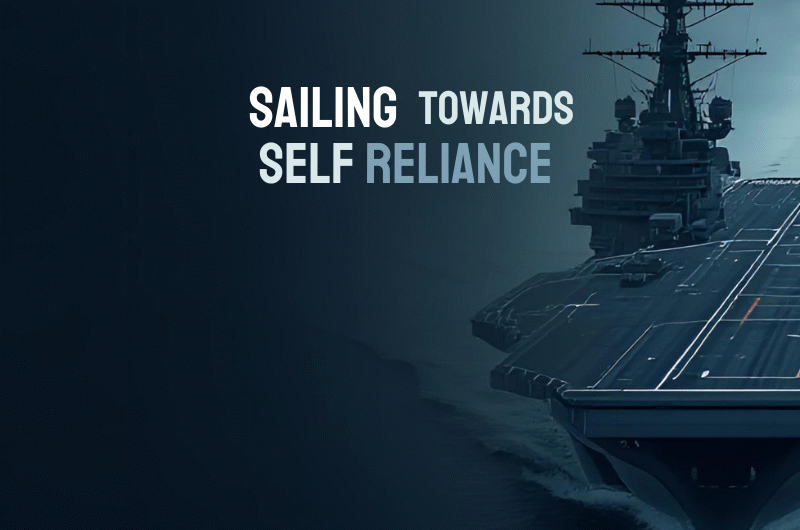
Sailing Towards Self-Reliance: The Indian Navy’s Aatmanirbhar Bharat Journey

INDIAN NAVY AND AATMANIRBHAR BHARAT  The Indian Navy is undergoing a strategic transformation under Vision 2047 to become a fully indigenous, technology-driven maritime force. The focus areas are innovation, indigenisation, and integration of advanced technologies, aligned with the national Aatmanirbhar Bharat mission. INDIGENISATION AND STRATEGIC SIGNIFICANCE Indigenisation is critical for operational autonomy, supply-chain security, and national security during crises. India’s role as “first responder” in the Indian Ocean Region (IOR) has expanded through HADR operations, anti-piracy missions, and maritime security. India safeguards major global trade routes, as nearly 50% of global trade and 40% of oil transit through the Indo-Pacific. The coastline (11,098 km) and EEZ (2.4 million sq km) require strong maritime capabilities. NAVAL INDIGENISATION STATUS Over 40 indigenous warships and submarines have been inducted since 2014, with one new platform added every 40 days in the last year. About 67% of capital procurement in the last decade has been from Indian industry. Machinery indigenisation levels: Float – 90%, Move – 60%, Fight – 50%. BUDGET AND MODERNISATION The Navy’s budget has grown from ₹49,623 crore (2020–21) to ₹1.03 lakh crore (2025–26). Defence budget stands at ₹6.81 lakh crore in 2025–26, showing sustained emphasis on maritime power. Capital expenditure for ships, submarines, and aviation has sharply increased, indicating focus on future warfare technologies. KEY PLATFORMS AND SHIPBUILDING 51 major warships are under construction in India (~₹90,000 crore value). Indigenous achievements include: – INS Vikrant: First indigenous aircraft carrier, 76% indigenous content. – Project 15B: Visakhapatnam-class destroyers (modern air defence and strike capability). – Project 17A: Nilgiri-class stealth frigates (advanced sensors and weapons). – Survey vessels and ASW crafts like INS Sandhayak, INS Androth, INS Mahe with high indigenous content. SUBMARINE CAPABILITY Project-75: Six Kalvari-class submarines strengthen underwater warfare. Indigenous AIP system developed by DRDO for endurance enhancement. Advanced sonar systems like HUMSA NG, ABHAY, and ALTAS support indigenous underwater dominance. WEAPONS AND SENSORS Indigenous missile systems include VL-SRSAM and BrahMos. Torpedoes and countermeasures: Maareech, Varunastra, ALWT, MIGM. Electronic warfare systems such as Shakti, Varuna, and Sangraha indigenised. AVIATION HAL Dhruv helicopters used for SAR, surveillance, and logistics. More than 340 produced, exported to friendly nations. POLICY FRAMEWORK INIP 2015–2030: Roadmap for indigenisation across Float, Move, Fight. NIIO (2020): Innovation ecosystem linking military, startups, and academia. SPRINT: Target of inducting 75 indigenous technologies. iDEX: Defence innovation funding (up to ₹10 crore). SRIJAN Portal and Positive Indigenisation Lists: Over 3,000 defence items indigenised. STRATEGIC CONCLUSION The Indian Navy has moved from “Buyer’s Navy” to “Builder’s Navy.” Indigenisation strengthens India’s maritime autonomy, industrial growth, and geopolitical influence. The Navy is emerging as a major pillar of India’s national power in the Indo-Pacific and supports long-term security under Vision 2047. MOTTO “Jalmev Yasya, Balmev Tasya” – One who controls the sea, controls power. MCQ: 1. The primary objective of the Indian Navy’s Vision 2047 is to: (a) Expand foreign procurement of naval platforms (b) Achieve complete technological isolation from allies (c) Maintain only coastal security operations (d) Become a fully indigenous and technologically advanced maritime force 2. The Indian Naval Indigenisation Plan (INIP) 2015–2030 focuses on indigenisation under which three functional categories? (a) Attack, Defence, Logistics (b) Air, Sea, Space (c) Float, Move and Fight (d) Surface, Sub-surface and Air 3. India is referred to as the “first responder” in the Indian Ocean Region mainly because: (a) It controls the Strait of Malacca (b) It conducts frequent humanitarian and disaster relief operations (c) It owns maximum merchant ships (d) It hosts most naval exercises 4. Approximately what percentage of India’s capital procurement for the Navy over the last decade has been from Indian industry? (a) 35% (b) 50% (c) 67% (d) 90% 5. Which one of the following best reflects India’s maritime economic dependence? (a) 90% of India’s population lives in coastal towns (b) 90% of India’s trade and 80% of freight is sea-based (c) 50% of India’s oil is mined offshore (d) 75% of GDP comes from ports 6. INS Vikrant is significant because: (a) It is India’s first nuclear-powered submarine (b) It is India’s first indigenous aircraft carrier (c) It is India’s longest-serving warship (d) It is India’s first stealth destroyer 7. Project 17A is associated with: (a) Aircraft carriers (b) Submarine development (c) Stealth frigates (d) Missile testing facility 8. The Kalvari class submarines were developed under: (a) Project 15B (b) Project 17 (c) Project 75 (d) Project 15A 9. Which missile system was inducted by the Indian Navy in March 2025? (a) Barak-8 (b) Agni-V (c) VL-SRSAM (d) Akash-NG 10. Which indigenous torpedo defence system protects Indian naval vessels against enemy torpedoes? (a) Varunastra (b) Shakti (c) Maareech (d) ALTAS 11. The Navy’s budget crossed ₹1 lakh crore in: (a) 2020–21 (b) 2022–23 (c) 2023–24 (d) 2025–26 12. The Naval Innovation and Indigenisation Organisation (NIIO) was established in: (a) 2018 (b) 2019 (c) 2020 (d) 2022 13. Under the SPRINT initiative, the Navy aims to induct: (a) 50 new platforms (b) 60 foreign systems (c) 75 indigenous technologies (d) 100 private shipyards 14. The Warship-grade steel used for Indian warships was jointly developed by: (a) DRDO and HAL (b) DRDO, SAIL and Indian Navy (c) BHEL and ISRO (d) L&T and BEL 15. Which statement best describes the Indian Navy’s transformation? (a) From Coastal Navy to International Navy (b) From Merchant Navy to Combat Navy (c) From Buyer’s Navy to Builder’s Navy (d) From Allied Navy to Neutral Navy  

More Details

FOOD IRRADIATION AND COLD CHAIN INFRASTRUCTURE IN INDIA

FOOD IRRADIATION AND COLD CHAIN INFRASTRUCTURE IN INDIA   Food irradiation is an advanced food preservation technique in which food items are exposed to a controlled dose of ionising radiation to destroy harmful bacteria, insects and moulds and to slow down spoilage processes such as ripening and sprouting. The treatment does not make food radioactive and does not reduce its nutritional value. Instead, it improves food safety and extends shelf life, making the food safer for human consumption and suitable for long-distance transport and storage.   India is expanding food irradiation facilities under the Integrated Cold Chain and Value Addition Infrastructure component of the Pradhan Mantri Kisan Sampada Yojana, implemented by the Ministry of Food Processing Industries. The objective is to build a seamless system from farm gate to consumer through scientific storage, refrigerated transport, processing and modern preservation technologies. Food irradiation has been included as a critical infrastructure element to reduce post-harvest losses and improve quality control.   The scientific safety of food irradiation has been widely accepted globally. International organisations and scientific institutions have confirmed that irradiated food does not pose any health risks and does not become toxic, unsafe or radioactive. In India, gamma irradiation using Cobalt-60 is supplied by the Board of Radiation and Isotope Technology under the Department of Atomic Energy, while X-rays and electron beams are also used for different processing needs.   In India, irradiation is applied to commodities such as potatoes, onions, spices, cereals, pulses, oilseeds and fruits like mangoes. The process prevents sprouting, destroys pathogens and insect infestations, increases shelf life and enables compliance with export quarantine standards. This makes Indian agricultural products more competitive in international markets and reduces wastage in domestic distribution.   Under the cold chain scheme, financial assistance is provided in the form of grants-in-aid to set up food irradiation units. Subsidy is given at thirty five percent of project cost in general areas and fifty percent in difficult areas and for projects by SC, ST, farmer producer organisations and self-help groups, subject to a maximum of ten crore rupees per project. Eligible entities include individuals, companies, cooperatives, NGOs, FPOs, SHGs and public sector units.   In July 2025, the government approved a major expansion of the scheme with an additional allocation, raising the total PMKSY outlay to six thousand five hundred and twenty crore rupees up to March 2026. From this, one thousand crore rupees has been earmarked for the establishment of fifty multi-product food irradiation units and one hundred NABL-accredited food testing laboratories. The added irradiation capacity is expected to reach twenty to thirty lakh metric tonnes annually.   As of June 2025, three hundred and ninety five integrated cold chain projects had been approved since the launch of the scheme. Out of these, two hundred and ninety one projects had become operational, creating a preservation capacity of over twenty five lakh metric tonnes per year and processing capacity of more than one hundred fourteen lakh metric tonnes. These projects have generated over one lakh seventy thousand jobs across the country.   By August 2025, sixteen multi-product food irradiation projects had been sanctioned across India, out of which nine were operational and seven were under implementation. More than one hundred crore rupees were approved as grants for these projects, with over sixty eight crore already released. This shows steady progress in expanding scientific storage and preservation infrastructure.   Food irradiation has major economic and social significance. It reduces post-harvest losses, stabilises food prices, increases farmer income and strengthens food security. It also improves export potential by meeting sanitary and phytosanitary standards of importing countries. In addition, it enhances public health by reducing the risk of foodborne diseases through better microbial control.   Consumers are advised to check quality certification marks, food safety licence numbers, fortification symbols and nutritional labels while purchasing irradiated or processed foods. Correct labelling provides assurance about safety, composition and quality. Awareness about irradiation helps remove misconceptions and encourages acceptance of scientifically safe food technologies.   Overall, food irradiation combined with cold chain infrastructure represents a shift towards a modern, resilient and efficient food system in India. With strong policy support and growing investment, India is building a scientific and sustainable agri-food ecosystem that reduces waste, protects public health and ensures safer and longer-lasting food supply for consumers. MCQ: 1. Food irradiation primarily helps in: (a) Increasing artificial flavour in food (b) Enhancing radioactive content of food (c) Destroying harmful microorganisms and delaying spoilage (d) Replacing refrigeration technology 2. One major advantage of food irradiation as mentioned in the passage is that it: (a) Makes food chemically treated (b) Makes food radioactive (c) Reduces nutritional value (d) Improves safety and shelf life without harming nutrition 3. Food irradiation helps food items become suitable for: (a) Immediate consumption only (b) Domestic consumption only (c) Long-distance transport and storage (d) Industrial raw material use only 4. Under which government scheme is India expanding food irradiation facilities? (a) National Food Security Mission (b) Pradhan Mantri Kisan Sampada Yojana (c) Rashtriya Krishi Vikas Yojana (d) Paramparagat Krishi Yojana 5. The Ministry responsible for implementing the cold chain scheme is: (a) Ministry of Health and Family Welfare (b) Ministry of Consumer Affairs (c) Ministry of Food Processing Industries (d) Ministry of Commerce and Industry 6. Food irradiation has been included in cold chain projects mainly to: (a) Increase artificial preservation (b) Reduce post-harvest losses and improve quality (c) Promote chemical usage in food (d) Replace traditional storage methods completely 7. In India, gamma irradiation is carried out using: (a) Cesium-137 (b) Uranium-235 (c) Cobalt-60 (d) Thorium-232 8. Cobalt-60 for irradiation is supplied by: (a) ISRO (b) BARC (c) DRDO (d) Board of Radiation and Isotope Technology 9. Which of the following is NOT mentioned as a method of irradiation in the passage? (a) Gamma rays (b) X-rays (c) Electron beams (d) Ultraviolet radiation 10. Which group of products is commonly irradiated in India? (a) Only fruits (b) Only meat products (c) Potatoes, spices, cereals and pulses

More Details

 INDIA’S SOLAR ENERGY REVOLUTION AND CLEAN POWER TRANSITION

INDIA’S SOLAR ENERGY REVOLUTION AND CLEAN POWER TRANSITION   India’s solar transformation is one of the most rapid energy transitions witnessed in the world. From merely 3 GW in 2014, installed solar capacity has grown to about 129 GW by 2025, marking more than a forty-fold increase. Solar energy has now become the largest contributor to India’s renewable power sector, overtaking wind and hydropower in total installations.   India has also crossed a historic milestone by sourcing over half of its electricity capacity from non-fossil fuel sources. Out of nearly 500 GW total installed capacity, more than 259 GW now comes from solar, wind, hydro, nuclear and biomass, indicating a major structural shift away from fossil fuel dominance in electricity generation.   The direction of India’s clean energy expansion is guided by the Panchamrit commitments announced at COP26 in 2021. These include achieving 500 GW of non-fossil capacity, ensuring 50% electricity from clean sources by 2030, reducing carbon emissions by one billion tonnes, lowering emission intensity by 45%, and achieving Net Zero by 2070.   Household-level solar adoption has accelerated through the PM Surya Ghar Muft Bijli Yojana launched in February 2024. The scheme targets one crore households and offers up to 300 free electricity units monthly, reducing energy costs while promoting decentralised power generation.   Agriculture is being integrated into the solar revolution through the PM-KUSUM scheme. Solar-powered pumps and grid-connected systems are helping farmers cut diesel use, lower irrigation costs and generate income by selling surplus electricity to power utilities.   To build industrial strength, the Production Linked Incentive scheme encourages domestic manufacturing of solar panels and components. This supports employment generation, industrial growth and reduction of import dependence, strengthening India’s energy security.   India has emerged as a leader in international solar cooperation through the International Solar Alliance headquartered in Gurugram. With more than 125 participating countries, the alliance supports finance mobilisation, technology transfer and capacity building for solar projects worldwide.   The One Sun, One World, One Grid vision promotes international grid connectivity, enabling countries to share solar power across borders. The idea presents a long-term solution for global energy sustainability and climate security.   Globally, India ranks among the top nations in renewable deployment, currently placed third in solar power capacity and fourth in overall renewable energy capacity. This reflects growing international recognition of India’s clean energy leadership.   Overall, India’s solar momentum represents a strategic combination of strong policies, technological adoption, domestic manufacturing and global diplomacy, establishing solar power as a backbone of sustainable development and climate action. MCQ: 1. With reference to India’s solar energy growth, consider the following statements: 1. India’s solar capacity increased more than forty times between 2014 and 2025. 2. Solar energy is now the largest contributor among renewable sources in India. 3. Hydropower contributes more than solar to the renewable mix at present. Which of the statements given above is/are correct? (a) 1 and 2 only (b) 2 and 3 only (c) 1 only (d) 1, 2 and 3 2. India crossed a major energy milestone when: (a) Nuclear energy overtook coal (b) Non-fossil power exceeded 50% of installed capacity (c) Renewable energy exports began (d) Solar energy became cheaper than hydropower 3. India’s total installed electricity capacity is closest to: (a) 300 GW (b) 400 GW (c) 500 GW (d) 600 GW 4. Non-fossil energy in India currently includes: (a) Only solar and wind (b) Solar, wind and biomass only (c) Solar, wind, hydro, nuclear and biomass (d) Only solar and nuclear 5. The Panchamrit commitments were announced at: (a) Rio+20 (b) COP21 (c) COP26 (d) COP28 6. Which of the following is NOT part of the Panchamrit framework? (a) 500 GW non-fossil capacity by 2030 (b) Carbon neutrality by 2050 (c) Net Zero emissions by 2070 (d) 45% reduction in emission intensity 7. The target of reducing total projected carbon emissions by 1 billion tonnes is to be achieved by: (a) 2025 (b) 2030 (c) 2040 (d) 2070 8. The PM Surya Ghar Muft Bijli Yojana mainly focuses on: (a) Solar farms in deserts (b) Rooftop solar for households (c) Wind-solar hybrid plants (d) Solar manufacturing parks 9. Under PM Surya Ghar Yojana, the maximum free electricity offered per month is: (a) 100 units (b) 200 units (c) 300 units (d) 400 units 10. PM-KUSUM scheme mainly integrates solar energy with: (a) Industry (b) Urban housing (c) Agriculture (d) Transport 11. A key benefit of PM-KUSUM for farmers is: (a) Free fertilizers (b) Income by selling surplus power (c) Free tractors (d) Export subsidy 12. The Production Linked Incentive scheme in the solar sector aims to: (a) Promote solar exports (b) Strengthen domestic manufacturing (c) Eliminate private investment (d) Focus only on research institutes 13. The official headquarters of the International Solar Alliance is located at: (a) New Delhi (b) Mumbai (c) Gurugram (d) Jaipur 14. India’s current global position in solar power capacity is: (a) First (b) Second (c) Third (d) Fourth 15. The concept of “One Sun, One World, One Grid” emphasises: (a) Solar panel standardisation (b) Cross-border renewable electricity sharing (c) Solar pricing regulation (d) Nuclear-solar integration

More Details

National Cooperative Development Corporation (NCDC)

National Cooperative Development Corporation (NCDC) Core Identity Statutory organisation established in 1963 under the Ministry of Cooperation to strengthen India’s cooperative movement through institutional finance and development support. Financial Scale and Trend (Highlights) Disbursement in 2024–25: ₹95,182.88 crore, up from ₹5,735.51 crore in 2014–15 (sharp long-term expansion). Disbursement in 2025–26 (till Oct 2025): ₹49,799.06 crore. Cumulative assistance to cooperative sugar mills: ₹33,311.79 crore (as of March 2025). SC/ST cooperatives: ₹57.78 crore (FY 2021–22 to FY 2024–25). Women cooperatives: – Total (FY 2021–22 to FY 2024–25): ₹4,823.68 crore – Infrastructure (2022–2025): ₹2.37 crore Sectoral Coverage Farm & allied: agriculture inputs, storage, cold chain, processing, marketing. Non-farm: dairy, livestock, poultry, fisheries, handloom, sericulture, women and SC/ST activities. Infrastructure: storage, logistics, processing plants, technology upgradation. Key Schemes 1) Yuva Sahakar (2019–20) Purpose: Support innovative cooperative start-ups; emphasis on NE region, Aspirational Districts, women/SC/ST/PwD cooperatives. Status: 32 societies, ₹49.35 crore sanctioned, ₹3.71 crore released. 2) Ayushman Sahakar (2020–21) Purpose: Cooperative-led healthcare, AYUSH facilities, alignment with national health systems and digital health. Status: 9 societies, ₹161.90 crore sanctioned, ₹43.19 crore released. 3) Dairy Sahakar (2021–22) Purpose: End-to-end dairy value chain—bovine development, processing, QA, branding, export; allied services (R&D, packaging, equipment, veterinary care). Status: 16 societies, ₹162.28 crore sanctioned, ₹177.72 crore released. 4) Digital Sahakar (2021–22) Purpose: Digitisation of cooperatives; better credit access; linkage with government incentives and platforms. Coverage: Cooperatives, FPOs/FFPOs, SHG federations (direct or via States/UTs). 5) Deerghavadhi Krishak Punji Sahakar Yojana (2022–23) Purpose: Long-term capital to agricultural credit cooperatives; strengthen farm and allied activities and non-farm diversification. Eligible: PACS, DCCBs, StCBs, PCARDS, SCARDS. Status: 5 societies, ₹5,400.76 crore sanctioned, ₹2,137.00 crore released. 6) Women-Focused Schemes Swayam Shakti Sahakar (2022–23): Credit to women SHGs via PACS/DCCBs/StCBs/federations. Nandini Sahakar (2020–21): Capacity building, enterprise planning and finance for women-led cooperatives. Output (FY 2021–22 to FY 2024–25): 34 cooperatives, ₹6,283.71 crore sanctioned, ₹4,823.68 crore released. Sugar Mills Support (Central Grant-in-Aid) Government grant ₹1,000 crore (2022–23, 2024–25). Credit up to ₹10,000 crore to mills for ethanol/cogeneration and working capital. Funding pattern eased to 90:10; term-loan interest 8.5%. Output: ₹10,005 crore to 56 mills. Recent Policy Push Grant-in-Aid Scheme (2025–26 to 2028–29): Outlay ₹2,000 crore (₹500 crore annually) to mobilise ~₹20,000 crore from markets. Expected beneficiaries: ~2.9 crore members across 13,288 societies (dairy, fisheries, sugar, textiles, processing, storage, labour, women-led). National Cooperation Policy, 2025 (Essentials) Vision aligned to “Sahkar-se-Samriddhi”. Focus: legal reform, professional management, technology adoption, transparency, cooperation among cooperatives. Institutional partners include major federations and financial institutions to scale and modernise the sector. Significance Expands rural infrastructure, strengthens value chains, raises farm and non-farm incomes, promotes financial inclusion, and deepens women and SC/ST participation through targeted finance and modernisation.   1. The National Cooperative Development Corporation (NCDC) functions under which Ministry? (a) Ministry of Finance (b) Ministry of Agriculture & Farmers Welfare (c) Ministry of Cooperation (d) Ministry of Rural Development 2. NCDC was established in the year: (a) 1952 (b) 1963 (c) 1975 (d) 1986 3. Which of the following best describes the nature of NCDC? (a) Private funding agency (b) Public sector bank (c) Statutory development corporation (d) Joint venture company 4. Which sector is NOT directly supported by NCDC? (a) Dairy (b) Fisheries (c) Handloom (d) Aerospace manufacturing 5. The scheme ‘Yuva Sahakar’ is primarily related to: (a) Healthcare expansion (b) Cooperative start-ups and innovation (c) Fertilizer subsidy (d) Export promotion 6. Ayushman Sahakar scheme mainly focuses on: (a) Agricultural mechanisation (b) Rural housing (c) Healthcare services through cooperatives (d) Crop insurance 7. Dairy Sahakar scheme supports: (a) Export of dairy animals (b) Only milk marketing (c) End-to-end dairy sector development (d) Cooperative training institutes 8. Which scheme promotes digital empowerment of cooperatives? (a) Dairy Sahakar (b) Digital Sahakar (c) Yuva Sahakar (d) Ayushman Sahakar 9. Deerghavadhi Krishak Punji Sahakar Yojana is aimed at: (a) Short-term farm loans (b) Long-term capital to agricultural credit cooperatives (c) Fertilizer subsidy (d) Food processing promotion 10. Under NCDC schemes, which institutions are eligible agricultural credit cooperatives? (a) PACS (b) DCCBs (c) State Cooperative Banks (d) All of the above 11. Which scheme exclusively targets women cooperatives? (a) Yuva Sahakar (b) Nandini Sahakar (c) Digital Sahakar (d) Dairy Sahakar 12. NCDC provides highest cumulative financial assistance to which sector? (a) Fisheries (b) Textile (c) Cooperative sugar mills (d) Poultry 13. The Grant-in-Aid to NCDC (2025–2029) is intended to: (a) Provide subsidies to farmers (b) Mobilise market funds for cooperative lending (c) Waive loans (d) Replace cooperative banks 14. NCDC funding pattern for sugar mill projects was revised to: (a) 70:30 (b) 80:20 (c) 90:10 (d) 60:40 15. National Cooperation Policy 2025 mainly focuses on: (a) Privatisation of cooperatives (b) Market monopolies (c) Strengthening cooperation among cooperatives (d) Reducing rural institutions

More Details

ASIAN YOUTH GAMES 2025

ASIAN YOUTH GAMES 2025       INTRODUCTION The Asian Youth Games (AYG) is a continental-level multi-sport event organised under the Olympic Council of Asia (OCA) to identify, nurture and prepare young athletic talent from across Asia. The Games target athletes aged 14–18 and function as a structured pathway to elite international competitions such as the Asian Games and the Olympic Games. Beyond competition, AYG promotes cultural integration, discipline, leadership and sporting ethics among Asia’s youth.   ORIGIN AND EVOLUTION The concept of the Asian Youth Games emerged after Singapore submitted a successful bid to host the Youth Olympic Games in 2010. Recognising the need for a continental youth platform, the OCA approved the creation of AYG in 2008. Singapore was unanimously awarded the hosting rights for the inaugural edition. Since then, the event has grown in scale, sports diversity and participant nations, reflecting Asia’s rising sporting ambitions.   INDIA’S OVERALL PERFORMANCE TRAJECTORY   ASIAN YOUTH GAMES 2009 – SINGAPORE India participated in the first edition with emerging-level infrastructure and exposure. The Indian team secured: Gold – 5 Silver – 3 Bronze – 3 Total – 11 medals Overall Rank – 11th This edition laid the foundation for India’s youth sports ecosystem and international presence.   ASIAN YOUTH GAMES 2013 – NANJING, CHINA India showed clear signs of growth with increased exposure, broader participation and better training inputs: Gold – 3 Silver – 4 Bronze – 7 Total – 14 medals Overall Rank – 10th Indian athletes expanded into new disciplines and demonstrated improved consistency.   ASIAN YOUTH GAMES 2025 – MANAMA, BAHRAIN After a gap of more than a decade, India returned with its strongest performance ever: Gold – 13 Silver – 18 Bronze – 17 Total – 48 medals Overall Rank – 6th India’s medals increased more than four times compared to 2009 and more than three times compared to 2013, marking a historic breakthrough.   EVENT SCALE – 2025 Participating countries – 45 Athletes – Over 4,000 Sports – 26 Indian contingent – 229 athletes Male – 107 Female – 122 Officials – 90   SPORTS-WISE EXCELLENCE – INDIA 2025   Beach Wrestling: Gold – 3, Silver – 2 India ranked first in this discipline.   Wrestling: Gold – 3, Silver – 2, Bronze – 2 India emerged as one of the strongest wrestling nations at youth level.   Boxing: Gold – 4, Silver – 2, Bronze – 1 Boxing was India’s highest gold-winning sport.   Kabaddi: Both boys’ and girls’ teams won gold in the sport’s debut appearance at AYG, remaining unbeaten throughout the event.   GENDER PARITY AND WOMEN EMPOWERMENT   Medal Distribution: Girls – 26 medals (54.17%) Boys – 19 medals (39.58%) Mixed – 3 medals (6.25%)   Gold Medals: Girls – 9 Boys – 4 Women contributed 69.23% of total gold medals.   Out of 77 medal winning athletes: Female – 46 Male – 31   This shows India’s success in implementing gender-inclusive sports policy and grassroots female participation.   RECOGNITION AND INCENTIVES   The Prime Minister congratulated Indian athletes and appreciated their discipline and determination.   Reward Announced by Indian Olympic Association: Gold Medal – ₹5 lakh Silver Medal – ₹3 lakh Bronze Medal – ₹2 lakh Fourth place finish – ₹50,000 Coach incentive – ₹1 lakh Kabaddi teams (each) – ₹10 lakh   This reflects direct incentivisation of performance and recognition of coaching ecosystem.   Institutional Support Framework: Ministry of Youth Affairs & Sports Sports Authority of India National Sports Federations   Government Schemes Driving Success: Khelo India Programme Target Olympic Podium Scheme (TOPS) State level sports academies and scholarships Talent identification and athlete tracking systems   CONCLUSION   India’s historic performance at Asian Youth Games 2025 confirms the success of long-term policy intervention in youth sports development. It highlights improvements in physical infrastructure, sports science, athlete nutrition, international exposure, psychological training and competitive mindset.   The Games demonstrate India’s shift from participation-based to performance-based sporting culture. With the next edition scheduled in Uzbekistan in 2029, India is well-positioned to emerge as a consistent youth sports power in Asia.   MCQs  1. The Asian Youth Games (AYG) is conducted under the authority of: (a) International Olympic Committee (b) Asian Games Federation (c) Olympic Council of Asia (d) National Olympic Committees 2. The primary age group targeted by the Asian Youth Games is: (a) 10–14 years (b) 12–16 years (c) 14–18 years (d) 16–21 years 3. The idea of the Asian Youth Games was directly inspired by: (a) Asian Games 2006 (b) Commonwealth Games 2010 (c) Singapore’s Youth Olympics bid (d) Beijing Olympics 4. The inaugural Asian Youth Games were held in: (a) Beijing (b) Singapore (c) Nanjing (d) Bangkok 5. India’s medal tally at the first Asian Youth Games in 2009 was: (a) 9 (b) 10 (c) 11 (d) 12 6. In which edition did India finish 10th in the medal standings? (a) Singapore 2009 (b) Nanjing 2013 (c) Manama 2025 (d) Doha 2017 7. India’s best-ever performance at the Asian Youth Games came in: (a) 2009 (b) 2013 (c) 2025 (d) 2021 8. At Asian Youth Games 2025, India won a total of: (a) 44 medals (b) 46 medals (c) 48 medals (d) 50 medals 9. India’s overall ranking at Asian Youth Games 2025 was: (a) 4th (b) 5th (c) 6th (d) 7th 10. Which sport brought India the highest number of gold medals in AYG 2025? (a) Wrestling (b) Beach Wrestling (c) Kabaddi (d) Boxing 11. India topped the medal tally in which discipline in AYG 2025? (a) Boxing (b) Wrestling (c) Beach Wrestling (d) Kabaddi 12. Kabaddi at the Asian Youth Games 2025 is significant because: (a) India lost the final match (b) It replaced Wrestling (c) It was played only by boys (d) It was introduced for the first time 13. Which statement accurately reflects gender participation in India’s team at AYG 2025? (a) Men were more in number than women (b) Women participation was exactly equal to men (c) Women outnumbered men (d) Only boys

More Details

Hamara Samvidhan – Hamara Swabhiman Campaign

Hamara Samvidhan – Hamara Swabhiman Campaign   India’s Constitution, adopted on 26 November 1949 and enforced from 26 January 1950, has completed 75 years as the foundation of Indian democracy. To commemorate this milestone and strengthen mass awareness about constitutional values, the Government of India launched the nationwide campaign titled “Hamara Samvidhan – Hamara Samman”, which later evolved into “Hamara Samvidhan – Hamara Swabhiman”.   The campaign is implemented by the Department of Justice under the Ministry of Law and Justice and is integrated with the DISHA scheme which stands for Designing Innovative Solutions for Holistic Access to Justice in India (2021–2026). This scheme aims to provide accessible, affordable and citizen-friendly legal services through Tele-Law, Nyaya Bandhu (Pro bono legal assistance) and legal awareness programmes.   The initiative was formally launched by the Vice-President on 24 January 2024 at the Dr. B.R. Ambedkar International Centre, New Delhi. The focus of the campaign was not limited to spreading information but also to making constitutional rights usable at the ground level by connecting people with legal services and awareness platforms.   In January 2025, the campaign entered its second phase titled “Hamara Samvidhan – Hamara Swabhiman”, shifting the focus from honouring the Constitution to developing pride and ownership among citizens regarding their rights and duties. The purpose of this phase is to promote a deeper sense of constitutional consciousness across society.   The campaign organized more than 13,700 events across India and engaged over one crore citizens. It reached remote villages, aspirational districts and urban centres through outreach programmes, workshops, digital platforms and awareness drives.   Three major components guided the campaign: Sabko Nyay Har Ghar Nyaya focusing on grassroots justice delivery, Nav Bharat Nav Sankalp encouraging citizen pledges and youth participation, and Vidhi Jagriti Abhiyaan promoting legal awareness among rural and marginalized communities.   Key activities included Panch Pran pledge campaigns through MyGov, legal service fairs called Nyaya Seva Melas in States and Union Territories, door-to-door legal awareness through Nyaya Sahayaks, and village-level Vidhi Baithak sessions involving Panchayats, schools and self-help groups.   The campaign has transformed constitutional celebrations into a participatory movement of empowerment, where citizens are encouraged to understand, assert and take pride in their constitutional rights.   Overall, the Hamara Samvidhan – Hamara Swabhiman campaign is a landmark initiative that strengthens India’s democratic culture by turning legal awareness into a people’s movement, aligning citizens with the vision of Viksit Bharat by 2047. MCQ: 1. The campaign “Hamara Samvidhan – Hamara Swabhiman” was launched primarily to: (a) Reform the judiciary system (b) Spread awareness of constitutional values among citizens (c) Implement new constitutional amendments (d) Establish new courts in rural areas 2. The Constitution of India was adopted on: (a) 15 August 1947 (b) 26 January 1950 (c) 26 November 1949 (d) 2 October 1950 3. The Constitution of India came into force on: (a) 26 November 1949 (b) 15 August 1947 (c) 26 January 1950 (d) 2 October 1951 4. The campaign was implemented by: (a) Ministry of Home Affairs (b) Department of Justice, Ministry of Law and Justice (c) Ministry of Social Justice and Empowerment (d) NITI Aayog 5. DISHA stands for: (a) Development Initiative for Social Harmony in Administration (b) Designing Innovative Solutions for Holistic Access to Justice in India (c) Digital Interface for Supporting Human Rights (d) Department of Institutional Services for Legal Help 6. The DISHA scheme covers which period? (a) 2019–2024 (b) 2020–2025 (c) 2021–2026 (d) 2022–2027 7. Which of the following is NOT a component of the DISHA scheme? (a) Tele-Law (b) Nyaya Bandhu (c) Lok Adalat Services (d) Legal awareness programmes 8. The campaign was formally launched on: (a) 26 January 2024 (b) 24 January 2024 (c) 26 November 2024 (d) 15 August 2024 9. The campaign was launched at: (a) Rashtrapati Bhawan (b) Parliament House (c) Dr. B.R. Ambedkar International Centre, New Delhi (d) Supreme Court premises 10. The second phase of the campaign emphasized: (a) Constitutional amendments (b) Pride and ownership among citizens regarding the Constitution (c) Court modernization (d) Law enforcement reforms 11. The campaign conducted more than: (a) 5,000 events (b) 8,000 events (c) 10,000 events (d) 13,700 events 12. Approximately how many citizens were engaged during the campaign? (a) 10 lakh (b) 50 lakh (c) One crore (d) Five crore 13. Which of the following was NOT a component of the campaign? (a) Sabko Nyay Har Ghar Nyaya (b) Nav Bharat Nav Sankalp (c) Vidhi Jagriti Abhiyaan (d) Swachh Vidhan Abhiyaan 14. Nyaya Seva Melas were organized mainly to: (a) Recruit judicial officers (b) Conduct constitutional debates (c) Deliver legal services at the grassroots (d) Introduce new laws 15. The campaign aims to align citizens with the vision of: (a) Digital India 2030 (b) Nyaya Bharat 2040 (c) Viksit Bharat 2047 (d) Samvidhan Mahotsav 2050

More Details

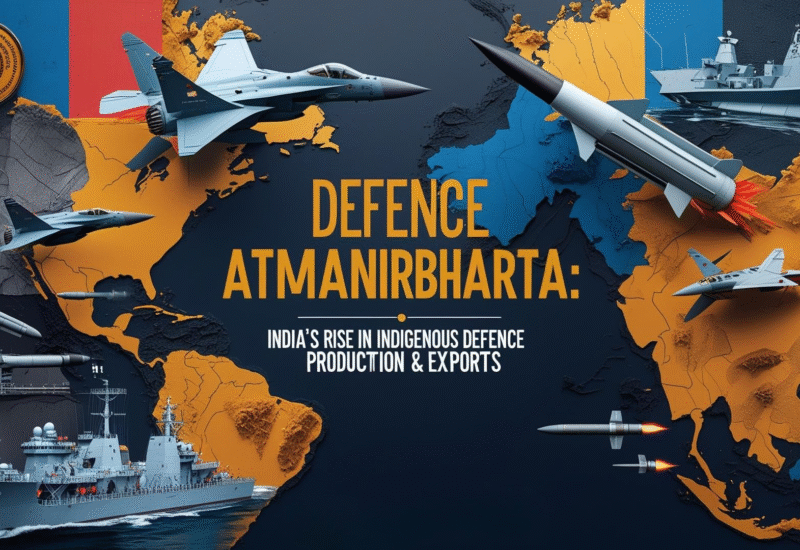
Defence Atmanirbharta: Record Production & Exports

Defence Atmanirbharta: Record Production & Exports   Context India’s defence sector is undergoing rapid indigenisation under Aatmanirbhar Bharat, aiming to reduce import dependence, enhance exports, strengthen R&D, and enable private sector + MSME participation.   Key Achievements Highest-ever defence production ₹1.54 lakh crore (FY 2024–25). Indigenous production ₹1,27,434 crore in FY 2023–24 (174% rise from 2014–15). Defence exports reached ₹23,622 crore (FY 2024–25), up from less than ₹1,000 crore in 2014. Private sector share increased to 23%; DPSUs contribute ~77%. 788 industrial licences issued to 462 companies; 16,000+ MSMEs onboarded.   Major Reforms Positive Indigenisation Lists, simplified licensing, and liberalised FDI (74% automatic). Defence Acquisition Procedure (DAP 2020) prioritises “Buy Indian‐IDDM”. Defence Procurement Manual (DPM 2025) promotes ease of doing business and transparency. iDEX, TDF, DIA-CoEs foster innovation, start-ups, and technology transfers.   Institutional Expansion Defence Industrial Corridors in UP and Tamil Nadu attracted investments worth ₹9,145+ crore. DRDO strengthening deep-tech ecosystem; ordnance factories reorganised into 7 DPSUs. Record 193 procurement contracts signed in FY 2024–25 worth ₹2,09,050 crore, majority to domestic vendors.   Defence Exports & Diplomacy Export basket includes bulletproof jackets, patrol boats, helicopters, radars, torpedoes, and subsystems. India now exports to 80+ countries including Armenia, U.S., and France. Export policy simplified via online authorisations, OGEL, and SOP reforms.   Budgetary Trends Defence budget rose from ₹2.53 lakh crore (2013–14) to ₹6.81 lakh crore (2025–26). Capital allocation for modernisation ₹1.72 lakh crore (2024–25), ensuring long-term capability development.   Targets Ahead Defence manufacturing target: ₹3 lakh crore by 2029. Defence export target: ₹50,000 crore by 2029.   Significance This shift strengthens national security, reduces strategic vulnerabilities, enhances global defence footprint, promotes technological sovereignty, and supports economic growth and employment generation. Practice :   Q1. Which category receives the highest priority under India’s defence procurement framework? (a) Buy (Global) (b) Buy (Indian-IDDM) (c) Buy & Make (Global) (d) Make (III)   Q2. What was India’s recorded defence production in FY 2024–25? (a) ₹1.27 lakh crore (b) ₹1.54 lakh crore (c) ₹23,622 crore (d) ₹2.09 lakh crore   Q3. What was India’s defence export figure in FY 2024–25? (a) Less than ₹1,000 crore (b) ₹15,209 crore (c) ₹23,622 crore (d) ₹54,000 crore   Q4. India’s major push for indigenous defence manufacturing is primarily linked to which initiative? (a) Skill India (b) Aatmanirbhar Bharat (c) Digital India (d) Sagarmala   Q5. Defence Industrial Corridors in India are located in: (a) Gujarat and Maharashtra (b) Uttar Pradesh and Tamil Nadu (c) Rajasthan and Karnataka (d) Delhi and Telangana   Q6. The primary aim of the Defence Acquisition Procedure (DAP) 2020 is: (a) Reducing defence exports (b) Enhancing speed and transparency in procurement (c) Privatizing all defence PSUs (d) Reducing the capital defence budget   Q7. The automatic route FDI limit in India’s defence sector is: (a) 26% (b) 49% (c) 74% (d) 100%   Q8. Which reform eased defence exports through digital processing and simplified licensing? (a) Digital India Portal (b) OGEL and end-to-end online export authorisation system (c) GST Exemption Scheme (d) Global Tender Relaxation   Q9. India now exports defence products to more than: (a) 20 countries (b) 40 countries (c) 60 countries (d) 80 countries   Q10. The purpose of the iDEX programme is to: (a) Promote global purchases (b) Encourage start-ups & MSME-led defence innovation (c) Subsidize foreign defence OEMs (d) Support only large PSUs   Q11. How many defence procurement contracts were signed in FY 2024–25? (a) 120 (b) 152 (c) 193 (d) 350   Q12. India’s defence budget for FY 2025–26 stands at: (a) ₹2.53 lakh crore (b) ₹6.81 lakh crore (c) ₹1.72 lakh crore (d) ₹9.15 lakh crore   Q13. Around what percentage of defence equipment is now manufactured domestically? (a) 20% (b) 30% (c) 50% (d) 65%   Q14. The major boost in India’s export sector is largely driven by: (a) Agriculture Technology (b) Private sector and MSMEs (c) Railway manufacturing units (d) Tourism sector   Q15. India’s defence export target for 2029 is: (a) ₹20,000 crore (b) ₹25,000 crore (c) ₹35,000 crore (d) ₹50,000 crore  

More Details

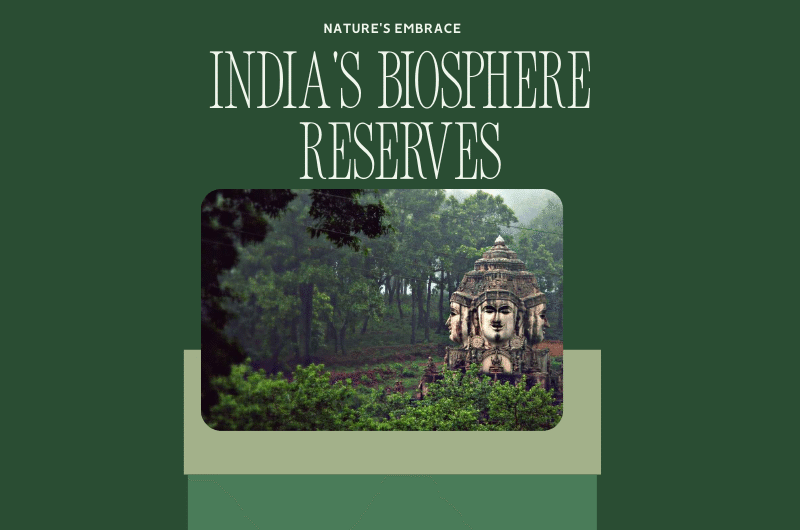
INDIA’S BIOSPHERE RESERVES

INDIA’S BIOSPHERE RESERVES   INTRODUCTION On November 3, the International Day for Biosphere Reserves is observed to promote harmony between nature and communities. These reserves act as “living laboratories” for sustainable development, biodiversity protection, and local welfare. India celebrates this day with pride, having a strong network of 18 biosphere reserves covering 91,425 sq. km — 13 of which are recognized by UNESCO under the Man and Biosphere (MAB) Programme.   KEY FACTS Centrally Sponsored Scheme (MoEFCC) with 60:40 funding; 90:10 for North-Eastern and Himalayan states. India ranks 9th in global forest area and 3rd in annual forest gain (FAO 2025). Cold Desert Biosphere Reserve added to UNESCO list in 2025. Biodiversity conservation budget increased from ₹5 crore (2024-25) to ₹10 crore (2025-26). Emphasizes coexistence of biodiversity conservation and community livelihood.   WHAT ARE BIOSPHERE RESERVES Biosphere Reserves are areas designated by governments to conserve biological diversity and promote sustainable use of natural resources. They are special regions where people and nature coexist responsibly. Each reserve includes terrestrial, coastal, or marine ecosystems and serves as a testing ground for reconciling conservation with development.   STRUCTURE OF A BIOSPHERE RESERVE Core Zone: Strictly protected area, free from human activity. Buffer Zone: Limited human use with eco-development projects. Transition Zone: Sustainable human settlements and livelihoods.   UNESCO MAN AND BIOSPHERE PROGRAMME The MAB Programme is a global initiative under UNESCO that recognizes and connects Biosphere Reserves as part of the World Network of Biosphere Reserves (WNBR). It integrates natural and social sciences to improve human livelihoods and environmental sustainability. The MAB Council, comprising 34 Member States, governs this network.   IMPLEMENTATION IN INDIA The Ministry of Environment, Forest and Climate Change (MoEFCC) manages the scheme under the CNRE programme. States receive financial and technical support to implement conservation projects through their Forest Departments. Focus areas include eco-development, community participation, and reducing dependence on forest resources.   IMPACT AND SIGNIFICANCE Biosphere Reserves enhance forest cover, protect species, and support climate resilience. They provide sustainable livelihood options to local and tribal populations, linking environmental protection with socio-economic progress. India’s efforts align with global goals such as climate action and biodiversity preservation.   RELATED NATIONAL PROGRAMMES Project Tiger (1973): Protection and management of tiger habitats. Project Elephant (1992): Conservation and welfare of elephants. Integrated Development of Wildlife Habitats (IDWH): Financial and technical aid for wildlife conservation. National Biodiversity Action Plan (NBAP): Framework for sustainable use and regulation of biological resources. Eco-Sensitive Zones (ESZs): Buffer areas around national parks and sanctuaries. Green India Mission (GIM): Expands forest cover and enhances carbon sequestration.   GLOBAL CONTEXT Over 260 million people live in biosphere reserves worldwide, protecting over 7 million sq. km—equal to Australia’s size. India’s 18 reserves represent its ecological diversity—mountains, forests, coasts, and islands—and showcase the country’s leadership in nature-human coexistence.   CONCLUSION India’s Biosphere Reserve network demonstrates that conservation and development can move together. By expanding protected areas, empowering local communities, and engaging with UNESCO frameworks, India sets a global example in environmental stewardship and sustainable living.     MCQs   Consider the following statements regarding Biosphere Reserves in India: Every Biosphere Reserve in India must be recognized by UNESCO. Biosphere Reserves include terrestrial, marine, and coastal ecosystems. They serve as models for balancing conservation and sustainable use. Which of the statements given above is/are correct? (a) 1 only (b) 2 and 3 only (c) 1 and 2 only (d) 1, 2 and 3   With reference to the UNESCO Man and Biosphere (MAB) Programme, consider the following: It was launched in the 1970s to integrate ecological and social sciences. Only countries from the Global South are eligible to participate. It operates through the World Network of Biosphere Reserves (WNBR). Which of the above statements is/are correct? (a) 1 and 3 only (b) 2 only (c) 1 only (d) 1, 2 and 3   The “core zone” of a Biosphere Reserve in India is primarily meant for: (a) Community-based livelihood promotion (b) Strict conservation with minimal human interference (c) Ecotourism and sustainable forestry (d) Research on agricultural productivity   Which of the following is correctly matched? (a) Nilgiri Biosphere Reserve – Himalayas (b) Gulf of Mannar Biosphere Reserve – Marine ecosystem (c) Nanda Devi Biosphere Reserve – Coastal region (d) Great Nicobar Biosphere Reserve – Desert ecosystem   In India, the Centrally Sponsored Scheme for Biosphere Reserves operates with which of the following cost-sharing ratios? (a) 70:30 for all States (b) 60:40 for all States; 90:10 for NE and Himalayan States (c) 50:50 uniformly (d) 75:25 for Union Territories and States   Consider the following pairs: Project Tiger – 1973 Project Elephant – 1992 Green India Mission – 2005 Which of the pairs given above is/are correctly matched? (a) 1 only (b) 1 and 2 only (c) 2 and 3 only (d) 1, 2 and 3   Which of the following organizations prepares the “Global Forest Resources Assessment”? (a) United Nations Environment Programme (b) Food and Agriculture Organization (c) World Wildlife Fund (d) World Bank   Which one of the following statements is NOT correct regarding India’s Biosphere Reserves? (a) They are notified by State Governments only. (b) They function under the Ministry of Environment, Forest and Climate Change. (c) They promote sustainable livelihoods for local communities. (d) They form part of India’s commitment under UNESCO’s MAB Programme.   Which of the following is the newest addition to UNESCO’s World Network of Biosphere Reserves from India? (a) Nilgiri (b) Cold Desert (c) Nanda Devi (d) Gulf of Mannar   In the context of India’s environmental governance, the CNRE Programme refers to: (a) Conservation of Natural Resources and Ecosystems (b) Climate Neutral Renewable Energy (c) Community Natural Resource Enhancement (d) Conservation of National Renewable Energy   Consider the following: Eco-Sensitive Zones Project Elephant Integrated Development of Wildlife Habitats Which of the above are linked directly with India’s Biosphere Reserve framework? (a) 1 and 3 only (b) 2 and 3 only (c) 1, 2 and 3 (d) 1 only   The MAB International Coordinating Council (MAB-ICC):

More Details

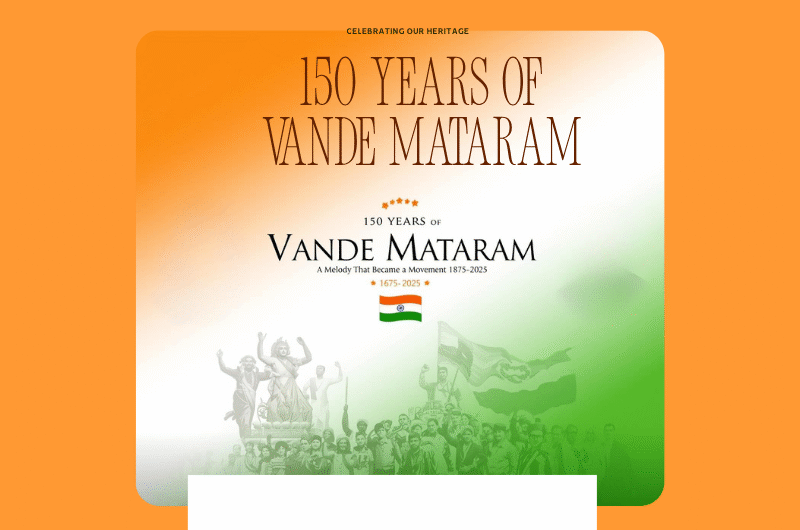
150 YEARS OF VANDE MATARAM

150 YEARS OF VANDE MATARAM   INTRODUCTION 7 November 2025 marks the 150th anniversary of India’s National Song “Vande Mataram,” composed by Bankim Chandra Chatterjee. First published in *Bangadarshan* (1875) and later included in *Anandamath* (1882). Set to music by Rabindranath Tagore; symbolizes unity, devotion, and nationalism.   HISTORICAL BACKGROUND First sung by Rabindranath Tagore at the 1896 Congress Session, Calcutta. Used as a political slogan on 7 August 1905 during the anti-partition movement. Inspired by Bengal’s awakening against colonial rule; mentioned by Sri Aurobindo (1907). Madam Bhikaji Cama’s 1907 tricolour in Stuttgart bore “Vande Mataram.”   ANANDAMATH AND THE RELIGION OF PATRIOTISM Novel’s monks (Santanas) worshipped the motherland as a goddess in three forms: past glory, present suffering, future resurgence. Represented spiritual patriotism — devotion to the motherland as divine duty.   BANKIM CHANDRA CHATTERJEE (1838–1894) Pioneer of modern Bengali prose and nationalism. Key works: *Anandamath*, *Durgeshnandini*, *Kapalkundala*, *Devi Chaudhurani*. Through “Vande Mataram,” he envisioned the motherland as sacred and invincible.   SONG OF RESISTANCE 1905–08: British bans on singing Vande Mataram in schools and public gatherings. Processions (Barisal, Calcutta, Rangpur, Tuticorin, Belgaum) defied prohibitions. Bipin Chandra Pal & Aurobindo’s *Bande Mataram* newspaper (1906) spread nationalism. Became the anthem of Swadeshi, uniting all communities under one cause.   GLOBAL IMPACT 1907: Tricolour with “Vande Mataram” raised abroad by Bhikaji Cama. 1909: Madan Lal Dhingra’s last words — “Bande Mataram.” Indian patriots in Europe published *Bande Mataram* (Geneva).   NATIONAL STATUS Constituent Assembly (24 Jan 1950): Dr. Rajendra Prasad declared “Vande Mataram” to be honoured equally with “Jana Gana Mana.” Both symbolize India’s cultural and political unity.   150-YEAR COMMEMORATION (2025) National inaugural event in Delhi (Indira Gandhi Stadium). Release of commemorative stamp & coin. Cultural programs, exhibitions, global music festival, and “Vande Mataram – Salute to Mother Earth” plantation drive. Campaigns linked with “Har Ghar Tiranga.”   CONCLUSION “Vande Mataram” remains a timeless emblem of India’s freedom struggle and cultural pride. It represents the synthesis of spirituality and nationalism — the soul of India’s collective identity.           MCQ Q1. Consider the following statements regarding *Vande Mataram*: It was first published in the 1882 edition of *Anandamath*. Its earliest musical composition was by Rabindranath Tagore. It was first publicly sung at the Calcutta Congress Session of 1896. How many of the above statements are correct? (a) Only one (b) Only two (c) All three (d) None   Q2. The term “Religion of Patriotism,” associated with *Vande Mataram*, refers to: (a) The blending of devotional worship with political awakening. (b) The replacement of religious rituals by national service. (c) The rejection of foreign faiths in favour of Vedic traditions. (d) A sect founded by Bankim Chandra to revive Hinduism.   Q3. Which of the following correctly matches the year with the related event of *Vande Mataram*? 1905 – Used as slogan during the Swadeshi Movement. 1906 – Launch of the newspaper *Bande Mataram*. 1907 – Tricolour flag with “Vande Mataram” raised in Stuttgart. Select the correct code: (a) 1 and 2 only (b) 2 and 3 only (c) 1 and 3 only (d) 1, 2 and 3   Q4. In the context of *Anandamath*, the three representations of the Mother Goddess signify: (a) Past, Present, and Future of Indian civilisation. (b) Knowledge, Power, and Wealth. (c) Dharma, Artha, and Karma. (d) Freedom, Faith, and Federation.   Q5. Which of the following best explains why “Vande Mataram” was controversial during colonial rule? (a) It called for violent revolution. (b) It was seen as invoking a religious image in nationalist politics. (c) It was banned for being written in Bengali script. (d) It criticised the British Crown by name.   Q6. With reference to the *Bande Mataram* daily (1906), consider the following: It was published from Lahore. Bipin Chandra Pal was its first editor. It later had Sri Aurobindo as co-editor. Which of the statements given above is/are correct? (a) 1 and 2 only (b) 2 and 3 only (c) 3 only (d) 1 and 3 only   Q7. The earliest known ban on singing “Vande Mataram” in educational institutions was imposed by: (a) Bengal Presidency Government (b) Madras Presidency Government (c) Government of Eastern Bengal and Assam (d) Central Legislative Council   Q8. “The Mother of his vision held trenchant steel in her twice seventy million hands” — this quotation reflects: (a) Sri Aurobindo’s interpretation of Vande Mataram as militant patriotism. (b) Bankim’s description of divine motherhood in Durgeshnandini. (c) Tagore’s critique of religious nationalism. (d) Tilak’s call for Swaraj through Karma Yoga.   Q9. Which one of the following events did **not** feature the chanting of “Vande Mataram”? (a) Tuticorin labour strike (1908) (b) Tilak’s trial in Bombay (1908) (c) Lahore protest against Rawalpindi arrests (1907) (d) Quit India Movement rally in 1942   Q10. In 1950, while conferring national status to “Vande Mataram,” Dr. Rajendra Prasad’s statement implied that: (a) It would be sung as an alternate National Anthem on official occasions. (b) It holds equal honour but is distinct from the National Anthem. (c) Its use would be restricted to cultural events only. (d) It would replace Jana Gana Mana after independence celebrations.   Q11. With reference to *Vande Mataram* in India’s national identity, consider the following: It appears in the Constitution’s Eighth Schedule. It was adopted by the Constituent Assembly without debate. It was set to tune originally by Rabindranath Tagore. How many of the statements given above are correct? (a) One only (b) Two only (c) All three (d) None   Q12. During the 150-year commemoration (2025), which of the following initiatives directly link cultural revival with environmental awareness? (a) “Vande Mataram: Salute to Mother Earth” plantation drive (b) Global Music Festival on Indian soil (c) Release of commemorative coin and stamp (d) Murals on national highways   Q13. The phrase “Mother, I bow to thee” in *Vande Mataram* symbolically denotes: (a) Territorial nationalism rooted in devotion to land. (b) Ethnic unity among linguistic groups. (c) Political allegiance to the Indian National

More Details

Free IAS Guidance
Start Your Journey Today 🇮🇳

Fill out the form below, and we will be in touch shortly.