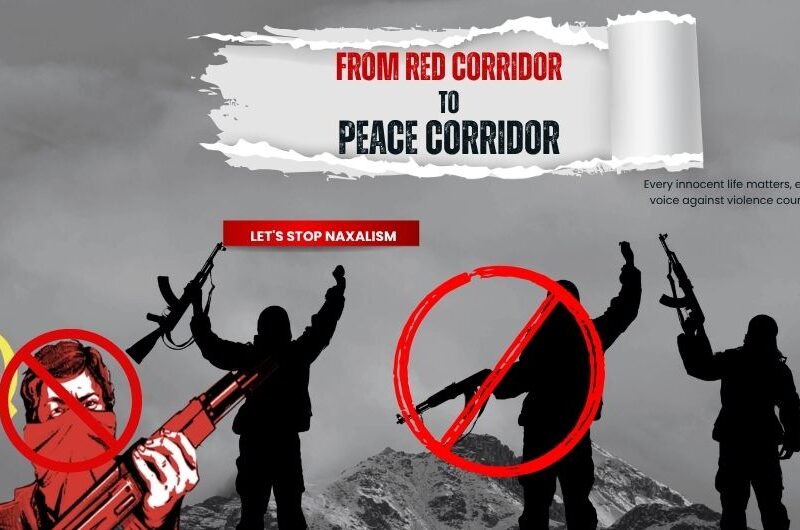
From Red Corridor to Peace Corridor
1. On 31 March 2026, India became effectively free from LWE (Left-Wing Extremism) after nearly six decades of Naxal-related violence.
2. The transformation towards Naxal-Free India was guided by three pillars: Vishwaas, Nirman, and Jan Kalyan.
3. Vishwaas focused on restoring trust through security operations, inter-agency coordination, surrender and rehabilitation, and community outreach.
4. Nirman focused on expanding physical and digital connectivity, governance presence, and economic opportunities in remote LWE-affected areas.
5. Jan Kalyan focused on welfare delivery, dignity, cultural inclusion, and mainstreaming affected communities into national development.
6. Left-Wing Extremism originated from the Naxalbari uprising of West Bengal in 1967, inspired by Maoist ideology.
7. Several extremist organisations merged under CPI (Maoist) [Communist Party of India (Maoist)] in 2004, making it India’s biggest internal security challenge.
8. Violence peaked in 2010 with 1,936 incidents and 720 civilian deaths in a single year.
9. The decade from 2004 to 2014 recorded 17,542 violent incidents, 1,913 security force deaths, and 5,019 civilian deaths.
10. In 2015, the National Policy and Action Plan to address LWE was approved, replacing the earlier fragmented approach with a structured whole-of-government framework.
11. On 24 August 2024, the Government of India set a target to make the country Naxal-free by 31 March 2026.
12. A total of 597 fortified police stations were constructed in Naxal-affected areas, compared to only 66 before 2014.
13. Police stations reporting Naxal incidents declined from 333 to 16.
14. Over 12,249 km (kilometres) of roads were constructed in LWE-affected areas since 2014, while projects of 17,319 km were approved at a cost of ₹20,557 crore.
15. LWE-affected districts declined from 126 in 2014 to only 2 districts in 2026, while the number of most affected districts reduced from 35 to zero.
Must Know Terms :
1.NaxalFreeIndia
On 31 March 2026, India became effectively free from Left-Wing Extremism after nearly six decades of violence. This milestone was achieved through a balanced strategy of security operations, development initiatives, welfare delivery, technology-based surveillance, and rehabilitation policies. It marked a major success in India’s internal security framework.
2. VishwaasNirmanJanKalyan
Vishwaas, Nirman, and Jan Kalyan were the three pillars of India’s anti-Naxal strategy. Vishwaas focused on restoring trust through security and rehabilitation. Nirman focused on roads, mobile towers, schools, banks, and governance outreach. Jan Kalyan focused on welfare delivery, tribal dignity, livelihood support, and mainstreaming affected communities.
3. NationalPolicyAndActionPlan
The National Policy and Action Plan to address Left-Wing Extremism was approved in 2015. It replaced the earlier fragmented approach with a structured whole-of-government framework. It combined security operations, development schemes, Central Armed Police Forces deployment, specialised training, and socio-economic interventions to address the root causes of extremism.
4. SecurityGrid
The Government strengthened the security grid in Naxal-affected areas through fortified police stations, Central Armed Police Forces camps, night-landing helipads, bullet-proof vehicles, and specialised forces. A total of 597 fortified police stations were constructed, and police stations reporting Naxal incidents declined from 333 to 16.
5. SurrenderRehabilitationPolicy
The surrender and rehabilitation policy encouraged Naxal cadres to return to mainstream society. Surrendering cadres received financial grants, monthly stipends, skill development support, housing assistance, and incentives for depositing weapons. In 2025 alone, 2,337 Naxalites surrendered, while 3,927 cadres surrendered between 2024 and March 2026.
6. LeftWingExtremism
Left-Wing Extremism began with the Naxalbari uprising of West Bengal in 1967 and was inspired by Maoist ideology. Several extremist organisations merged under CPI (Maoist) in 2004. Violence peaked in 2010 with 1,936 incidents and 720 civilian deaths, but by 2026, LWE-affected districts declined from 126 to only 2.
MCQ :
1. With reference to Naxal-Free India, consider the following statements:
1. India became effectively free from Left-Wing Extremism on 31 March 2026.
2. This came after nearly six decades of Naxal-related violence.
3. The strategy was based only on military operations.
Which of the statements given above is/are correct?
A. 1 and 2 only
B. 2 and 3 only
C. 1 and 3 only
D. 1, 2 and 3
2. The transformation towards Naxal-Free India was guided by which of the following pillars?
1. Vishwaas
2. Nirman
3. Jan Kalyan
4. Vishleshan
Select the correct answer using the code below:
A. 1 and 2 only
B. 1, 2 and 3 only
C. 2, 3 and 4 only
D. 1, 2, 3 and 4
3. With reference to the pillar of Vishwaas, consider the following statements:
1. It focused on restoring trust.
2. It included security operations and inter-agency coordination.
3. It ignored surrender and rehabilitation frameworks.
Which of the statements given above is/are correct?
A. 1 and 2 only
B. 2 and 3 only
C. 1 and 3 only
D. 1, 2 and 3
4. The pillar of Nirman in the anti-Naxal strategy mainly focused on:
A. Expanding physical and digital connectivity, governance presence, and economic opportunities
B. Limiting welfare schemes in remote areas
C. Reducing road and telecom connectivity
D. Replacing all development schemes with policing only
5. With reference to Jan Kalyan, consider the following statements:
1. It focused on welfare delivery.
2. It emphasised dignity and cultural inclusion.
3. It aimed at mainstreaming affected communities into national development.
Which of the statements given above is/are correct?
A. 1 and 2 only
B. 2 and 3 only
C. 1 and 3 only
D. 1, 2 and 3
6. Left-Wing Extremism in India originated from:
A. Tebhaga movement of Bengal in 1946
B. Naxalbari uprising of West Bengal in 1967
C. Telangana armed struggle in 1948
D. Quit India Movement in 1942
7. Several extremist organisations merged under CPI (Maoist) in:
A. 1991
B. 1998
C. 2004
D. 2010
8. With reference to the peak of Naxal violence, consider the following statements:
1. Violence peaked in 2010.
2. In 2010, 1,936 incidents were recorded.
3. In 2010, 720 civilian deaths were recorded.
Which of the statements given above is/are correct?
A. 1 and 2 only
B. 2 and 3 only
C. 1 and 3 only
D. 1, 2 and 3
9. The decade from 2004 to 2014 recorded:
1. 17,542 violent incidents
2. 1,913 security force deaths
3. 5,019 civilian deaths
Which of the statements given above is/are correct?
A. 1 only
B. 1 and 2 only
C. 2 and 3 only
D. 1, 2 and 3
10. The National Policy and Action Plan to address Left-Wing Extremism was approved in:
A. 2010
B. 2012
C. 2015
D. 2024
11. The National Policy and Action Plan replaced the earlier fragmented approach with:
A. A purely military framework
B. A structured whole-of-government framework
C. A state-only security model
D. A foreign-assisted counter-insurgency framework
12. On 24 August 2024, the Government of India set the target to make the country Naxal-free by:
A. 31 March 2025
B. 31 December 2025
C. 31 March 2026
D. 15 August 2026
13. With reference to the security grid in Naxal-affected areas, consider the following statements:
1. 597 fortified police stations were constructed.
2. Only 66 fortified police stations existed before 2014.
3. Police stations reporting Naxal incidents declined from 333 to 16.
Which of the statements given above is/are correct?
A. 1 and 2 only
B. 2 and 3 only
C. 1 and 3 only
D. 1, 2 and 3
14. With reference to infrastructure development in LWE-affected areas since 2014, consider the following statements:
1. Over 12,249 km of roads were constructed.
2. Road projects of 17,319 km were approved.
3. Approved road projects involved a cost of ₹20,557 crore.
Which of the statements given above is/are correct?
A. 1 and 2 only
B. 2 and 3 only
C. 1 and 3 only
D. 1, 2 and 3
15. Which of the following best describes the change in LWE-affected districts?
A. They increased from 2 districts in 2014 to 126 districts in 2026.
B. They declined from 126 districts in 2014 to only 2 districts in 2026.
C. They remained unchanged from 2014 to 2026.
D. The number of most affected districts increased from 35 to 50.




0 comment