Best UPSC and MPPSC IAS Coaching Classes in Gwalior

Strategic Momentum in India–EU Partnership: Trade, Technology, Security, Connectivity and Mobility

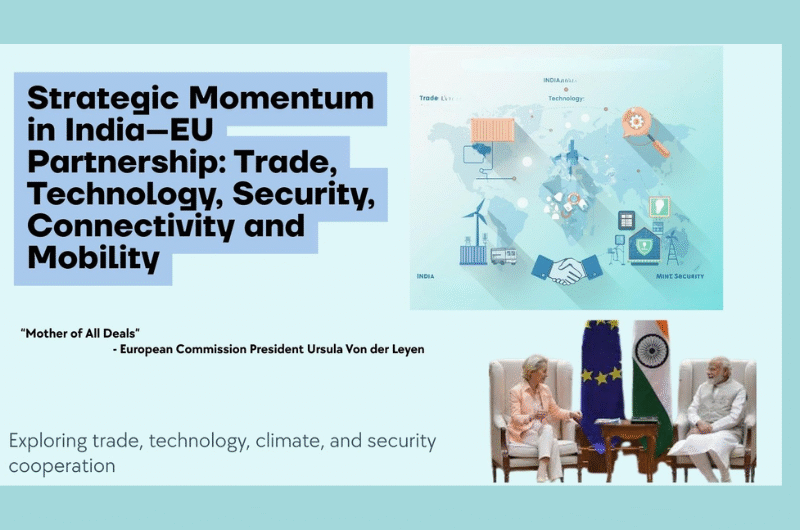
Strategic Momentum in India–EU Partnership: Trade, Technology, Security, Connectivity and Mobility     “Mother of All Deals”                                                                                                                                                                    –  European Commission President Ursula Von der Leyen       1. India–EU ties gain strategic momentum ahead of New Delhi summit, aiming for a new Joint Strategic Agenda and revival of long-pending Free Trade Agreement negotiations across sectors rapidly. 2. EU became India’s largest goods trading partner, with bilateral merchandise trade about $136 billion in 2024–25, covering machinery, transport equipment, chemicals, metals, mineral products and textiles overall strength. 3. Services trade expanded steadily from 2019 to 2024: Indian exports to the EU rose from €19 billion to €37 billion, while EU exports reached €29 billion there too. 4. Partnership is guided by the 2020 roadmap to 2025, spanning trade, investment, security, defence, climate action, clean energy, digital transition, connectivity, space, agriculture and people-to-people exchanges today widely. 5. Diplomatic links date to 1962 when India engaged the European Economic Community, later formalised through the 1993 Joint Political Statement and 1994 Cooperation Agreement strengthening political-economic cooperation frameworks. 6. The first summit in Lisbon, June 2000, began annual high-level dialogues; in 2004 at The Hague, ties were upgraded to a Strategic Partnership broadening cooperation beyond trade alone. 7. Recent acceleration includes resuming trade and investment talks in May 2021 and launching the Trade and Technology Council in April 2022 for digital and green cooperation jointly implemented. 8. The EU College of Commissioners, led by President Ursula von der Leyen, visited New Delhi in February 2025—the first such visit to a non-European bilateral partner ever recorded. 9. Leaders met alongside multilateral forums including G7 and G20, most recently June 2025 in Canada, and maintained regular telephonic contact through September 2025 calls at top levels often. 10. Security and defence cooperation advanced in 2025, with agreement to explore a Security and Defence Partnership and ministerial-level interactions on defence and space industries for shared strategic outcomes. 11. Maritime cooperation includes joint naval exercises in the Indian Ocean (June 2025), Gulf of Guinea (October 2023) and Gulf of Aden (June 2021), plus escort operations near Somalia. 12. Energy-climate ties centre on the Clean Energy and Climate Partnership launched 2016; Phase III adopted November 2024, expanding work on renewables, infrastructure, methane reduction and technology transfer initiatives. 13. EU joined the International Solar Alliance in 2018; the European Investment Bank funds sustainable transport and metro projects, while the EU joined CDRI in March 2021 for resilience. 14. Scientific cooperation includes a July 2020 Euratom R&D agreement on peaceful nuclear energy uses, and India’s associate membership of CERN since 2017, supporting frontier research links globally visible. 15. Mobility links are substantial: 931,607 Indian citizens lived in the EU by end-2024, including 16,268 Blue Card holders; over 6,000 Erasmus Mundus scholarships awarded across two decades collectively.   Must Know Terms:   1) India–EU Free Trade Agreement (FTA): Long-pending negotiations aim to reduce tariffs, align standards, and expand market access for goods and services. It matters for export growth, investment confidence, and resilient supply chains. In this topic, both sides seek to “advance” FTA talks ahead of the summit, signalling political intent to convert strategic goodwill into binding economic rules.   2) Joint Strategic Agenda: A proposed guiding document to steer India–EU cooperation beyond the existing Roadmap to 2025. It structures priorities, timelines, and deliverables across trade, technology, climate, security, connectivity, and people-to-people links. Its value is coordination: it converts multiple dialogues into measurable actions, reducing fragmentation between sectoral tracks and ensuring continuity across leadership changes.   3) Trade and Technology Council (TTC): A high-level platform launched to deepen cooperation in digital and green technologies, standards, innovation, and trusted supply chains. It matters because strategic technologies increasingly decide competitiveness and security. In this topic, TTC ministerial meetings reflect a shift from broad dialogues to implementation—working groups can drive outcomes on semiconductors, AI governance, clean-tech value chains, and regulatory alignment.   4) Clean Energy and Climate Partnership (CECP): The core framework for India–EU collaboration on climate action and energy transition, established in 2016 and expanded through successive phases. It covers renewables, methane reduction, infrastructure resilience, finance, and technology transfer. Its significance is practical support—mobilising expertise and capital to accelerate decarbonisation while balancing development needs, and linking climate goals with industrial policy.   5) India–EU Connectivity Partnership (2021): A strategic initiative to develop sustainable, inclusive, resilient connectivity across transport, digital infrastructure, and energy networks. It matters for diversification away from single-route dependencies and for creating transparent, high-standard infrastructure models. In this topic, it supports movement of goods, services, data, and capital, and complements corridor-style initiatives through coordinated planning and financing.   6) Common Agenda on Migration and Mobility (CAMM) (2016): A structured framework to manage legal migration, skilled mobility, social security issues, and orderly pathways, aligning EU demographic needs with India’s workforce advantages. It matters for people-to-people ties and economic complementarity. In this topic, dialogues propose mechanisms like a Legal Gateway Office and youth mobility frameworks to operationalise access.     Key Takeaways   India’s engagement with the EU highlights its strategic focus on Europe, aligned with the upcoming India-EU Summit and the ongoing Free Trade Agreement. Bilateral trade volume reached approximately $136 billion in 2024-25, making the EU India’s largest goods trading partner. Between 2019 and 2024, India-EU bilateral trade in services grew steadily, with Indian exports rising from €19 billion to €37 billion and EU exports to India increasing to €29 billion. As of 2024, over 931,607 Indians resided in the EU, including 16,268 Blue Card holders, and in the past 20

More Details
Peacekeeping and India: Leadership, Women, and Global Service

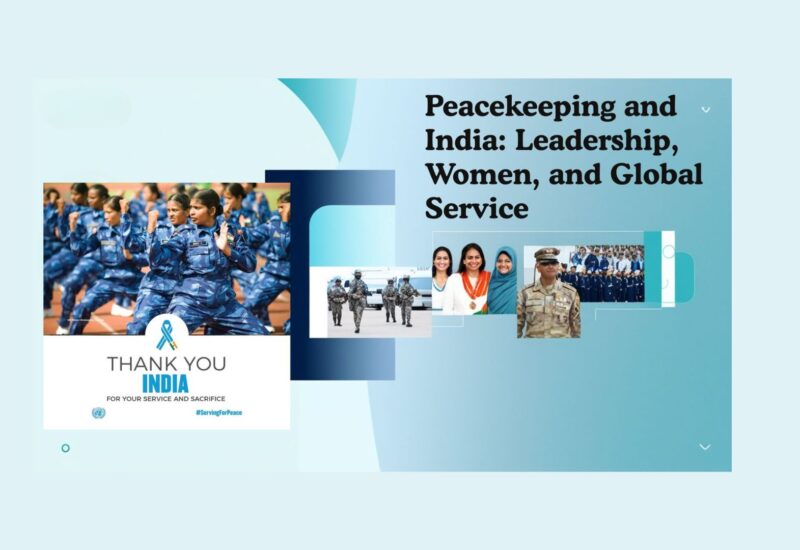
Peacekeeping and India: Leadership, Women, and Global Service       “At the heart of our foreign policy lies a commitment to peacekeeping—rooted in dialogue, diplomacy, and cooperation. Guided by the philosophy of “Vasudhaiva Kutumbakam,” the belief that the world is one family, India will continue to contribute meaningfully to the cause of UN peacekeeping.”                                                            – Dr S. Jaishankar, External Affairs Minister of India       1) UN Peacekeeping supports countries moving from conflict to peace through deployed missions under UN mandates, complementing peacemaking and peacebuilding, with tasks expanding beyond military observation into multidimensional governance support.   2) India is among the largest contributors, with over 2,90,000 peacekeepers serving in more than 50 UN missions since the 1950s, reflecting sustained operational commitment across continents.   3) Current footprint is stated as 5,000+ Indian peacekeepers deployed in 9 active missions, operating in high-risk environments to protect civilians, secure agreements, and stabilise conflict zones. 4) “Blue Helmets” derive from the UN flag’s light blue colour adopted in 1947, symbolising peace, contrasting red’s association with war, becoming an enduring visual identity of UN missions.   5) UN peacekeeping began in 1948 with UNTSO in the Middle East, initially unarmed observer missions focused on monitoring ceasefires, mediation, and reporting, before later mandate expansion. The nine UN peacekeeping missions where the Indian Armed Forces were involved as of May 29, 2024: 6) Post–Cold War 1990s saw major expansion of peacekeeping scale and scope, shifting to multidimensional missions combining military, political, and humanitarian elements in civil-conflict settings globally.   7) Mission failures in Rwanda and Bosnia triggered reforms, including the Brahimi Report (2000), emphasising clearer mandates, adequate resources, and more robust operational posture in hostile theatres.   8) Modern missions may be authorised to use force for civilian protection and mandate enforcement when host state capacity is inadequate, reflecting evolution from traditional neutrality-only observation roles.   9) Core mission functions include facilitating political processes, protecting civilians, supporting DDR, assisting elections, and strengthening human rights and rule of law to prevent relapse into violence.   10) India’s participation is traced to UN operations in Korea (1953), aligning peacekeeping with India’s non-violence ethos and “Vasudhaiva Kutumbakam” framing in foreign policy.   11) Sacrifice is highlighted with nearly 180 Indian peacekeepers stated to have died in service, underscoring operational risk and long-term commitment to international security responsibilities.   12) In 2023, Dag Hammarskjöld Medal was awarded posthumously to Indian peacekeepers Shishupal Singh and Sanwala Ram Vishnoi, plus civilian UN worker Shaber Taher Ali, for Congo sacrifice.   13) Women’s participation remains low globally, stated as under 10% of 70,000 uniformed peacekeepers; UN targets 15% military and 25% police women by 2028.   14) Women, Peace and Security agenda began with UNSC Resolution 1325 (2000), followed by resolutions 1820, 1888, 1889, 2122, and 2242 addressing participation and sexual violence.   15) India pioneered all-female Formed Police Unit deployment in Liberia (2007), and as of February 2025 has 150+ women peacekeepers across six missions, with Major Radhika Sen recognised in 2023.   The following table summarizes some of the key UN peacekeeping missions where India has been involved:   Mission Name Location Year India’s Contribution UN Assistance Mission in the Central African Republic (MINUSCA) Central African Republic 2014-Present Formed Police Units (FPUs) and military observers UN Mission in South Sudan (UNMISS) South Sudan 2012-Present Infantry battalion, medical personnel, and engineering units UN Organization Stabilization Mission in the Democratic Republic of the Congo (MONUSCO) DR Congo 2010-Present Infantry battalions, medical units, and support staff UN Mission in the Golan Heights (UNDOF) Golan Heights 2006-Present Logistics Battalion with 188 personnel for logistics security UN Mission in Sudan (UNMIS/UNMISS) Sudan/South Sudan 2005-Present Battalion groups, engineer company, Signal Company, hospitals, military observers (MILOBs) and staff officers (SOs) UN Organization Mission in the Democratic Republic of the Congo (MONUC/MONUSCO) DR Congo 2005-Present Infantry Brigade Group (three battalions, including RDB), hospital, MILOBs, SOs, and two FPUs UN Interim Force in Lebanon (UNIFIL) Lebanon 1998-Present Infantry battalion group with 762 personnel and 18 staff officers UN Mission in Liberia (UNMIL) Liberia 2007-16 Deployed both male and female FPUs UN Mission in Ethiopia and Eritrea (UNMEE) Ethiopia-Eritrea 2006-08 Contributed an infantry battalion group, an engineer company, and a force reserve company UN Stabilization Mission in Haiti (MINUSTAH) Haiti 2004-17 Contributed Formed Police Units (FPUs) from various police forces UN Mission in Sierra Leone (UNAMSIL) Sierra Leone 1999-2001 Deployed infantry battalions, engineer companies, and other support elements UN Angola Verification Mission (UNAVEM) Angola 1989-99 Provided military observers and staff officers UN Assistance Mission for Rwanda (UNAMIR) Rwanda 1994-96 Contributed medical personnel and logistical support UN Operation in Somalia (UNOSOM II) Somalia 1993-94 Deployed an Army Brigade Group and four Navy battleships UN Operation in the Congo (ONUC) Congo 1960-64 Deployed two brigades to counter secession and re-integrate the country UN Emergency Force (UNEF I) Middle East 1956-67 Contributed to an infantry battalion and other support elements Control of Indo-China Indo-China (Vietnam, Cambodia, Laos) 1954-70 Provided an infantry battalion and supporting staff for monitoring ceasefire and repatriation of prisoners of war UN Operation in Korea Korea 1950-54 Provided medical cover to UN forces, chaired the Neutral Nations Repatriation Commission   Must Know Terms :   1. UN Peacekeeping: Started in 1948 with UNTSO, it helps societies move from conflict to peace. Modern mandates combine ceasefire support, civilian protection, DDR, election assistance, human-rights monitoring, and rule-of-law institution building. Core principles remain consent of parties, impartiality, and restrained use of force, yet recent missions are multidimensional and sometimes “robust” to protect civilians and implement mandates under volatile conditions. 2. Blue Helmets: The term refers to UN peacekeepers’ distinctive light-blue headgear, adopted in 1947 from the UN flag’s colour, symbolising peace and neutrality. The visual identity helps differentiate UN personnel from belligerents, signals international legitimacy, and builds local trust. In high-risk theatres, the blue helmet becomes a practical marker for protected status, mandate authority, and disciplined conduct expected under UN rules of engagement. 3. Dag Hammarskjöld Medal: This is the UN’s highest peacekeeping honour, awarded posthumously to

More Details

India’s Expanding Global Influence

India’s Expanding Global Influence 1. Over the past 11 years, India has expanded global influence through climate leadership, AI governance, public health diplomacy, humanitarian assistance, and strategic defence, aligning international engagement with national interest and inclusivity. 2. India’s G20 Presidency (Dec 2022–Nov 2023) spotlighted the Global South, hosted 200+ meetings in 60 cities, and convened the 18th Leaders’ Summit at Bharat Mandapam. 3. The New Delhi Leaders’ Declaration was adopted unanimously despite major geopolitical divisions, highlighting India’s growing role as a consensus-builder able to deliver outcomes during global uncertainty and competing priorities. 4. The Global Biofuels Alliance was launched during the G20 Summit period, reflecting India’s leadership in energy transition coalitions and practical pathways for cleaner fuels, resilience, and sustainable growth.   5. India co-chaired the AI Action Summit in Paris on 10 February 2024, advancing discussions on responsible, inclusive AI and reinforcing India’s role in setting norms for emerging technologies. 6. Vaccine Maitri supplied 30.12 crore COVID vaccine doses to 99 countries and two UN bodies, including 1.51 crore as grants and 5.2 crore through the COVAX mechanism. 7. The International Solar Alliance, launched at COP21 on 30 November 2015, has 120 members/signatories, targets mobilising over USD 1,000 billion for solar by 2030, and is headquartered at Gurugram. 8. At the ISA 7th Session held in New Delhi (3–6 November 2024), emphasis was placed on faster solar deployment in underserved regions through innovation, financing mechanisms, and cross-border cooperation. 9. India provided humanitarian assistance and disaster relief to 150+ countries in five years and created a Rapid Response Cell in July 2021 to coordinate crisis support with agencies and foreign governments. 10. Neighbourhood First policy prioritises stronger physical, digital, and cultural connectivity with neighbouring countries, guided by respect, dialogue, peace, and prosperity, using consultative, outcome-focused, non-reciprocal cooperation. 11. Act East Policy, upgraded in 2014, deepens engagement with Southeast Asia and the Indo-Pacific, with ASEAN at its core, and emphasises connectivity plus participation in EAS, QUAD, and ADMM-Plus. 12. India’s Voice of Global South Summit held three editions (Jan 2023, Nov 2023, Aug 2024) with 100+ countries each, strengthening India’s credibility as an amplifier of developing-world priorities. 13. In March 2025, MAHASAGAR doctrine was launched in Mauritius, projecting Mutual and Holistic Advancement for Security and Growth Across Regions, aligning oceanic cooperation with development partnerships. 14. India expanded diplomatic presence by opening 39 new embassies and consulates between 2014 and 2024, taking the total to 219, strengthening trade outreach, partnerships, and citizen support abroad. 15. Relief operations include Vande Bharat Mission facilitating 3.20 crore movements, evacuations from Wuhan, and missions like Devi Shakti, Ganga, Kaveri, Ajay, and Indravati, reflecting people-first crisis response.     Key Takeaways   1.India hosted 200 G20 meetings; New Delhi Declaration adopted unanimously. 2.Sent 30.12 crore COVID-19 vaccine doses to 99 countries under Vaccine Maitri. 3.Opened 39 new embassies and consulates between 2014-24   Defence Production ₹46,429 (2014–15) ₹1.27 Lakh crore (2023–24)    Terror incidents in J&K 228 (2018) 28 (2024)   Must Know Terms : 1) G20 Presidency (1 Dec 2022–30 Nov 2023): India chaired G20 for a full year and hosted 200+ meetings across 60 cities with 1 lakh+ delegates, culminating in the 18th Leaders’ Summit at Bharat Mandapam, New Delhi (9–10 Sept 2023). The theme “One Earth, One Family, One Future” framed priorities like inclusive growth, resilient supply chains, climate action, and Global South concerns. 2) New Delhi Leaders’ Declaration (2023): The G20 declaration at New Delhi was adopted unanimously despite sharp divisions among members on geopolitical issues, including the Ukraine conflict. It is significant as an example of consensus diplomacy—getting all members to agree on common language, shared commitments, and deliverables. For prelims, treat it as a landmark outcome that enhanced India’s image as a consensus-builder. 3) Global Biofuels Alliance (GBA): Announced during the G20 Summit period, GBA is presented as a concrete deliverable to accelerate biofuel adoption through cooperation on standards, supply chains, technology pathways, and best practices. It links energy transition with rural income opportunities and fuel diversification. For objective questions, remember it is highlighted as a G20-era initiative associated with India’s presidency outcomes. 4) Vaccine Maitri: Launched from January 2021 during COVID-19, Vaccine Maitri supplied over 30.12 crore vaccine doses to 99 countries and two UN bodies, including 1.51 crore doses as grants and 5.2 crore doses via the COVAX mechanism. It is tested as an example of health diplomacy and “Humanity First” outreach, strengthening India’s credibility as a reliable Global South partner. 5) International Solar Alliance (ISA): ISA was launched at COP21, Paris, on 30 November 2015 by India and France, and is headquartered in Gurugram. It has 120 members/signatories and aims to mobilise over USD 1,000 billion in solar investments by 2030. It is a major climate institution led by India and is often asked via year, place, HQ, and target figures. 6) MAHASAGAR Doctrine (March 2025): Launched in Mauritius, MAHASAGAR stands for “Mutual and Holistic Advancement for Security and Growth Across Regions.” It is used to frame India’s ocean-focused cooperation—security, connectivity, and development partnerships—especially in the Indian Ocean Region. For students, remember the acronym expansion, launch location (Mauritius), and its positioning as a maritime cooperation doctrine aligned with wider regional growth. MCQ     1. With reference to India’s G20 Presidency, consider the following statements: 1. It ran from December 1, 2022 to November 30, 2023. 2. India hosted over 200 meetings in 60 cities with more than one lakh delegates. Which of the statements given above is/are correct? (a) 1 only (b) 2 only (c) Both 1 and 2 (d) Neither 1 nor 2 2. India’s G20 Leaders’ Summit in 2023 was held at: (a) Bharat Mandapam, New Delhi (b) Vigyan Bhawan, New Delhi (c) Hyderabad International Convention Centre (d) Jaipur Convention Centre 3. Consider the following statements regarding the New Delhi Leaders’ Declaration: 1. It was adopted unanimously. 2. It was adopted despite deep divides on issues such as the Ukraine conflict. Which of the statements given above is/are correct? (a) 1 only (b) 2

More Details

India’s QS Ranking Surge 2026

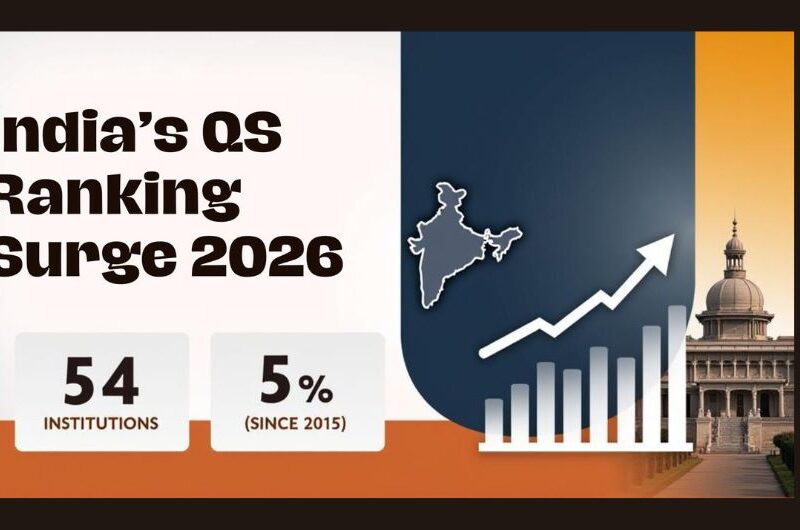
India’s QS Ranking Surge 2026     1. India placed 54 institutions in QS World University Rankings 2026, including 12 IITs and eight first-time entrants, making India the world’s fourth most represented country overall globally today. 2. Representation rose from 11 ranked Indian institutions in 2015 to 54 in 2026, a five-fold decade increase that positions India as the fastest-rising G20 nation over the decade. 3. Eight debut entrants are IIT Gandhinagar, LPU, KIIT, Ashoka University, Galgotias University, Shiv Nadar University, CHRIST Bengaluru, and MRIIRS, signalling broader public–private participation across the rankings this year. 4. About 48 percent of India’s ranked universities improved their positions compared with the previous year, indicating broad performance momentum rather than isolated gains by a handful across India. Weightings for each performance lens and indicator: 5. Six Indian institutions appear within the global top 250, highlighting a growing cluster of internationally competitive campuses across engineering, science, and multidisciplinary higher education ecosystems for India’s system. 6. IIT Delhi led India at rank 123 in 2026, improving from 150 in 2025, reflecting strengthened outcomes across the indicator mix used in QS scoring in this cycle. 7. IIT Madras recorded one of the biggest jumps, rising 47 places from 227 in 2025 to 180 in 2026, signalling rapid year-on-year advancement among Indian institutes nationwide overall. 8. Five Indian institutions feature in the global top 100 for Employer Reputation, signalling strong recruiter confidence in graduate quality, employability skills, and workplace readiness across diverse sectors nationally. 9. Eight Indian universities rank among the world’s top 100 for Citations per Faculty, posting an average score of 43.7, higher than Germany, the UK, and USA this edition. 10. QS 2026 draws on over 16 million academic papers and surveys of more than 151,000 academics and 100,000 employers, providing a large evidence base for comparative robustness overall. 11. A new indicator, International Student Diversity, was added, assessing both international student numbers and the variety of source countries; it is presently assigned zero weight within the framework. 12. International Student Ratio remains a weighted metric, while scoring was fine-tuned, meaning some indicator scores can change even when an institution’s rank stays stable across global comparisons today. 13. QS methodology is structured into lenses, indicators, and metrics: lenses group indicators by theme, indicators measure performance areas, and metrics compute precise scores for transparent cross-country score aggregation. 14. Research and Discovery carries 50% weight, comprising Academic Reputation at 30% and Citations per Faculty at 20%, making research performance the dominant driver across institutions and subject areas. 15. Employability and Outcomes weighs 20% overall, combining Employer Reputation at 15% and Employment Outcomes at 5%, linking rankings to labour-market perceptions and results for employer and reform tracking.     Key Insights from QS World University Ranking 2026 1. India has 54 universities in the QS World University Rankings 2026, making it the fourth most represented country. 2. Only the United States (192), the United Kingdom (90), and Mainland China (72) have more universities ranked than India. 3. Eight Indian institutions have entered the rankings for the first time. This is the highest number of new entrants from any country this year. 4. The number of Indian universities in the rankings has grown from 11 in 2015 to 54 in 2026. This marks a five-fold increase in just over a decade. 5. 48 percent of India’s ranked universities improved their positions compared to the previous year. 6. Six Indian institutions feature in the global top 250. 7. IIT Delhi leads the Indian contingent. It is ranked 123rd globally, rising from 150th in 2025. 8. IIT Madras recorded one of the biggest jumps, rising 47 places from 227 in 2025 to 180 in 2026. 9. A total of 12 Indian Institutes of Technology (IITs) feature in the list, highlighting their strong presence in global academia. 10. Five Indian institutions feature in the global top 100 for Employer Reputation. This reflects strong industry confidence in Indian graduates. 11. Eight Indian universities rank among the world’s top 100 for Citations per Faculty. Their average score of 43.7 is higher than that of Germany, the United Kingdom and the United States. 12. India now has a diverse mix of public and private institutions represented, including central universities, deemed-to-be universities, and technical institutes. Top Indian Institutions in QS World University Rankings 2026 (Rank vs 2025) S No. Institution Rank (2026) Previous Rank (2025) 1 Indian Institute of Technology Delhi (IITD) 123 150 2 Indian Institute of Technology Bombay (IITB) 129 118 3 Indian Institute of Technology Madras (IITM) 180 227 4 Indian Institute of Technology Kharagpur (IITKGP) 215 222 5 Indian Institute of Science (IISc) Bangalore 219 211 6 Indian Institute of Technology Kanpur (IITK) 222 263 7 University of Delhi 328 328 8 Indian Institute of Technology Guwahati (IITG) 334 344 9 Indian Institute of Technology Roorkee (IITR) 339 335 10 Anna University 465 383 11 Shoolini University of Biotechnology and Management Sciences 503 587 12 Indian Institute of Technology Indore 556 477 13 Jawaharlal Nehru University 558 580 14 Indian Institute of Technology BHU Varanasi (IIT BHU Varanasi) 566 531 15 Savitribai Phule Pune University 566 631-640 16 Chandigarh University 575 691-700 17 Indian Institute of Technology Hyderabad (IITH) 664 681-690 18 University of Mumbai 664 711-720 19 Birla Institute of Technology and Science 668 801-850 20 Jadavpur University 676 721-730 21 Vellore Institute of Technology (VIT), Vellore, India 691 791-800 22 Symbiosis International (Deemed University) 696 641-650 23 National Institute of Technology Tiruchirappalli 731-740 701-710 24 Jamia Millia Islamia, New Delhi 761-770 851-900 25 Thapar Institute of Engineering & Technology 771-780 851-900 26 University of Calcutta 771-780 751-760 27 IIT Gandhinagar 801-850 — 28 University of Hyderabad 801-850 801-850 29 Manipal Academy of Higher Education – Manipal University (MAHE) 851-900 901-950 30 O. P. Jindal Global University (JGU) 851-900 1001-1200 31 Lovely Professional University (LPU) 901-950 — 32 Panjab University 901-950 1001-1200 33 Saveetha Institute of Medical and Technical Sciences (SIMATS) 901-950 951-1000 34 University of Petroleum and Energy Studies

More Details

Global Standards Against Money Laundering and Terror Financing

Global Standards Against Money Laundering and Terror Financing       1. FATF, created at the 1989 G7 Paris Summit, is an independent inter-governmental body that sets global standards to combat money laundering, terrorist financing, and proliferation financing effectively. 2. FATF standards help authorities trace illicit funds linked to drug trafficking, illicit arms trade, cyber fraud, and other serious crimes, reinforcing coordinated national and international responses globally. 3. Through its 40-member structure, FATF has enabled more than 200 countries and jurisdictions to commit to implementing standards, strengthening global protections against organised crime, corruption, and terrorism. 4. FATF publishes two public documents three times yearly, identifying jurisdictions with weak AML/CFT measures and spotlighting strategic deficiencies requiring corrective actions by governments and financial sectors. 5. Grey list jurisdictions are under increased monitoring, working with FATF to fix deficiencies within agreed timelines; they commit to reforms against money laundering, terror, and proliferation financing. 6. On 13 June 2025, the grey list included Algeria, Nepal, and South Africa among others, indicating compliance gaps and the need for sustained monitoring and reform implementation. 7. Blacklist jurisdictions face a call for action and enhanced due diligence; on 13 June 2025, Democratic People’s Republic of Korea, Iran, and Myanmar were listed for countermeasures. 8. India became a FATF observer in 2006 and joined as the 34th member in June 2010, following an on-site mutual evaluation during November–December 2009 for compliance assessment. 9. India applies risk-based legislative frameworks under the Prevention of Money Laundering Act, 2002 and the Unlawful Activities (Prevention) Act, 1967 to deter illicit finance domestically and externally. 10. Two 2025 reports highlighted evolving threats: ‘Complex Proliferation Financing and Sanctions Evasion Schemes’ and ‘Comprehensive Update on Terrorist Financing Risks’, offering mitigation recommendations for institutions and regulators. 11. Proliferation financing tactics include obscuring beneficial ownership, misusing virtual assets and cryptocurrencies, and leveraging maritime shipping sectors to bypass sanctions and international regulatory requirements through trade-based channels. 12. India is cited for creating multiple operational and policy coordination mechanisms on proliferation financing, underscoring domestic collaboration, better detection, and stronger international cooperation to counter sanctions evasion. 13. DPRK-linked cyber operations, including a reported 2025 $1.5 billion ByBit theft, illustrate cybercrime’s nexus with proliferation financing and heighten cross-border financial intelligence demands for rapid detection. 14. A case study raised concerns about Pakistan’s state-owned National Development Complex, sanctioned in several jurisdictions; Pakistan is presented as a high-risk regional jurisdiction for proliferation financing currently. 15. Terrorist financing risks show decentralised local cells, blending cash smuggling, hawala, NPO abuse, and crypto settlements; misuse of e-commerce, social media crowdfunding, and gaming platforms persists significantly.         Key Takeaways • The Financial Action Task Force (FATF) was set up in 1989 during the G7 Summit in Paris. • India became 34th member of FATF in 2010. • India has declared zero tolerance towards terror financing and money laundering, working actively with FATF. • India has implemented risk-based legislative frameworks under the Prevention of Money Laundering Act 2002 and the Unlawful Activities (Prevention) Act 1967. • The two recent reports of FATF in June 2025 provide significant overview of evolving global threats and typologies while offering practical recommendations and mitigation strategies.     Must Know Terms:   1.FATF (Financial Action Task Force): An independent inter-governmental body established in 1989 at the G7 Summit in Paris to set global standards against money laundering, terrorist financing and proliferation financing. It issues a common policy framework and regularly monitors implementation across countries and jurisdictions. India became the 34th member in June 2010 after an on-site assessment in November–December 2009.   2. AML/CFT Frameworks: Anti-Money Laundering and Countering Financing of Terrorism regimes translate FATF standards into domestic law, supervision and enforcement. A risk-based approach prioritises higher-risk sectors, customers and transactions for controls, reporting and investigation across financial and non-financial firms. India operationalises this through legislative tools such as the Prevention of Money Laundering Act, 2002, alongside the Unlawful Activities (Prevention) Act, 1967.   3. Grey List (Increased Monitoring): A public list for jurisdictions with strategic AML/CFT deficiencies that have committed to an agreed action plan and timelines while working with FATF. It is issued in FATF public documents released three times a year. As on 13 June 2025, jurisdictions under increased monitoring included Nepal, South Africa, Nigeria, Haiti, Kenya, Vietnam, Algeria, Lebanon and Monaco.   4. Blacklist (Call for Action): A public list for jurisdictions with serious strategic deficiencies for money laundering, terrorist financing and proliferation financing, triggering calls for enhanced due diligence and counter-measures by other countries. It is updated through FATF public documents and drives stronger safeguards. As on 13 June 2025, jurisdictions subject to a call for action included DPRK, Iran and Myanmar.   5. Proliferation Financing (PF) and Sanctions Evasion: Financing linked to weapons of mass destruction and efforts to bypass international restrictions. A June 2025 report highlights tactics such as hiding beneficial ownership, misuse of virtual assets, and maritime and shipping manipulation. It stresses domestic coordination and international cooperation, stronger suspicious transaction reporting, and information-sharing across public-private stakeholders for detection and disruption effective.   6.Terrorist Financing (TF) Risks: Funding that enables terrorist acts, networks and logistics, increasingly shaped by digital channels and decentralised local actors. A July 2025 update notes continued use of cash smuggling, hawala and NPO abuse, alongside blending with crypto, e-commerce, mobile money and online crowdfunding via social media. It also flags crime–terror convergence and microfinancing by lone actors, gaming.     MCQ     1. The Financial Action Task Force (FATF) was set up in: (a) 1975 during the UN Summit in Geneva (b) 1989 during the G7 Summit in Paris (c) 1991 during the G20 Summit in Rome (d) 2001 during the UN Security Council session 2. FATF is best described as an: (a) Inter-governmental treaty court with binding judgments (b) Independent inter-governmental body setting AML/CFT and PF standards (c) UN agency regulating global banking interest rates (d) Regional forum limited to Asia-Pacific jurisdictions 3. FATF’s Standards have been committed to by: (a) Only 40 countries and no

More Details

India–Jordan Relations: Key Developments and Areas of Cooperation

India–Jordan Relations: Key Developments and Areas of Cooperation     Key Takeaways PM Narendra Modi visited Jordan on December 15-16, 2025, his first full-fledged visit to the country. Five MoUs were signed in the areas of renewable energy, water resource management, cultural exchange, digital solution and twinning between Petra and Ellora This year is the 75th anniversary of the establishment of diplomatic relations between the two countries. India is Jordan’s third largest trading partner. The two countries aim to enhance bilateral trade to US$ 5 billion over the next 5 years. Jordan is a leading supplier of phosphates and potash fertilizers for India. Around 17,500 Indian nationals currently live in Jordan, mostly working in textiles, construction, manufacturing, healthcare etc.     1. The Prime Minister visited Jordan on 15–16 December 2025, marking his first full-fledged bilateral visit and holding detailed discussions with King Abdullah II. 2. The visit coincided with the seventy-fifth anniversary of diplomatic relations, highlighting the long-standing partnership formally established between India and Jordan in 1950. 3. Five memoranda of understanding were signed covering renewable energy, water resource management, cultural exchange, digital solutions, and twinning of Petra with Ellora. 4. India is Jordan’s third largest trading partner, with both sides proposing to enhance bilateral trade to five billion US dollars within five years. 5. Jordan serves as a leading supplier of phosphates and potash fertilizers to India, supporting agricultural and fertilizer security through sustained commercial cooperation. 6. Around seventeen thousand five hundred Indian nationals currently reside in Jordan, employed across textiles, construction, manufacturing, healthcare, education, and information technology sectors. 7. High-level political engagement includes regular leadership interactions, foreign office consultations, and structured dialogue mechanisms sustaining momentum in bilateral relations. 8. Trade and economic cooperation is anchored by institutional frameworks such as the Trade and Economic Joint Committee established under the 1976 Trade Agreement. 9. Joint ventures like the Jordan India Fertiliser Company produce phosphoric acid for Indian markets, reflecting deep integration in fertilizer supply chains. 10. Defence cooperation is guided by a memorandum signed in 2018, complemented by exchanges between armed forces and participation in joint defence-related events. 11. The India–Jordan Center of Excellence in Information Technology was inaugurated in 2021 to build advanced digital and software skills among Jordanian professionals. 12. Educational cooperation includes training programmes, scholarships, and technical courses, with thousands of Jordanians having graduated from Indian higher education institutions. 13. Cultural relations remain vibrant through regular exchanges in music, dance, cinema, yoga events, and participation in major cultural festivals in Jordan. 14. During the visit, leaders discussed cooperation in digital infrastructure, renewable energy, agriculture, innovation, health, tourism, and people-to-people linkages. 15. Both sides reaffirmed strong commitment against terrorism, shared regional security concerns, and emphasized peace, stability, and strategic alignment in West Asia.   MCQ:   1. The Prime Minister’s visit to Jordan mentioned in the text took place on: A. 10–11 December 2025 B. 15–16 December 2025 C. 16–17 December 2025 D. 18–19 December 20252. The bilateral discussions during the visit were held with: A. President of Jordan B. King Abdullah II C. Prime Minister of Jordan only D. Speaker of the Jordanian Parliament3. The visit is described as the Prime Minister’s: A. Second official state visit to Jordan B. First full-fledged bilateral visit to Jordan C. First visit to West Asia D. First transit visit to Jordan 4. The year 2025 marked the: A. 50th anniversary of diplomatic relations B. 60th anniversary of diplomatic relations C. 75th anniversary of diplomatic relations D. 80th anniversary of diplomatic relations 5. Diplomatic relations between the two countries are stated to be established in: A. 1947 B. 1950 C. 1960 D. 1976 6. How many MoUs were signed during the visit, as stated in the text? A. Three B. Five C. Seven D. Ten 7. Which of the following areas was covered by the signed outcomes? A. Nuclear power cooperation B. Water resource management C. Space launch partnership D. Fisheries agreement 8. The twinning initiative mentioned was between: A. Petra and Ajanta B. Petra and Ellora C. Jerash and Hampi D. Aqaba and Konark 9. India is described as Jordan’s: A. Largest trading partner B. Second largest trading partner C. Third largest trading partner D. Fourth largest trading partner 10. The proposed bilateral trade target over the next five years was: A. US$ 2 billion B. US$ 3 billion C. US$ 5 billion D. US$ 10 billion 11. Jordan is highlighted as a leading supplier to India of: A. Rare earth minerals B. Phosphates and potash fertilizers C. Crude oil and LNG D. Copper and zinc 12. Approximately how many Indian nationals are stated to live in Jordan? A. Around 7,500 B. Around 12,500 C. Around 17,500 D. Around 27,500 13. The Trade and Economic Joint Committee (TEJC) is noted as being set up under the: A. 1950 Diplomatic Agreement B. 1960 Friendship Treaty C. 1976 Trade Agreement D. 2009 Tourism Agreement 14. The India–Jordan Center of Excellence in Information Technology (IJCOEIT) was inaugurated in: A. 2018 B. 2020 C. 2021 D. 2023 15. Which one of the following was explicitly reaffirmed by both sides during the visit? A. Support for a single regional military bloc B. Commitment against terrorism in all forms C. Adoption of a common currency mechanism D. A bilateral customs union arrangement  

More Details

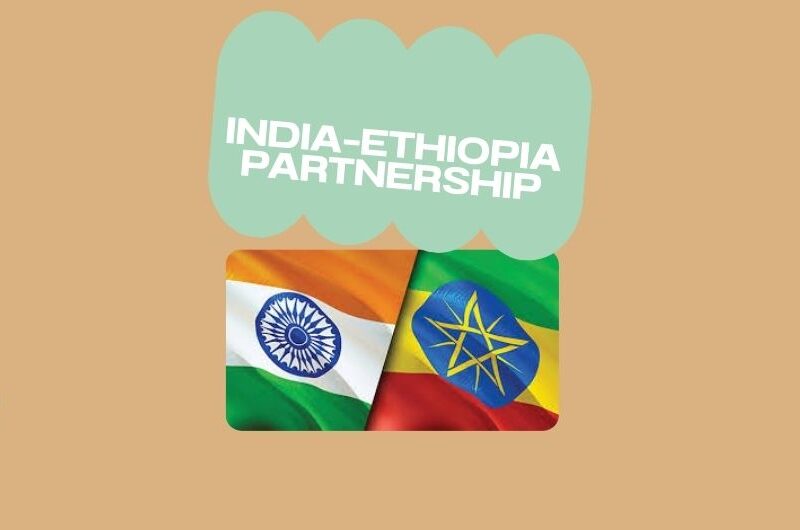
India–Ethiopia Strategic Partnership: Key Developments and Cooperation Areas

India–Ethiopia Strategic Partnership: Key Developments and Cooperation Areas   Key Takeaways PM Narendra Modi visited Ethiopia on 16-17 December 2025, on his first bilateral visit. He was conferred with ‘Great Honor Nishan of Ethiopia’ country’s highest honour during Addis Ababa visit. India and Ethiopia have elevated their bilateral ties to a Strategic Partnership, marking a new phase of cooperation. India, Ethiopia signed eight MoUs, agreements, including that for establishing a Data Centre at Ethiopia’s Ministry of Foreign Affairs and for debt restructuring under the G20 Common Framework. Over 675 Indian companies are registered with the Ethiopian Investment Commission, with total investments over USD 6.5 billion, especially in key sectors of manufacturing and pharmaceuticals, creating over 75,000 local jobs. Bilateral ties are supported by structured dialogues such as Foreign Office Consultations and Joint Trade Committee meetings. High-level political engagement is also sustained through Prime Minister-level meetings on the sidelines of G20 and BRICS Summits, and regular External Affairs Minister interactions. India–Ethiopia total trade stood at US$ 550.19 million in FY 2024–25. Indian exports are US$ 476.81 million and imports US$ 73.38 million, making the relationship strongly export-driven.     1. Prime Minister Narendra Modi visited Ethiopia on 16–17 December 2025 during a three-nation tour, arriving in Addis Ababa for formal talks with Abiy Ahmed. 2. He received the Great Honor Nishan of Ethiopia, the country’s highest award, in Addis Ababa, recognising contributions toward strengthening the bilateral partnership publicly, significantly. 3. Leaders elevated relations to a Strategic Partnership, signalling expanded cooperation in trade, investment, technology, skilling, education, defence, ICT, and people-to-people linkages across multiple sectors. 4. Eight agreements and MoUs were signed, including establishing a data centre at Ethiopia’s foreign ministry and formal debt restructuring under the G20 Common Framework. 5. Historical ties span over two millennia, including Axumite-era trade and exchanges via Adulis, linking Indian merchants with Ethiopian gold and ivory maritime routes early. 6. Formal diplomatic relations began in 1950, evolving into collaboration on trade, investment, capacity building, and development cooperation supported by structured institutional mechanisms today regularly. 7. High-level engagement occurs through regular meetings alongside G20 and BRICS summits, supplemented by ministerial interactions, telephonic conversations, Foreign Office Consultations, and Joint Trade Committees. 8. India–Ethiopia trade in FY 2024–25 totaled US$550.19 million, with exports US$476.81 million and imports US$73.38 million, yielding a surplus, making the relationship strongly export-driven. 9. Over 675 Indian companies are registered in Ethiopia, with investments exceeding US$6.5 billion, especially in manufacturing and pharmaceuticals, supporting substantial local employment across regions. 10. Indian investment is described as creating over 75,000 local jobs, alongside industrial capacity in essential sectors, including textiles, manufacturing, and pharmaceuticals production for Ethiopia. 11. Ethiopia benefits under India’s duty-free tariff preference for least developed countries, supporting market access and encouraging diversification and deeper economic cooperation for mutual benefit. 12. Recent exchanges included defence cooperation talks, parliamentary delegations, election-board study visit, and participation in textiles, health, solar energy, and governance programmes in Addis Ababa. 13. In 2025, a multi-party Indian parliamentary delegation met Ethiopian leaders and African Union representatives during May–June, emphasising zero tolerance toward terrorism and mutual solidarity. 14. Cooperation priorities discussed included digital public infrastructure, health security, digital health, traditional medicine, Jan Aushadhi Kendra, food security, natural farming, agri-tech, and innovation partnerships. 15. Both sides highlighted collaboration on climate action, renewable energy, disaster risk reduction, and engagement with international initiatives such as IBCA, CDRI, GBA, and ISA.         MCQ: 1. With reference to the visit mentioned, the Prime Minister’s visit to Ethiopia took place on: A. 10–11 November 2025 B. 16–17 December 2025 C. 26–27 December 2025 D. 1–2 January 2026 2. The Prime Minister arrived in Ethiopia for formal talks in: A. Addis Ababa B. Gondar C. Dire Dawa D. Mekelle 3. The Great Honor Nishan of Ethiopia, mentioned in the text, is: A. A state-level military decoration B. Ethiopia’s highest award C. An award of the African Union D. An economic merit award for investors 4. The bilateral relationship was elevated to a: A. Comprehensive Economic Partnership B. Strategic Partnership C. Defence Alliance Treaty D. Customs Union Arrangement 5. How many agreements and MoUs were signed during the visit as stated? A. Four B. Six C. Eight D. Ten 6. Which of the following was included among the signed outcomes? A. Establishing a data centre at Ethiopia’s foreign ministry B. Setting up a nuclear research facility C. Launching a single-currency trade settlement D. Establishing a joint space station programme 7. The debt restructuring mentioned was under the: A. Paris Club Mechanism B. G20 Common Framework C. IMF Extended Fund Facility D. World Bank Debt Service Suspension Initiative only 8. The text notes that historical ties span over: A. 500 years B. 1,000 years C. 2,000 years D. 3,500 years 9. The Axumite-era exchanges referenced in the text involved maritime links via: A. Massawa B. Adulis C. Berbera D. Mombasa 10. Formal diplomatic relations between the two countries began in: A. 1947 B. 1950 C. 1956 D. 1962 11. High-level engagement is described as occurring alongside: A. ASEAN and SCO summits B. G20 and BRICS summits C. SAARC and BIMSTEC summits D. Commonwealth and NAM summits only 12. India–Ethiopia trade in FY 2024–25 was approximately: A. US$150.19 million B. US$350.19 million C. US$550.19 million D. US$750.19 million 13. As per the text, India’s exports to Ethiopia in FY 2024–25 were about: A. US$176.81 million B. US$276.81 million C. US$476.81 million D. US$676.81 million 14. Over how many Indian companies are registered in Ethiopia, as stated? A. Over 275 B. Over 475 C. Over 675 D. Over 875 15. Ethiopia benefits under India’s: A. Export Credit Guarantee Scheme for developed countries B. Duty-free tariff preference for least developed countries C. Customs Union with African states D. Preferential market access only for landlocked countries

More Details

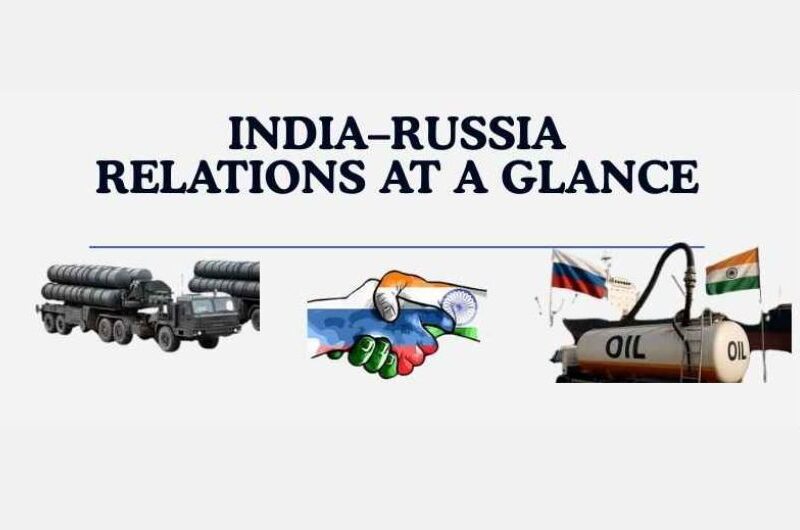
 India-Russia Relations at a Glance

 India-Russia Relations at a Glance   Overview of the Partnership India and Russia share an enduring, time-tested relationship strengthened over 78 years. The 2000 “Strategic Partnership” and the 2010 elevation to a “Special and Privileged Strategic Partnership” institutionalised cooperation across political, defence, economic, nuclear, space, science, culture and multilateral domains. The Intergovernmental Commission (IRIGC) operates at two levels: IRIGC-TEC (economic, scientific, cultural) and IRIGC-M&MTC (military & technical).   Key Developments in 2025 India and Russia pushed to accelerate the USD 100 billion bilateral trade target by 2030, including progress on the India-EAEU FTA. INDRA-2025 naval exercises (March–April 2025) reinforced operational defence cooperation. Sectoral dialogues in 2025 deepened ties, including maritime consultations (Nov 2025) and Russia’s participation in India Energy Week. Two new Indian consulates planned in Kazan and Yekaterinburg.   Political and Diplomatic Engagement Annual Summits are the highest-level mechanism (23rd Summit in Dec 2025). Frequent high-level contacts: PM–President meetings at BRICS, SCO; NSA-level strategic dialogues; multiple ministerial meetings (EAM–Lavrov). India emphasised dialogue and diplomacy on Ukraine; raised concerns over Indians recruited into Russian forces. Regular trilateral/multilateral coordination in BRICS, SCO, G20, UN; Russia consistently supports India’s UNSC permanent seat bid.   Economic Relations Bilateral Trade Record USD 68.7 billion trade in FY 2024–25. Exports (USD 4.9 bn): pharma, chemicals, iron & steel, marine products. Imports (USD 63.8 bn): crude oil, petroleum products, sunflower oil, fertilizers, coking coal, precious stones. Strategic Targets USD 100 bn trade by 2030, USD 50 bn mutual investments by 2025. Progress on India–EAEU FTA; focus on resolving tariff and logistics barriers, payment mechanisms, and promoting connectivity (NSTC, Chennai–Vladivostok corridor).   Defence and Military-Technical Cooperation Defence remains the strongest pillar of the India–Russia partnership. Framework 10-year Defence Cooperation Programme (2021–2031) covering joint R&D, production, maintenance, and technology transfer. Major Platforms and Projects BrahMos: Jointly developed supersonic cruise missile; key symbol of collaboration. Sukhoi Su-30MKI: Licensed production by HAL. T-90S Bhishma tanks: Assembled in India. S-400 Triumf system procured. INS Vikramaditya, submarines, engines and spares from Russia. AK-203 rifles manufactured under Indo-Russia Rifles Pvt. Ltd. (U.P.). Exercises INDRA-2025 (Army/Navy/Air Force) in Rajasthan and Bay of Bengal. Participation in Zapad-2025 strategic exercises. Multiple meetings under IRIGC-M&MTC.   Science, Technology and Nuclear Cooperation Cooperation spans basic sciences, materials science, mathematics, nanotechnology, space and energy. Kudankulam Nuclear Power Plant (Tamil Nadu) is India’s only foreign-assisted nuclear power project. Collaboration under the Gaganyaan human spaceflight program, including astronaut training in Russia. The 2021 STI Roadmap focuses on innovation, technology commercialization and joint R&D.   Education and Cultural Exchange Education Around 20,000 Indian students study in Russia, mostly in medicine. Cooperation mechanisms include: Educational Exchange Programme (EEP) RIN network (universities collaboration) SPARC, GIAN Indology and Hindi/Sanskrit/Pali taught in several Russian institutions. Russia participates actively in India’s ITEC scholarship programme. Culture Centuries-old cultural ties: Afanasy Nikitin’s travels, yoga popularity, Indian cinema influence. 2025 saw major cultural events: Bharat Utsav festival in Moscow (850,000 visitors) Indian Film Festival across five regions Yoga Day celebrations in 60+ Russian regions Russia hosted relics of Lord Buddha (Kalmykia, 2025)   Parliamentary Cooperation The Inter-Parliamentary Commission (Lok Sabha–State Duma) meets regularly; last major engagements in 2024–2025. Delegations exchanged views on terrorism, global politics, and bilateral cooperation.   Connectivity and Multilateral Engagement Major connectivity corridors shaping future cooperation: International North–South Transport Corridor (INSTC) Chennai–Vladivostok Eastern Maritime Corridor Northern Sea Route Russia supports India’s BRICS 2026 chairship priorities.   Conclusion India–Russia relations remain durable, diversified and strategically important. The relationship is evolving beyond traditional defence-centric ties to include energy, nuclear, space, maritime connectivity, science, technology, higher education, and cultural diplomacy. The emerging synergy aligns Russia’s pivot to the East with India’s Atmanirbhar Bharat and Make in India objectives, shaping a long-term partnership anchored in multipolarity, stability and mutual strategic trust.           In which year was the India–Russia “Special and Privileged Strategic Partnership” established? 1998 2000 2005 2010   What is the bilateral trade target set by India and Russia for 2030? USD 50 billion USD 75 billion USD 100 billion USD 150 billion   IRIGC-TEC deals with cooperation in which area? Only defence Only nuclear energy Trade, economic, scientific and cultural cooperation Only foreign policy   The INDRA-2025 exercise was conducted between which two countries? India–USA India–Japan India–France India–Russia   India–Russia bilateral trade in FY 2024–25 reached approximately: USD 18.7 billion USD 28.7 billion USD 48.7 billion USD 68.7 billion   Which of the following is the major component of India’s imports from Russia? Pharmaceuticals Marine products Crude oil and petroleum products Electronic machinery   The BrahMos missile project represents what form of cooperation? Pure procurement Joint research and development Only licensed production Only training   The 2021–2031 India–Russia defence cooperation programme focuses primarily on: Defence imports Border management Joint R&D, production and maintenance Strategic communications   Kudankulam Nuclear Power Plant in Tamil Nadu has been established with the cooperation of: Japan France Russia USA   Approximately how many Indian students study in Russia? 5,000 10,000 20,000 40,000   The “2+2 Dialogue” between India and Russia is held at the level of: Finance and Agriculture Ministers Foreign and Defence Ministers Culture and Education Ministers Energy and Science Ministers   The International North–South Transport Corridor aims to improve connectivity between: Europe and Africa India and Russia through passenger travel India–Russia–Iran freight connectivity Indian Ocean maritime security   Russia’s stance on India’s candidature for a permanent seat in the UN Security Council is: Opposed Neutral Limited support Consistent support   AK-203 rifles are produced in India through which collaboration? HAL DRDO–Mitsubishi JV Indo-Russia Rifles Private Limited BHEL–Rosatom JV   The 2025 “Bharat Utsav” cultural festival was a major success in which city? St. Petersburg Vladivostok Kazan Moscow    

More Details

Free IAS Guidance
Start Your Journey Today 🇮🇳

Fill out the form below, and we will be in touch shortly.