Best UPSC and MPPSC IAS Coaching Classes in Gwalior

India’s Climate Milestones, Coal Reality, and Coalition Strategy

India’s Climate Milestones, Coal Reality, and Coalition Strategy     1. India’s climate pathway balances development and sustainability through renewable expansion, emissions-intensity reduction, and coalition leadership, while confronting coal dependence, financing gaps, bottlenecks, and rising energy demand. 2. India targeted 175 GW renewables for 2022 but achieved 119 GW excluding large hydro, missing the mark yet creating momentum; by October 2025 renewables reached about 242 GW. 3. India’s emissions are about 4,195 MtCO2e, roughly 7.6% globally; per capita near 1.85 tCO2e supports equity claims; cumulative since 1850 totals 169,900 MtCO2e. 4. India pledged a 45% GDP emissions-intensity cut from 2005 by 2030 and 50% cumulative installed non-fossil capacity; it targets net-zero 2070 and promotes Mission LiFE. 5. In 2023 non-fossil capacity neared 49%: solar ~123 GW, wind 52 GW, large hydro 50 GW; yet renewable generation including hydro is ~22% amid coal-dominant dispatch. 6. FY2024–25 added 29.52 GW renewables, led by ~24 GW solar; April–September 2025 added ~25 GW, including 21.7 GW solar and 3.09 GW wind. 7. India reached 50% installed capacity from non-fossil sources about five years before 2030; nevertheless energy-related CO2 emissions rose about 5.3% in 2024 amid demand growth. 8. First-half 2025 power-sector CO2 fell about 1% year-on-year, linked to record clean additions and favorable weather; 2015–2020 policies reportedly avoided about 440 MtCO2. 9. Between 2005 and 2019, India cut GDP emissions intensity about 33%, advancing its 2030 pledge; leadership is pursued via ISA, CDRI, GBA, LeadIT, and IBCA with implementation focus. 10. ISA began at COP21 in November 2015 with France; 100+ signatories and 90+ ratifications. CDRI launched September 2019; ~60 members support 180+ resilience projects worldwide, with Delhi secretariat. 11. GBA launched September 2023 with the G20 in New Delhi and expanded by mid-2025. LeadIT, co-launched 2019 with Sweden, entered a new phase at COP28 globally. 12. IBCA launched April 2023; Cabinet approval came March 2024. An April 2025 Headquarters Agreement established its secretariat in India; by 2025, over 12 countries formally joined as members. 13. Coal supplies ~73% of electricity generation and ~44% of primary energy; energy demand may roughly double from 2020 to 2040, complicating transition sequencing for states and workers nationally. 14. Net-zero pathways need about $10 trillion (2020–2070). Finance flows near $44B annually versus needs ~$260B; transmission lags cause curtailment; FY2024 solar imports exceeded $12B value overall. 15. Opportunities include Morena solar-plus-storage at ₹2.70/kWh, PM Suryaghar adding ~6 GW rooftop for two million households, more storage and corridors, managed coal transition, skills. Must Know Terms   1.NDC and Net Zero NDC and Net Zero: India’s updated NDC (submitted Aug 2022) commits to (i) reduce emissions intensity of GDP by 45% by 2030 from 2005 levels, and (ii) achieve about 50% cumulative electric power installed capacity from non-fossil sources by 2030. Separately, India announced a net-zero target year of 2070 at COP26 (2 Nov 2021), alongside “Panchamrit” milestones including 500 GW non-fossil power capacity by 2030. 2.Dispatch Gap Dispatch Gap: The hard shortage at peak—Peak Demand minus Peak Met (MW), also expressed as “Demand Not Met (%)”. Official all-India data show: FY 2022-23 peak demand 215,888 MW vs peak met 207,231 MW → gap 8,657 MW (4.0%). FY 2023-24 gap 3,340 MW (1.4%). FY 2024-25 gap 2 MW (0.0%). FY 2025-26 (Apr–Dec 2025) peak demand 242,773 MW vs peak met 242,493 MW → gap 280 MW (0.1%). 3.International Solar Alliance (ISA) International Solar Alliance (ISA): Treaty-based intergovernmental organisation headquartered at the National Institute of Solar Energy (NISE), Gurugram. It became treaty-based when its Framework Agreement entered into force on 6 Dec 2017 after the 15th ratification. ISA’s official portal currently shows 112 Member Countries and 14 Signatory Countries (public count on the site home page). 4.Coal Reliance and Just Transition Coal Reliance and Just Transition: Coal remains the backbone of India’s electricity generation even as non-fossil installed capacity rises. In 2024, India generated about 2,030 TWh of electricity; coal contributed a record ~1,517.9 TWh (renewables ~240.5 TWh). Coal is also a jobs-and-regional-economy issue: a Government of India document lists workforce in major coal companies as Coal India Limited 330,318; SCCL 40,893; NLC India 20,811. “Just transition” focuses on planned worker reskilling, social protection, and district-level economic diversification as coal use gradually declines. 5.Climate Finance Gap Climate Finance Gap: Two hard numbers show the “gap”. First, the long-standing developed-country pledge: OECD reported developed countries provided and mobilised USD 115.9 billion in climate finance for developing countries in 2022 (first time exceeding USD 100 billion). Second, the needs scale: UNFCCC notes the Standing Committee on Finance (2021 Needs Determination Report) found nearly USD 6 trillion is needed to implement developing countries’ climate action plans by 2030 (and this does not fully cost adaptation). COP29 also agreed a new post-2025 finance goal architecture: scale up climate finance for developing countries to at least USD 1.3 trillion annually by 2035 (all actors) and developed countries to take the lead in mobilising at least USD 300 billion annually by 2035. 6.Transmission, Storage, Curtailment Transmission, Storage, Curtailment: Grid constraints show up as curtailment and delayed evacuation. CEA’s transmission plan for integrating 500+ GW renewables by 2030 is officially costed at about ₹2.44 lakh crore and is designed for ~537 GW RE integration. Curtailment has become measurable: an Ember analysis reported about 2.3 TWh of solar power was curtailed in India over May–December 2025 for grid-security reasons. Storage is being pushed as the balancing tool, but deployment is still small versus tenders: Reuters reported only ~500 MWh operational as of Sept 2025 out of ~83 GWh tendered since 2021, and noted bids in some tenders falling below ₹1.5/kWh, raising viability concerns. MCQ 1. India’s net-zero target year stated in the passage is: (a) 2030 (b) 2047 (c) 2070 (d) 2100 2. India’s 2022 renewable deployment target was: (a) 119 GW (b) 175 GW (c) 242 GW (d) 500 GW 3. By 2022, renewable capacity excluding large hydro was stated as: (a) 100 GW (b) 119 GW (c) 175 GW (d) 242 GW 4. India’s greenhouse gas emissions

More Details
Growth with Climate Action: India’s Equity, Health, and Green Leapfrogging Pathway  

Growth with Climate Action: India’s Equity, Health, and Green Leapfrogging Pathway       1. India is at a crossroads where poverty reduction goals coincide with intensifying climate risks, making integrated choices unavoidable and shifting the core question to whether growth and climate action can advance together. 2. India’s catch-up legacy leaned on coal, steel, and cement; replicating Western growth is described as impractical under climate constraints, yet halting development is framed as unfair given unmet basic needs. 3. The development-versus-climate framing is treated as a false dichotomy, proposing a combined programme integrating climate action into growth through technology, finance, diplomacy, and inclusive governance mechanisms. 4. Climate action is positioned as enabling development by sustaining health systems, protecting agriculture, preserving the demographic dividend, and improving resilience because repeated shocks can erase progress quickly. 5. India is described as the third largest greenhouse gas emitter, about seven percent of global CO₂, yet per capita emissions are less than half the global average and about one seventh of the United States. 6. India must reduce emissions while meeting basic needs for about 1.4 billion people; around 230 million are described as multidimensionally poor, keeping development requirements and equity constraints large. 7. Nearly forty percent of the workforce is described as dependent on agriculture, with heatwaves, erratic monsoons, floods, and droughts directly threatening output, rural incomes, and food stability. 8. Health burdens such as air pollution and malnutrition are described as intersecting with climate stresses, compounding inequality; slowing growth is described as unacceptable, but climate inaction is equally dangerous. 9. South Asia is described as a hotspot for heat extremes, water shortages, and food insecurity, increasing urgency for resilience building to protect human capital and development gains. 10. Heat-related deaths among older Indians are described as rising by 55% over two decades; heat exposure drives productivity losses, reducing wages and output for outdoor and informal workers. 11. Climate shocks are described as reversing SDG progress: crop failures and health shocks push households into poverty, while dengue and malaria risks shift with higher temperatures and unstable rainfall patterns. 12. Women are described as facing heavier burdens from water scarcity and fuel shortages; farmers, construction labourers, and vendors lose working hours in extreme heat, directly reducing incomes. 13. Air pollution is described as India’s second largest disease risk factor linked to about 1.6 million deaths annually; clean energy and urban planning reduce admissions, raise productivity, and improve lives. 14. Heat Action Plans are described as emerging in Ahmedabad after the 2010 heatwave, saving lives via early warning, outreach, and cooling measures, but often missing mental health and gender integration. 15. India is described as able to leapfrog into green development: targets include 500 GW non-fossil capacity by 2030 and net zero 2070; constraints include intermittency, land, grid integration, storage, and transport emissions. Must Know Terms: 1.False Dichotomy False Dichotomy: A logical fallacy where only two choices are presented as if they are the only options, while feasible alternatives exist. Common policy examples include “growth vs environment” or “coal vs blackout,” ignoring efficiency, demand response, diversified renewables, storage, and grid upgrades. In arguments, it is detected by “either–or” framing that excludes middle paths, sequencing, or mixed strategies.   2.Emissions Equity Context Emissions Equity Context: Equity framing compares (a) historical contribution, (b) per-capita emissions, and (c) capacity to pay. India’s per-capita CO₂ is around ~2 tonnes, and is less than half of the global average; the U.S. and EU remain far higher per person. Historically, the U.S. has contributed more than one-quarter of cumulative CO₂ emissions since the industrial era, shaping claims on “responsibility.” Equity language in global talks is anchored in CBDR–RC principles and “different national circumstances.”   3.Heat Action Plans Heat Action Plans: India’s heat governance tool built around early warning + public advisories + health system readiness. NDMA notes that 17 heat-wave-prone states have prepared Heat Wave Action Plans and that more than 120 districts/cities across 14 states have prepared local action plans. Ahmedabad’s Heat Action Plan launched in 2013 is cited as South Asia’s first city heat plan and is periodically updated. A published evaluation linked Ahmedabad’s plan with reduced hot-day mortality, estimating over ~1,100 deaths avoided per year after implementation.   4.Air Pollution Burden Air Pollution Burden: Air pollution is quantified as premature deaths, DALYs, and disease shares attributable to PM2.5 and household air pollution. State of Global Air (GBD 2021) reports ~8.1 million deaths globally in 2021 from air pollution, with India around ~2.1 million deaths (about one-quarter of the global total). India-specific estimates for 2019 attribute ~1.67 million deaths to air pollution and ~17.8% of all deaths. Child burden is large: reported ~169,400 under-5 deaths in India in 2021 linked to air pollution (≈ 464 per day).   5.Great Nicobar Project Great Nicobar Project: The officially cleared “Holistic/Integrated Development of Great Nicobar Island” includes (i) an International Container Transshipment Terminal (ICTT) at Galathea Bay with stated planned capacity of 14.2 million TEU, (ii) township/area development, and (iii) a 450 MVA gas-and-solar power plant. Project documents cite an overall project area of about 16,610 hectares. Environmental and CRZ clearance documentation is dated 11.11.2022 (File No. 10/17/2021-IA.III).   6.Integrated Planning Integrated Planning: A method to align land use, transport, housing, water, waste, energy, environment, and disaster risk so sector decisions do not conflict. It is operationalised through a single baseline (population, demand, hazards), scenario modelling, and phased capex sequencing across agencies. Outputs are measurable: service coverage targets, emission intensity targets, resilience targets, and infrastructure capacity thresholds (water balance, mobility capacity, waste processing capacity) with timelines and budgets. MCQ 1. The passage frames India’s current policy situation primarily as: (a) A post-growth stabilisation phase (b) A crossroads where poverty reduction coincides with intensifying climate risks (c) A period of declining climate hazards (d) A phase where development can be halted without equity issues 2. India’s historical catch-up narrative is described as leaning on: (a) Hydropower and geothermal (b) Coal, steel, and cement (c) Nuclear-only expansion (d) Biomass and peat 3. Replicating the

More Details

Clean Technology Transition and Import Dependence: India’s Targets, Risks, and Indigenisation Strategy

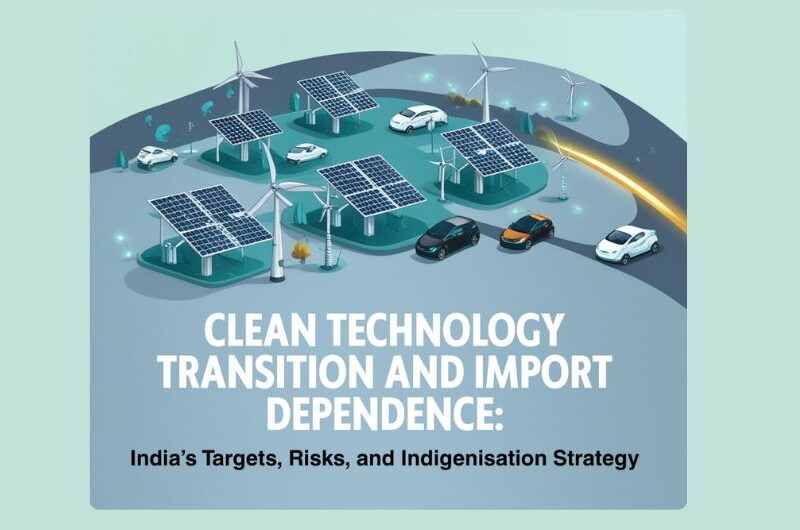
Clean Technology Transition and Import Dependence: India’s Targets, Risks, and Indigenisation Strategy   1. India has declared a net zero emissions target for 2070 and targets 50% of energy from non-fossil sources by 2030, requiring accelerated deployment and reliable grid integration. 2. India targets 30% of new vehicle sales as electric by 2030, implying large-scale charging rollout, battery ecosystem expansion, and industrial capacity for motors, controllers, and cells. 3. The power system scale is stated as 442 GW installed capacity, with renewables at 33% and hydropower at 11%, indicating a growing but not yet dominant clean capacity mix. 4. Rapid renewable installation growth is presented as supporting confidence in meeting 2030 clean energy objectives ahead of schedule, driven by targeted policy incentives and reduced investor uncertainty. 5. Renewable energy capacity is stated to have grown eightfold between 2010 and 2023, with falling solar and wind costs cited as key enablers alongside procurement mechanisms. 6. Clean transition scale-up is described as expanding venture capital participation through policy stability and financial innovations across clean technology segments and investment pipelines. 7. Scale-up is framed as creating startup and MSME opportunities across manufacturing and services value chains, linking domestic entrepreneurship to deployment, O&M, and component supply. 8. Cleantech expenditure is stated as $68 billion in 2023, about 40% higher than average spending during 2016–2020, signalling a step-change in annual investment intensity. 9. Capturing transition benefits is linked to indigenising supply chains and building domestic manufacturing for critical components while addressing high capital costs that reduce project viability. 10. Supply chain bottlenecks and local technology expertise gaps are identified as constraints slowing indigenisation, limiting competitiveness, and sustaining reliance on imported upstream inputs. 11. Import dependence is framed as a strategic risk in a fragmented economy with export controls; clean technology dependence is compared to oil dependence in vulnerability terms. 12. Import dependence is stated to range from 20% to 90% across cleantech segments, showing uneven exposure and differing readiness of domestic ecosystems by technology. 13. Segment dependence is stated as: solar 80%, wind 60%, BESS 75–90%, e-mobility components 60–70%, green hydrogen 90%, and bioenergy 20–30% import dependent. 14. Without policy action, cleantech imports are projected at $85–110 billion by 2030 and $140–300 billion by 2040, approaching the magnitude of the oil import bill. 15. Strategy stresses Made in India capacity plus partnerships: PLI, duties, linked auctions, technology transfer, finance alliances, market access, and rapid execution amid infrastructure, logistics, R&D, and machinery constraints. Must Know Terms :   1.Net Zero 2070 Net Zero 2070: India announced the net-zero target year as 2070 at COP26 (Glasgow) on 2 November 2021. The same announcement listed “Panchamrit” targets for 2030: (i) 500 GW non-fossil electricity capacity, (ii) 50% of energy requirements from renewables, (iii) 45% reduction in emissions intensity of GDP, (iv) 1 billion tonnes reduction in projected cumulative emissions, and (v) net-zero by 2070. 2.Import Dependence Range Import Dependence Range: India’s dependence differs by fuel and is often expressed as import dependency (%). Crude oil import dependency is around the high-80% range in recent years; natural gas import dependency is roughly around half; coal imports remain large in absolute terms (hundreds of million tonnes annually) even with rising domestic production, indicating continued exposure to global supply and price shocks across multiple fuels. 3.Cleantech Spend 2023 Cleantech Spend 2023: Global energy investment in 2023 was about US$2.8 trillion, with more than US$1.7 trillion directed to clean energy (renewables, grids, storage, nuclear, low-emission fuels, efficiency, electrification). The remaining slightly over US$1 trillion went to unabated fossil fuel supply and power. A commonly cited ratio for 2023 is: for every US$1 spent on fossil fuels, about US$1.7 was spent on clean energy. 4.Techno-Nationalism and Export Controls Techno-Nationalism and Export Controls: Export controls are state tools to restrict access to strategic technologies (chips, advanced tools, software, know-how) for security and industrial policy goals. The U.S. imposed major advanced computing and semiconductor-related export controls on 7 Oct 2022, expanded/updated them on 17 Oct 2023, updated again on 2 Dec 2024, and further strengthened restrictions on 15 Jan 2025—tightening access to high-end chips and key chipmaking capabilities. 5.PLI and Manufacturing-Linked Auctions PLI and Manufacturing-Linked Auctions: India’s PLI scheme for High-Efficiency Solar PV Modules has an outlay of ₹24,000 crore. Official parliamentary reporting notes large realised investments and job creation under this scheme by late 2024. Separately, “manufacturing-linked” solar procurement has been used in competitive bidding—capacity awards for solar generation were linked with domestic manufacturing commitments, including documented examples of 12,000 MW solar linked with 3,000 MW manufacturing, and an additional “Green Shoe Option” linking extra capacity with manufacturing, with tariffs around ₹2.92/kWh in earlier award records. 6.Indigenisation Constraints Indigenisation Constraints: Local manufacturing faces constraints from concentrated global chokepoints—frontier lithography tools, specialty chemicals/materials, ultra-pure gases, precision components, and IP. Advanced nodes rely on extremely complex equipment ecosystems; access limitations (including export controls) can slow timelines, increase costs, and force dependence on older-generation tools. This creates a practical gap between policy intent (localisation) and achievable near-term capability, especially in semiconductors and high-end cleantech supply chains. MCQ 1. India’s declared net zero emissions target year is: (a) 2030 (b) 2050 (c) 2070 (d) 2100 2. India’s 2030 target for energy from non-fossil sources is: (a) 25% (b) 40% (c) 50% (d) 70% 3. India’s target for electric share of new vehicle sales by 2030 is: (a) 15% (b) 30% (c) 45% (d) 60% 4. India’s total installed energy capacity is stated as: (a) 242 GW (b) 342 GW (c) 442 GW (d) 542 GW 5. Renewables are stated as what percent of installed capacity? (a) 11% (b) 22% (c) 33% (d) 50% 6. Hydropower is stated as what percent of installed capacity? (a) 5% (b) 11% (c) 18% (d) 33% 7. Renewable energy capacity is stated to have grown how much between 2010 and 2023? (a) Twofold (b) Fourfold (c) Eightfold (d) Tenfold 8. Cleantech expenditure in 2023 is stated as: (a) $28 billion (b) $48 billion (c) $68 billion (d) $88 billion 9. The 2023

More Details

Climate Resilience as Competitiveness: India’s Risk, Reform, and Transition Pathways

Climate Resilience as Competitiveness: India’s Risk, Reform, and Transition Pathways     1. National competitiveness is increasingly tied to resilience: the capacity to manage cascading climate risks, protect livelihoods, and sustain growth during simultaneous heatwaves, floods, cyclones, and droughts nationwide. 2. India’s recent experience with pandemic, global economic shocks, and converging climate threats shows crises can occur together or in quick succession, changing planning assumptions for policy and firms. 3. Competitiveness is no longer judged only by GDP or exports, because repeated climate disruption can erase gains, weaken long-term prosperity, and undermine national stability and services. 4. Resilience functions as a metric for inclusive prosperity by safeguarding livelihoods, maintaining essential services, and keeping growth stable during repeated climate shocks and recovery cycles. 5. Late twentieth century debates linked competitiveness with innovation, investment attraction, and export performance; India’s 1991 reforms emphasised liberalisation, efficiency, market dynamism, and services exports. 6. Standards of progress evolve; AI, digital platforms, and supply-chain shifts reshape competitiveness, while global markets increasingly value policy coherence, predictability, productive ecosystems, and institutional capacity. 7. Historical development brought gains with major costs: Panama Canal (1880–1914), Industrial Revolution pollution, and colonial extraction caused human suffering, deforestation, soil exhaustion, displacement, and cultural loss. 8. Man-made disasters illustrate catastrophic risk: Bhopal (1984) and Chernobyl (1986) produced long-lasting health and environmental impacts, underscoring the need for safeguards and oversight. 9. Mega infrastructure shows tradeoffs: Three Gorges displaced over one million and altered ecosystems; Aswan High Dam reduced silt deposition, affected fertility and fisheries, and relocated Nubian communities. 10. Policy frames development, security, and environmental preservation as interlinked priorities; Great Nicobar debate highlights ecological risks, disaster exposure, and tribal impacts alongside strategic and economic goals. 11. Heat stress already cuts average labour productivity by 5.7% in lower-middle-income countries; by 2030, India could lose 34 million job equivalents or about $450 billion output annually. 12. Highly exposed workers include construction, agriculture, and informal sectors, converting climate stress into macroeconomic competitiveness losses, especially where cooling, safety, and work redesign are limited. 13. Agriculture supports livelihoods for over 40% of India’s workforce; climate variability could reduce unirrigated farm incomes by up to 25%, widening rural vulnerability and regional disparities. 14. Recurrent shocks show persistence: Assam floods, Bundelkhand droughts, 2019 Chennai water crisis, and Cyclone Amphan 2020 causing $13 billion damages strain infrastructure and budgets. 15. 2010–2020 climate disasters cost India about $87 billion annually, near 3% of GDP; transition strategies link decarbonisation, circular economy, renewables scaling, and job creation to competitiveness.   Must Know Terms: 1.Resilience Metric Resilience Metric: A hard, trackable score used to compare “risk-to-loss reduction” across countries/projects. Under the Sendai Framework, progress is monitored using 7 global targets (A–G) and 38 indicators (mortality, affected people, direct economic loss, damage to critical infrastructure/basic services, DRR strategies, international cooperation, early warning/risk information). The World Bank’s Resilience Rating System (RRS) rates projects from C to A+ on two dimensions and was piloted on 21 projects in FY21–FY22.   2.Heat Stress Productivity Loss Heat Stress Productivity Loss: Measurable output loss when heat/humidity reduces safe working time or forces slower work, especially in agriculture and construction. ILO projects that by 2030, 2.2% of total global working hours will be lost due to heat stress—equivalent to about 80 million full-time jobs and about US$2.4 trillion in annual economic losses. For India, McKinsey estimates lost labor hours from heat/humidity could put ~2.5–4.5% of GDP at risk by 2030 (≈ US$150–250 billion).   3.Climate Disaster Fiscal Drain Climate Disaster Fiscal Drain: Quantified pressure on public finances after disasters—relief + reconstruction outlays, revenue shortfalls, and higher debt/interest. IMF research finds public debt rises by about 2.5% of GDP in disaster years on average (lower growth + lower tax revenue + higher spending). India-specific IMF staff analysis reports fiscal costs from disasters ranging roughly 0.5% to 5.2% of state-level GDP, illustrating how repeated shocks can crowd out capex and social spending. 4.Great Nicobar Strategic Infrastructure Great Nicobar Strategic Infrastructure: Official project scope for “Integrated Development” includes (i) International Container Transshipment Terminal (ICTT) at Galathea Bay with planned capacity 14.2 million TEU, (ii) Township & Area Development, and (iii) 450 MVA gas-and-solar power plant, over a stated project area of 16,610 hectares in Great Nicobar. The Environment Ministry clearance letter cites File No. 10/17/2021-IA.III and is dated 11.11.2022 (EC & CRZ clearance). 5.Carbon-Linked Trade Regimes Carbon-Linked Trade Regimes: Trade systems where market access/cost is tied to embedded carbon emissions. EU CBAM is the flagship case: it entered “transitional application” on 1 Oct 2023 and runs to 31 Dec 2025; during this phase, importers mainly report embedded emissions, and the first reporting period ended 31 Jan 2024. Covered sectors include cement, iron & steel, aluminium, fertilisers, electricity, and hydrogen. The “definitive period” starts 1 Jan 2026, when financial compliance (CBAM certificates) applies. 6.Circular Economy Transition Circular Economy Transition: Data-driven shift from “take–make–waste” to keeping materials in use (reuse/repair/refurbish/remanufacture/recycle) and reducing virgin extraction. The key global metric is circularity rate (share of secondary materials in total material use). Circularity Gap Report 2024 documents a decline from 9.1% (2018) to 7.2% (2023)—a 21% drop in five years, meaning the world is becoming less circular despite expanding circular-economy policy and investment.   MCQ 1. In these notes, “resilience” most directly means the capacity to: (a) Maximise exports regardless of shocks (b) Manage climate risks, protect livelihoods, and sustain growth during multiple hazards (c) Replace all public services with private provision (d) Reduce trade by isolating the economy 2. The notes argue competitiveness is no longer judged only by GDP because: (a) GDP is now banned in policy analysis (b) Climate disruption can erase gains and weaken long-term prosperity (c) Exports have no role in growth (d) Innovation no longer matters 3. India’s 1991 reforms are linked in the notes with: (a) Import substitution and high tariffs (b) Global integration, liberalisation, efficiency, and services export growth (c) Abolition of private investment (d) Elimination of market dynamism 4. Which factor is explicitly listed as reshaping competitiveness today? (a) AI, digital platforms, and

More Details

Integrated Development, Environmental Ethics, and Disaster Governance

Integrated Development, Environmental Ethics, and Disaster Governance 1. Panama Canal (1880–1914) and the Industrial Revolution (18th–19th centuries) shortened routes and raised output, yet caused worker deaths, smog, polluted rivers, deforestation, and severe public health crises locally. 2. Colonial rubber, cotton, and mineral extraction across Africa, Asia, and Latin America expanded, driving deforestation, soil exhaustion, displacement, and cultural loss, while assessments and rehabilitation costs were deferred. 3. Ecosystems have carrying-capacity limits; resource use beyond regeneration turns dependence into degradation, reducing long-term productivity of land, water, and forests; nonrenewables bring income, but depletion burdens future generations. 4. Timber demand and plantation clearing reduce biodiversity, destabilise slopes, increase flood peaks, and diminish groundwater recharge, raising downstream disaster vulnerability and weakening ecosystem services that often buffer communities. 5. Dense urban housing near factories increased exposure to soot, sewage, and workplace hazards; where sanitation lagged, infectious outbreaks and occupational illnesses became common, revealing public-health costs of growth. 6. Engineering achievements can boost trade and security, but without safeguards they fragment habitats, alter hydrology, and impose health costs; integrated planning aligns economic targets with thresholds and safeguards. 7. Bhopal (1984) toxic gas release killed thousands and left lasting health and environmental impacts; Chernobyl (1986) reactor accident spread radiation across borders, forcing evacuations, exclusion zones, chronic risks. 8. High-hazard industries need strict maintenance, transparent continuous monitoring, and emergency readiness; low-probability failures can generate irreversible human and ecological harm, often exposing weak community protection and oversight systems. 9. Poor toxic-waste storage, transport accidents, and illegal dumping spread pollutants into soil and water, creating disease burdens and remediation; marine oil spills smother coasts, poison fisheries, disrupt livelihoods. 10. Large dams inundate villages, farmland, and forests, requiring resettlement, fair compensation, livelihood rebuilding, and long-term support; China’s Three Gorges displaced over one million and altered ecology, sediments, fisheries. 11. Aswan High Dam (1960s) reduced Nile silt deposition, changed fertility, affected fisheries, and relocated Nubian communities, transforming heritage landscapes; disasters reshape regulations, yet enforcement gaps persist under pressure. 12. Environmental ethics assesses duties when infrastructure reshapes ecosystems; technology amplifies impacts; climate research links fossil fuels and forest clearing to greenhouse gases, seriously demanding consideration beyond local debates. 13. Frameworks differ: anthropocentrism values nature instrumentally; stewardship assigns custodial responsibility; ecofeminism links exploitation with patriarchy; biocentrism values all organisms; ecocentrism prioritises ecosystem integrity and cycles in public governance. 14. Environmental justice stresses equal protection and meaningful participation; procedural and geographic inequities exclude communities and export waste burdens; marginalised groups face disproportionate toxic exposure, requiring transparency, uniform enforcement. 15. India’s Great Nicobar plan spans ~166 km² over 30 years: Bay port, airport, and cities within biosphere reserve and hazard zone; Narmada protests since 1985; Sterlite closure 2018. Must Know Terms : 1.Carrying Capacity Carrying Capacity: The average population size or density of a species that an environment can sustain over time; below this level numbers tend to rise, above it they tend to fall due to resource shortages. It is species-specific and depends on limiting factors like food, water, shelter, and space. In applied environmental planning, it is used to set quantified caps for tourism load, grazing pressure, water withdrawal, and waste-assimilation limits.   2.Bhopal Tragedy (1984) Bhopal Tragedy (1984): The disaster occurred on the night of 2/3 December 1984 when toxic methyl isocyanate (MIC) leaked from Union Carbide India Limited’s pesticide plant in Bhopal. Government sources note the Bhopal Gas Leak Disaster (Processing of Claims) Act, 1985 came into force on 20.02.1985. Reported exposure exceeded 500,000 people; reported injuries are at least 558,125, and reported deaths include at least 3,787 (with higher estimates in some accounts).   3.Chernobyl Accident (1986) Chernobyl Accident (1986): On 26 April 1986, Reactor 4 at the Chernobyl Nuclear Power Plant (near Pripyat) was destroyed, releasing substantial radioactive material. UNSCEAR reports 30 worker deaths within a few weeks and radiation injuries to over 100 others. Pripyat was evacuated on 27 April 1986; about 116,000 people living within a 30-km radius were evacuated and later relocated by mid-May 1986.   4.Environmental Justice Environmental Justice: Defined by the U.S. EPA as fair treatment and meaningful involvement of all people regardless of race, color, national origin, or income in the development, implementation, and enforcement of environmental laws and policies. Fair treatment implies no group should bear a disproportionate share of negative environmental consequences, while meaningful involvement implies timely access to information, participation opportunities, and consideration of community input in decisions.   5.Great Nicobar Project Great Nicobar Project: The officially cleared proposal includes an International Container Transshipment Terminal (ICTT) with stated capacity of 14.2 million TEU, township and area development, and a 450 MVA gas-and-solar power plant, over a stated project area of 16,610 hectares. The Environment Ministry clearance document is dated 11.11.2022 and carries File No. 10/17/2021-IA.III (EC and CRZ clearance).   6.Integrated Planning Integrated Planning: A holistic approach that combines multiple sectors so decisions reinforce each other—land use, transport, housing, environment, and infrastructure investment—rather than working in silos. In practice, it aligns master plans, mobility plans, water and waste systems, climate risk reduction, and phased public investment under one coordinated framework. MCQ 1. The concept of carrying capacity primarily refers to: (a) Maximum annual GDP growth sustainable for a country (b) Finite ecological limits beyond which resource use degrades long-term productivity (c) Legal limits on industrial output imposed by regulators (d) Maximum population that can be supported by imports indefinitely 2. Exceeding an ecosystem’s regeneration capacity most directly results in: (a) Automatic technological substitution without losses (b) Conversion of dependence into degradation and reduced long-term productivity (c) Permanent increase in groundwater recharge rates (d) Reduced disaster vulnerability through rapid growth 3. In the provided notes, fossil fuels and minerals are treated as problematic mainly because: (a) They cannot generate concentrated energy (b) Their depletion and emissions create intergenerational burdens not reversible by short-term compensation (c) Their use always reduces trade and security (d) Their extraction never produces local employment 4. The Bhopal tragedy (1984) is used chiefly to highlight: (a) Benefits of industrial clustering for urban jobs (b) Industrial safety failures

More Details

India’s Strategy for Rare Earth Self-Reliance and Manufacturing Expansion

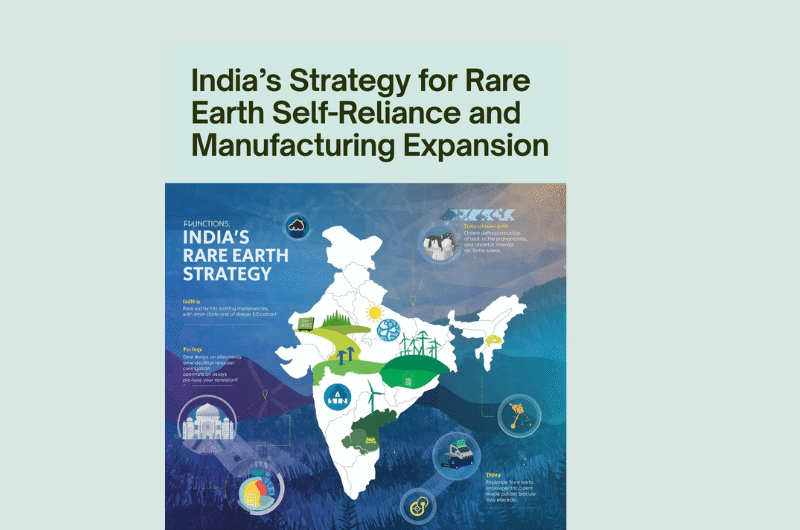
India’s Strategy for Rare Earth Self-Reliance and Manufacturing Expansion         1. Union Budget 2026–27 announced Dedicated Rare Earth Corridors in Odisha, Kerala, Andhra Pradesh and Tamil Nadu, integrating mining, processing, research and REPM manufacturing to expand domestic capacity national. 2. In November 2025, the government approved a ₹7,280 crore REPM Manufacturing Scheme to create an end-to-end domestic ecosystem from rare-earth oxides to finished magnets ensuring national supply security. 3. The scheme targets creation of 6,000 MTPA integrated sintered REPM capacity, allocated among up to five beneficiaries through global competitive bidding to ensure supply security for strategic industries. 4. Over five years, ₹6,450 crore sales-linked incentives and ₹750 crore capital subsidy will support advanced facilities after a two-year gestation period for production linked to verified output milestones. 5. Rare Earth Permanent Magnets are high-strength, stable magnets essential for electric vehicle motors, wind turbine generators, electronics, aerospace systems, defence equipment and precision sensors used across strategic sectors. 6. India possesses 13.15 million tonnes of monazite containing about 7.23 million tonnes of rare-earth oxides, forming a strong domestic raw-material base for downstream permanent magnet manufacturing industries nationwide. 7. Rare-earth deposits occur across Odisha, Kerala, Andhra Pradesh, Tamil Nadu, West Bengal, Gujarat, Maharashtra and Jharkhand, mainly in coastal beach sands, teri sands and inland alluvium geological formations. 8. Additional in-situ rare-earth oxide resources of about 1.29 million tonnes have been identified in hard-rock areas of Gujarat and Rajasthan, expanding exploration potential beyond coastal mineral sands regions. 9. Geological Survey of India identified 482.6 million tonnes of rare-earth ore resources across 34 exploration projects, significantly strengthening the national raw-material inventory for future industrial scale manufacturing capacity. 10. Between 2022 and 2025, India sourced nearly 60–80 percent by value and 85–90 percent by quantity of permanent magnets from China, highlighting strategic import dependence risks nationally significant. 11. Rapid growth in electric mobility, renewable energy, electronics and defence is expected to double India’s REPM consumption by 2030, necessitating urgent domestic manufacturing expansion to meet projected demand. 12. Dedicated Rare Earth Corridors aim to strengthen mining, processing, research and manufacturing linkages, boosting local economies, R&D capacity and India’s integration into global advanced-materials value chains networks worldwide. 13. IREL India Limited, under the Department of Atomic Energy since 1963, operates processing facilities producing ilmenite, rutile, zircon, sillimanite and garnet minerals supporting strategic mineral supply chains nationally. 14. IREL operates a Rare Earth Extraction Plant in Odisha and a Rare Earth Refining Unit at Aluva, Kerala, supporting corridor-based expansion of domestic rare-earth capacity and downstream manufacturing. 15. Policy reforms under the amended MMDR Act 2023 and the National Critical Minerals Mission 2025 promote exploration, private participation and secure supply chains for critical minerals nationwide development. Must Know Terms:     1) Rare Earth Permanent Magnets (REPMs): REPMs are high-performance magnets with very high magnetic strength and stability in compact form. They are essential for EV motors, wind turbine generators, electronics, aerospace systems, defence equipment and precision sensors. Their availability directly affects clean-energy scale-up and strategic manufacturing, so domestic REPM capacity reduces import risk and strengthens supply security.   2) Dedicated Rare Earth Corridors: These are corridor-based industrial ecosystems announced in Union Budget 2026–27 for Odisha, Kerala, Andhra Pradesh and Tamil Nadu. They aim to integrate mining, processing, research and manufacturing in mineral-rich regions. Corridors are important because they cluster infrastructure, skills and R&D, improve logistics efficiency, strengthen local economies and connect India into advanced-materials value chains.   3) REPM Manufacturing Scheme (₹7,280 crore): Approved in November 2025, this scheme supports creation of 6,000 MTPA integrated sintered REPM capacity and covers the value chain from rare-earth oxides to finished magnets. It includes five-year sales-linked incentives and capital subsidy for advanced facilities after a two-year setup period. The scheme matters for supply security in mobility, renewables, electronics and defence.   4) Monazite Deposits and Rare-Earth Oxides (REO): Monazite is a rare-earth bearing mineral that provides rare-earth oxides used in downstream products like permanent magnets. India holds 13.15 million tonnes of monazite containing an estimated 7.23 million tonnes of REO. Deposits occur in several states, mainly in coastal beach sands and also inland settings, creating a strong raw-material base for domestic manufacturing.   5) GSI Rare-Earth Ore Resource Identification: Geological Survey of India identified 482.6 million tonnes of rare-earth ore resources across 34 exploration projects. This expands the documented resource base beyond known deposits and supports planning for mining, processing and manufacturing investments. Large identified resources matter because they improve long-term supply confidence, attract industry participation and support scaling integrated rare earth value chains.   6) Import Dependence on China (2022–25): During 2022–25, permanent magnet imports were mainly sourced from China, about 60–80% by value and 85–90% by quantity. This level of dependence creates strategic vulnerability to supply disruptions and price shocks. Reducing it is important for EVs, wind energy and defence systems where magnets are critical components for performance and reliability.     Key Takeaways Union Budget 2026–27 announces Dedicated Rare Earth Corridors in Odisha, Kerala, Andhra Pradesh, and Tamil Nadu for mining, processing, research, and manufacturing of Rare Earth Permanent Magnets (REPMs). ₹7,280 crore REPM Manufacturing Scheme approved in November 2025. 6,000 MTPA integrated REPM capacity to be created. ₹6,450 crore sales-linked incentives over five years. ₹750 crore capital subsidy for advanced facilities. Geological Survey of India (GSI) has identified 482.6 million tonnes of rare-earth ore resources.       MCQ 1. The Union Budget 2026–27 announced Dedicated Rare Earth Corridors in which of the following states? A. Odisha, Kerala, Andhra Pradesh, Tamil Nadu B. Gujarat, Rajasthan, Maharashtra, Jharkhand C. West Bengal, Bihar, Odisha, Assam D. Chhattisgarh, Telangana, Karnataka, Kerala 2. The REPM Manufacturing Scheme approved in November 2025 has a total financial outlay of: A. ₹6,450 crore B. ₹7,280 crore C. ₹8,000 crore D. ₹7,750 crore 3. The targeted integrated manufacturing capacity of Rare Earth Permanent Magnets under the approved scheme is: A. 3,000 MTPA B. 4,500 MTPA C. 6,000 MTPA D. 7,500 MTPA 4. Sales-linked incentives under the REPM Manufacturing Scheme are provided for a period of: A. Three years B. Four years C. Five

More Details

MISSION ZERO DUMPSITES: DRAP AND LEGACY WASTE REMEDIATION

MISSION ZERO DUMPSITES: DRAP AND LEGACY WASTE REMEDIATION 1. DRAP launched in November 2025 to achieve Lakshya: Zero Dumpsites by October 2026, accelerating scientific remediation of long-standing municipal legacy waste across cities nationwide. 2. India has identified about 2,479 legacy dumpsites with 1,000+ tonnes waste, containing roughly 25 crore metric tonnes spread across nearly 15,000 acres nationwide today. 3. Remediation is underway at 1,428 sites, and over 62% of identified legacy waste has already been processed through biomining, segregation, and recovery pathways successfully. 4. DRAP prioritises 214 high-impact dumpsites holding nearly 80% of remaining legacy waste, spanning 30 States/UTs and covering about 200 urban local bodies nationwide collectively. 5. These 214 sites account for roughly 8.6 crore metric tonnes; projects worth about ₹6,700 crore target accelerated clearance, processing capacity, and land reclamation quickly. 6. Legacy dumpsites harm air quality, contaminate soil and groundwater, emit methane, create fire risks, and attract disease vectors, causing chronic health burdens nearby communities. 7. Strategy is double-pronged: remove existing dumpsites through remediation while preventing new ones by expanding processing facilities and scientific handling of fresh waste streams daily. 8. In 2025, 459 dumpsites across 438 cities achieved complete remediation, processing 183 lakh metric tonnes, contributing to 1,138 fully remediated sites overall nationwide cumulatively. 9. Reclaimed land after remediation is prioritised for solid waste management infrastructure or developing green cover, ensuring productive reuse rather than renewed open dumping anywhere. 10. SBM-Urban 2.0 launched in 2021 deepened progress through segregation at source, expanded processing capacity, and stronger scientific waste management systems in cities nationwide significantly. 11. DRAP uses a 5P framework: Political Leadership, Public Finance, Partnerships, People’s Participation, and Project Management, ensuring accountable planning, financing, execution, and monitoring always transparently. 12. Financial support includes CFA at ₹550 per tonne, with 25%, 33%, or 50% project-cost disbursement tiers depending on city category and scale parameters defined. 13. Partnerships route inert waste to roads via PWDs/NHAI, send RDF to cement or WtE plants, and integrate corporates, experts, NGOs for scale efficiently nationally. 14. Biomining excavates, aerates, bio-stabilises, screens, and segregates waste into fines, inert, recyclables, and combustibles, then routes fractions to appropriate reuse outlets safely, responsibly onsite. 15. Only non-reusable rejects go to scientific landfills, enabling circular economy outcomes and supporting SDGs 11, 12, and 13 with reduced methane emissions substantially nationwide.  MUST-KNOW TERMS   1. DRAP (Dumpsite Remediation Accelerator Programme): DRAP is a national accelerator launched in November 2025 to fast-track scientific cleanup of legacy municipal dumpsites and prevent new ones. It targets Lakshya: Zero Dumpsites by October 2026, prioritising 214 high-impact sites holding most remaining waste. It integrates funding, leadership adoption, partnerships, and tech-enabled monitoring so cities execute remediation quickly, transparently, and measurably, with clear nationwide milestones. 2. Legacy waste / legacy dumpsite: Legacy waste refers to decades-old mixed municipal garbage accumulated through unscientific open dumping by urban local bodies. It contaminates groundwater and soil, degrades air quality, emits methane, and creates fire and disease risks. Remediation involves scientific excavation and processing, recovery of usable fractions, disposal of only rejects in engineered landfills, and reclamation of land for infrastructure or green cover. 3. Biomining: Biomining is the scientific excavation and stabilisation of old dumpsite waste to recover resources and reduce landfill pressure. Excavated waste is aerated in windrows, where bio-cultures accelerate decomposition until stability is achieved. The material is then screened into soil-like fines, inert debris, recyclables, and combustibles, each routed for reuse, recycling, co-processing, or energy generation safely on site. 4. Refuse-Derived Fuel (RDF): RDF is the combustible, non-recyclable fraction recovered from mixed waste and biomined legacy dumpsites. It includes soiled paper, contaminated plastics, multilayer packaging, rubber, leather, wood, tyres, and thermocol. Instead of dumping, RDF is supplied to cement kilns and waste-to-energy plants as an alternative to coal, reducing fossil fuel consumption and landfill fires at scale nationwide. 5. Material Recovery Facility (MRF): An MRF is a dedicated facility for sorting and processing recyclable materials from dry waste streams. It enhances segregation efficiency, reduces landfill load, and boosts recycling rates by separating plastics, paper, metals, glass, and cardboard into marketable fractions. Under SBM–Urban 2.0, cities are encouraged to establish at least one MRF, with mechanisation promoted for larger facilities. 6. Central Financial Assistance (CFA): CFA is per-tonne central funding support for legacy waste remediation and related waste-processing infrastructure. Under DRAP, assistance is calculated at ₹550 per tonne of legacy waste, with project-cost disbursement levels of 25%, 33%, or 50% depending on city category. It aims to ease financial constraints, accelerate remediation, and prevent formation of new dumpsites.     Key Takeaways   India is targeting “Zero Dumpsites” through the Dumpsite Remediation Accelerator Programme. Over 61% of legacy waste has already been processed. The programme prioritises 214 high-impact sites containing nearly 80% of the remaining waste. Remediated waste is repurposed into resources such as road-building material, filling of low-lying areas, recyclables, and Refuse-Derived Fuel. Once dumpsites are remediated, cities benefit from cleaner air, safer groundwater, reduced fires, and reclaimed land for infrastructure or developing green cover.       MCQ   1. DRAP was launched primarily to achieve which target? A) 100% door-to-door collection in all cities B) Lakshya: Zero Dumpsites by October 2026 C) Ban all plastics nationwide by 2026 D) Build one landfill in every district 2. DRAP was launched in which month and year? A) November 2025 B) January 2024 C) October 2026 D) March 2025 3. Approximately how many legacy dumpsites were identified across the country (1,000 tonnes or more)? A) 1,428 B) 214 C) 2,479 D) 459 4. The estimated quantity of accumulated legacy waste in identified dumpsites is closest to: A) 2.5 crore metric tonnes B) 25 crore metric tonnes C) 250 crore metric tonnes D) 25 lakh metric tonnes 5. DRAP prioritises how many high-impact dumpsites for accelerated remediation? A) 200 B) 214 C) 240 D) 247 6. The high-impact dumpsites contain approximately what share of remaining legacy waste? A) 50% B) 61% C) 80% D) 95% 7. Remediation is currently underway at how many dumpsites (as described)?

More Details

Mission Amrit Sarovar: Restoring Traditional Ponds, Recharging Groundwater

Mission Amrit Sarovar: Restoring Traditional Ponds, Recharging Groundwater Background and Vision   Amrit Sarovars plays an important role in increasing the availability of water, both on surface and under-ground. Development of Amrit Sarovars is also an important symbol of constructive actions, dedicated to the country on the occasion of Azadi Ka Amrit Mahotsav, that create sustainable and long-term productive assets, beneficial to both the living beings and environment. Different types of user groups could be formed based on the usage: 1. Village Water and Sanitation Committee (VWSC) / Pani Samiti (Department of Drinking Water and Sanitation, GoI) 2. Self Help Groups (NRLM) 3. Fishermen group (Department of Fisheries, GoI) 4. Van Samiti (Forest Department) 5. Aquaculture practitioners 6. Water chestnut cultivators 7. Lotus cultivators 8. Makhana cultivators 9. Duckery 10. Water for Livestock users 11. Domestic water users 12. Any other depending on the socio-economic importance of local lakes 1. Mission Amrit Sarovar was launched in 2022 to construct and rejuvenate at least 75 water bodies in every district, strengthening surface storage, groundwater recharge, and local water security. 2. The initial vision targeted creation of 50,000 Amrit Sarovars by 15 August 2023; the milestone was achieved ahead of schedule, indicating fast execution through district-level planning.3. By March 2025, over 68,000 Sarovars had been completed, expanding community water assets across regions and improving availability for domestic use, livestock, and productive activities. 4. More than 46,000 Sarovars were constructed or rejuvenated under Mahatma Gandhi NREGS, linking water conservation with wage employment and durable rural asset creation. 5. The mission was announced on 24 April 2022 during National Panchayati Raj Day at Palli Gram Panchayat, Samba district, Jammu, giving it strong Panchayat-centered positioning. State-Wise Performance Highlights The top 5 performing states under the Mission Amrit Sarovar initiative as of March 2025, ranked by the number of Amrit Sarovars completed, are:   Rank State Number of Amrit Sarovars Completed 1 Uttar Pradesh 16,630 2 Madhya Pradesh 5,839 3 Karnataka 4,056 4 Rajasthan 3,138 5 Maharashtra 3,055 6. The programme is anchored by the Ministry of Rural Development and implemented through convergence involving seven ministries to improve coordination, funding efficiency, and outcomes. 7. Each Amrit Sarovar is designed with a minimum pondage area of 1 acre (0.4 hectare) and about 10,000 cubic metres water holding capacity, creating a standardised asset specification. 8. Technology support includes extensive use of remote sensing and geospatial tools from site selection to completion, improving credibility, monitoring, and timely course-correction. 9. A centralised digital tracking system enables granular, real-time progress reporting, improving transparency and inter-departmental coordination at district and state levels. 10. Convergence funding draws from ongoing schemes such as Mahatma Gandhi NREGS, 15th Finance Commission grants, and Pradhan Mantri Krishi Sinchayee Yojana sub-components, plus state schemes. 11. Monitoring at Panchayat level includes two dedicated prabharis per Sarovar: a Panchayat Pratinidhi as citizen supervisor and a Panchayat-level officer for progress reporting with photos and videos. 12. Sustainability is built through mapped user groups, largely drawn from SHG members, with women and weaker sections represented to ensure equitable use and maintenance responsibility. 13. User groups handle ongoing upkeep, including plantation and voluntary silt removal from catchments after every monsoon, supporting long-term pond capacity and functionality. 14. Phase I (April 2022–August 2023) completed 59,492 Sarovars by May 2023; community participation included freedom fighters’ families, martyrs’ families, and Padma awardees. 15. Groundwater recharge from tanks, ponds, and water conservation structures rose from 13.98 BCM (2017) to 25.34 BCM (2024), reflecting strengthened recharge outcomes. Must-Know Terms : 1. Mission Amrit Sarovar: A nationwide initiative launched in 2022 to build and rejuvenate community water bodies at scale, targeting 75 ponds per district. It standardises pond size (minimum 1 acre) and capacity (~10,000 m³), blends heritage revival with water security, and uses convergence funding plus community-led maintenance to create long-life rural water assets. 2. Jan Bhagidari: The community-participation approach that drives the mission’s credibility and sustainability. It enables local ownership through shramdaan, local donations, and public involvement in planning, execution, utilisation, and upkeep. It also promotes celebrating national events at Sarovar sites, strengthening collective responsibility and improving protection of the asset from neglect or encroachment. 3. Convergence Mechanism: A financing-and-execution model that pools resources from multiple schemes and departments to avoid duplication and accelerate delivery. Works are taken up by states and districts using channels such as rural employment funds, finance commission grants, irrigation sub-schemes, and state programmes, enabling faster completion, better cost efficiency, and stronger alignment between water conservation and livelihoods. 4. Panchayat Pratinidhi: The citizen supervisor nominated by the Gram Panchayat for each Sarovar. This role protects community interest, monitors faithful execution, and strengthens accountability at the local level. It complements official supervision by ensuring the work remains aligned with local needs, fair implementation, and shared ownership, thereby reducing the risk of poor-quality assets or elite capture. 5. User Group: A voluntary, representative body linked to each Sarovar, largely drawn from SHG members, with adequate inclusion of women and weaker sections. The group manages efficient use, resolves local coordination issues, supports plantation, and undertakes routine maintenance such as post-monsoon silt removal. User groups can vary by use-case, including sanitation committees, fishermen, aquaculture, livestock users, and cultivators. 6. Remote Sensing and Geospatial Monitoring: A technology layer used from site selection to completion to ensure appropriate siting, credible measurement, and effective progress monitoring. By using mapping and imagery-based assessment, it improves transparency, enables early identification of delays or design issues, and supports evidence-based reporting at district and state levels, strengthening quality control and long-term outcomes. MCQ 1. Mission Amrit Sarovar was launched in: (a) 2019 (b) 2020 (c) 2022 (d) 2024 2. The mission’s district-level objective is to construct/rejuvenate at least: (a) 25 water bodies per district (b) 50 water bodies per district (c) 75 water bodies per district (d) 100 water bodies per district 3. The initial nationwide target was to build 50,000 Sarovars by: (a) 26 January 2023 (b) 15 August 2023 (c) 2 October 2023 (d) 31 March 2024 4. As on March 2025, the number of completed Sarovars

More Details

Ocean-to-Plate: Seaweed Farming and India’s Blue Economy Push

Ocean-to-Plate: Seaweed Farming and India’s Blue Economy Push   1. Seaweed is a nutrient rich marine plant containing vitamins, minerals, amino acids, and 54 trace elements, linked with reduced risks of diabetes, arthritis, heart disease, hypertension, and cancers. 2. Cultivation occurs in shallow coastal waters and needs no land, freshwater, fertilizers, or pesticides, positioning seaweed as an eco friendly crop suited for climate resilience, low input livelihoods. 3. Seaweed supplies inputs for food, cosmetics, fertilizers, medicines, and industrial hydrocolloids, enabling diversified value chains beyond fisheries and creating new employment opportunities for coastal women and youth nationwide. 4. Alginate is a thickening extract from brown seaweeds, valued around US$ 213 million, largely wild harvested, used in foods, cosmetics, and medical products for stability and texture control.5. Agar derives from red seaweeds, cultivated since the 1960s, valued about US$ 132 million, used in desserts, jams, and laboratory culture media for microbiology work and biotechnology research. 6. Carrageenan is extracted from certain red seaweeds such as Irish Moss, valued near US$ 240 million, widely used in dairy products, ice creams, and toothpaste for thickening applications. 7. Women farmers in Mandapam, Tamil Nadu began seaweed enterprise after training, investing ₹27,000 with cooperative support, overcoming cyclones and marketing hurdles, and producing 36,000 tonnes seaweed and jobs. 8. The global seaweed industry is valued near US$ 5.6 billion; a World Bank estimate suggests ten emerging markets could expand to about US$ 11.8 billion by 2030 collectively. 9. India hosts about 844 seaweed species, around 60 commercially valuable, and national agencies are promoting farming through policies, infrastructure support, and collaboration with states and research institutes actively. 10. Pradhan Mantri Matsya Sampada Yojana began in June 2020 with investment of ₹20,050 crore for fisheries development, making seaweed cultivation a priority component within sector modernization efforts nationally. 11. From 2020 to 2025, ₹640 crore is allocated for seaweed cultivation, including ₹194.09 crore for a Park in Tamil Nadu and a Brood Bank in Daman and Diu. Key Seaweed Developments in India:  12. Operational support includes approval of 46,095 rafts and 65,330 monocline tubenets, enabling farmers to scale cultivation structures and improve harvest consistency across coastal production clusters rapidly each season. 13. National targets aim to raise seaweed output to 1.12 million tonnes within five years, supporting nutrition security, green industry inputs, and alternative incomes that reduce dependence on fishing. 14. Seaweed based biostimulants, regulated under the Fertilizer Control Order 1985, enhance plant processes, nutrient uptake, and stress tolerance, complementing organic initiatives like PKVY and MOVCDNER since 2015–16 nationally. 15. CSIR CSMCRI developed tissue culture for Kappaphycus alvarezii, distributing seedlings in Tamil Nadu districts; farmers produced 30 tonnes in two cycles with 20–30% growth and improved carrageenan quality.   Must Know Terms :   1. PMMSY (Pradhan Mantri Matsya Sampada Yojana): Launched in June 2020 with an investment outlay of ₹20,050 crore, it strengthens fisheries value chains and treats seaweed as a priority livelihood. For 2020–2025, ₹640 crore is earmarked for seaweed cultivation support, infrastructure, and capacity building. A key target is scaling seaweed output to 1.12 million tonnes within five years for coastal households. 2. NFDB (National Fisheries Development Board): NFDB supports policy execution, project appraisal, and capacity building for fisheries and aquaculture, including seaweed value chains. It facilitates state partnerships, training, and convergence with research institutes to move seaweed from pilot activity to commercial enterprise. By backing inputs, post-harvest handling, and market linkages, it helps coastal communities diversify incomes beyond capture fishing at scale. 3. Multipurpose Seaweed Park (Tamil Nadu): Planned under public support, the park is designed as a hub for processing, quality testing, product development, and entrepreneurship. It can enable value addition into food, cosmetics, pharma inputs, and agricultural biostimulants, reducing raw-material wastage. The initiative is part of the larger seaweed push, with a portion of ₹194.09 crore funding allocated for key projects. 4. Seaweed Brood Bank (Daman and Diu): A brood bank maintains healthy, high-quality seaweed seed material to ensure reliable supply for farmers. It supports genetic quality, disease control, and rapid multiplication, helping stabilize production across seasons. Alongside the Seaweed Park, it is funded within a ₹194.09 crore project component. Strong seed systems reduce crop failure risks and improve commercial consistency overall. 5. Biostimulant (Seaweed-based): Seaweed is recognised among eight biostimulant categories used to enhance plant performance without acting as a direct fertiliser. It improves nutrient uptake, stress tolerance, and soil biological activity. Quality of seaweed-derived biostimulants is regulated under the Fertilizer (Control) Order, 1985, aligning formulations, labelling, and standards. This links marine biomass with sustainable agriculture and resilience gains for farmers nationwide. 6. Kappaphycus alvarezii (Elkhorn sea moss): A commercially valuable seaweed cultivated for carrageenan used in food, pharmaceuticals, and cosmetics. In Tamil Nadu, CSIR-CSMCRI introduced tissue-culture propagation to supply uniform, disease-free seedlings. Farmers in Ramanathapuram, Pudukottai, and Tuticorin reported 30 tonnes in two cycles with 20–30% higher growth and improved carrageenan quality, strengthening scalable coastal enterprises. Improves seed supply and farmer profitability.     Summary Seaweed is a nutrient-rich marine plant, packed with vitamins, minerals and amino acids. It contains 54 trace elements and essential nutrientsthat help fight diseases like cancer, diabetes, arthritis, heart problems and high blood pressure. Seaweed is a sea plant that grows in the ocean and seas. Seaweed cultivation requires no land, freshwater, fertilizers or pesticides, making it sustainable. The $5.6 billion seaweed industryis booming, with India’s production increasing steadily. Under one of its components, the Pradhan Mantri Matsya Sampada Yojana (PMMSY) aims to boost seaweed production to 12 million tonnesin five years.   MCQ   1.Seaweed cultivation is considered sustainable mainly because it requires: (a) Land and canal irrigation (b) No land, freshwater, fertilizers, or pesticides (c) Intensive pesticide schedules (d) High freshwater pumping   2.The five year production target mentioned for seaweed is: (a) 0.12 million tonnes (b) 1.12 million tonnes (c) 2.12 million tonnes (d) 11.2 million tonnes   3.The scheme launched in June 2020 with ₹20,050 crore investment is: (a) PKVY (b) PMMSY (c) MOVCDNER (d) NFDB Export Mission   4.The total budget stated for seaweed

More Details

Forests, Food Security, and Community Livelihoods

1. International Day of Forests is observed on March 21 to celebrate all forest types, highlight benefits like oxygen, food, medicine, and livelihoods, and mobilize protection actions worldwide annually for awareness. 2. United Nations designated March 21 as International Day of Forests in 2012, and each year a theme is selected by the Collaborative Partnership on Forests to guide outreach and engagement. 3. The 2025 theme, “Forests and Food,” stresses forests’ role in food security through fruits, seeds, roots, and wild meat, supporting indigenous and rural communities, nutrition diversity, and resilience for families. 4. India links forest protection with culture, economy, and biodiversity, treating conservation as a responsibility and aligning schemes with nutrition, livelihoods, and sustainable resource use across districts, landscapes, and communities locally. 5. National Agroforestry Policy 2014 promotes integrating trees with crops to raise productivity, improve soils, diversify income, and build climate resilience through tree planting on farmland and sustainable farm planning systems. 6. Agroforestry implementation emphasizes quality planting material via nurseries and tissue culture units, with ICAR-CAFRI as nodal body for technical support, certification, training, coordination, and nationwide farmer advisory services, field extension. 7. Economic support includes price guarantees, buy-back options, and private participation for marketing and processing agroforestry products, while linking millet promotion with local enterprises, processing clusters, and integrated rural value chains. 8. Green India Mission under the National Action Plan on Climate Change began activities in 2015-16, aiming to protect, restore, and enhance forest cover while improving biodiversity and water resources nationally. 9. GIM targets expanding forest and tree cover by five million hectares and improving another five million hectares, while enhancing ecosystem services and raising incomes for three million rural households sustainably. 10. GIM operational design includes five sub-missions: forest cover enhancement, ecosystem restoration, urban greening, agroforestry and social forestry, and wetland restoration to create biomass, carbon sinks, and livelihood co-benefits at scale. 11. Ecosystem Services Improvement Project under GIM is World Bank-backed in Chhattisgarh and Madhya Pradesh, supporting plantation and eco-restoration actions within targeted landscapes for improved services, monitoring, and community stewardship innovation. 12. As of July 2024, ₹909.82 crore was allocated to 17 states and one Union Territory for plantation and eco-restoration over 155,130 hectares, including work in Palghar, Maharashtra, and Dahanu Division. 13. Forest Fire Prevention and Management scheme supports states and Union Territories with financial assistance, community involvement, technology use, and productivity restoration in fire-affected forest areas, strengthening preparedness and response capacities. 14. Forest Survey of India runs near real-time fire detection using remote sensing, plus a satellite-based monitoring and alert system sending SMS and email to registered users for rapid response coordination. 15. Pradhan Mantri Van Dhan Yojana, launched 2018 by Tribal Affairs and TRIFED, builds tribal livelihoods through value addition of minor forest produce via Van Dhan Vikas Kendras and market linkages.     Must-Know Terms : Agroforestry integrates trees with crops and/or livestock on the same land to raise productivity and resilience. India adopted the National Agroforestry Policy in February 2014, aiming to expand trees on farms, ease felling/transport rules, improve quality planting material, credit and insurance, and build value chains for timber, fuelwood, fodder and fruit. It also strengthens soils, biodiversity and carbon storage notably. Green India Mission (GIM) is one of eight missions under India’s National Action Plan on Climate Change. Launched by MoEFCC in 2011, it seeks to protect, restore and enhance forest and tree cover through adaptation and mitigation. Targets include increasing cover on 5 million hectares and improving quality on another 5 million hectares, strengthening biodiversity, water services and carbon sequestration. Forest fire management combines prevention, preparedness, early warning, rapid response and post-fire rehabilitation. In India, the Forest Fire Prevention and Management (FPM) scheme (MoEFCC) supports states for fire lines, equipment, training, awareness and community participation, with funding patterns that vary by state category. Remote sensing, danger-rating and real-time alerts improve detection, while restoration reduces erosion, invasive spread and habitat loss. Pradhan Mantri Van Dhan Vikas Yojana is a Ministry of Tribal Affairs initiative implemented through TRIFED, launched on 14 April 2018. It organises forest-produce gatherers into Van Dhan Vikas Kendra clusters (typically 15 SHGs, 300 members) to provide processing, packaging, quality control, branding and market linkages for minor forest produce. The model raises incomes, builds enterprises and encourages sustainable harvesting. Food security exists when all people, at all times, have physical access to sufficient, safe and nutritious food for an active, healthy life. Its pillars are availability, access, utilisation and stability. Forests support food security by supplying wild foods and medicines, sustaining pollinators, regulating water and soils, buffering climate shocks, and providing fuelwood and income options during crop failures reliably. MCQ 1. International Day of Forests is observed on: A. March 3 B. March 21 C. April 22 D. June 5 2. March 21 was declared as International Day of Forests by the United Nations in: A. 2009 B. 2010 C. 2012 D. 2014 3. The theme highlighted for 2025 is: A. Forests and Water B. Forests and Food C. Forests and Energy D. Forests and Cities 4. In the given framework, the central policy explicitly promoting trees on farmland is dated: A. 2002 B. 2012 C. 2014 D. 2018 5. The nodal technical institution named for agroforestry support, certification, and training is: A. FSI, Dehradun B. ICAR-CAFRI C. TRIFED D. NDMA 6. Activities under the Green India Mission started in: A. FY 2012-13 B. FY 2014-15 C. FY 2015-16 D. FY 2018-19 7. With reference to GIM targets, consider the following: 1. Expand forest/tree cover by 5 million hectares. 2. Improve the quality of another 5 million hectares. Which is correct? A. 1 only B. 2 only C. Both 1 and 2 D. Neither 1 nor 2 8. Which of the following is NOT listed among the five sub-missions under GIM? A. Urban Greening B. Wetland Restoration C. Coastal Shipping Modernisation D. Ecosystem Restoration 9. ESIP under GIM is described as operating in: A. Assam and Meghalaya B. Chhattisgarh and Madhya Pradesh C. Kerala and Tamil Nadu D.

More Details

Free IAS Guidance
Start Your Journey Today 🇮🇳

Fill out the form below, and we will be in touch shortly.