Best UPSC and MPPSC IAS Coaching Classes in Gwalior

World Wildlife Day 2026 and Medicinal Plant Conservation

World Wildlife Day 2026 and Medicinal Plant Conservation 1. World Wildlife Day is observed on 3 March, marking adoption of CITES, while the 2026 theme focuses on medicinal and aromatic plants, health heritage, and livelihoods. 2. India is among the world’s 17 mega biodiversity rich countries and holds nearly 7 percent of global biodiversity, giving special significance to medicinal plant conservation. 3. India has 15 agro climatic regions and about 45,000 plant species, of which nearly 15,000 are medicinal plants and around 8,000 are used in medicine. 4. Nearly 70 percent of India’s medicinal and aromatic plants occur in the tropical forests of the Western Ghats, Eastern Ghats, Himalayas, and Aravalli range. 5. Botanical Survey of India has identified over 5,250 plant species and documented more than 9,567 folk medicinal claims for treating different ailments across communities. 6. The demand supply assessment estimated annual domestic demand for medicinal plants at about 5,12,000 metric tonnes in 2014 to 15, reflecting major market scale. 7. The same study documented 1,178 medicinal plant species in trade, of which 242 species were traded in high volumes exceeding 100 metric tonnes annually. 8. India supports in situ conservation through Medicinal Plants Conservation Area initiatives, with 115 MPCA sites currently representing models of indigenous health traditions and biodiversity protection. 9. Ex situ conservation includes preservation of 9,361 medicinal and aromatic plant accessions at the National Seed Gene Bank under NBPGR, New Delhi facilities. 10. The Central Sector Scheme on Conservation, Development and Sustainable Management of Medicinal Plants has an outlay of ₹322.41 crore for 2021 to 22 through 2025 to 26. 11. Under this scheme, MPCDAs are developed for natural habitat protection, while plantations on degraded and rural lands are promoted for conservation and resource augmentation. 12. e CHARAK mobile application and web portal were launched by NMPB to improve medicinal plant trade, information exchange, and market access for farmers nationwide. 13. e CHARAK regularly updates fortnightly market prices of 100 medicinal plants collected from 25 herbal markets across India, improving price visibility for stakeholders. 14. NMPB’s Integrated Component supports quality planting material, IEC activities, post harvest infrastructure, marketing systems, and quality testing certification across medicinal plant supply chains. 15. Nagauri Ashwagandha received GI tag registration under an NMPB supported project through GI Application No. 1143 on 24 November 2025 in India. Must know Terms : 1. MPCA MPCA means Medicinal Plants Conservation Area. It is an in situ conservation model for protecting medicinal plant species in natural habitats. India currently has 115 MPCA sites. These sites conserve wild medicinal species while linking biological diversity, cultural diversity, and indigenous health traditions. They function as field based conservation models within broader habitat protection systems such as parks, reserves, and sanctuaries. 2.MPCDA MPCDA means Medicinal Plants Conservation and Development Area. These are supported under the Central Sector Scheme on Conservation, Development and Sustainable Management of Medicinal Plants. The scheme has an outlay of ₹322.41 crore for 2021-22 to 2025-26. MPCDAs protect plants in natural habitats, while parallel support is provided for plantations on degraded lands and rural landscapes for resource augmentation. 3.GACP GACP stands for Good Agricultural and Collection Practices. It is a quality assurance component promoted under the National Medicinal Plants Board framework. It focuses on scientific cultivation, proper collection, handling, and quality maintenance of medicinal plant raw material. In the same scheme structure, research support and Raw Drug Repositories are also promoted, strengthening standardisation, traceability, and reliability in the medicinal plant sector. 4.AVMP AVMP stands for Aushadhi Vanaspati Mitra Program. It is run by the National Medicinal Plants Board under the Ministry of Ayush. The programme recognises and rewards individuals, communities, and institutions for significant contribution to medicinal plant conservation, cultivation, and marketing. Its practical purpose is to encourage wider participation in the sector and promote public involvement in protecting and sustaining medicinal plant resources. 5.eCHARAK eCHARAK is the digital platform launched by the National Medicinal Plants Board for medicinal plant trade and stakeholder information exchange. It is available as both a mobile application and web portal. The platform supports farmers and other stakeholders through multilingual access. It regularly updates fortnightly market prices of 100 medicinal plants collected from 25 herbal markets across India, improving transparency and market access. 6.Navara Navara is a GI tagged rice variety grown mainly in Palakkad and nearby districts of Kerala. In Ayurveda it is called Shashtikashali. It is used in the Panchakarma therapy known as Navarakizhi. The text associates it with treatment of rheumatic pain, blood circulation problems, respiratory diseases, and support in polio related disabilities, making it both a medicinal and heritage linked plant resource.       Key Takeaways A. World Wildlife Day is observed on 3 March to mark the adoption of CITES (Convention on International Trade in Endangered Species of Wild Fauna and Flora). The theme for 2026 is “Medicinal and Aromatic Plants: Conserving Health, Heritage and Livelihoods” highlighting the importance of plant resources for health and livelihoods. B. India is one of 17 mega biodiversity-rich countries with around 15,000 medicinal plant species, of which 8,000 are used in Indian medicine, making it one of the world’s most important hubs for medicinal and aromatic plants. C. India actively supports in-situ conservation through MPCDAs, ex-situ cultivation and resource augmentation under Central Sector Scheme on Conservation, Development and Sustainable Management of Medicinal Plants of NMPB Ministry of Ayush. D. As per the study “Medicinal Plants in India: An Assessment of their Demand and Supply”(Ved & Goraya, 2017), the annual domestic demand for medicinal plants was estimated at approximately 5,12,000 metric tonnes (2014–15). The study documented 1,178 medicinal plant species in trade, of which 242 species are traded in high volumes (above 100 MT per annum), indicating the scale and economic significance of the sector.   MCQ 1. World Wildlife Day is observed every year on: A) 5 June B) 22 April C) 3 March D) 16 September 2. World Wildlife Day marks the adoption of: A) Convention on Biological Diversity B) CITES C) Ramsar Convention D) Bonn Convention 3. The 2026 theme

More Details
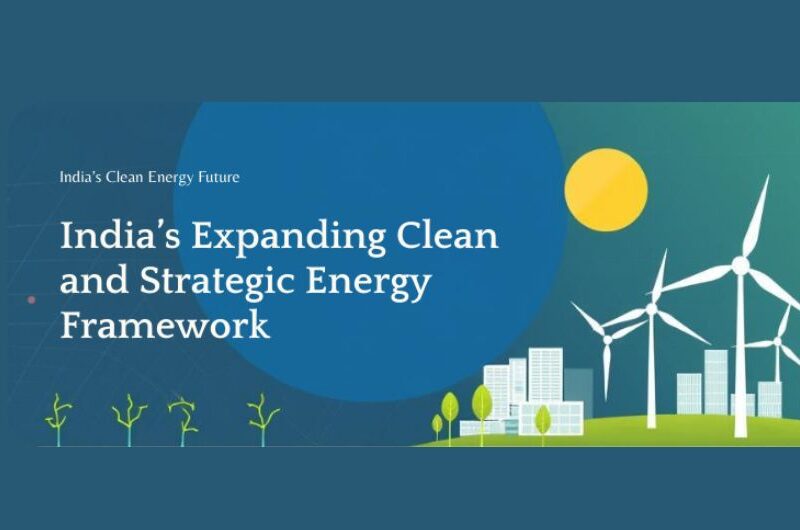
India’s Expanding Clean and Strategic Energy Framework

India’s Expanding Clean and Strategic Energy Framework   1. India’s energy system is being reshaped to provide reliable, affordable, cleaner, and more secure power for households, farms, industries, transport systems, and public services. 2. Average electricity availability in rural areas increased from 12.5 hours in 2014 to 22.6 hours, while urban power supply improved from 22.1 hours to 23.4 hours. 3. India is among the world’s top three energy consumers, and total electricity generation rose from 1,739.09 Billion Units in 2023-24 to 1,829.69 Billion Units in 2024-25. 4. For 2025-26, India set an electricity generation target of 2,000.4 Billion Units, reflecting rising power demand linked with economic growth and expanding energy access. 5. India ranks fourth globally in total installed renewable energy capacity, while installed solar capacity rose sharply from 3 GW in 2014 to 140 GW in January 2026. 6. Non-fossil fuel capacity has moved beyond 50 percent of total installed electricity capacity, showing the growing role of clean energy in India’s power mix. 7. India’s cumulative installed wind capacity reached about 54.65 GW by January 2026, making wind power a major contributor to grid diversification alongside solar energy. 8. PM Surya Ghar enabled 23.9 lakh households to install rooftop solar systems, adding 7 GW of distributed clean energy capacity across the country. 9. PM-KUSUM promotes solarisation in agriculture and aims to install 14 lakh standalone pumps by 31 March 2026, reducing diesel dependence and improving rural energy supply. 10. India approved 55 solar parks across 13 states with nearly 40 GW sanctioned capacity, while the solar PLI scheme with ₹24,000 crore supports domestic manufacturing. 11. Under the National Green Hydrogen Mission, India targets production of 5 million metric tonnes of green hydrogen annually by 2030 with major investment and emission-reduction goals. 12. The green hydrogen mission has an approved outlay of ₹19,744 crore till FY 2029-30, including ₹17,490 crore under the SIGHT programme for electrolysers and hydrogen production. 13. India’s present nuclear power capacity stands at 8.78 GW and is projected to rise to 22.38 GW by 2031-32, with a long-term target of 100 GW by 2047. 14. The SHANTI Act, 2025 modernised the nuclear legal framework by enabling limited private participation, recognising AERB statutorily, introducing graded liability, and strengthening safety safeguards. 15. Power distribution reforms expanded electricity access through village electrification, household connections, smart metering, RDSS investment, and digital systems like the India Energy Stack for efficient governance.   Must Know Terms : 1. SHANTI SHANTI stands for Sustainable Harnessing and Advancement of Nuclear Energy for Transforming India Act, 2025. It modernised India’s nuclear legal framework. The Act enables limited private sector participation under regulatory oversight, grants statutory recognition to AERB, introduces a graded liability framework, strengthens safety, security, and safeguards, and retains sovereign control over sensitive nuclear fuel-cycle activities. It supports expansion from 8.78 GW toward future targets. 2.SIGHT SIGHT means Strategic Interventions for Green Hydrogen Transition. It is the main incentive component of the National Green Hydrogen Mission. Out of the mission outlay of ₹19,744 crore till FY 2029-30, ₹17,490 crore is allocated under SIGHT. It supports domestic electrolyser manufacturing and green hydrogen production. This framework helps India pursue its target of producing 5 million metric tonnes annually by 2030. 3.UDIT UDIT stands for Urja Dakshata Information Tool. It is a digital platform used to improve transparency, monitoring, and compliance in India’s energy-efficiency system. It supports data-based tracking of performance across sectors and complements market reforms such as the Carbon Credit Trading Scheme. UDIT helps strengthen governance where efficient energy use matters for savings, lower demand pressure, compliance reporting, and better implementation outcomes nationally. 4.RDSS RDSS means Revamped Distribution Sector Scheme. It was launched in 2021 with an outlay of ₹3.03 lakh crore to improve the financial and operational condition of power distribution companies. Projects worth about ₹2.8 lakh crore have been approved under it. RDSS supports infrastructure modernisation and smart metering. It is linked with broader reforms, including installation of 5.62 crore smart electricity meters across India. 5.AERB AERB stands for Atomic Energy Regulatory Board. It is India’s nuclear regulatory authority responsible for radiation and nuclear safety oversight. The SHANTI Act, 2025 gave it statutory recognition, strengthening its institutional status. AERB is important as India’s present nuclear capacity of 8.78 GW is projected to rise to 22.38 GW by 2031-32, while the long-term nuclear mission targets 100 GW by 2047. 6.IES IES means India Energy Stack. It is a Digital Public Infrastructure designed for trusted digital interaction among consumers, utilities, regulators, and distributed energy assets. It is based on open standards and consent-based data sharing. IES aims to standardise data exchange, simplify onboarding across utilities, enable consumer choice, and support monetisation of rooftop solar, batteries, EV chargers, and flexible loads at scale nationwide.   MCQ: 1. India’s average electricity availability in rural areas increased from 12.5 hours in 2014 to: A) 20.4 hours B) 21.6 hours C) 22.6 hours D) 23.4 hours 2. Urban power supply improved from 22.1 hours in 2014 to: A) 22.6 hours B) 23.4 hours C) 23.8 hours D) 24.0 hours 3. Total electricity generation in India rose from 1,739.09 Billion Units in 2023-24 to: A) 1,800.69 Billion Units B) 1,829.69 Billion Units C) 1,900.40 Billion Units D) 2,000.40 Billion Units 4. India’s electricity generation target for 2025-26 was set at: A) 1,950.4 Billion Units B) 1,980.4 Billion Units C) 2,000.4 Billion Units D) 2,050.4 Billion Units 5. India ranks ______ globally in total installed renewable energy capacity. A) second B) third C) fourth D) fifth 6. Installed solar capacity in India increased from 3 GW in 2014 to: A) 120 GW B) 130 GW C) 135 GW D) 140 GW 7. India’s cumulative installed wind capacity by January 2026 was about: A) 44.65 GW B) 49.65 GW C) 54.65 GW D) 59.65 GW 8. PM Surya Ghar enabled how many households to install rooftop solar systems? A) 21.9 lakh B) 22.9 lakh C) 23.9 lakh D) 24.9 lakh 9. PM Surya Ghar added distributed clean energy capacity of:

More Details

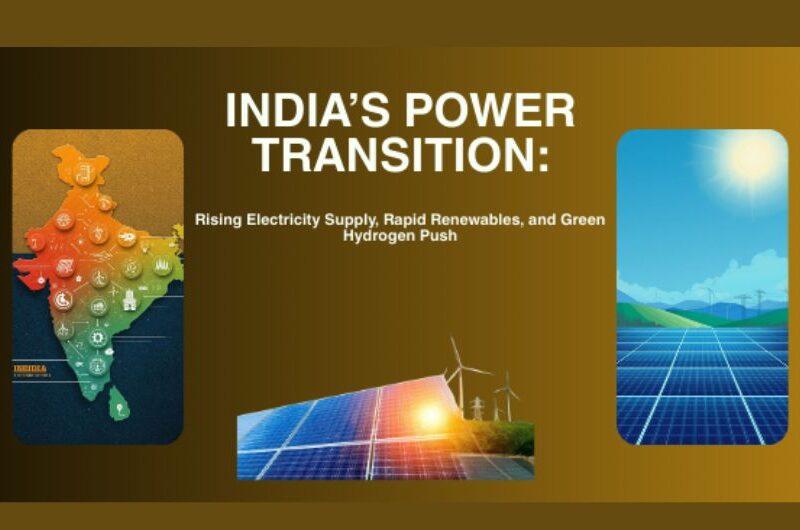
India’s Power Transition: Rising Electricity Supply, Rapid Renewables, and Green Hydrogen Push

India’s Power Transition: Rising Electricity Supply, Rapid Renewables, and Green Hydrogen Push     1) Average rural electricity supply improved from 12.5 hours in 2014 to 22.6 hours now, while urban supply improved from 22.1 hours in 2014 to 23.4 hours now.   2) India is among the world’s top three energy consumers, and electricity demand keeps rising with more households, growing industry, and expanding services.   3) Total electricity generation rose from 1,739.09 Billion Units (BU) in 2023–24 to 1,829.69 BU in 2024–25, showing 5.21% growth in one year.   4) For 2025–26, the electricity generation target is 2,000.4 BU, showing continued scaling of supply capacity.   5) As per International Renewable Energy Agency (IRENA) Renewable Energy Statistics 2025, India ranks 4th globally in total installed renewable energy capacity.   6) Installed solar capacity increased from 3 Gigawatt (GW) in 2014 to 140 GW in January 2026, showing rapid expansion of solar power capacity.   7) Non-fossil fuel capacity has crossed 50% of India’s total installed electricity capacity, mainly due to solar growth and other clean sources.   8) India’s total installed wind capacity reached about 54.65 GW by January 2026, making wind a major pillar alongside solar in the renewable mix.   9) PM Surya Ghar enabled 23.9 lakh households to install rooftop solar, adding 7 GW of decentralised clean capacity and increasing consumer-level power generation.   10) Pradhan Mantri Kisan Urja Suraksha evam Utthaan Mahabhiyan (PM-KUSUM) aims to install 14 lakh standalone solar pumps by 31.03.2026, supporting solar use in farming and reducing diesel use for irrigation.   11) 55 solar parks across 13 states have been approved with a sanctioned capacity of nearly 40 GW, helping faster large-scale renewable deployment.   12) Solar manufacturing is being strengthened through Production Linked Incentive (PLI) Scheme with ₹24,000 crore outlay, aimed at reducing import dependence in solar supply chains.   13) National Green Hydrogen Mission targets 5 million metric tonnes (MMT) green hydrogen per year by 2030, with a standard allowing up to 2 kg CO₂e per 1 kg hydrogen output.   14) The Mission expects over ₹8 lakh crore investment, fossil fuel import reduction of over ₹1 lakh crore, and avoidance of nearly 50 MMT greenhouse gas emissions annually by 2030.   15) Government approved ₹19,744 crore outlay till FY 2029–30, including ₹17,490 crore under Strategic Interventions for Green Hydrogen Transition (SIGHT), and progress includes a first port-based pilot, mobility pilots on 10 routes, and Green Hydrogen Certification Scheme 2025.     Must Know Terms : 1) Renewable Energy Capacity: This means total installed power capacity from renewables like solar, wind, small hydro and bioenergy. India is ranked 4th globally in total installed renewable capacity as per IRENA Renewable Energy Statistics 2025. Rising renewable capacity directly increases clean electricity supply and reduces dependence on coal and imported fuels over time. 2) Non-Fossil Fuel Share: This is the share of total installed electricity capacity coming from non-fossil sources such as solar, wind, hydro and nuclear. India’s non-fossil capacity has crossed 50% of total installed capacity. It signals a cleaner capacity mix, though actual electricity generation share can differ because solar and wind depend on weather and time. 3) Solar Capacity Expansion: Installed solar capacity rose from 3 GW in 2014 to 140 GW by January 2026. This includes large solar parks and rooftop systems. PM Surya Ghar helped 23.9 lakh households add rooftop solar, contributing about 7 GW. Fast solar growth is a key reason non-fossil capacity crossed the 50% mark. 4) Wind Power Capacity: India’s installed wind capacity reached about 54.65 GW by January 2026. Wind is a major renewable pillar along with solar, especially in coastal and high-wind states. Wind helps balance solar because wind generation can be stronger in different seasons and at different times than solar, improving renewable reliability. 5) Green Hydrogen Mission: It targets 5 million metric tonnes of green hydrogen per year by 2030. The standard mentioned allows up to 2 kg CO₂e emissions per 1 kg hydrogen produced. Expected outcomes include over ₹8 lakh crore investment, over ₹1 lakh crore reduction in fossil fuel imports, and avoidance of nearly 50 MMT greenhouse gas emissions annually by 2030. 6) Production Linked Incentive Scheme: PLI is a manufacturing support scheme where incentives are linked to actual production. For solar manufacturing, the outlay mentioned is ₹24,000 crore to strengthen domestic supply chains and reduce import dependence. Stronger domestic manufacturing supports faster solar installation, better availability of modules, and more stable pricing for projects.     MCQ : 1. Average rural electricity supply improved from 12.5 hours in 2014 to: A) 18.6 hours B) 20.6 hours C) 22.6 hours D) 23.6 hours 2. Average urban electricity supply improved from 22.1 hours in 2014 to: A) 22.6 hours B) 23.4 hours C) 23.9 hours D) 24.0 hours 3. India is among the world’s top three: A) Oil exporters B) Coal producers C) Energy consumers D) LNG importers 4. Total electricity generation in 2023–24 was: A) 1,629.69 BU B) 1,739.09 BU C) 1,829.69 BU D) 2,000.4 BU 5. Total electricity generation in 2024–25 was: A) 1,739.09 BU B) 1,829.69 BU C) 1,929.69 BU D) 2,000.4 BU 6. The one-year generation growth from 2023–24 to 2024–25 was: A) 3.21% B) 4.21% C) 5.21% D) 6.21% 7. The electricity generation target for 2025–26 is: A) 1,900.4 BU B) 2,000.4 BU C) 2,040.0 BU D) 2,100.4 BU 8. India ranks globally in total installed renewable energy capacity at: A) 2nd B) 3rd C) 4th D) 5th 9. Installed solar capacity increased from 3 GW in 2014 to 140 GW by: A) January 2024 B) January 2025 C) January 2026 D) January 2027 10. Non-fossil fuel capacity has crossed: A) 40% of total installed capacity B) 45% of total installed capacity C) 50% of total installed capacity D) 60% of total installed capacity 11. India’s total installed wind capacity reached about 54.65 GW by: A) January 2024 B) January 2025 C) January 2026 D) January 2027 12. PM Surya Ghar enabled

More Details

Waste-to-Wealth in Agriculture: Circular Solutions and Key Numbers

Waste-to-Wealth in Agriculture: Circular Solutions and Key Numbers 1. India generates about 350 million tonnes of agricultural waste annually, including crop residues, husk, straw, and food-processing by-products, creating serious air, soil, and water contamination risks when mismanaged. 2. MNRE estimates agricultural residues could generate over 18,000 MW of power annually, alongside producing nutrient-rich organic fertilisers that improve soil health and significantly reduce dependence on chemical inputs. 3. Under Crop Residue Management initiatives, ₹3,926.16 crore was released from 2018-19 to 2025-26 to Punjab, Haryana, Uttar Pradesh, NCT Delhi, and ICAR for targeted residue-management support measures additional. 4. Over 42,000 Custom Hiring Centres were set up for crop-residue machines, and more than 3.24 lakh machines were supplied to CHCs and individual farmers during 2018-19 to 2025-26. 5. Under GOBARdhan, 979 biogas plants were operational by 14 January 2026, covering 51.4% of India’s districts and converting dung, crop residues, and food waste into energy and manure. 6. Globally, food waste reached 1.05 billion tonnes in 2022; about 60% came from households, indicating major consumer-stage losses with significant climate, fiscal, and resource costs worldwide every year. 7. Organic waste decomposing in landfills releases methane and other greenhouse gases, generates odours, and can pollute air and groundwater; segregation, composting, and biomethanation at scale reduce landfill pressure. 8. Circularity is framed around six Rs Reduce, Reuse, Recycle, Refurbish, Recover, Repair, aiming to minimise raw-material, water, and energy extraction while keeping materials in productive use longer, profitably. 9. India’s circular economy is projected to reach about $2 trillion market value by 2050 and create roughly 10 million jobs, linking waste-to-wealth strategies with growth and employment nationally. 10. Crop residues left after harvest are often utilised as cattle feed, compost, biogas, mulch, or fuel, yet significant shares are still burned in situ for rapid field preparation. 11. Residue burning depletes soil nutrients, degrades soil health, and emits greenhouse gases; in-situ incorporation and ex-situ collection are promoted to cut pollution, curb smoke, and raise productivity notably. 12. Livestock waste includes dung and bedding; during disease outbreaks, timely carcass disposal is essential to prevent infectious and zoonotic spread, requiring infrastructure, financing, trained manpower, and capacity locally. 13. Food waste at markets, retail, and households is being converted into value-added products such as engineered biochar, which can sequester carbon, improve soil, and remove contaminants at scale. 14. Unified GOBARdhan Portal launched in 2023 to enhance transparency; by 14 January 2026, 979 operational plants across 51.4% districts signalled scaled adoption, tracking, and growing private interest nationwide. 15. Agriculture Infrastructure Fund, launched 2020-21, provides medium-to-long-term credit; by 2025 it supported 545 organic-input projects with ₹850 crore loans, alongside ₹66,310 crore sanctioned overall nationally for post-harvest assets.   Must Know Terms : 1. GOBARdhan : Launched to convert cattle dung, crop residues, and food waste into compressed biogas (CBG) and organic manure through multi-ministry coordination. Unified GOBARdhan Portal launched in 2023 for transparency and tracking. As of 14 January 2026, 979 biogas plants were operational across 51.4% of India’s districts. Policy support mentioned includes carbon credit trading linkage for CBG, tax relief on CBG-blended fuels, and simplified manure norms under Fertiliser Control Order. 2.CRM: Crop Residue Management initiative targets reduction of open burning by promoting in-situ methods (incorporation/mulch) and ex-situ collection for compost, biogas, and bioenergy. From 2018-19 to 2025-26, ₹3,926.16 crore was released to Punjab, Haryana, Uttar Pradesh, NCT Delhi, and ICAR. During the same period, more than 42,000 Custom Hiring Centres were set up and over 3.24 lakh machines were supplied to CHCs and individual farmers. 3.CHCs: Custom Hiring Centres are machine hubs created to provide farmers access to crop-residue management equipment without full ownership cost. Under CRM support (2018-19 to 2025-26), more than 42,000 CHCs were established. Over 3.24 lakh machines were deployed through CHCs and to individual farmers, enabling residue incorporation, mulching, collection, and related operations. The programme funding release of ₹3,926.16 crore is linked to these deployments in the listed states and ICAR. 4.Biochar: Biochar is a carbon-rich material produced by heating biomass such as crop residues or wood waste under low-oxygen conditions. Engineered biochar is further treated to improve specific performance, including soil fertility, water retention, and nutrient-use efficiency. The document notes emerging conversion of food waste into value-added products like engineered biochar, with stated potential to sequester carbon, enhance soil health, and remove environmental contaminants, making it a waste-to-value pathway within agriculture and food systems. 5.AHIDF: Animal Husbandry Infrastructure Development Fund was launched in 2020 under Atmanirbhar Bharat Abhiyan with a corpus of ₹15,000 crore. It aims to catalyse private and cooperative investment across the livestock value chain, including meat and dairy processing, animal feed manufacturing, and waste-to-wealth management. The document also mentions formation of three exclusive Multi-State Cooperative Societies to supply feed and inputs, promote manure/biogas via cooperative models, and enable scientific handling of hides, bones, horns from fallen animals. 6.Indicator241: SDG Indicator 2.4.1 is highlighted as the measure focusing on resilient farming systems that improve soil health and reduce dependence on chemical inputs. The document links circular practices to this indicator by citing composting, biochar use, and biomass recycling as actions that enhance soil fertility, improve productivity, and support environmentally sustainable agriculture. It also connects circular agriculture with reducing global food waste, recorded at 1.05 billion tonnes in 2022, with 60% from households. MCQ 1. India generates approximately how much agricultural waste annually? A) 35 million tonnes B) 150 million tonnes C) 350 million tonnes D) 1.05 billion tonnes 2. Agricultural residues in India are estimated to have power generation potential of about: A) 1,800 MW annually B) 8,000 MW annually C) 18,000 MW annually D) 63,000 MW annually 3. Under Crop Residue Management support (2018-19 to 2025-26), the total release mentioned is: A) ₹392.16 crore B) ₹3,926.16 crore C) ₹15,000 crore D) ₹66,310 crore 4. The Crop Residue Management release (2018-19 to 2025-26) was directed to which set of states/regions plus ICAR? A) Punjab, Haryana, Uttar Pradesh, NCT Delhi, and ICAR B) Punjab, Rajasthan, Madhya Pradesh, NCT Delhi, and ICAR C) Haryana, Bihar,

More Details

From Record Heat to COP30: Global and India Climate Snapshot 2025

From Record Heat to COP30: Global and India Climate Snapshot 2025 1. From 2015 to 2025, every year ranked among the eleven warmest in a 176-year record; 2023, 2024, and 2025 were the three warmest years observed globally on record. 2. January to August 2025 mean near-surface temperature reached 1.42°C above the pre-industrial average, sustaining exceptional warmth and reinforcing the decade’s persistent global temperature anomaly across multiple observations worldwide. 3. Heat-trapping greenhouse-gas concentrations and ocean heat content, both record-high in 2024, continued rising through 2025, signalling persistent planetary energy imbalance and ongoing accumulation of heat in oceans globally. 4. Arctic sea-ice extent after the 2025 winter freeze was the lowest on record, while Antarctic sea-ice extent tracked well below average for much of the year overall worldwide. 5. Long-term sea-level rise continued in 2025, despite a small temporary dip attributed to naturally occurring factors, indicating underlying thermal expansion and ice-loss drivers remained dominant across oceans globally. 6. Ocean heat content in 2025 exceeded the record 2024 values, confirming continued warming of upper and deeper layers that influences marine ecosystems, sea level, and extreme weather intensity. 7. In 2025, climate extremes—devastating rainfall, flooding, brutal heat, and wildfires—produced severely cascading impacts on lives, livelihoods, and food systems across regions, economies, and public services worldwide. 8. Texas suffered its most significant inland flood disaster in nearly 50 years, underscoring intensified rainfall extremes and the exposure of inland communities, transport corridors, and utilities to flooding. 9. European and East Mediterranean heatwaves set record temperatures in Spain, Portugal, and Turkey, with records documented in parts of France and Germany, stressing health systems and energy demand. 10. South Africa’s Eastern Cape Province faced severe storm-driven flooding in 2025, causing widespread disruption and demonstrating how intense rainfall events can overwhelm drainage, roads, housing, and response capacity. 11. South Korea experienced the largest known wildfires in its history in the country’s east, showing how hot, dry conditions can accelerate fire spread, smoke impacts, evacuations, and losses. 12. COP30 met in Belém, Brazil, from 10 to 22 November 2025, during the NDC update cycle; the host framed it as an “Implementation COP” for measurable action delivery. 13. COP30 structured talks around six priority axes—energy/transport/industry, forestry, cities, agriculture, people, and finance/technology—selecting about 30 priorities and organising an unprecedented series of debates across themes officially. 14. Fossil-fuel wording became the central COP30 impasse; draft text omitted phase-out language, the meeting extended past 21 November, and efforts to advance earlier commitments to move away stalled. 15. India stated: emission intensity declined over 36% since 2005; non-fossil sources exceed half of installed power capacity at about 256 GW; the relevant 2030 target was achieved early.     Must Know Terms : 1.Cryosphere Components include glaciers, ice sheets (Greenland/Antarctica), sea ice, seasonal snow, and frozen ground/permafrost. Global glaciers lost 267 ± 16 gigatonnes of ice per year on average during 2000–2019 (≈21 ± 3% of observed sea-level rise). Newer global synthesis reports glacier loss rates rising from −231 ± 23 Gt/yr (2000–2011) to −314 ± 23 Gt/yr (2012–2023); 2023 recorded 548 ± 120 Gt loss (≈1.51 ± 0.33 mm/yr sea-level equivalent). IPCC AR6 assesses glacier mass loss (excluding ice-sheet peripheral glaciers) at 240 ± 40 Gt/yr for 2006–2019. Ice sheets (Greenland + Antarctica) contributed 21.0 ± 1.9 mm to global mean sea level between 1992 and 2020; loss rates accelerated from ~105 Gt/yr (1992–1996) to ~372 Gt/yr (2016–2020). Total complete loss of current land-ice reservoirs would raise global mean sea level by about 65.6 ± 1.8 m. 2.Thermosteric Thermosteric sea level change is the sea-level rise from thermal expansion of seawater due to warming (temperature-driven density decrease). IPCC AR6 gives global mean thermosteric sea-level (ThSL) rise rate of 0.89 mm/yr (range 0.69–1.10) for 1993–2018 (full-ocean-depth estimate). Over the same broad modern period, total global mean sea level rise accelerated to 3.7 mm/yr for 2006–2018, meaning thermosteric is a major but not sole contributor alongside land-ice melt and land-water storage changes. 3.Stocktake The “global stocktake” is legally defined in Article 14: it assesses collective progress toward the Agreement’s purpose and long-term goals, covering mitigation, adaptation, and means of implementation/support, “in the light of equity and the best available science.” Timing rule: first stocktake in 2023 and every five years thereafter (unless changed by Parties). COP28 decision text (first stocktake outcome) includes a call for global actions consistent with: tripling renewable energy capacity and doubling energy-efficiency improvement rates by 2030, and “transitioning away from fossil fuels in energy systems” in a just, orderly and equitable manner. 4.Disinformation Disinformation is false or misleading information shared with the intention to deceive; misinformation is false information shared without intent to deceive. A hard regulatory threshold used in platform governance: under the EU Digital Services Act, “Very Large Online Platforms” are designated at ≥45 million monthly users in the EU, triggering stricter systemic-risk obligations (used in multiple Commission designations). 5.Biofuels Main transport biofuels: ethanol (petrol blending) and biodiesel/HVO (diesel blending), with newer categories like SAF for aviation. IEA projects the share of biofuels in total liquid fuel transport demand rises from 5.6% (2023) to 6.4% (2030), reaching ~215 billion litres/year by 2030 (main case). India policy timeline: the ethanol blending target of 20% in petrol was advanced to Ethanol Supply Year (ESY) 2025–26 (policy update path reflected in official policy summaries). India blending trajectory reported in parliamentary/ministerial updates carried by major outlets: 12.06% (ESY 2022–23), 14.60% (ESY 2023–24), and 17.98% in ESY 2024–25 up to 28 Feb 2025; ethanol supplied to OMCs up to Feb 2025 reported as 278.88 crore litres. 6.CBDR-RC CBDR-RC is treaty text in UNFCCC Article 3(1): Parties should protect the climate system “on the basis of equity” and in accordance with “common but differentiated responsibilities and respective capabilities,” with developed countries taking the lead. Paris Agreement Article 2(2) re-states CBDR-RC with an added qualifier: implementation reflects equity and CBDR-RC “in the light of different national circumstances.” CBDR-RC is operationally used in negotiations for: (i) who leads in mitigation, (ii) scale and terms of finance (grants

More Details

From Winter Smog to Year-Round Clean-Air Governance: January 2026 Delhi–NCR High-Level Review and Sectoral Action Plan

From Winter Smog to Year-Round Clean-Air Governance: January 2026 Delhi–NCR High-Level Review and Sectoral Action Plan 1. Delhi–NCR’s winter pollution remains extreme; on 28 December 2025, Delhi recorded “hazardous” air with AQI 530, highlighting repeated seasonal spikes and worsening multi-year deterioration trends. 2. Short-term controls have included GRAP (Graded Response Action Plan) and routine mist-spray systems on central road verges to suppress dust, yet overall ambient air quality has not improved to acceptable levels. 3. A high-level NCR air-pollution review was held on 12 January 2026, chaired by the Union Environment Minister, with Delhi’s Chief Minister and senior Union/Delhi officials. 4. A fresh scientific source-apportionment effort was announced to precisely identify pollution contributors, enabling targeted structural action instead of repeated emergency restrictions and scattered, short-duration interventions. 5. A reduction target was articulated: cut air pollution across the National Capital Region by 15–20% by end-2026, implying measurable outcomes across sectors and agencies. 6. The source-identification study began in January 2026, led by institutions including TERI (The Energy and Resources Institute), IIT Delhi, IITM (Indian Institute of Tropical Meteorology, Pune), and ARAI (Automotive Research Association of India) to generate updated datasets. 7. Vehicular emissions received priority; smart traffic management is planned at 62 identified congestion hotspots to reduce idling, stop–go movement, and concentrated emission build-up corridors. 8. Proposed transport enforcement includes strict action against polluting vehicles, a special registration drive, and expanded ANPR (Automatic Number Plate Recognition) systems for detection, compliance tracking, and penalties. 9. Demand-management options were also discussed, including staggered office timings, alongside strengthening public transport and last-mile connectivity to reduce reliance on private vehicles. 10. Industrial controls noted progress: 227 of 240 NCR industrial estates have shifted to PNG (Piped Natural Gas), yet unplanned industrial activity outside designated zones remains problematic. 11. Directions were issued for strict action against illegally operating and non-conforming industrial units, aiming to curb emissions from units bypassing fuel norms, siting rules, and compliance checks. 12. The Central Pollution Control Board issued notices to 88 units lacking OCEMS (Online Continuous Emission Monitoring Systems); closure actions were set to commence from 23 January 2026 for non-installation. 13. Road dust was treated as a core contributor: end-to-end paving and mission-mode plantation of local shrub varieties were emphasized, involving youth groups and civic bodies. 14. Over 3,300 km of Delhi roads are planned for redevelopment within the coming year, with dust-control measures and traffic management integrated into execution and monitoring frameworks. 15. Construction and demolition waste controls were stressed: designate C&D waste sites, halt demolition during peak pollution periods, and partner with recycling associations to reduce open dumping. Must Know Terms :   1.#SourceApportionmentStudy Delhi PM2.5 source split (IIT-Kanpur study cited in public summaries): road dust 38%, vehicular 20%, domestic 12%, industrial 11%, concrete batching 6%, hotels/restaurants 3%, MSW burning 3%, diesel gensets 2%, industrial-area sources 2%, and cremation/aircraft/medical incinerators 1% each. Same study’s Delhi PM10 split (widely cited): road dust 56%, vehicular 9% (other shares distributed across construction, industry, biomass/garbage burning, etc.). These percentages are used as “receptor-model” style outputs: they convert measured chemical fingerprints in PM into source contributions. 2.#CongestionHotspotMapping City traffic choke-point identification (Delhi official statement reported by PTI): 233 traffic choke points identified; 123 of these fall under PWD. Hotspot mapping (pollution-source mapping at priority locations): 13 hotspots mapped with 57 distinct pollution sources identified; Mundka and Anand Vihar recorded 7 sources each in that mapping. A later Delhi government update reported identification of 62 hotspots for PM10-focused actions (dusty roads, construction activity, and traffic congestion flagged as dominant drivers). 3.#ANPREnforcement ANPR-led enforcement was linked with a sharp jump in PUC e-challans: ~163,000 PUC challans issued in 2025 (till late July), versus 68,000 in all of 2024; 43,500 in 2022; and 36,000 in 2021. GRAP enforcement snapshot (late Dec 2025): 1,114 challans generated via ANPR cameras during a focused enforcement drive; 2,500+ vehicles penalised for PUC-related violations over two days; 28 PUC centres suspended in the same action window. 4.#OCEMSCompliance OCEMS = real-time stack emission monitoring connected to the central server for continuous tracking of key pollutants. Compliance gap figure reported by CPCB leadership (Delhi–NCR): 2,254 “highly polluting” industries had not installed and connected OCEMS to the CPCB server at the time of the statement. Deadline-based direction reported for Delhi–NCR red-category units: installation of OCEMS and surveillance/PTZ cameras to be ensured by end-2025 in specified sectors (food/food processing, textiles, metal processing). 5.#MechanisedRoadSweeping Identified road-length target (Delhi compiled multi-agency data, Feb 2024): 7,964.69 km of roads identified for mechanised sweeping per day. Actual mechanised sweeping achieved (same dataset): 3,055.7 km/day on average → 38.37% of identified daily road-length. Planning norm cited in enforcement meetings: approximately 1 sweeping machine per 40 km to close the coverage gap. 6.#CNDWasteRecycling Processing capacity and plant count (Delhi civic system, reported figures): 5 C&D waste processing plants (Burari, Rani Khera, Shastri Park, Bakkarwala, Okhla) with combined capacity reported at ~5,500 tonnes/day. Plant-wise capacities reported in Delhi news records: Burari 2,000 TPD; Bakkarwala 1,000 TPD; Shastri Park 1,000 TPD; Rani Khera reported around 1,000–1,500 TPD in different updates. Daily generation benchmark often used for Delhi: ~5,500–6,000 tonnes/day of C&D waste, implying near-full utilisation is required to avoid open dumping and secondary dust.   MCQ: 1. Delhi experienced “hazardous” air quality with an AQI of 530 on: A) January 12, 2026 B) December 28, 2025 C) January 23, 2026 D) February 6, 2023 2. The high-level review meeting on Delhi–NCR air pollution was chaired by: A) Shri Kirti Vardhan Singh B) Shri Bhupender Yadav C) Shri Manjinder Singh Sirsa D) Smt. Rekha Gupta 3. The meeting took place on: A) Monday, January 12, 2026 B) Monday, January 23, 2026 C) Monday, December 28, 2025 D) Monday, October 12, 2024 4. The stated target to curb air pollution in the NCR by end-2026 is: A) 5–10% B) 10–12% C) 15–20% D) 25–30% 5. The new scientific study to pinpoint sources of pollution was initiated from: A) October 2024 B) January 2026 C) December 2025 D) March 2026 6. Which of the following

More Details

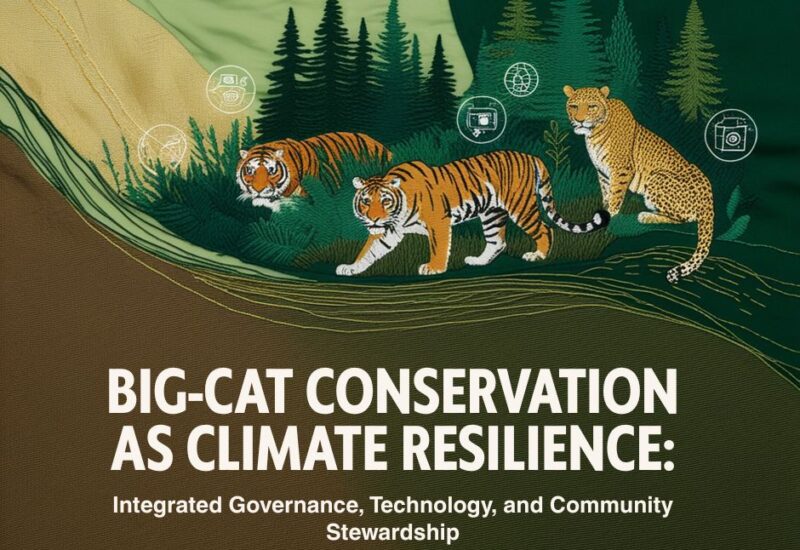
Big-Cat Conservation as Climate Resilience: Integrated Governance, Technology, and Community Stewardship

Big-Cat Conservation as Climate Resilience: Integrated Governance, Technology, and Community Stewardship     1. Climate action is described as increasingly linking conservation, technology, and diplomacy into a holistic governance approach, reducing fragmented planning and improving coherence across sectors and landscapes. 2. Biodiversity protection is treated as a climate instrument, aligning habitat security with mitigation, adaptation, and long-term resilience, supported by statutory protections for continuity beyond political cycles. 3. Conservation frames ecosystems as living assets, emphasising stewardship and interdependence; climate and biodiversity positions prioritise ecological integrity beyond narrow human welfare measures alone. 4. Biodiversity goals reinforce climate commitments by protecting carbon sinks, stabilising hydrology, and reducing vulnerability to extremes, positioning conservation as risk management against floods, droughts, and heat. 5. Climate strategies aim for integrated outcomes—emissions reduction, biodiversity health, water security, and livelihoods—supported by coordinated monitoring, enforcement, research, and policy screening across institutions. 6. A big-cat conservation alliance is described as an international platform to protect flagship species while strengthening wider habitat and biodiversity outcomes across multiple landscapes and governance contexts. 7. The framework focuses on seven major big cats, using their ecological roles to anchor protection of forests, grasslands, mountains, and river catchments through shared responsibility and cooperation. 8. Protecting apex predator landscapes safeguards entire food webs; predators regulate herbivore pressure, enabling regeneration and preserving vegetation that supports carbon storage and ecosystem stability. 9. Protected habitats deliver ecosystem services including microclimate stability, soil retention, moisture conservation, reduced erosion and landslide risks, and stronger catchment protection for water security. 10. Mountain predators serve as indicators of high-altitude ecosystem stability; declines can signal warming impacts, habitat shrinkage, and downstream hydrological disruption affecting seasonal river flows. 11. Conservation supports long-term social and economic value via regulated climates, reduced disaster impacts, and protection of genetic resources that can strengthen future food security under climate stress. 12. Protected landscape expansion includes inviolate core zones, buffers for managed use and coexistence, and corridors that maintain genetic exchange and reduce fragmentation under climate-driven shifts. 13. Conservation planning extends beyond park boundaries to farms, rivers, grasslands, and meadows; infrastructure in sensitive zones requires mitigation to reduce mortality and ecological disruption. 14. Wildlife-friendly infrastructure uses underpasses and overpasses to maintain connectivity while preserving traffic efficiency; large mitigation structures are described as demonstration sites for compatibility. 15. Modern conservation systems use camera traps, statistical models, AI image processing, satellite tracking, thermal surveillance, GIS mapping, and app-based smart patrols, anchored by community benefits and stewardship. Must Know Terms : 1.Conservation–Climate Integration Conservation–Climate Integration: The evidence base treats biodiversity protection as a climate tool and climate action as a biodiversity tool. IPCC AR6 WGII states safeguarding biodiversity and ecosystems is fundamental to climate-resilient development. The Kunming–Montreal Global Biodiversity Framework sets a quantified 2030 conservation benchmark: at least 30% of terrestrial, inland water, and coastal/marine areas to be effectively conserved through “well-connected” and equitably governed systems, integrated into wider landscapes. 2.Big-Cat Alliance Framework Big-Cat Alliance Framework: India’s International Big Cat Alliance (IBCA) is framed around conservation of seven big cats: Tiger, Lion, Leopard, Snow Leopard, Puma, Jaguar, and Cheetah. The platform logic is cross-border: shared best practices, capacity building, and coordinated actions against habitat loss, poaching, and illegal wildlife trade across range states, with a single umbrella for multiple flagship big-cat programmes rather than species-wise silos. 3.Apex Predators and Trophic Balance Apex Predators and Trophic Balance: Large carnivores regulate prey and mesopredators, stabilising food webs via direct predation and “fear effects.” A landmark Science review documents cascading ecosystem changes after predator guild loss, including shifts in pollinators, seed dispersers, herbivory pressure, woody recruitment, bird abundance, and even soil carbon/nitrogen ratios (example case: Lago Guri islands after fragmentation). In Indian landscapes, tiger recovery metrics also reflect top-predator status—All India Tiger Estimation 2022 reports a minimum of 3,167 tigers. 4.Corridors and Connectivity Corridors and Connectivity: Connectivity is operationalised as mapped movement linkages between source populations to reduce isolation and enable dispersal. Government reporting states NTCA and WII mapped 32 major tiger corridors at macro/landscape scale, with management interventions operationalised through Tiger Conservation Plans mandated under Section 38V of the Wildlife (Protection) Act, 1972. Corridor thinking is now integrated into land-use screening, mitigation siting, and conflict-response planning around source areas. 5.Wildlife-Compatible Infrastructure Mitigation Wildlife-Compatible Infrastructure Mitigation: The highest-evidence package is crossing structures plus exclusion fencing. A synthesis reports ~86% reduction in reported wildlife-vehicle collisions when crossings are paired with adequate fencing. A frequently cited real-world example is Banff National Park: along a 23-km highway section, crossing structures plus fencing reduced wildlife collisions by ~80% overall and by ~96% for common large ungulates (deer/elk), demonstrating measurable safety and conservation returns. 6.Tech-Enabled Monitoring and Smart Patrols Tech-Enabled Monitoring and Smart Patrols: India’s core protected-area field platform is M-STrIPES (Monitoring System for Tigers – Intensive Protection and Ecological Status). Technical stack reported by WII: GPS + GPRS + remote sensing for field data capture, database creation, GIS/statistical analysis, and patrol-route mapping to tighten spatial coverage and response. The governance intent is measurable: digitised patrol effort, geo-tagged observations, and faster detection of threats (signs, camps, snares, wildlife crime indicators) for action by reserve management.   MCQ   1. The passage frames biodiversity protection primarily as: (a) Separate from climate policy (b) A climate instrument supporting mitigation and adaptation (c) Only a tourism strategy (d) Only a legal compliance issue 2. Conservation is positioned as risk management because it lowers exposure to: (a) Only earthquakes (b) Floods, droughts, heat stress, and ecological collapse (c) Only market volatility (d) Only urban congestion 3. The alliance framework described focuses on: (a) Three large herbivores (b) Seven major big cats (c) Ten marine mammals (d) Five migratory birds 4. Protecting apex predator landscapes is described as safeguarding: (a) Only single-species outcomes (b) Whole food webs and ecosystems (c) Only hunting revenues (d) Only urban parks 5. Predators contribute to trophic balance mainly by: (a) Increasing overgrazing (b) Regulating herbivore numbers and enabling regeneration (c) Eliminating vegetation (d) Replacing soil organisms 6. Protected habitats are described as supporting water security mainly through: (a) Removing

More Details

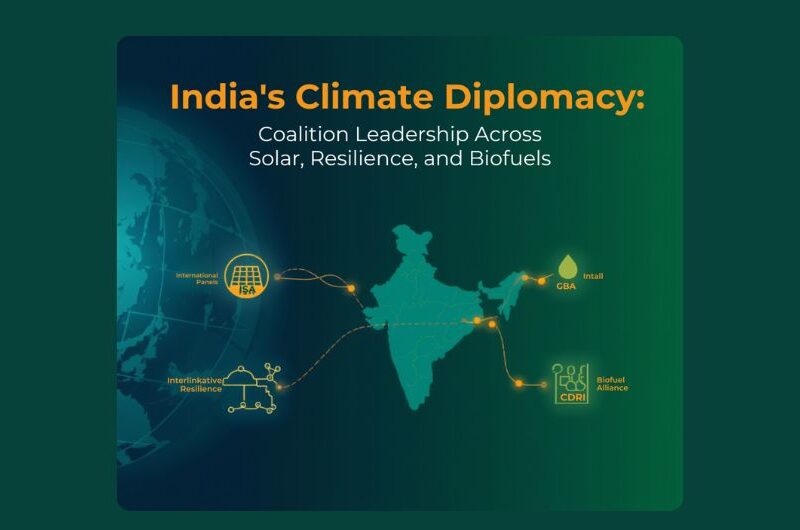
India’s Climate Diplomacy: Coalition Leadership Across Solar, Resilience, and Biofuels

India’s Climate Diplomacy: Coalition Leadership Across Solar, Resilience, and Biofuels   1. India’s climate diplomacy balances development for 1.4 billion people with climate goals, using low per-capita emissions and equity framing to argue for developmental space with ambition. 2. India commits to cut GDP emissions intensity 45% from 2005 by 2030 and targets net zero by 2070; early 50% installed non-fossil electricity capacity strengthens credibility internationally. 3. Diplomatic posture is described as shifting from defensive burden-sharing to proactive coalition building, offering deployable solutions, training, and affordability-oriented implementation lessons to partners. 4. Domestic action combines renewables expansion, efficiency programmes, and sustainable lifestyles, while regulators increasingly integrate climate risks to strengthen resilience and support green investments and transition finance. 5. International Solar Alliance (ISA) launched in 2015 with France; treaty-based headquarters in India boosts convening power and continuity within India’s diplomatic architecture. 6. ISA’s “Towards 1000” agenda targets mobilising $1 trillion and enabling 1,000 GW solar by 2030; it supports access via decentralised solar while avoiding long-term carbon lock-in. 7. ISA uses demand pooling, procurement aggregation, and standardisation to de-risk projects; training strengthens planning, installation, operations, and regulatory capacity across members. 8. ISA faces constraints: limited dominance in low-cost manufacturing, supply concentration, policy volatility, grid weakness, and permitting delays that can erode investor confidence despite pooled demand. 9. CDRI launched in 2019 to shift from response to prevention, focusing on cascading failures across power, transport, telecom, and water to maintain lifeline continuity during extremes. 10. CDRI develops toolkits, standards, and risk-assessment methodologies; resilient island initiatives support small islands facing cyclones, sea-level rise, and service disruptions in critical systems. 11. Resilience finance is framed around quantifying avoided losses, but fragmentation across ministries, weak hazard mapping, and difficulty converting plans into bankable projects slow execution. 12. Nature-based solutions—wetlands, mangroves, and urban green spaces—are treated as protective assets complementing engineered infrastructure and strengthening service reliability during shocks. 13. Global Biofuels Alliance (GBA) launched in 2023 to align policies and standards for sustainable biofuels; it links mitigation with energy security by reducing oil import dependence. 14. GBA targets hard-to-electrify sectors via SAF and advanced biodiesel; second/third-generation biofuels use residues and algae but require safeguards against land conversion and biodiversity loss. 15. Combined platforms (ISA, CDRI, GBA) widen India’s leadership across mitigation, adaptation, and hard-sector transition, but delivery depends on concessional finance, risk-sharing, storage, skills, standards, data, and just transition. Must Know Terms : 1.Equity and Climate Justice Frame Equity and Climate Justice Frame: Anchored in Paris Agreement Article 2.2, which states implementation will reflect “equity” and CBDR–RC “in the light of different national circumstances.” In practice, it frames burden-sharing using measurable axes: historical cumulative emissions, per-capita emissions, capability/HDI, and vulnerability. It drives claims on (i) grant-based finance vs loans, (ii) adaptation priority, (iii) loss-and-damage support, and (iv) technology transfer on fair terms. 2.International Solar Alliance (ISA) International Solar Alliance (ISA): Treaty-based intergovernmental organisation headquartered in Gurugram (India) at NISE. Its official portal currently displays 112 Member Countries and 14 Signatory Countries. ISA’s core function is to scale solar deployment via programmatic support, standardisation, and finance mobilisation across member states; membership is open to UN members. It is widely cited as one of India’s flagship climate institutions with a dedicated international legal framework. 3.One Sun One World One Grid One Sun One World One Grid: Proposed by India in October 2018 at the first ISA Assembly as a transnational clean-power grid concept to move renewable electricity across time zones. In May 2021, India and the UK agreed to merge OSOWOG with the UK’s Green Grids Initiative and jointly launch the combined initiative at COP26 (Glasgow, Nov 2021). The operational logic is measurable: higher renewable utilisation, lower curtailment, and smoother peak balancing through cross-border interconnections. 4.Coalition for Disaster Resilient Infrastructure (CDRI) Coalition for Disaster Resilient Infrastructure (CDRI): Launched in September 2019 (UN Climate Action Summit, New York) to strengthen resilience of infrastructure systems to climate and disaster risks. CDRI’s official “About” page states 53 member countries and 12 partner organizations; CDRI’s site dashboard currently shows 65 members (plus project and funding counters). It functions as a coalition platform—standards, knowledge, technical support, and pipeline development for resilient infrastructure investments. 5.Global Biofuels Alliance (GBA) Global Biofuels Alliance (GBA): Launched on 9 September 2023 on the sidelines of the G20 Summit in New Delhi as India’s Chair initiative. Official releases state 19 countries and 12 international organisations agreed to join at launch. The coalition’s stated purpose is to accelerate global biofuel uptake through (i) technology advancement, (ii) stronger standards/certification, (iii) capacity-building and technical support for national programmes, and (iv) acting as a knowledge repository/expert hub. 6.Risk-Sharing and Sovereign Guarantees Risk-Sharing and Sovereign Guarantees: A Risk Sharing Facility (RSF) is a bilateral loss-sharing structure where a guarantor (e.g., IFC) reimburses a lender/originator for an agreed portion of principal losses on a defined portfolio of eligible assets—used to expand lending into new/underserved segments without full risk retention. Sovereign (government) guarantees are legally binding state commitments to backstop specified obligations or losses if defined triggers occur; IMF treats guarantees as contingent liabilities that can create significant fiscal risk if called. MCQ 1. India’s 2030 emissions-intensity commitment in the passage is: (a) 33% from 2019 levels (b) 40% from 2010 levels (c) 45% from 2005 levels (d) 50% from 1990 levels 2. India’s stated net-zero target year is: (a) 2050 (b) 2060 (c) 2070 (d) 2100 3. The passage states India achieved 50% installed electricity capacity from non-fossil sources: (a) After 2030 (b) Exactly in 2030 (c) Earlier than the 2030 timeline (d) Not achieved 4. ISA is described as launched in: (a) 2010 (b) 2015 (c) 2019 (d) 2023 5. ISA is described as launched with: (a) Sweden (b) France (c) Japan (d) Brazil 6. ISA’s “Towards 1000” agenda targets: (a) $100B and 100 GW by 2030 (b) $1T and 1,000 GW by 2030 (c) $1T and 500 GW by 2040 (d) $500B and 1,000 GW by 2050 7. ISA aims to improve bankability primarily through: (a) Ending private investment (b) Demand pooling

More Details

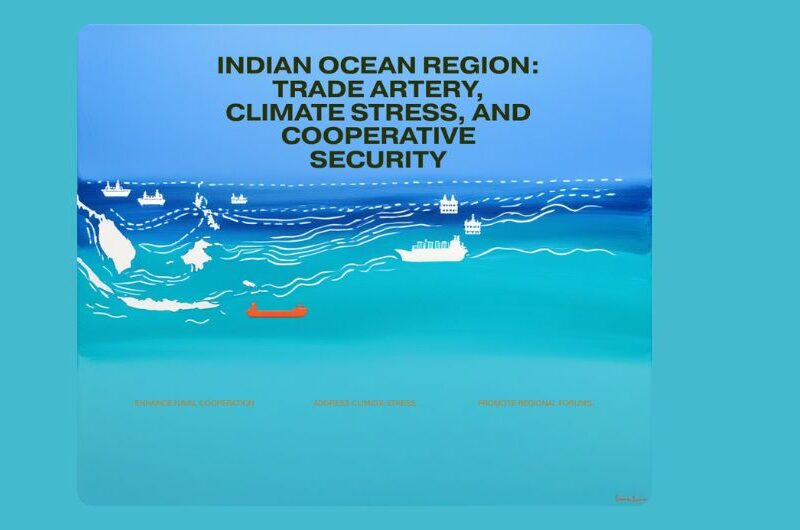
Indian Ocean Region: Trade Artery, Climate Stress, and Cooperative Security

Indian Ocean Region: Trade Artery, Climate Stress, and Cooperative Security   1. The Indian Ocean spans Bay of Bengal to Antarctica and South Africa to Western Australia; it covers about 21.45 million square nautical miles, roughly one-fifth of Earth’s water surface. 2. The Indian Ocean Region includes 36 countries and about 2.5 billion people, around 35% of global population, forming a vast canvas linking littorals, islands, and major trade routes. 3. Roughly 100,000 ships cross the region yearly, carrying about 30% of global container traffic; maritime security is central to trade continuity and global market stability. 4. The region transports about 42% of global crude oil and petroleum products; littorals hold over half proven oil-gas reserves and contribute roughly 40% of offshore output. 5. Major refining hubs include Jubail, Jamnagar, and Singapore, together supporting about 20% of world refining capacity; Singapore alone handles near one-seventh of transshipment annually. 6. Three of the world’s twenty largest merchant fleets belong to Indian Ocean littorals; chokepoints Hormuz, Bab el Mandeb, and Malacca can rapidly raise freight and fuel costs. 7. The Indian Ocean is warming faster than other oceans; sea surface temperatures rose over 1.5°C since the industrial era, intensifying sea-level rise and extreme weather risks. 8. Projections of 1.7–3.8°C warming elevate threats to monsoon timing, rainfall extremes, fisheries, coral systems, and livelihoods across coasts, deltas, and islands. 9. Warmer waters intensify cyclones, storm surge, flooding, and wind damage; rising seas accelerate erosion and salt intrusion into aquifers and deltas, harming freshwater and agriculture. 10. Heat and acidification weaken coral reefs, reducing biodiversity and fish nurseries; warming shifts fish distribution, increasing competition among fleets and pressures on nearshore coastal incomes. 11. Low-lying islands face inundation, erosion, and freshwater loss, complicating habitation, sovereignty, land tenure, and long-term development planning under rising sea levels. 12. Recurrent floods, cyclones, and heat shocks drive migration, disrupting labour markets and services; cross-border displacement can strain diplomacy and demand humanitarian cooperation frameworks. 13. Declining fisheries and seabed mineral prospects increase rivalry; IUU fishing provokes detentions, protests, and tougher policing; shifting coastlines complicate baselines and EEZ claims. 14. Climate hazards threaten ports, refineries, pipelines, and telecom networks; disasters disrupt shipping and logistics hubs, raising insurance premiums, delaying cargo, and stressing supply chains. 15. Regional responses emphasise SAGAR, IORA, BIMSTEC, INCOIS alerts, and coalitions like ISA, CDRI, GBA, IBCA, focusing on early warning, resilient ports, nature-based defenses, and governance. Must Know Terms : 1.Indian Ocean Trade Artery Indian Ocean Trade Artery: The Indian Ocean is described as a trade-route “lifeline” carrying (i) about half of the world’s container ships, (ii) about one-third of global bulk cargo traffic, and (iii) about two-thirds of the world’s oil shipments. These are commonly used strategic metrics to show why disruption in the Indian Ocean quickly impacts global energy and freight prices. 2.Maritime Chokepoints Maritime Chokepoints: Narrow passages where a disruption can block or delay huge trade flows. Key Indian Ocean-linked chokepoints include: Strait of Hormuz: In 2023, flows through Hormuz were “more than one-quarter” of total global seaborne traded oil; also around one-fifth of global LNG transited the strait. Strait of Malacca: In 2016, petroleum and other liquids transiting Malacca reached about 16 million barrels/day; at its narrowest point it is about 1.7 miles wide—making it a physical bottleneck. 3.Rapid Indian Ocean Warming Rapid Indian Ocean Warming: Government climate assessment summaries report the tropical Indian Ocean has warmed faster than the global ocean average. Basin-wide sea surface temperature (SST) warming over 1951–2015 is cited at about 0.15°C per decade in the tropical Indian Ocean versus about 0.11°C per decade for globally averaged SST over the same period, implying faster heat accumulation in this basin. 4.Saltwater Intrusion Saltwater Intrusion: A measurable coastal groundwater risk where saline water moves landward into freshwater aquifers. USGS explains the mechanism clearly: when too much freshwater is pumped from a coastal aquifer, the freshwater–saltwater interface migrates inland, and pumping wells near the interface can start producing saline-contaminated water. This directly affects drinking-water quality and irrigation suitability in coastal belts. 5.IUU Fishing IUU Fishing (Illegal, Unreported and Unregulated): FAO notes IUU fishing represents up to 26 million tonnes of fish caught annually. A widely used global estimate puts illegal/unreported catch in the range 11–26 million tonnes per year, with an estimated value of about US$10–23 billion, and notes that IUU can account for up to 20% of the world’s catch (higher in some fisheries). It is treated as both a conservation and transnational-crime problem. 6.CDRI (Coalition for Disaster Resilient Infrastructure) CDRI: A global coalition launched by India at the UN Climate Action Summit in New York in September 2019 to strengthen resilience of infrastructure systems against climate and disaster risks. CDRI’s official “About” page states current scale as 53 member countries and 12 partner organizations, spanning governments and international bodies, to support knowledge exchange, research, and investment for disaster-resilient infrastructure.   MCQ 1. The Indian Ocean is described as the world’s: (a) Largest oceanic basin (b) Second largest oceanic basin (c) Third largest oceanic basin (d) Fifth largest oceanic basin 2. The Indian Ocean is stated to cover about: (a) 11.45 million sq nautical miles (b) 21.45 million sq nautical miles (c) 31.45 million sq nautical miles (d) 41.45 million sq nautical miles 3. The Indian Ocean Region includes about: (a) 16 countries and 1.5 billion people (b) 26 countries and 2.0 billion people (c) 36 countries and 2.5 billion people (d) 46 countries and 3.5 billion people 4. About how many ships cross the region yearly? (a) 10,000 (b) 50,000 (c) 100,000 (d) 250,000 5. The region carries about what share of global container traffic? (a) 10% (b) 20% (c) 30% (d) 50% 6. The region transports about what share of global crude oil and petroleum products? (a) 22% (b) 32% (c) 42% (d) 62% 7. Indian Ocean littorals are stated to hold: (a) Less than 10% of proven oil-gas reserves (b) About one-third of proven reserves (c) More than half of proven reserves (d) Nearly all proven reserves 8.

More Details

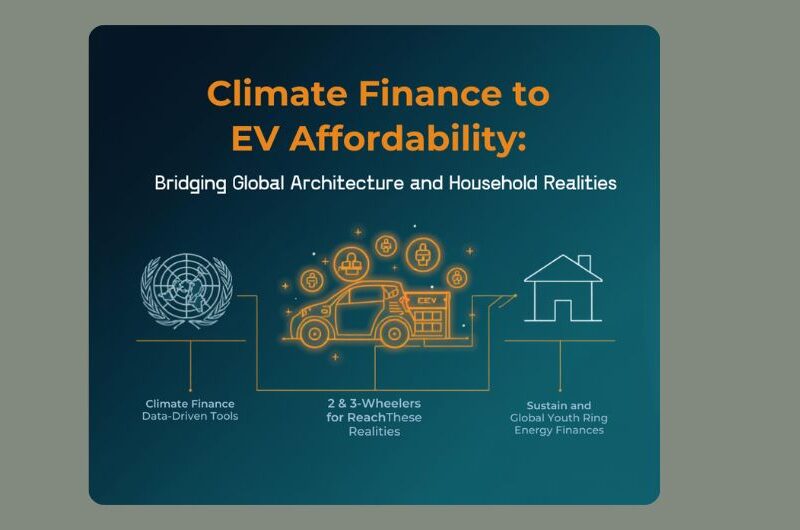
Climate Finance to EV Affordability: Bridging Global Architecture and Household Realities

Climate Finance to EV Affordability: Bridging Global Architecture and Household Realities   1. India’s climate transition funding links global mechanisms with domestic innovation, especially electric mobility, creating a finance tension that requires simultaneous action across diplomacy, markets, and institutions. 2. India’s climate financing need is estimated at $1.5–$2.5 trillion by 2030, far above current inflows; India rejected a $300 billion NCQG baseline by 2035 as inadequate. 3. International climate finance is described as loan- and equity-heavy with limited grants, increasing repayment burdens; debt servicing in many LMICs exceeds estimated NDC spending needs. 4. MDBs provide large climate volumes mainly via debt while not matching debt-relief participation; private mobilisation biases funds toward commercially viable projects, underserving LDCs and SIDS. 5. India frames climate finance as obligation tied to historical responsibility, seeking predictable concessional flows for adaptation and loss; weak global terms raise local capital costs. 6. India sold over 1.5 million EVs in FY2024, but affordability constraints remain, especially in two- and three-wheelers, because upfront prices dominate purchase decisions. 7. EVs are described as costing 1.5–2× comparable ICE models; EV loan rates often exceed 20% while ICE loans are near 10%, sharply worsening monthly affordability. 8. Lenders price EV risk higher due to unclear resale values, battery degradation variation, and thin secondary markets; mainstream banks lack experience in 2W/3W lending. 9. NBFCs dominate vehicle credit but often delay EV entry due to technology risk and valuation doubts; early losses from low-quality e-rickshaw batteries reinforced caution and pricing. 10. Risk-sharing tools like credit guarantees and first-loss facilities can reduce default risk and enable longer tenors and cheaper rates; an SBI-managed instrument withdrew on viability concerns. 11. Implementation moved to SIDBI, reflecting need for development-finance intermediaries; high rates and sparse channels risk excluding tier II/III households and deepening transport poverty. 12. A domestic climate finance taxonomy can standardise climate-aligned activities; country-determined criteria can include realistic transition pathways aligned to development priorities, not imported templates. 13. A government-backed EV finance institution could refinance NBFCs and micro-lenders, using blended capital from budgets and multilateral concessional funds to lower cost of capital. 14. Market design options include battery-as-a-service, battery identifiers and health records, cashflow-matched loans, charging-linked finance, insurance pools, clear swapping standards, and data-driven underwriting. 15. Co-benefits include lower oil imports and air pollution; scaling needs local capacity, procurement levers, resale ecosystems, carbon-market revenues, targeted interest subvention, and accountability reporting. Must Know Terms :   1.NCQG Baseline NCQG Baseline: The New Collective Quantified Goal (NCQG) is the post-2025 climate-finance goal set “in extension” of the earlier USD 100-billion goal under the Paris decision framework. The agreed headline level is at least USD 300 billion per year by 2035 for developing countries’ climate action, with developed countries taking the lead, and alongside a wider scaling pathway to enable at least USD 1.3 trillion per year by 2035 from all sources (public/private, bilateral/multilateral, including alternative sources). 2.Loan-Heavy Climate Finance Loan-Heavy Climate Finance: Public climate finance to developing countries has been dominated by loans, especially for middle-income recipients. Over 2016–2022, loans represented about 85% of public climate finance provided to LMICs, 87% to UMICs, and 92% to high-income developing countries; grants were much higher mainly in LICs (about 64% grants). Concessionality differs by channel: over 2016–2022, about 79% of bilateral-provider loans were concessional, while only about 41% of multilateral climate-fund loans and about 23% of MDB climate loans were concessional. 3.EV Interest Rate Spread EV Interest Rate Spread: The measurable difference in borrowing cost between EV loans and comparable ICE vehicle loans, usually expressed in percentage points or basis points (bps). Example (India, May 2025): EV car-loan rates were reported as low as 8.15% versus 8.30% for non-electric car loans, implying an EV “green discount” spread of 0.15 percentage points = 15 bps (before borrower credit-score and tenure adjustments). 4.Risk-Sharing Facilities Risk-Sharing Facilities: Structured finance vehicles where a public/DFI partner shares a defined portion of credit losses with lenders or investors to unlock longer-tenor lending at lower risk. Standard definition (portfolio RSF): the guarantor reimburses the originator for an agreed share of principal losses on a portfolio of eligible assets. Example (GCF–IDB FP048): a climate-smart agriculture risk-sharing facility for MSMEs in Guatemala and Mexico approved with USD 20 million GCF support, within a total stated project investment of about USD 158 million, designed to help lenders offer longer-term loans for climate-smart investments. 5.Climate Finance Taxonomy Climate Finance Taxonomy: A classification system that defines which activities qualify as “climate-aligned” (mitigation, adaptation, transition, etc.) to guide capital flows and reduce greenwashing. India’s draft “Climate Finance Taxonomy” framework was released for public consultation by the Department of Economic Affairs (Ministry of Finance) in May 2025, explicitly linked to enabling larger resource flows for climate-friendly activities while maintaining reliable and affordable energy access. In practice, taxonomies are used by banks, bond issuers, and regulators to standardise disclosure and product labels. 6.Battery-as-a-Service and Data Infrastructure Battery-as-a-Service (BaaS): A model where the battery is owned/managed by a battery provider (not the EV buyer) and the user pays for energy/service (swap/lease/rent), reducing upfront EV cost and enabling faster “refuel” via swapping. India’s draft Battery Swapping Policy (20 Apr 2022) mandates lifecycle traceability: a Unique Identification Number (UIN) assigned at manufacturing for each battery pack; required technical data mapped to the UIN; swapping operators must store usage history and performance data against the UIN across the battery lifecycle; UINs also for swapping stations. It also specifies data/communication standards (e.g., open protocols such as OCPP for back-end interoperability), encourages data-sharing agreements, allows nodal authorities access to tracked information, and requires certain consumer-facing information (availability, battery type, compatibility, performance) to be made openly available in a standard format.   MCQ   1. India’s estimated climate financing need by 2030 is stated as: (a) $0.5–$1.0 trillion (b) $1.0–$1.5 trillion (c) $1.5–$2.5 trillion (d) $3.0–$4.0 trillion 2. India rejected which NCQG baseline level and timing? (a) $100B annually by 2030 (b) $200B annually by 2040 (c) $300B annually by 2035 (d) $500B annually by 2050 3. International climate finance is

More Details

Free IAS Guidance
Start Your Journey Today 🇮🇳

Fill out the form below, and we will be in touch shortly.