Best UPSC and MPPSC IAS Coaching Classes in Gwalior

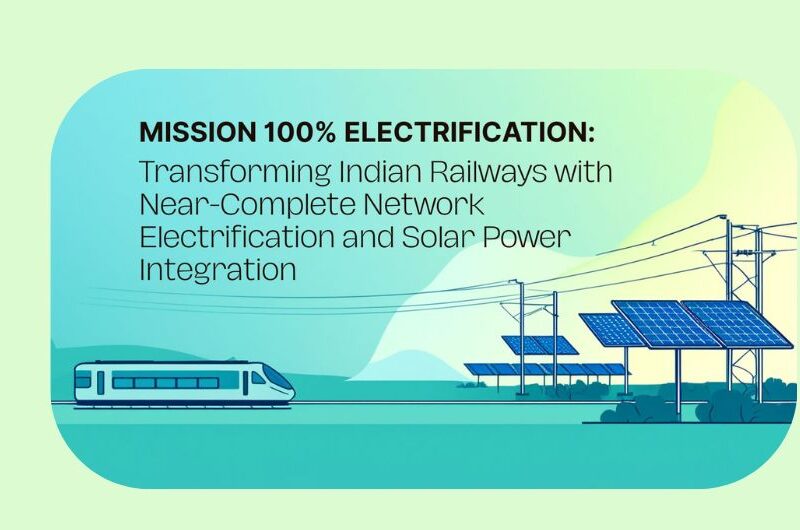
Mission 100% Electrification: Transforming Indian Railways with Near-Complete Network Electrification and Solar Power Integration

Mission 100% Electrification: Transforming Indian Railways with Near-Complete Network Electrification and Solar Power Integration       Key Takeaways   Indian Railways has electrified about 99.2% of its network by November 2025, making it one of the world’s most extensively electrified rail systems.   Electrification pace has surged from 1.42 km/day (2004–2014) to over 15 km/day in 2019- 2025, marking a massive acceleration in modernization.   By November 2025, Indian Railways expanded its solar power capacity to 898 MW, up from 3.68 MW in 2014, marking a transformational growth in renewable energy adoption.       1. Indian Railways electrified about 99.2% of its network by November 2025, making the system among the world’s most extensively electrified rail networks. 2. Electrification speed rose from about 1.42 km per day during 2004–2014 to over 15 km per day in 2019–2025. 3. India’s first electric train ran in 1925 between Bombay Victoria Terminus and Kurla Harbour, using a 1500 Volt DC traction system. 4. By Independence, only 388 route kilometers were electrified, while coal and diesel locomotives continued to dominate most railway operations nationwide. 5. Electrified track share increased from 24% in 2000 to 40% in 2017, then crossed 96% by end-2024. 6. As of November 2025, 69,427 route kilometers were electrified, with 46,900 route kilometers completed between 2014 and 2025. 7. Broad Gauge network totals about 70,001 route kilometers; 99.2% is electrified, leaving only 574 route kilometers pending work. 8. Twenty-five States and Union Territories achieved 100% Broad Gauge electrification, with no remaining route kilometers pending electrification completion. 9. Residual electrification remains in five States, with balances: Assam 197 km, Karnataka 151 km, Tamil Nadu 117 km, Rajasthan 93 km, Goa 16 km. 10. Electrification supports sustainability and economic growth by reducing environmental impact, improving energy security, enhancing operational efficiency, and enabling development along corridors. 11. India’s electrification level compares strongly with major networks, exceeding several large systems, while Switzerland is fully electrified and China remains around eighty-two percent. 12. Indian Railways expanded solar capacity to 898 MW by November 2025, rising from 3.68 MW in 2014, indicating transformational renewable adoption. 13. Solar installations cover 2,626 railway stations, creating a nationwide clean-energy footprint across diverse operational zones and geographic regions for daily services. 14. Of 898 MW solar capacity, 629 MW is used for traction, while 269 MW supports non-traction needs like stations, workshops, buildings, and quarters. 15. Modern electrification uses mechanised cylindrical foundations and automatic wiring trains, accelerating overhead equipment installation with accurate tension control and consistent construction quality.   MCQ: 1. As of November 2025, approximately what share of the Indian Railways network had been electrified? A. 89.2% B. 94.5% C. 99.2% D. 100% 2. Electrification pace increased from about 1.42 km/day (2004–2014) to over 15 km/day mainly during: A. 2010–2014 B. 2014–2019 C. 2019–2025 D. 2021–2024 3. India’s first electric train (1925) ran between: A. Bombay Victoria Terminus and Kurla Harbour B. Howrah and Sealdah C. Madras Central and Tambaram D. Delhi and Agra Cantt 4. The traction system used on India’s first electric train in 1925 was: A. 750 V DC B. 1500 V DC C. 25 kV AC D. 15 kV AC 5. By the time India gained independence, electrified route kilometers were about: A. 188 RKMs B. 388 RKMs C. 3,880 RKMs D. 6,388 RKMs 6. Electrified track share rose from 24% in 2000 to about 40% in: A. 2007 B. 2012 C. 2017 D. 2020 7. Electrified track share crossed 96% by the end of: A. 2022 B. 2023 C. 2024 D. 2025 8. As of November 2025, electrified route kilometers were approximately: A. 46,900 RKMs B. 57,400 RKMs C. 69,427 RKMs D. 70,001 RKMs 9. Route kilometers electrified between 2014 and 2025 were about: A. 19,427 RKMs B. 36,900 RKMs C. 46,900 RKMs D. 69,427 RKMs 10. The total Broad Gauge network length cited was closest to: A. 60,001 RKM B. 65,427 RKM C. 69,427 RKM D. 70,001 RKM 11. The balance Broad Gauge route kilometers pending electrification across five States was: A. 574 RKM B. 740 RKM C. 1,574 RKM D. 5,740 RKM 12. How many States/Union Territories were reported as 100% electrified on Broad Gauge? A. 15 B. 20 C. 25 D. 30 13. As of November 2025, Indian Railways’ commissioned solar power capacity was: A. 98 MW B. 398 MW C. 898 MW D. 1,898 MW 14. Of the commissioned solar capacity, the portion used for traction purposes was: A. 269 MW B. 629 MW C. 898 MW D. 2,626 MW 15. Solar power installations were reported across how many railway stations? A. 629 B. 898 C. 1,426 D. 2,626

More Details

Banking Laws (Amendment) Act, 2025

Banking Laws (Amendment) Act, 2025   Introduction   India’s banking system forms the backbone of economic activity by mobilising savings, facilitating credit, enabling payments, and supporting investment. Over time, the sector has transitioned from manual, branch-centric operations to a technology-driven ecosystem that supports large-scale financial inclusion. As banking operations expand in scale, complexity, and digital intensity, regulatory frameworks require periodic updating to ensure stability, transparency, depositor confidence, and sound governance. The Banking Laws (Amendment) Act, 2025 represents a comprehensive legislative response to these evolving needs.   Evolution of Banking Regulation in India   Banking regulation in India has developed alongside the country’s institutional and economic growth. Foundational legislations such as the Reserve Bank of India Act, the Banking Regulation Act, and statutes governing public sector banks established a structured supervisory and governance framework. Subsequent amendments addressed emerging priorities such as nationalisation, liquidity management, capital adequacy, and oversight of cooperative banks. The 2025 amendment builds upon this legislative trajectory by updating provisions to reflect present-day operational realities, financial scale, and technological integration within the banking system.   Rationale for the 2025 Amendment   Rapid digitalisation, deepening financial inclusion, and increasing household reliance on banking services have highlighted limitations in existing legal provisions. Large volumes of unclaimed deposits, governance challenges in certain institutions, and procedural rigidities in reporting and compliance created the need for reform. The 2025 amendment seeks to simplify processes, improve clarity in asset succession, align statutory timelines with accounting cycles, and ensure uniform regulatory terminology. These changes aim to reduce manual burden, minimise disputes, and strengthen systemic efficiency.   Strengthening Depositor Protection   A central feature of the amendment is the modernisation of the nomination framework. Depositors are now provided greater flexibility to designate nominees in a manner aligned with their preferences. Provisions allow for multiple nominees, either simultaneously through percentage-based allocation or successively to ensure continuity in the event of a nominee’s death. This framework is designed to address delays in claim settlement, reduce legal disputes, and ensure faster access to deposits, lockers, and articles in safe custody for families.   Governance and Oversight Reforms   The amendment introduces important governance-related changes to improve regulatory oversight. The threshold defining “substantial interest” has been revised to reflect economic growth and inflation, strengthening transparency and accountability. In cooperative banks, the tenure of directors has been rationalised to align governance norms with constitutional principles of democratic functioning. These measures aim to improve board effectiveness, reduce concentration of control, and enhance institutional stability across the banking sector.   Audit and Transparency Measures   To improve audit quality and financial transparency, public sector banks have been granted greater flexibility in determining auditor remuneration, enabling them to attract qualified professionals. Additionally, unclaimed shares, interest, and bond redemption amounts are to be transferred to the Investor Education and Protection Fund, aligning banking practices with corporate sector standards. These provisions strengthen accountability, improve disclosure, and ensure better management of dormant financial assets.   Procedural and Operational Efficiency   The amendment streamlines several procedural aspects of banking operations. Statutory reporting dates have been rationalised by replacing references to specific weekdays with month-end or fortnight-end timelines. This shift facilitates automation, reduces compliance ambiguity, and improves consistency in reporting across institutions. By aligning legal requirements with modern banking operations, the Act enhances operational efficiency and regulatory clarity.   Broader Impact on the Banking System   The Banking Laws (Amendment) Act, 2025 is expected to reinforce public trust in financial institutions through stronger depositor safeguards and transparent governance norms. Enhanced audit standards, clearer succession mechanisms, and efficient reporting structures contribute to a more resilient banking system. These reforms support long-term stability, improve service delivery, and strengthen the legal foundation of India’s increasingly digital and inclusive financial ecosystem.   Conclusion   The 2025 amendment marks a significant step in aligning banking laws with contemporary economic conditions and technological advancements. By addressing depositor protection, governance standards, audit quality, and procedural efficiency, the legislation strengthens the institutional framework of the banking sector. Its implementation is likely to enhance confidence, transparency, and effectiveness within the financial system, supporting sustainable economic growth and financial stability.   Multiple Choice Questions   The Banking Laws (Amendment) Act, 2025 primarily aims to: Nationalize private banks Strengthen governance and depositor protection Reduce the role of the central bank Promote foreign ownership in banks   Under the amended nomination framework, a depositor can nominate: Only one person Up to two persons Up to three persons Up to four persons   Simultaneous nomination under the Act allows: Nominees to inherit sequentially Equal distribution only Percentage-wise allocation totaling 100 percent Transfer only after court approval   Successive nomination mainly ensures: Faster loan approval Seamless succession if a nominee dies Higher interest on deposits Automatic closure of accounts   The threshold for defining “substantial interest” has been revised to: ₹50 lakh ₹1 crore ₹2 crore ₹5 crore   The revision in “substantial interest” threshold is intended to: Encourage bank mergers Reflect inflation and growth in the economy Reduce regulatory oversight Promote foreign investment   Maximum tenure of directors in co-operative banks (excluding chairperson and whole-time directors) is now: 6 years 8 years 9 years 10 years   The revised tenure of co-operative bank directors aligns with: 42nd Constitutional Amendment 73rd Constitutional Amendment 97th Constitutional Amendment 101st Constitutional Amendment   One major audit reform introduced for public sector banks allows them to: Appoint foreign auditors only Fix auditors’ remuneration Skip statutory audits Reduce audit frequency   Unclaimed shares, interest, and bond redemption amounts will now be transferred to: Consolidated Fund of India Deposit Insurance Fund Investor Education and Protection Fund National Investment Fund   Reporting timelines under the Act have been aligned with: Weekly reporting cycles Quarterly reporting cycles Last day of the month or fortnight Financial year-end only   One key reason for introducing the 2025 amendments was: Decline in digital banking usage Rising complexity due to financial inclusion and technology Excess liquidity in banks Fall in household savings   The Banking Laws (Amendment) Act, 2025 amends how many major banking legislations?

More Details

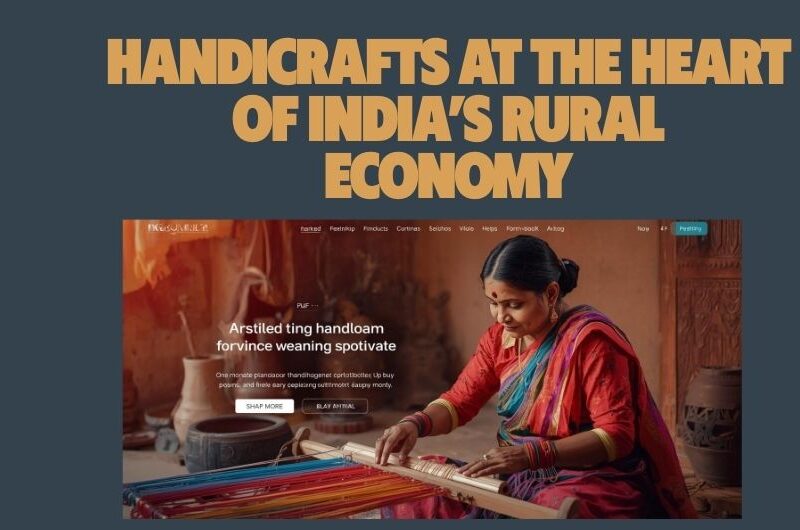
Handicrafts at the Heart of India’s Rural Economy

Handicrafts at the Heart of India’s Rural Economy Handicrafts and Rural Livelihoods   India’s handicraft sector functions as a large, decentralized livelihood system rooted in rural and semi-urban areas. It supports artisan households through home-based or small-workshop production models that require relatively low capital but generate meaningful value addition. Beyond income, handicrafts sustain community skills transmitted across generations and reinforce cultural continuity through region-specific techniques, motifs, and materials. The sector’s breadth is reflected in hundreds of formally classified craft categories and a wide range of geographically distinctive products with recognized identity value.   What Makes a Product a Handicraft   Handicrafts are predominantly hand-made goods, even when tools or limited machinery assist certain steps. Their distinctiveness arises from visual appeal, aesthetic and artistic character, and cultural attachment, which differentiates them from mechanized products of similar utility. The sector is labour-intensive and widely dispersed, with production often organized around informal networks, local supply chains, and seasonal availability of raw materials. This structure allows households—especially those tied to agriculture—to supplement incomes during lean periods while maintaining flexible work arrangements within their local context.   Workforce Profile and Inclusion   The artisan workforce is large and includes substantial participation from women and social groups that have historically relied on informal, locally anchored occupations. Women form a major share of weavers and artisans, indicating the sector’s role in expanding economic participation within households and communities. Craft work also draws participation from communities across social categories, making it an avenue of livelihood diversification and inclusion. Identification and registration initiatives strengthen visibility of artisans, improve access to formal benefits, and create a basis for targeted support, training, and market linkage interventions.   Exports, Markets, and Demand Trends   Handicrafts contribute to external demand alongside the broader textiles and apparel ecosystem, with exports spanning multiple categories such as woodwares, art metal wares, handprinted textiles, embroidered goods, and imitation jewellery. Market concentration remains significant in major importing countries, while a substantial share also goes to diversified global destinations. Demand is increasingly shaped by preferences for authentic, sustainable, and handmade products, creating space for India to expand value realization through design innovation, quality assurance, branding, and reliable supply fulfillment. Strengthening consistency in finishing, packaging, and compliance can improve unit value while sustaining artisanal character.   Institutional Support and Sector Development   Public interventions focus on cluster development, skill upgradation, tool support, marketing platforms, and social security coverage. Cluster-based models aim to bring scattered artisans into collective frameworks supported by common facilities, modern infrastructure, and structured training to improve productivity and competitiveness. Skill programmes emphasize design and technology development, apprenticeship-style transmission of traditional knowledge, structured upgradation aligned with recognized qualification frameworks, and distribution of improved toolkits to enhance output quality and efficiency. Marketing and exhibition support provides platforms for visibility, buyer linkages, and discovery of new demand segments, complementing local retail channels and emerging digital avenues.   Clusters, Collectives, and Enterprise Pathways   A cluster approach enables artisans and small enterprises to achieve economies of scale without losing craft specificity. Common facility centres, raw material banks, design support, and professional program management can reduce transaction costs and improve market readiness. Collective structures such as producer companies and artisan groups improve bargaining power, help standardize processes where appropriate, and facilitate access to finance and formal schemes. The broader objective is to shift artisans from vulnerability to resilience by building enterprise capabilities while safeguarding heritage and region-specific craft identities.   Policy Enablement and Market Competitiveness   Reforms affecting taxation, labour welfare, and export competitiveness influence the sector’s ability to scale. Rationalized tax treatment for selected craft items can reduce cost pressures, while welfare-oriented frameworks can improve dignity of work and stability for craft workers. Export support instruments and promotional missions aim to reduce embedded costs, strengthen competitiveness, and expand international presence. At the same time, the sector’s long-term gains depend on combining authenticity with modern market expectations—quality consistency, timely delivery, contemporary design adaptation, and credible branding.   Conclusion Handicrafts constitute a high-impact rural economy segment that blends livelihood creation with cultural stewardship. With rising global interest in handmade products, the sector’s growth potential is strong if support focuses on skills, infrastructure, clusters, market access, and social protection. Strengthening value chains, enhancing product innovation while preserving identity, and improving formal inclusion of artisans can raise incomes and ensure sustained expansion. The sector’s future competitiveness will be shaped by its ability to scale responsibly—protecting heritage, improving productivity, and integrating with wider domestic and global markets.     Multiple Choice Questions   Which feature best distinguishes handicrafts from mechanically produced goods? High capital investment Predominant use of machines Hand-based production with cultural and aesthetic value Standardized mass production   India’s handicraft sector is characterized mainly by: Capital-intensive factory systems Labour-intensive and decentralized production Complete dependence on urban markets Exclusive export orientation   How many GI-tagged handicraft products are associated with India? About 150 About 220 About 318 About 450   National Handicrafts Week is observed annually during: January 1–7 August 15–21 December 8–14 October 2–8   The Shilp Guru Award is best described as: A regional marketing incentive A training certification The highest honour in the handicrafts sector An export-linked subsidy   Which group constitutes the largest share of artisans in the handicrafts sector? Urban industrial workers Women artisans Foreign skilled workers Corporate designers   Approximately how many handloom and handicraft artisans are estimated to be engaged in India? 32 lakh 45 lakh 64.66 lakh 90 lakh   The handicrafts sector supports rural livelihoods mainly by: Replacing agricultural activity entirely Providing seasonal and supplemental income Promoting large-scale mechanization Eliminating household-based work   The Pehchan Artisan Identification programme primarily aims to: Promote exports directly Register artisans for taxation Formalize artisans and link them to welfare benefits Replace traditional crafts   In 2024–25, handicraft exports excluding hand-knotted carpets reached approximately: ₹18,000 crore ₹25,000 crore ₹33,122 crore ₹45,000 crore   Which country accounts for the largest share of India’s handicraft exports? United Kingdom Germany United States Japan   The National Handicraft Development Programme primarily focuses on: Import

More Details

FOOD IRRADIATION AND COLD CHAIN INFRASTRUCTURE IN INDIA

FOOD IRRADIATION AND COLD CHAIN INFRASTRUCTURE IN INDIA   Food irradiation is an advanced food preservation technique in which food items are exposed to a controlled dose of ionising radiation to destroy harmful bacteria, insects and moulds and to slow down spoilage processes such as ripening and sprouting. The treatment does not make food radioactive and does not reduce its nutritional value. Instead, it improves food safety and extends shelf life, making the food safer for human consumption and suitable for long-distance transport and storage.   India is expanding food irradiation facilities under the Integrated Cold Chain and Value Addition Infrastructure component of the Pradhan Mantri Kisan Sampada Yojana, implemented by the Ministry of Food Processing Industries. The objective is to build a seamless system from farm gate to consumer through scientific storage, refrigerated transport, processing and modern preservation technologies. Food irradiation has been included as a critical infrastructure element to reduce post-harvest losses and improve quality control.   The scientific safety of food irradiation has been widely accepted globally. International organisations and scientific institutions have confirmed that irradiated food does not pose any health risks and does not become toxic, unsafe or radioactive. In India, gamma irradiation using Cobalt-60 is supplied by the Board of Radiation and Isotope Technology under the Department of Atomic Energy, while X-rays and electron beams are also used for different processing needs.   In India, irradiation is applied to commodities such as potatoes, onions, spices, cereals, pulses, oilseeds and fruits like mangoes. The process prevents sprouting, destroys pathogens and insect infestations, increases shelf life and enables compliance with export quarantine standards. This makes Indian agricultural products more competitive in international markets and reduces wastage in domestic distribution.   Under the cold chain scheme, financial assistance is provided in the form of grants-in-aid to set up food irradiation units. Subsidy is given at thirty five percent of project cost in general areas and fifty percent in difficult areas and for projects by SC, ST, farmer producer organisations and self-help groups, subject to a maximum of ten crore rupees per project. Eligible entities include individuals, companies, cooperatives, NGOs, FPOs, SHGs and public sector units.   In July 2025, the government approved a major expansion of the scheme with an additional allocation, raising the total PMKSY outlay to six thousand five hundred and twenty crore rupees up to March 2026. From this, one thousand crore rupees has been earmarked for the establishment of fifty multi-product food irradiation units and one hundred NABL-accredited food testing laboratories. The added irradiation capacity is expected to reach twenty to thirty lakh metric tonnes annually.   As of June 2025, three hundred and ninety five integrated cold chain projects had been approved since the launch of the scheme. Out of these, two hundred and ninety one projects had become operational, creating a preservation capacity of over twenty five lakh metric tonnes per year and processing capacity of more than one hundred fourteen lakh metric tonnes. These projects have generated over one lakh seventy thousand jobs across the country.   By August 2025, sixteen multi-product food irradiation projects had been sanctioned across India, out of which nine were operational and seven were under implementation. More than one hundred crore rupees were approved as grants for these projects, with over sixty eight crore already released. This shows steady progress in expanding scientific storage and preservation infrastructure.   Food irradiation has major economic and social significance. It reduces post-harvest losses, stabilises food prices, increases farmer income and strengthens food security. It also improves export potential by meeting sanitary and phytosanitary standards of importing countries. In addition, it enhances public health by reducing the risk of foodborne diseases through better microbial control.   Consumers are advised to check quality certification marks, food safety licence numbers, fortification symbols and nutritional labels while purchasing irradiated or processed foods. Correct labelling provides assurance about safety, composition and quality. Awareness about irradiation helps remove misconceptions and encourages acceptance of scientifically safe food technologies.   Overall, food irradiation combined with cold chain infrastructure represents a shift towards a modern, resilient and efficient food system in India. With strong policy support and growing investment, India is building a scientific and sustainable agri-food ecosystem that reduces waste, protects public health and ensures safer and longer-lasting food supply for consumers. MCQ: 1. Food irradiation primarily helps in: (a) Increasing artificial flavour in food (b) Enhancing radioactive content of food (c) Destroying harmful microorganisms and delaying spoilage (d) Replacing refrigeration technology 2. One major advantage of food irradiation as mentioned in the passage is that it: (a) Makes food chemically treated (b) Makes food radioactive (c) Reduces nutritional value (d) Improves safety and shelf life without harming nutrition 3. Food irradiation helps food items become suitable for: (a) Immediate consumption only (b) Domestic consumption only (c) Long-distance transport and storage (d) Industrial raw material use only 4. Under which government scheme is India expanding food irradiation facilities? (a) National Food Security Mission (b) Pradhan Mantri Kisan Sampada Yojana (c) Rashtriya Krishi Vikas Yojana (d) Paramparagat Krishi Yojana 5. The Ministry responsible for implementing the cold chain scheme is: (a) Ministry of Health and Family Welfare (b) Ministry of Consumer Affairs (c) Ministry of Food Processing Industries (d) Ministry of Commerce and Industry 6. Food irradiation has been included in cold chain projects mainly to: (a) Increase artificial preservation (b) Reduce post-harvest losses and improve quality (c) Promote chemical usage in food (d) Replace traditional storage methods completely 7. In India, gamma irradiation is carried out using: (a) Cesium-137 (b) Uranium-235 (c) Cobalt-60 (d) Thorium-232 8. Cobalt-60 for irradiation is supplied by: (a) ISRO (b) BARC (c) DRDO (d) Board of Radiation and Isotope Technology 9. Which of the following is NOT mentioned as a method of irradiation in the passage? (a) Gamma rays (b) X-rays (c) Electron beams (d) Ultraviolet radiation 10. Which group of products is commonly irradiated in India? (a) Only fruits (b) Only meat products (c) Potatoes, spices, cereals and pulses

More Details

August 2025 Current Affairs Part-2

Promotion and Regulation of Online Gaming Act, 2025 – Passed August 2025 Passed in August 2025, this Act establishes a national framework for online gaming regulation in India. It distinguishes between games of skill and chance, prohibits real-money gambling platforms, promotes e-sports, and sets up a central regulatory body—making India one of the few countries with a dedicated gaming law. Key Points: Bans all real-money gaming involving chance, including betting and wagering. Allows certified e-sports and skill-based platforms to operate under regulation. Establishes the National Online Gaming Commission (NOGC) to license and monitor platforms. Mandates platforms to verify age, comply with data security, and ensure no addictive mechanics. Penal provisions include heavy fines and platform shutdowns for non-compliance. The Act strikes a careful balance—protecting users from digital gambling addiction while nurturing the potential of e-sports and gaming startups. By creating a defined legal ecosystem, it brings legitimacy and order to a rapidly expanding but previously grey regulatory area. UPSC Prelims‑style MCQs: The Promotion and Regulation of Online Gaming Act, 2025 prohibits: A) E-sports events B) Real-money betting platforms C) Skill-based puzzles D) Fantasy leagues with entry limits The Act empowers which regulatory body? A) TRAI B) National Gaming Commission of India C) National Online Gaming Commission D) Digital India Games Authority Which of the following is permitted under the Act? A) Online poker tournaments B) Educational quiz games C) Lottery apps D) Roulette and slot machine apps The Act was primarily passed to: A) Boost state tax revenue B) Promote fantasy cricket C) Curb gambling and support skill-based gaming D) Expand casinos across Indian states UN Regional SDG Centre for Central Asia and Afghanistan – Launched 3 August 2025   In a landmark development, the United Nations inaugurated a Regional Centre for Sustainable Development Goals in Almaty, Kazakhstan, on 3 August 2025. The centre aims to enhance regional cooperation, especially for fragile states like Afghanistan, in achieving Agenda 2030 targets. Key Points: Functions as a multilateral platform for SDG planning, monitoring, and coordination across Central Asia. Focuses on education, gender equity, water security, and post-conflict resilience in Afghanistan. Operates under the UN Sustainable Development Division in collaboration with local governments. Expected to strengthen climate adaptation, urban resilience, and digital governance. Serves as a neutral bridge between Central Asian republics and global partners. This centre enhances institutional capacity in a geopolitically volatile region. For India, it offers strategic convergence—supporting Afghanistan’s development while countering influence from other regional powers through multilateral frameworks and soft power diplomacy. UPSC Prelims‑style MCQs: The UN SDG Regional Centre launched in August 2025 is located in: A) Kabul B) Dushanbe C) Almaty D) Tashkent One of the core goals of the centre is to: A) Build railways in Central Asia B) Provide military training C) Coordinate SDG efforts in fragile states D) Promote e-sports across Afghanistan Which of the following is NOT a focus area of the Centre? A) Water security B) Digital governance C) Arms trade regulation D) Post-conflict resilience The Centre works under: A) UN Security Council B) UN Development Programme C) UN Sustainable Development Division D) UNESCO Pradhan Mantri Kisan Samman Nidhi – 20th Installment (2 August 2025) On 2 August 2025, Prime Minister Modi released the 20th installment of the PM-KISAN scheme in Varanasi. A total of ₹20,500 crore was disbursed via Direct Benefit Transfer to 9.7 crore farmers, reinforcing the government’s commitment to agricultural welfare and digital transparency. Key Points: Mass Disbursement: ₹20,500 crore transferred to 9.7 crore beneficiaries—each received ₹2,000. Transparent Delivery: Funds credited instantaneously via DBT, minimizing leakages. Community Engagement: Event emphasized as both mission and festival, mobilizing KVKs, Drone Didis, Krishi Sakhis, and others. Agricultural Messaging: PM, amidst tariff tensions, reaffirmed support for farmers, promoted ‘Vocal for Local’, and inaugurated development projects alongside the disbursement. Potential Delays: Some farmers faced delays due to e‑KYC incomplete or land record linkage issues; advised to check status via portal or helplines. The 20th installment exemplifies how digital infrastructure and community outreach can elevate welfare schemes. By linking monetary relief with developmental messaging and addressing procedural hurdles, it reinforces both pedagogical outreach and grassroots-centric governance. UPSC Prelims‑style MCQs: The 20th installment of PM‑KISAN, released on 2 August 2025, involved disbursement of approximately: A) ₹6,000 crore B) ₹20,500 crore C) ₹50,000 crore D) ₹3.6 lakh crore How much did each eligible farmer receive under the 20th installment? A) ₹500 B) ₹2,000 C) ₹6,000 D) ₹10,000 Which method was used to transfer the funds? A) Postal cheques B) Direct Benefit Transfer (DBT) C) Cash distribution at KVKs D) Through agricultural cooperatives Which of the following was not a reason for payment delay mentioned in media reports? A) Incomplete e-KYC B) Incorrect bank details C) Pending land record linkage D) Faulty biometric screening at village level Raksha Bandhan Event under Nasha Mukt Bharat Abhiyaan (8 August 2025) On 8 August 2025, as part of the fifth anniversary of the Nasha Mukt Bharat Abhiyaan (NMBA), Brahma Kumaris sisters tied rakhis to nearly 400 CRPF personnel at the Dr. Ambedkar International Centre in New Delhi. The event included a mass pledge against drug abuse, symbolizing the nation’s commitment to a drug-free society. Key Points: Organized by the Department of Social Justice & Empowerment to honor Raksha Bandhan and reinforce NMBA goals. Brahma Kumaris tied rakhis to approximately 400 CRPF jawans, viewing them as defenders of society against drugs. Participants—including ministers, officers, and civil society—took a mass pledge committing to remain drug-free. NMBA, operational across all districts, focuses on raising awareness among youth, women, and educational institutions. The campaign includes tech-enabled initiatives such as NMBA mobile app, online pledges, Master Volunteers, and institutional collaborations. Merging cultural symbolism with social messaging, this unique Raksha Bandhan initiative strengthened public outreach and emotional resonance of NMBA. By involving uniformed personnel and spiritual entities, it blended moral appeal with institutional partnership—enhancing public engagement with the anti-drug mission. UPSC Prelims‑style MCQs: The special Raksha Bandhan event under Nasha Mukt Bharat Abhiyaan in August 2025 involved: A) Tying rakhis to BSF jawans B) A

More Details

August 2025 Current Affairs Part-1

Pradhan Mantri Viksit Bharat Rozgar Yojana (PM-VBRY) – Launched 15 August 2025 On 15 August 2025, PM Modi announced the Pradhan Mantri Viksit Bharat Rozgar Yojana, a ₹1 lakh crore Employment Linked Incentives scheme under the “Viksit Bharat 2047” vision. It targets creation of 3.5 crore jobs in two years, offering wage support to youth and hiring incentives to employers. Key Points: Scheme Outlay & Timeline: ₹99,446 crore approved; job generation valid from 1 August 2025 to 31 July 2027. Beneficiaries: Aims to create 3.5 crore jobs, with nearly 1.92 crore first-time workers supported. Dual Incentives: Part A supports employees (e.g., partial wage support); Part B incentivizes employers for job creation. Implementation Mode: Benefits transferred directly to beneficiaries for transparency and efficiency. Link with Vision: Aligns with “Viksit Bharat 2047”, turning demographic potential into formal employment-led growth. The PM-VBRY is a critical instrument to translate India’s demographic dividend into sustainable growth. By blending employee-driven wage support with employer incentives, it fosters immediate job creation while embedding long-term structural reform.  MCQs: The Pradhan Mantri Viksit Bharat Rozgar Yojana (PM-VBRY), launched on 15 August 2025, aims to create how many jobs? A) 1 crore B) 2 crore C) 3.5 crore D) 5 crore Under PM-VBRY, scheme benefits are designed to be transferred: A) Through state governments B) Via banks only C) Directly to beneficiaries D) Through NGOs Which aspect of PM-VBRY refers to financial support to employers for job generation? A) Part A B) Part B C) Part C D) Part D The PM-VBRY scheme is intended to operate within which timeline? A) Aug 2025 – Jul 2027 B) Jan 2025 – Dec 2026 C) Aug 2025 – Aug 2028 D) Jan 2026 – Dec 2027 Next‑Generation GST Reforms – Effective from 22 September 2025 As announced under India’s “Next‑Generation GST Reforms,” the GST Council on 3 September streamlined the tax system into two rate slabs—5% (merit) and 18% (standard)—plus a 40% demerit rate for sin and luxury goods. Additionally, essential items and insurance received tax relief; reforms aim to simplify compliance and boost affordability. Key Points: Simplified Slab Structure: GST reduced from four slabs (5%, 12%, 18%, 28%) to two—5% and 18%—with 40% applied only to sin and luxury goods. Tax Relief for Common Goods: Everyday essentials—from toiletries and packaged foods to soap, hair oil, butter, and paneer—now attract reduced or zero GST. Insurance Exemption: All individual life and health insurance policies (including ULIPs and senior citizen plans) are now fully exempt from GST. Rationalization & Structural Reforms: The reform corrects inverted duty structures, resolves classification disputes, and improves compliance through facilitation measures. Effective Date & Impact: Implemented from 22 September 2025. Expected to lower consumer prices, boost demand, and reinforce ease of doing business. This overhaul marks a bold policy reset—from complexity to citizen-centricity. By aligning taxation with consumption patterns and prioritizing transparency, the reforms simultaneously ease household burdens and modernize the compliance architecture, signaling India’s taxation maturity and fiscal sensitivity.  (choose correct answer): Under the “Next‑Generation GST Reforms” of 2025, what are the standard and merit slabs? A) 5% and 12% B) 5% and 18% C) 12% and 18% D) 18% and 28% Which category is entirely exempt from GST under the 2025 reforms? A) Motorcycles under 350cc B) Small cars C) Individual life and health insurance policies D) Beauty and wellness services The demerit GST rate of 40% applies to: A) Essential food items B) Indian breads and paneer C) Sin and super luxury goods D) Agricultural inputs From what date did the 2025 Next‑Generation GST Reforms become effective? A) Diwali 2025 B) 15 August 2025 C) 22 September 2025 D) 1 January 2026 Environment Audit Rules, 2025 – Notified on 29 August 2025 The Environment Audit Rules, 2025 were notified to formalize and institutionalize environmental auditing in India. They aim to transition from punitive enforcement to a proactive compliance regime by introducing certified auditors, audit frameworks, and oversight mechanisms—marking a major step toward accountable ecological governance. Key Points: Introduces a two-tier environmental audit system for industries, replacing inconsistent monitoring norms. Requires mandatory registration and certification of Environmental Auditors to ensure professionalism. Designates a national agency to accredit auditors, manage quality control, and ensure oversight. Ensures audit reports are submitted annually, including emission records, mitigation plans, and compliance status. Designed to complement—rather than replace—existing pollution control board functions and environmental laws. This reform signals a shift from reactive policing to structured environmental accountability. By embedding third-party audit systems into regulatory architecture, the state builds capacity for both enforcement and self-regulation—paving the way for transparent and investor-friendly environmental governance. UPSC Prelims‑style MCQs: The Environment Audit Rules, 2025 aim primarily to: A) Regulate construction near protected forests B) Institutionalize certified environmental audits C) Promote solar manufacturing industries D) Replace the Environment Protection Act, 1986 Which of the following is a key feature of the 2025 audit rules? A) Carbon pricing mechanism B) Compulsory annual environmental audits C) Disbanding of State Pollution Control Boards D) Creation of an Environment Tribunal The Environment Audit Rules are administered under which Ministry? A) Ministry of Power B) Ministry of Finance C) Ministry of Environment, Forest and Climate Change D) Ministry of Law and Justice Which of these is true under the new rules? A) All pollution control boards are abolished B) Only multinationals require audits C) Audit reports must include compliance and mitigation data D) Forests are now fully privatized

More Details

Free IAS Guidance
Start Your Journey Today 🇮🇳

Fill out the form below, and we will be in touch shortly.