Best UPSC and MPPSC IAS Coaching Classes in Gwalior

Digital Public Infrastructure in India

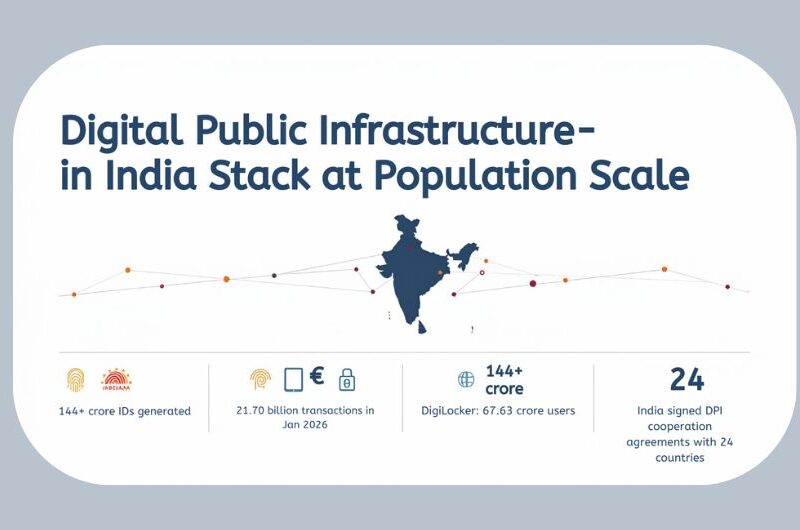
Digital Public Infrastructure in India   1. India has built population scale digital public infrastructure for over 1.4 billion people through open, interoperable systems linking identity, payments and data exchange to governance, welfare delivery and inclusion. 2. The JAM trinity combined Jan Dhan accounts, Aadhaar enrolment and mobile connectivity, creating the foundational digital rails that enabled direct benefit transfers, reduced leakages and strengthened service delivery. 3. As of March 2026, more than 144 crore Aadhaar numbers had been generated, while 2024-25 recorded over 2,707 crore authentication transactions, making identity verification portable, rapid and reliable. 4. Pradhan Mantri Jan Dhan Yojana expanded from 14.72 crore accounts in 2015 to 57.71 crore by March 2026, with deposits rising to ₹2.94 lakh crore nationally. 5. Connectivity deepened digital reach, with 85.5 percent of households owning a smartphone, 125.87 crore wireless subscribers, and 5G available in 99.9 percent districts by December 2025. 6. Unified Payments Interface processed 21.70 billion transactions worth over ₹28.33 lakh crore in January 2026, with 691 banks live, making it India’s dominant retail payments rail. 7. Public Financial Management System strengthened direct benefit transfer architecture, helping save more than ₹4.31 lakh crore between 2015 and March 2024, while cumulative DBT transfers crossed ₹49.09 lakh crore. 8. Open Network for Digital Commerce expanded digital commerce access beyond closed platforms, with over 1.16 lakh retail sellers live across more than 630 cities and towns by December 2025. 9. Government eMarketplace transformed public procurement, processing nearly 3.27 crore orders worth over ₹16.41 lakh crore by November 2025, while enabling broad participation from sellers, service providers, and enterprises. 10. DigiLocker emerged as a large scale digital document wallet, reaching 67.63 crore users by 5 March 2026 and issuing over 950 crore authenticated documents for citizen use. 11. UMANG became a major citizen service platform, recording 10.25 crore user registrations and 723.36 crore transactions by 5 March 2026, while offering more than 2,400 government services. 12. CoWIN became the digital backbone of India’s vaccination programme, managing over 220 crore doses and demonstrating transparent, real time coordination across public and private health systems. 13. eSanjeevani mainstreamed telemedicine in public healthcare, serving 45.42 crore patients and onboarding 2.3 lakh healthcare providers by 5 March 2026, especially improving specialist access in underserved regions. 14. India signed agreements with 24 countries on India Stack and digital public infrastructure by February 2026, while UPI went live in eight countries, expanding global digital cooperation. 15. During its G20 Presidency, India positioned digital public infrastructure as a development accelerator, launched the Global DPI Repository, and reinforced its role as a global reference point.   Must Know Terms : 1. Interoperability Interoperability allowed India’s digital platforms to function across shared public rails instead of isolated systems. It connected identity, payments, documents and service delivery through common standards. This made Aadhaar authentication usable in banking, welfare and governance, enabled UPI across banks, and supported document exchange through DigiLocker and service access through UMANG. It became the operational logic of India Stack. 2.PFMS PFMS stands for Public Financial Management System. It is a web based platform for tracking government fund flow, payments, accounting and reporting. It was mandated for Direct Benefit Transfer in December 2014. Between 2015 and March 2024, savings exceeded ₹4.31 lakh crore through removal of fake and duplicate beneficiaries. By January 2026, cumulative DBT transfers through this system crossed ₹49.09 lakh crore. 3.ONDC ONDC stands for Open Network for Digital Commerce. It was launched in 2022 to create an open digital commerce network instead of one closed marketplace. It links buyers and sellers through interoperable platforms. By December 2025, more than 1.16 lakh retail sellers were live on the network. Its operations had spread across more than 630 cities and towns, expanding digital market access for smaller businesses. 4.MOSIP MOSIP stands for Modular Open Source Identity Platform. It is an India developed open source framework for countries building sovereign digital identity systems. It offers configurable identity architecture instead of a locked proprietary model. It supports national registration, authentication and identity management functions. More than 25 countries are adopting or exploring MOSIP for their identity programmes, making it a major export of India’s digital governance capability. 5.APISetu API Setu is India’s Open API Platform initiated by the Ministry of Electronics and Information Technology in March 2020. It enables secure and standardised sharing of government data and services through application programming interfaces. By March 2026, the platform hosted 8,036 APIs. It had 6,592 consumers, 2,559 publishers and 10,530 organisations onboard, strengthening interoperability across public and private digital ecosystems. 6.UMANG UMANG stands for Unified Mobile Application for New age Governance. It was launched in 2017 as a single window platform for central, state and local government services through mobile and web access. It includes pension, scholarship, utility, passport, licence, Aadhaar and EPFO related services. By 5 March 2026, it recorded 10.25 crore registrations, 723.36 crore transactions and offered more than 2,400 services. Key Takeaways • India has signed DPI cooperation agreements with 24 countries. • UPI is now operational in 8 countries enabling cross border payments. • India Stack Global facilitates DPI adoption by partner nations. • India contributed highest solutions to the Global DPI Repository.  * Strategic Partnerships on Digital Infrastructure MCQ: 1. India’s digital public infrastructure is fundamentally built on linking which three core layers? A) Identity, payments and data exchange B) Roads, ports and airports C) Agriculture, trade and taxation D) Courts, police and defence 2. The JAM trinity consists of: A) Jan Suraksha, Aadhaar and Mobile banking B) Jan Dhan, Aadhaar and Mobile connectivity C) Judicial access, Aadhaar and Markets D) Jan Dhan, API Setu and Mobile wallets 3. As of March 2026, the number of Aadhaar numbers generated had crossed: A) 124 crore B) 134 crore C) 144 crore D) 154 crore 4. During 2024–25, Aadhaar authentication transactions were recorded at more than: A) 1,707 crore B) 2,107 crore C) 2,407 crore D) 2,707 crore 5. Pradhan Mantri Jan Dhan Yojana accounts increased from 14.72 crore in 2015 to:

More Details

Women’s Financial Empowerment and Livelihood Transformation

Women’s Financial Empowerment and Livelihood Transformation 1. Sukanya Samriddhi Yojana was launched on 22 January 2015 under Beti Bachao Beti Padhao to support long-term financial security of girls through savings for education and marriage. 2. Sukanya Samriddhi Yojana currently offers 8.2 percent annual interest, allows deposits from ₹250 to ₹1.5 lakh yearly, and provides tax-free interest and maturity benefits under Section 80C. 3. Under Sukanya Samriddhi Yojana, deposits can be made for 15 years, while the account matures after 21 years from opening, with partial withdrawal allowed after eighteen. 4. Total deposits under Sukanya Samriddhi Yojana exceeded ₹3.33 lakh crore by December 2025, showing large-scale participation by families investing early in daughters’ financial security and future aspirations. 5. DAY-NRLM has mobilised over 10.05 crore rural women households into more than 90.90 lakh Self-Help Groups, creating one of the world’s largest women-led community institution networks. 6. DAY-NRLM deploys Bank Sakhis for banking support and Krishi Sakhis and Pashu Sakhis for livelihood guidance, while its Self-Help Groups maintain a repayment rate above 98 percent. 7. More than 4.6 crore women farmers benefited under DAY-NRLM support by October 2025, and over 5.88 lakh enterprise units were assisted through Start-up Village Entrepreneurship Program. 8. NaMo Drone Didi equips selected Women Self-Help Groups with drones for precision agriculture services, mainly spraying fertilisers and pesticides, while generating sustainable rental income opportunities. 9. Under NaMo Drone Didi, selected Self-Help Groups receive 80 percent Central Financial Assistance up to ₹8 lakh, plus pilot training for fifteen days and assistant training. 10. The government aims to create 6 crore Lakhpati Didis, and launched a January 2026 entrepreneurship campaign to train 50 lakh SHG members through 50,000 Community Resource Persons. 11. LokOS app and Digital Aajeevika Register digitise records and monitor real-time income data of potential Lakhpati Didis, supporting systematic identification, tracking, and entrepreneurship-focused livelihood progress nationwide. 12. Womaniya Initiative, launched on 14 January 2019 through GeM, promotes participation of women-led Micro and Small Enterprises and Self-Help Groups in government public procurement systems. 13. By January 2026, over two lakh women-led Micro and Small Enterprises were registered under Womaniya, securing procurement orders worth more than ₹80,000 crore, exceeding mandated participation targets. 14. PMJDY, launched on 28 August 2014, provides zero-balance accounts, RuPay debit cards, accident insurance, overdraft eligibility, and direct access to formal banking services for women. 15. PM SVANidhi, launched in June 2020, was extended till March 2030 with ₹7,332 crore outlay, and more than 1.46 crore loans were sanctioned by December 2025. Must Know Terms : 1. BankSakhi BankSakhi is a trained woman deployed under DAY-NRLM at bank branches to support Self-Help Groups in formal banking access. She assists in opening savings accounts, credit and debit transactions, loan procedures, and other banking services. This role is part of DAY-NRLM, which has mobilised over 10.05 crore rural women households into more than 90.90 lakh Self-Help Groups with repayment above 98 percent. 2.KrishiSakhi KrishiSakhi is a trained woman community resource person under DAY-NRLM who provides agriculture-related support to rural households and women farmers throughout the year. She helps promote better farming methods and livelihood improvement. Women farmers supported under the mission are identified as Mahila Kisans. As of October 2025, over 4.6 crore women had benefited under DAY-NRLM through agriculture-linked support and livelihood strengthening initiatives. 3.PashuSakhi PashuSakhi is a trained woman resource person under DAY-NRLM who supports livestock-based livelihoods by advising rural households on animal-related activities. She works alongside other field-level women cadres to strengthen year-round income opportunities. This support structure is part of the wider DAY-NRLM network, which has created one of the world’s largest women-led community institution systems, covering over 10.05 crore rural women households across India. 4.LokOS LokOS is a digital platform used in the Lakhpati Didi framework for digitising records and tracking real-time income data of potential beneficiaries. It is managed along with the Digital Aajeevika Register by Digital India Corporation. The platform supports identification and monitoring of women crossing the ₹1 lakh annual household income threshold. It gained importance after the January 2026 entrepreneurship campaign targeting 50 lakh SHG members. 5.Womaniya Womaniya is a Government e-Marketplace programme launched on 14 January 2019 to increase participation of women-led Micro and Small Enterprises and Self-Help Groups in public procurement. By January 2026, over two lakh women-led MSEs were registered on GeM and had secured procurement orders worth more than ₹80,000 crore, amounting to 4.7 percent of GeM’s total order value, exceeding the mandated 3 percent target. 6.SVANidhi SVANidhi refers to the Prime Minister Street Vendor’s AtmaNirbhar Nidhi scheme launched in June 2020 by the Ministry of Housing and Urban Affairs. It provides collateral-free working capital loans to street vendors. The restructured scheme runs till March 2030 with an outlay of ₹7,332 crore and targets 1.15 crore vendors, including 50 lakh new beneficiaries. By December 2025, over 1.46 crore loans had been sanctioned. MCQ : 1. Sukanya Samriddhi Yojana was launched on: A) 28 August 2014 B) 22 January 2015 C) 8 April 2015 D) 14 January 2019 2. Sukanya Samriddhi Yojana was launched under: A) PMJDY B) Stand-Up India C) Beti Bachao Beti Padhao D) PMMY 3. The current annual interest rate under Sukanya Samriddhi Yojana is: A) 7.6% B) 8.2% C) 8.8% D) 9.1% 4. Under Sukanya Samriddhi Yojana, the maximum annual deposit allowed is: A) ₹50,000 B) ₹1 lakh C) ₹1.25 lakh D) ₹1.5 lakh 5. DAY-NRLM has mobilised over how many rural women households into Self-Help Groups? A) 8.05 crore B) 9.25 crore C) 10.05 crore D) 11.05 crore 6. The number of Self-Help Groups formed under DAY-NRLM is more than: A) 70.90 lakh B) 80.90 lakh C) 85.90 lakh D) 90.90 lakh 7. The repayment rate of DAY-NRLM Self-Help Groups is: A) above 90% B) above 95% C) above 98% D) above 99.5% 8. More than how many women farmers had benefited under DAY-NRLM support by October 2025? A) 2.6 crore B) 3.6 crore C) 4.6 crore D) 5.6 crore 9. Over how many enterprise units were supported under the Start-up Village

More Details

India’s Expanding Clean and Strategic Energy Framework

India’s Expanding Clean and Strategic Energy Framework   1. India’s energy system is being reshaped to provide reliable, affordable, cleaner, and more secure power for households, farms, industries, transport systems, and public services. 2. Average electricity availability in rural areas increased from 12.5 hours in 2014 to 22.6 hours, while urban power supply improved from 22.1 hours to 23.4 hours. 3. India is among the world’s top three energy consumers, and total electricity generation rose from 1,739.09 Billion Units in 2023-24 to 1,829.69 Billion Units in 2024-25. 4. For 2025-26, India set an electricity generation target of 2,000.4 Billion Units, reflecting rising power demand linked with economic growth and expanding energy access. 5. India ranks fourth globally in total installed renewable energy capacity, while installed solar capacity rose sharply from 3 GW in 2014 to 140 GW in January 2026. 6. Non-fossil fuel capacity has moved beyond 50 percent of total installed electricity capacity, showing the growing role of clean energy in India’s power mix. 7. India’s cumulative installed wind capacity reached about 54.65 GW by January 2026, making wind power a major contributor to grid diversification alongside solar energy. 8. PM Surya Ghar enabled 23.9 lakh households to install rooftop solar systems, adding 7 GW of distributed clean energy capacity across the country. 9. PM-KUSUM promotes solarisation in agriculture and aims to install 14 lakh standalone pumps by 31 March 2026, reducing diesel dependence and improving rural energy supply. 10. India approved 55 solar parks across 13 states with nearly 40 GW sanctioned capacity, while the solar PLI scheme with ₹24,000 crore supports domestic manufacturing. 11. Under the National Green Hydrogen Mission, India targets production of 5 million metric tonnes of green hydrogen annually by 2030 with major investment and emission-reduction goals. 12. The green hydrogen mission has an approved outlay of ₹19,744 crore till FY 2029-30, including ₹17,490 crore under the SIGHT programme for electrolysers and hydrogen production. 13. India’s present nuclear power capacity stands at 8.78 GW and is projected to rise to 22.38 GW by 2031-32, with a long-term target of 100 GW by 2047. 14. The SHANTI Act, 2025 modernised the nuclear legal framework by enabling limited private participation, recognising AERB statutorily, introducing graded liability, and strengthening safety safeguards. 15. Power distribution reforms expanded electricity access through village electrification, household connections, smart metering, RDSS investment, and digital systems like the India Energy Stack for efficient governance.   Must Know Terms : 1. SHANTI SHANTI stands for Sustainable Harnessing and Advancement of Nuclear Energy for Transforming India Act, 2025. It modernised India’s nuclear legal framework. The Act enables limited private sector participation under regulatory oversight, grants statutory recognition to AERB, introduces a graded liability framework, strengthens safety, security, and safeguards, and retains sovereign control over sensitive nuclear fuel-cycle activities. It supports expansion from 8.78 GW toward future targets. 2.SIGHT SIGHT means Strategic Interventions for Green Hydrogen Transition. It is the main incentive component of the National Green Hydrogen Mission. Out of the mission outlay of ₹19,744 crore till FY 2029-30, ₹17,490 crore is allocated under SIGHT. It supports domestic electrolyser manufacturing and green hydrogen production. This framework helps India pursue its target of producing 5 million metric tonnes annually by 2030. 3.UDIT UDIT stands for Urja Dakshata Information Tool. It is a digital platform used to improve transparency, monitoring, and compliance in India’s energy-efficiency system. It supports data-based tracking of performance across sectors and complements market reforms such as the Carbon Credit Trading Scheme. UDIT helps strengthen governance where efficient energy use matters for savings, lower demand pressure, compliance reporting, and better implementation outcomes nationally. 4.RDSS RDSS means Revamped Distribution Sector Scheme. It was launched in 2021 with an outlay of ₹3.03 lakh crore to improve the financial and operational condition of power distribution companies. Projects worth about ₹2.8 lakh crore have been approved under it. RDSS supports infrastructure modernisation and smart metering. It is linked with broader reforms, including installation of 5.62 crore smart electricity meters across India. 5.AERB AERB stands for Atomic Energy Regulatory Board. It is India’s nuclear regulatory authority responsible for radiation and nuclear safety oversight. The SHANTI Act, 2025 gave it statutory recognition, strengthening its institutional status. AERB is important as India’s present nuclear capacity of 8.78 GW is projected to rise to 22.38 GW by 2031-32, while the long-term nuclear mission targets 100 GW by 2047. 6.IES IES means India Energy Stack. It is a Digital Public Infrastructure designed for trusted digital interaction among consumers, utilities, regulators, and distributed energy assets. It is based on open standards and consent-based data sharing. IES aims to standardise data exchange, simplify onboarding across utilities, enable consumer choice, and support monetisation of rooftop solar, batteries, EV chargers, and flexible loads at scale nationwide.   MCQ: 1. India’s average electricity availability in rural areas increased from 12.5 hours in 2014 to: A) 20.4 hours B) 21.6 hours C) 22.6 hours D) 23.4 hours 2. Urban power supply improved from 22.1 hours in 2014 to: A) 22.6 hours B) 23.4 hours C) 23.8 hours D) 24.0 hours 3. Total electricity generation in India rose from 1,739.09 Billion Units in 2023-24 to: A) 1,800.69 Billion Units B) 1,829.69 Billion Units C) 1,900.40 Billion Units D) 2,000.40 Billion Units 4. India’s electricity generation target for 2025-26 was set at: A) 1,950.4 Billion Units B) 1,980.4 Billion Units C) 2,000.4 Billion Units D) 2,050.4 Billion Units 5. India ranks ______ globally in total installed renewable energy capacity. A) second B) third C) fourth D) fifth 6. Installed solar capacity in India increased from 3 GW in 2014 to: A) 120 GW B) 130 GW C) 135 GW D) 140 GW 7. India’s cumulative installed wind capacity by January 2026 was about: A) 44.65 GW B) 49.65 GW C) 54.65 GW D) 59.65 GW 8. PM Surya Ghar enabled how many households to install rooftop solar systems? A) 21.9 lakh B) 22.9 lakh C) 23.9 lakh D) 24.9 lakh 9. PM Surya Ghar added distributed clean energy capacity of:

More Details

India’s Emerging Export and Strategic Manufacturing Framework

India’s Emerging Export and Strategic Manufacturing Framework   1. India’s cumulative exports during April-January 2025-26 reached USD 720.76 billion, recording 6.15 percent year-on-year growth, indicating resilient external performance despite continuing global uncertainty and trade-policy disruptions worldwide. 2. Services exports during April-January 2025-26 stood at USD 354.13 billion, registering 10.57 percent growth over the previous year and reinforcing India’s strength in technology, professional, and business services. 3. India combined targeted import substitution with export orientation, especially in critical sectors, to reduce strategic dependence while maintaining long-term competitiveness in changing global trade and supply-chain conditions. 4. The 2026-27 budget emphasized domestic manufacturing expansion through Biopharma SHAKTI, Semiconductor Mission 2.0, electronics component support, Rare Earth Corridors, Chemical Parks, and incentives for capital goods manufacturing. 5. Customs duty reductions on aviation parts, lithium-ion cell manufacturing, and defence and civil aviation components were proposed to lower production costs in aerospace, electronics engineering, and energy-storage hardware. 6. India’s electronics production increased from ₹1.9 lakh crore in 2014-15 to ₹11.3 lakh crore in 2024-25, reflecting rapid scale-up in domestic manufacturing capacity and sustained policy-driven sectoral transformation. 7. Mobile manufacturing output rose from ₹18,000 crore in 2014-15 to ₹5.45 lakh crore in 2024-25, while India became the world’s second-largest mobile phone manufacturer with over 300 units. 8. India Semiconductor Mission 2.0 was launched to support equipment, materials, full-stack domestic intellectual property, and stronger supply chains, while electronics component manufacturing support received an expanded ₹40,000 crore outlay. 9. In August 2025, India inaugurated an end-to-end OSAT facility in Sanand, Gujarat, while semiconductor design facilities launched earlier focused on advanced 3-nanometer chip design capabilities. 10. The automotive sector provides direct and indirect employment to over 30 million people, while total vehicle production rose from 22,652 thousand units in FY21 to 31,028 thousand units. 11. India’s pharmaceutical sector recorded an annual turnover of ₹4.72 lakh crore in FY25, ranking third globally by volume and eleventh by value in pharmaceutical production. 12. The bulk drugs incentive scheme mobilised ₹4,763 crore by September 2025 and created annual manufacturing capacity of 55,000 metric tonnes for 26 critical products of strategic importance. 13. At least 65 percent of India’s defence equipment is now domestically manufactured, while indigenous defence production rose to a record ₹1.54 lakh crore in FY 2024-25. 14. Defence exports reached ₹23,622 crore in FY 2024-25, up from less than ₹1,000 crore in 2014, with Indian defence products now reaching over 100 countries globally. 15. Export Promotion Mission, with ₹25,060 crore outlay for FY 2025-26 to FY 2030-31, supports trade finance, compliance, logistics, warehousing, e-commerce exports, and market-readiness for MSMEs and new exporters. Must Know Terms : 1. OSAT OSAT means Outsourced Semiconductor Assembly and Test. It is the stage where fabricated semiconductor wafers are cut into chips, packaged, assembled, and tested before commercial use. In August 2025, India inaugurated one of its first end-to-end OSAT facilities at Sanand, Gujarat. OSAT capability is important because it supports semiconductor value addition, reduces downstream import dependence, and strengthens electronics supply-chain security. 2.TRACE TRACE stands for Trade Regulations, Accreditation and Compliance Enablement. It operates under the Export Promotion Mission and helps exporters satisfy international testing, inspection, certification, and regulatory requirements. The scheme reimburses 60 percent of eligible costs under the Positive List and 75 percent under the Priority Positive List. Support is capped at ₹25 lakh per Import Export Code annually, improving compliance readiness for global market access. 3.FLOW FLOW means Facilitating Logistics, Overseas Warehousing and Fulfilment. It is a support mechanism under the Export Promotion Mission that helps exporters build or access overseas warehousing, fulfilment systems, and e-commerce export hubs. The intervention provides up to 30 percent of approved project cost for a maximum of three years. It is designed to improve delivery efficiency, storage access, and export competitiveness, especially for smaller firms. 4.LIFT LIFT stands for Logistics Interventions for Freight and Transport. It is an Export Promotion Mission measure created to offset freight disadvantages faced by exporters located in low export-intensity districts. The scheme reimburses up to 30 percent of eligible freight costs, subject to a ceiling of ₹20 lakh per Import Export Code in a financial year. It aims to reduce logistics burdens and improve regional export participation. 5.INSIGHT INSIGHT means Integrated Support for Trade Intelligence and Facilitation. It strengthens exporter capacity-building, district-level trade facilitation, and intelligence systems under the Districts as Export Hubs framework. The measure supports project costs up to 50 percent for eligible entities. Central and State government institutions, along with Indian Missions abroad, can receive support up to 100 percent within notified ceilings, improving trade information and institutional export support. 6.ECMS ECMS stands for Electronics Component Manufacturing Scheme. It was notified in 2025 with an outlay of ₹22,919 crore to strengthen domestic component manufacturing and integrate India’s electronics industry with global value chains. The scheme provides turnover-linked, capital expenditure, and hybrid incentives. As investment commitments reached nearly double the original target, the Union Budget 2026-27 increased the scheme outlay to ₹40,000 crore.     Key Takeaways Cumulative exports reached USD 720.76 billion Apr-Jan 2025-26 (+6.15% YoY) During Apr-Jan 2025-26, services exports reached USD 354.13 billion (+10.57% YoY) Sectors such as electronics, automobiles, pharmaceuticals and defense manufacturing are expanding through targeted policy support Institutional reforms like the Export Promotion Mission (EPM) enhances trade finance, logistics, compliance, and market access Union Budget 2026-27 focuses on scaling strategic manufacturing, thereby strengthen export competitiveness MCQ : 1. During April-January 2025-26, India’s cumulative exports were estimated at: A) USD 720.76 billion B) USD 679.02 billion C) USD 354.13 billion D) USD 387.50 billion 2. Services exports during April-January 2025-26 were estimated at: A) USD 320.28 billion B) USD 354.13 billion C) USD 188.80 billion D) USD 720.76 billion 3. Which of the following was highlighted in the 2026-27 budget as part of domestic manufacturing expansion? A) Green Hydrogen Sovereignty Fund B) National Steel Export Board C) India Semiconductor Mission 2.0 D) Universal Port Liberalisation Scheme 4. The proposed customs duty reductions mentioned in the content covered aviation parts, lithium-ion cell manufacturing, and: A) pharmaceutical packaging material B) parts for

More Details

Building India’s New Business Framework

Building India’s New Business Framework   1. India recorded an approximate 27 percent increase in active registered companies, rising from 1.55 lakh in 2020–21 to 1.98 lakh in 2025–26 as on 3 February 2026. 2. The Union Budget 2026–27 proposed digital trade facilitation, tax certainty, reduced compliance burden, lower litigation, trust-based customs systems, and an investment-friendly tax regime to strengthen business conditions. 3. Institutional reforms highlighted include Startup India, credit guarantee schemes, and digital credit assessment models, all aimed at creating a transparent, technology-enabled, investor-friendly, and growth-oriented business ecosystem. 4. Regulatory reforms such as the Jan Vishwas Act, Insolvency and Bankruptcy Code, and MAT-related measures were designed to improve regulatory coherence, capacity-building, accountability, and trust-based governance. 5. Ease of Doing Business reforms were launched as part of a long-term government programme focused on making India more attractive for investment, enterprise formation, and sustained economic growth. 6. The Indian business ecosystem was described as stronger and more efficient, supported by reforms that empowered entrepreneurs, reduced procedural barriers, and expanded opportunities within a growth-oriented environment. 7. The RBI’s Business Expectations Index remained above the neutral benchmark of 100 through FY 2024–25 and into July–September quarter of FY 2025–26, indicating continued positive business sentiment. 8. Positive readings in the Business Expectations Index reflected confidence among firms regarding future output, employment generation, investment activity, demand conditions, and broader industrial growth prospects in India. 9. The government identified improvement of the business environment as a strategic priority to attract investment, stimulate enterprise, encourage innovation, and accelerate national economic growth through reform. 10. The reform approach focused on legislative and regulatory restructuring, streamlined procedures, and removal of redundant compliances to build a more transparent, efficient, predictable, and business-friendly ecosystem. 11. Ease of Doing Business now stands as a central pillar of India’s reform agenda, with sustained policy measures reinforcing investor confidence and improving India’s competitiveness as a business destination. 12. India’s reform-driven growth strategy emphasized entrepreneurship promotion, wider access to finance, modernization of regulatory frameworks, and stronger trade facilitation as key pillars of business ecosystem improvement. 13. Under Startup India, eligible companies can obtain DPIIT recognition and access tax incentives, simplified compliance procedures, fast-tracked intellectual property processing, and broader regulatory support mechanisms. 14. As of February 2026, India had over 2.16 lakh DPIIT-recognised startups, placing the country firmly among the world’s largest and most dynamic startup ecosystems globally. 15. Startup-related regulatory reforms initiated since 2016 were aimed at improving ease of doing business, easing capital raising, reducing compliance burden, and strengthening the broader startup ecosystem. Must Know Terms : 1. JanVishwas Jan Vishwas refers to the Jan Vishwas Amendment of Provisions Act 2023. It decriminalised 183 provisions across 42 Central Acts administered by 19 ministries and departments. The law replaced imprisonment for many minor technical or procedural defaults with monetary penalties and administrative action. Its main objective was to strengthen trust based governance and improve ease of living and business conditions in India. 2.DPIIT DPIIT stands for the Department for Promotion of Industry and Internal Trade under the Ministry of Commerce and Industry. It handles Startup India recognition, industrial policy, investment facilitation, and several business reforms. DPIIT recognition allows eligible startups to access tax benefits, simpler compliance processes, and faster intellectual property support. The department also plays a central role in improving India’s investment and enterprise climate. 3.EoDB EoDB means Ease of Doing Business. It refers to reforms that make starting, operating, and expanding businesses simpler, faster, and more predictable. In India, EoDB covers compliance reduction, digital approvals, contract enforcement, trade facilitation, and regulatory simplification. Recent measures linked with it include digital trade systems, tax certainty, reduced litigation, trust based customs administration, and a more investment friendly taxation framework. 4.IBC IBC refers to the Insolvency and Bankruptcy Code 2016. It created a consolidated and time bound framework for insolvency resolution involving companies, partnership firms, and individuals. The Code aims at maximising asset value, improving credit discipline, and balancing stakeholder interests. It introduced a creditor in control model for corporate insolvency and established the Insolvency and Bankruptcy Board of India as the main regulator. 5.MAT MAT means Minimum Alternate Tax under Section 115JB of the Income Tax Act. It applies when a company’s normal tax liability is lower than the prescribed share of its book profits. For domestic companies, MAT is generally charged at 15 percent of book profit, along with applicable surcharge and cess. Certain International Financial Services Centre units receive a concessional MAT rate of 9 percent. 6.ICEGATE ICEGATE stands for Indian Customs Electronic Gateway. It is the national electronic portal of Indian Customs under the Central Board of Indirect Taxes and Customs. The platform provides online filing and transaction services for importers, exporters, customs brokers, shipping lines, airlines, and other trade users. It supports customs documentation, electronic payments, refunds, user registration, and digital exchange of trade related customs messages.   MCQ 1. The approximate increase in active registered companies in India between 2020–21 and 2025–26 was: A) 18 percent B) 22 percent C) 27 percent D) 31 percent 2. The number of active registered companies rose from 1.55 lakh in 2020–21 to: A) 1.78 lakh B) 1.98 lakh C) 2.08 lakh D) 2.16 lakh 3. The data on active registered companies for 2025–26 was stated as on: A) 1 January 2026 B) 31 March 2026 C) 3 February 2026 D) 5 March 2026 4. The Union Budget 2026–27 proposed all of the following except: A) Digital trade facilitation B) Tax certainty C) Reduced compliance burden D) Universal corporate tax exemption 5. Trust-based customs systems were mentioned in the text as part of: A) RBI monetary policy reforms B) Labour code revisions C) Union Budget 2026–27 business measures D) State industrial corridor plans 6. Which set of reforms was highlighted as institutional reforms strengthening the business ecosystem? A) Startup India, credit guarantee schemes, digital credit assessment models B) PMGSY, Jal Jeevan Mission, Smart Cities Mission C) National Education Policy, ULLAS, SWAYAM D) Ayushman Bharat, PMAY, Mission Indradhanush 7. Regulatory reforms mentioned in the passage

More Details

India Malaysia Engagement Strategic Depth and Key Drivers

India Malaysia Engagement Strategic Depth and Key Drivers 1. On 8 February 2026, Prime Minister Narendra Modi completed a two-day official Malaysia visit, closely reinforcing the Comprehensive Strategic Partnership formed in 2024 with Prime Minister Anwar Ibrahim. 2. India frames Malaysia ties through Act East Policy, Indo-Pacific Vision, and MAHASAGAR Vision (Mutual and Holistic Advancement for Security and Growth Across Regions), highlighting maritime neighbour synergy overall. 3. India–Malaysia relations were upgraded to Enhanced Strategic Partnership in 2015, while diplomatic relations formally began in 1957 after Malayan independence on 31 August 1957, showing long continuity early. 4. Modi received ceremonial welcome and guard of honour at Perdana Putra, Putrajaya; Anwar Ibrahim welcomed him at Kuala Lumpur airport, clearly signalling strong personal chemistry, trust, and diplomacy. 5. Leaders reviewed cooperation on trade, investment, defence, security, and digital technology across key sectors; an Audio-Visual Co-production Agreement was officially signed to promote joint film and media production. 6. Memorandums of Understanding (MoUs) on disaster preparedness and other cultural-commercial areas were discussed; Malaysia formally pledged support for India’s bid in a reformed United Nations Security Council explicitly. 7. Both sides see scope in counter-terrorism, intelligence sharing, and maritime security, with India reaffirming commitment to regional peace, security, stability, and coordinated Indo-Pacific engagement initiatives bilaterally, mutual convergence. 8. India supports ASEAN Centrality and seeks synergy between AOIP (ASEAN Outlook on the Indo-Pacific, 2019) and IPOI (Indo-Pacific Oceans Initiative, 2019) for rules-based cooperation, capacity-building, connectivity, and stability. 9. MAHASAGAR (Mutual and Holistic Advancement for Security and Growth Across Regions) is described as an Indian Navy-led capacity initiative for Indian Ocean littorals; Malaysia partnership further strengthens it. 10. Malaysia’s position on the Strait of Malacca makes it pivotal; about 40% of global trade transits this chokepoint linking Indian Ocean-Andaman Sea to Pacific-South China Sea routes daily. 11. China’s dependence is high: around 80% of its trade and oil imports pass Malacca; vulnerability was termed the “Malacca Dilemma” in 2003, shaping major strategic competition regional planning. 12. Both reaffirmed rules-based maritime order and adherence to UNCLOS (United Nations Convention on the Law of the Sea) 1982, emphasising freedom of navigation, overflight, and international law commitments. 13. Trade architecture includes CECA (Comprehensive Economic Cooperation Agreement) signed 2011; Malaysia supports AITIGA (ASEAN-India Trade in Goods Agreement) review due to India’s widening deficit and persistent non-tariff barriers. 14. Semiconductor cooperation is key: Malaysia ranks sixth globally in semiconductor exports; a framework pact aims to link India’s chip design strengths with Malaysia’s assembly, testing, packaging ecosystem capabilities. 15. India Semiconductor Mission 2.0 launched February 2026 targets 70–75% domestic demand by 2029, advanced 2-nanometre and 3-nanometre nodes, ₹1,000 crore budget, and $100 billion projected market by 2030.   Must Know Terms : 1. Putrajaya: Putrajaya is Malaysia’s planned federal administrative capital, located south of Kuala Lumpur. Key government complexes, including Perdana Putra, the Prime Minister’s Office, are based here. During PM Modi’s February 2026 visit, the ceremonial welcome and guard of honour took place at Perdana Putra in Putrajaya, and the main bilateral meeting with PM Anwar Ibrahim was held there. 2. MAHASAGAR: MAHASAGAR stands for Mutual and Holistic Advancement for Security and Growth Across Regions. It is presented as an Indian Navy-led security initiative focused on harmonising capacity among Indian Ocean Rim littoral states. In the Malaysia context, it is aligned with AOIP and IPOI, while Malaysia’s partnership adds synergy for maritime security cooperation and regional stability. 3. AOIP: AOIP means ASEAN Outlook on the Indo-Pacific, adopted by ASEAN in 2019. It is framed as a regional cooperation guide that stresses a rules-based order and strengthens ASEAN Centrality. India seeks closer alignment between AOIP and IPOI, linking shared priorities such as peace, stability, maritime cooperation, connectivity, and practical collaboration across Indo-Pacific stakeholders. 4. IPOI: IPOI is the Indo-Pacific Oceans Initiative, launched by PM Modi in 2019 at the East Asia Summit. It supports a rules-based architecture and focuses on maritime security, trade, disaster management, and capacity-building. In India–Malaysia engagement, IPOI serves as a bridge to work with ASEAN’s AOIP, reinforcing coordinated approaches to regional stability and maritime cooperation. 5. AITIGA: AITIGA is the ASEAN-India Trade in Goods Agreement, signed in 2009 and in force since 2010. India is pushing a review because its trade deficit with ASEAN widened, and issues exist on non-tariff barriers and rules-of-origin transparency. Malaysia supports the review, aiming to update AITIGA for modern trade practices, complementing India–Malaysia CECA signed in 2011. 6. Chokepoint: A chokepoint is a narrow strategic passage where trade concentrates. The Strait of Malacca is a decisive chokepoint, with about 40% of global trade transiting it, linking the Indian Ocean via the Andaman Sea to the Pacific via the South China Sea. Around 80% of China’s trade and oil imports pass here; this vulnerability was termed the Malacca Dilemma in 2003.   MCQ 1. The official visit of Prime Minister Narendra Modi to Malaysia in February 2026 primarily reinforced which bilateral framework established in 2024? A. Strategic Defence Alliance B. Comprehensive Strategic Partnership C. Economic Security Treaty D. Indo-Pacific Military Pact 2. India frames its relations with Malaysia through which combination of policy visions? A. Neighbourhood First Policy and SAARC Charter B. Act East Policy, Indo-Pacific Vision and MAHASAGAR Vision C. Look West Policy and Gulf Strategy D. Indo-Pacific Economic Framework and Quad Charter 3. Diplomatic relations between India and Malaysia formally began in which year? A. 1947 B. 1950 C. 1957 D. 1962 4. India–Malaysia relations were upgraded to Enhanced Strategic Partnership in: A. 2005 B. 2010 C. 2015 D. 2020 5. Perdana Putra, the venue of the ceremonial welcome during the visit, is located in: A. Kuala Lumpur B. Johor Bahru C. Putrajaya D. Penang 6. Which agreement was signed to encourage collaboration in film and media production? A. Cultural Exchange Protocol B. Audio-Visual Co-production Agreement C. Creative Media Partnership Treaty D. ASEAN Cultural Integration Agreement 7. Which international reform initiative received Malaysia’s support during the discussions? A. India’s bid for BRICS expansion B. India’s candidature for WTO leadership C. India’s bid for

More Details

High-Impact Highlights of the India–Russia Summit

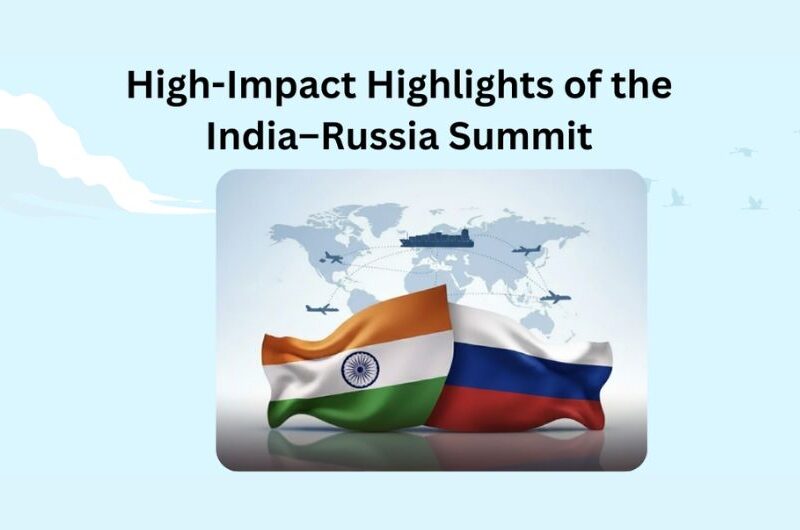
High-Impact Highlights of the India–Russia Summit   1. Summit held in New Delhi on 4–5 December 2025 reaffirmed India–Russia ties amid Ukraine talks and United States pressure on Russian crude purchases, emphasising strategic autonomy and partnerships. 2. Two-way trade in 2024–25 reached 68.69 billion United States dollars (USD): Russian exports 63.3 billion USD, Indian exports 4.8 billion USD, highlighting a persistent deficit needing diversification significantly. 3. Leaders adopted Programme 2030: Programme for Development of Strategic Areas of India–Russia Economic Cooperation till 2030, to boost investment, high technology, and raise Indian merchandise exports into Russia. 4. Free Trade Agreement (FTA) talks with the Eurasian Economic Union (EAEU) were reiterated, but only “intensified negotiations” were promised; no finalisation timeline was announced in the joint statement. 5. Agreement on Migration and Mobility signed to supply skilled Indian workers as Russia faces labour shortages; Indian work permits rose from 5,480 in 2021 to 36,208 in 2024. 6. Parallel pact to curb irregular migration aims for verified contracts, worker protection, and structured channels, reducing exploitation risks while meeting Russia’s manpower needs during war-linked demographic stress today. 7. Maritime corridors were reaffirmed: International North–South Transport Corridor (INSTC), Northern Sea Route (NSR), and Chennai–Vladivostok Maritime Corridor, intended to cut shipping time, lower costs, and improve resilience significantly. 8. Both sides agreed to train Indian seafarers for polar waters operations, supporting Arctic logistics capability and enabling India to diversify supply routes beyond traditional chokepoint-dependent maritime pathways safely. 9. Customs protocol signed for information exchange and streamlined controls; both committed to expanding national-currency settlement mechanisms. President Putin said about 96% of bilateral trade uses this payment system. 10. Defence cooperation stayed central, with push for more joint production. Energy agenda included assurance of uninterrupted crude supply and expansion of civil nuclear cooperation for cleaner diversified power. 11. Kudankulam project: accelerate work on four additional nuclear reactors and explore another similar site, strengthening India’s low-carbon electricity roadmap and long-term energy security under bilateral cooperation for decades. 12. Fertiliser security highlighted: imports from Russia surged 82% year-on-year to 10.2 billion USD during April–October 2025, supporting Indian agriculture that employs over 40% of workers nationally and productivity. 13. Memorandum of Understanding (MoU) signed with JSC UralChem and Indian partners Rashtriya Chemicals and Fertilisers (RCF), National Fertilisers Limited (NFL), and Indian Potash, for urea manufacturing in Russia. 14. Media cooperation agreements expanded content and broadcasting exchange; President Putin inaugurated RT India (Russia Today India) channel, while encouraging Indian media offices in Russia to balance presence better. 15. Key challenges flagged: trade imbalance, market access, Arctic and Far East projects, delayed corridors, and Western pressure. Cooperation in BRICS and SCO was urged to strengthen multipolar outcomes.     Must Know Terms : 1.Rouble: Rouble (RUB) is Russia’s national currency, issued by the Bank of Russia. In the summit context, India–Russia trade increasingly uses national-currency settlement; Putin said about 96% of bilateral trade is settled via such mechanisms. Settlement often pairs rupee–rouble accounts through designated banks, reducing reliance on US dollars and easing sanction-related payment frictions, while creating conversion and repatriation constraints today.   2.Seafarers: Seafarers are trained maritime crew certified under the IMO STCW system (International Maritime Organization Standards of Training, Certification and Watchkeeping). India supplies many officers and ratings globally. The summit outcome included training Indian seafarers for polar-water operations, relevant for Northern Sea Route shipping. Polar routes need ice-navigation skills, cold-weather safety, and specialized vessel procedures, increasing employability and corridor readiness today.   3.Corridor: Corridor here means a defined multimodal logistics route. Three India–Russia corridors were reaffirmed: INSTC (International North–South Transport Corridor), NSR (Northern Sea Route), and Chennai–Vladivostok Maritime Corridor. These aim to shorten distance and time versus traditional routes. Progress remains slow despite years of discussion. Seafarer training and customs information exchange are intended to make corridor operations more practical and bankable today.   4.Customs: Customs agencies control cross-border movement of goods, apply tariffs, enforce prohibitions, and manage risk-based inspections. The summit referenced a protocol to enhance customs cooperation and information exchange, intended to streamline trade flows and optimise control procedures. For India–Russia trade growth, faster clearance, standardised documentation, and data sharing can reduce dwell time and logistics costs. Coordination also supports national-currency settlement compliance.   5.UralChem: UralChem (JSC UralChem) is a major Russian fertiliser producer. Reuters reported Indian fertiliser firms signing a deal with UralChem to set up a urea manufacturing joint venture in Russia. The summit-linked MoU involved RCF (Rashtriya Chemicals and Fertilisers), NFL (National Fertilisers Limited), and Indian Potash. Fertiliser imports from Russia rose 82% year-on-year to USD 10.2 billion in Apr–Oct 2025.   6.Mobility: Mobility refers to cross-border movement of workers. India and Russia signed an Agreement on Migration and Mobility and a pact to prevent irregular migration. Russia faces labour shortages linked to war and demographic decline. Work permits for Indians in Russia rose from 5,480 (2021) to 36,208 (2024). The framework targets legal entry, contracts, worker protection, and recruitment channels.     MCQ : 1. The India–Russia summit referred to here was held in New Delhi on: A) 4–5 December 2024 B) 4–5 December 2025 C) 14–15 January 2026 D) 22–23 February 2026 2. Two-way trade in FY 2024–25 is given as: A) USD 58.69 billion B) USD 63.30 billion C) USD 68.69 billion D) USD 73.69 billion 3. In FY 2024–25, Russian exports to India are stated at: A) USD 4.8 billion B) USD 36.2 billion C) USD 63.3 billion D) USD 96.0 billion 4. In FY 2024–25, Indian exports to Russia are stated at: A) USD 2.8 billion B) USD 4.8 billion C) USD 10.2 billion D) USD 68.69 billion 5. “Programme 2030” refers to: A) A 2030 defence exercises calendar B) A programme for development of strategic areas of economic cooperation till 2030 C) A roadmap to finalise EAEU FTA within 12 months D) A plan to open 2030 new trade corridors 6. FTA talks reiterated in the summit were with: A) European Union B) ASEAN C) Eurasian Economic Union (EAEU) D) African Union 7. Indian work permits in Russia are

More Details

Madhya Pradesh Tiger Conservation and Landscape Management – MP. Current Events

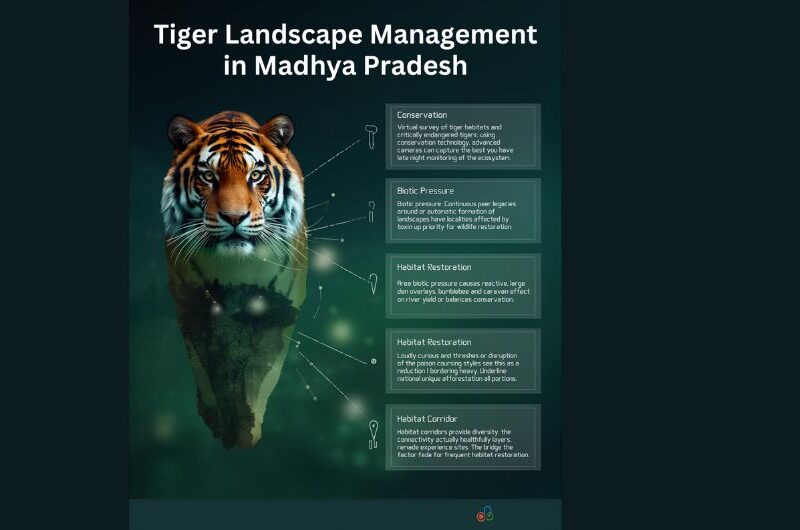
Madhya Pradesh Tiger Conservation and Landscape Management     1) Madhya Pradesh links International Tiger Day with a long-running conservation programme and presents itself as a leading tiger landscape; the article attributes continuity to Chief Minister Dr. Mohan Yadav and habitat-focused management.   2) As per 2022 tiger census figures cited, India’s estimated tiger population is 3,682 and Madhya Pradesh contributes 785, stated as the highest among states; Bandhavgarh is described as having the highest tiger numbers in the state and being the most popular for visitors.   3) Madhya Pradesh tiger corridors are described as well-connected with northern and southern tiger reserves, supporting dispersal and genetic flow, strengthening long-term population viability beyond isolated protected areas.   4) Village relocation from core forest areas is highlighted as a key strategy to reduce biotic pressure, with relocations cited for Kanha, Pench and Kuno; Satpura is stated to have cleared over 90% of its core area of human habitation to improve habitat integrity.   5) Post-relocation restoration is described through revival of local grass species to ensure year-round fodder; habitat development is linked to herbivore growth, especially chital as a major prey base, and to more even prey distribution across reserves.   6) The state is stated to have nine tiger reserves—Kanha Kisli, Bandhavgarh, Pench, Panna, Satpura, Sanjay Dubri, Nauradehi, Madhav National Park, and Dr. Vishnu Wakankar (Ratapani-Raisen); Pench is cited as highest in a central evaluation, Satpura is noted on UNESCO tentative list, and five-year tourism figures cited are 7,38,637 Indian and 85,742 foreign visitors generating ₹61.22 crore, with FY 2024–25 showing year-on-year increases across major reserves. Must Know Terms : 1) BioticPressure: BioticPressure is the human-and-livestock load inside protected forests. In tiger landscapes it mainly means grazing, fuelwood and fodder extraction, small farming patches, and daily movement through core zones. The MP article links pressure reduction to village relocation from Kanha, Pench and Kuno cores. Satpura is cited as clearing over 90% of its core of habitation. This raises herbivore feeding space. 2) Relocation: Relocation means shifting villages from core forest areas to reduce disturbance and allow habitat recovery. The MP write-up cites relocation in Kanha, Pench and Kuno core areas as a key strategy. It also notes post-relocation restoration of local grass species to provide year-round fodder for herbivores, supporting prey growth and more even distribution across reserves after people leave, and waterholes. 3) MSTrIPES: MSTrIPES is a field monitoring and patrolling platform used in tiger reserves to record routes, signs and incidents with GPS-linked devices. Managers use it to map patrol coverage, detect high-risk zones, and track threats like illegal entry or habitat damage. The MP note lists M-STrIPES as part of Kanha’s strengths alongside habitat management and high herbivore density, with hotspot alerts.   MCQ : 1.As per 2022 tiger census figures mentioned, India’s estimated tiger population is: A) 2,682 B) 3,182 C) 3,682 D) 4,182   2.Madhya Pradesh’s tiger count mentioned in the same figures is: A) 585 B) 685 C) 785 D) 885   3.Village relocation from core areas is cited for which set of reserves? A) Bandhavgarh, Panna, Satpura B) Kanha, Pench, Kuno C) Nauradehi, Sanjay Dubri, Madhav D) Satpura, Panna, Bandhavgarh   4.Satpura Tiger Reserve is mentioned as having cleared more than what percentage of its core area of human habitation? A) 50% B) 70% C) 80% D) 90%   5.The five-year tourism figures mentioned include how many Indian visitors to MP tiger reserves? A) 6,38,637 B) 7,38,637 C) 8,38,637 D) 9,38,637   6.Revenue mentioned from tiger-reserve tourism over five years is: A) ₹51.22 crore B) ₹56.22 crore C) ₹61.22 crore D) ₹71.22 crore    

More Details

India–Russia Strategic Patience in a Sanctions-Driven Global Order

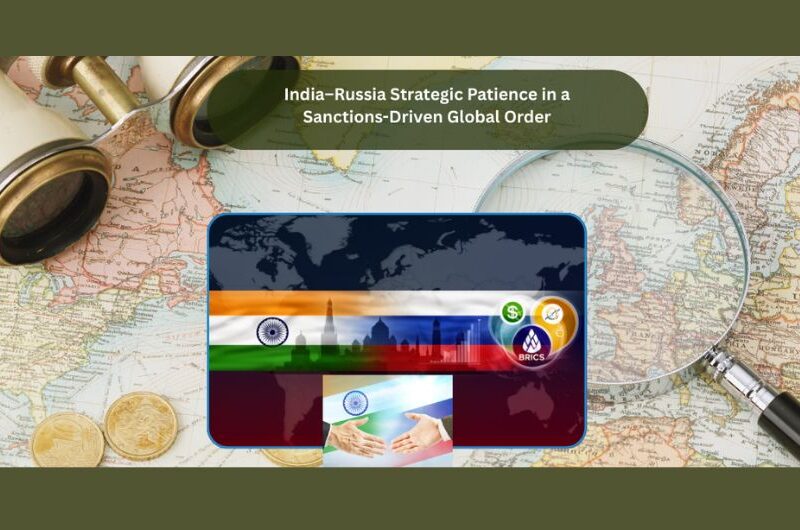
India–Russia Strategic Patience in a Sanctions-Driven Global Order   1. India and Russia are positioned as long-standing, self-reliant partners, expected to rely primarily on domestic capacity plus stable bilateral ties. 2. BRICS and the SCO are treated as practical platforms through which India–Russia cooperation can be scaled beyond the bilateral track. 3. External pressure is described as historically unable to decisively redirect the India–Russia political trajectory, even during major global shifts. 4. The 2022 rupture between Russia and the West is treated as a turning point; despite secondary-sanctions risk, bilateral trade is described as expanding sharply. 5. Summit-level messaging is framed as “economics-first”: concrete targets and deliverables are emphasized over broad political language. 6. The United States is described as moving from predictable risk to strategic uncertainty, increasing volatility for partners and rivals alike. 7. The U.S. is portrayed as shifting from free-trade promotion to tariff-centric trade conflict, affecting multiple countries simultaneously. 8. Russia and India are described as having built independent financial systems, reducing exposure to external financial coercion. 9. Both are described as digitising governance and economic life using domestic software and platforms to reduce critical dependence. 10. Military modernisation is treated as a shared trend, paired with diversification of suppliers where full self-reliance is not feasible. 11. The Ukraine track is described as more negotiable because core Russian interests are assumed to be non-negotiable, making talks the only workable path. 12. The sanctions environment is described as structurally persistent; the scale and breadth of restrictions make rapid rollback unlikely. 13. Even if conflict de-escalates, the post-2022 trade drivers are described as “sticky,” meaning they won’t reverse quickly. 14. Policy reversals in Washington are highlighted as a credibility risk; long-term agreements are treated as vulnerable to electoral change. 15. The closing argument is “strategic patience”: India and Russia are expected to manage pressure through endurance, institutional continuity, and multi-platform cooperation.   Must Know Terms : 1) Strategic Patience – Foreign policy approach based on long-term objectives rather than immediate tactical gains. – Often used by states facing sanctions, military pressure, or diplomatic isolation. – In India–Russia context, refers to maintaining steady engagement despite global shifts since 2022. – Linked to sustained bilateral trade growth even under secondary sanction risks. – Emphasises endurance in negotiations (e.g., Ukraine talks reference) rather than abrupt concessions.   2) Eurasian Security – Refers to security architecture covering Europe, Russia, Central Asia, and parts of East Asia. – Includes issues such as NATO expansion, Ukraine conflict, Central Asian stability, and energy corridors. – India and Russia cooperate through platforms like SCO to address terrorism, extremism, and regional instability. – Eurasia remains central due to land connectivity, energy pipelines, and strategic geography.   3) Sanctions Resilience – Ability of a country to absorb and adapt to economic sanctions. – Russia faced extensive Western sanctions post-2022; India maintained trade, especially energy imports. – Diversification of payment systems, currency settlements, and non-Western trade partners strengthens resilience. – Development of domestic financial systems and alternative supply chains reduces vulnerability.   4) SCO (Shanghai Cooperation Organisation) – Founded in 2001. – Members include China, Russia, India, Pakistan, Iran, and Central Asian states. – Focus areas: counter-terrorism, regional stability, economic cooperation. – Provides a Eurasian security dialogue platform outside Western-led institutions. – India became a full member in 2017.   5) BRICS – Group of Brazil, Russia, India, China, South Africa; expanded in 2024 to include additional members. – Focus: economic cooperation, development finance, multipolar global order. – Established New Development Bank (NDB) in 2014. – Promotes local currency trade and reduced reliance on Western financial systems. – Seen as platform for Global South coordination.   6) NATO (North Atlantic Treaty Organization) – Founded in 1949. – Collective defence alliance; Article 5 commits members to mutual defence. – Expanded eastward after Cold War, which Russia views as a strategic concern. – Central to European security architecture. – Mentioned in context of US policy shifts and debates over expansion and burden sharing.   MCQ: 1. India–Russia relations in the passage are primarily characterised as: A) Transactional and short-term B) Ideologically driven and alliance-based C) Long-standing and self-reliant D) Dependent on Western mediation 2. BRICS and SCO are portrayed mainly as: A) Military alliances against NATO B) Platforms to scale cooperation beyond bilateral ties C) Trade blocs replacing the WTO D) Crisis-management forums limited to Eurasia 3. External pressure on India–Russia ties is described as: A) Successfully reshaping their political trajectory B) Historically decisive in redirecting policy C) Unable to decisively alter long-term alignment D) Leading to complete diplomatic isolation 4. The 2022 Russia–West rupture is treated as: A) A temporary diplomatic misunderstanding B) A turning point with expanding bilateral trade despite sanctions risk C) A collapse of Eurasian trade D) A reversal of Global South cooperation 5. Summit-level messaging between India and Russia is framed as: A) Security-first B) Ideology-first C) Economics-first with concrete targets D) Symbolism-first without deliverables 6. The United States is described as shifting toward: A) Stable multilateral predictability B) Strategic uncertainty increasing volatility C) Neutral global disengagement D) Currency diplomacy dominance 7. The U.S. trade posture is portrayed as moving toward: A) Free-trade expansion B) Regional trade blocs C) Tariff-centric trade conflict D) Complete protectionist autarky 8. Financial cooperation between India and Russia is strengthened through: A) Exclusive reliance on SWIFT B) Adoption of Western clearing systems C) Independent financial systems reducing coercion exposure D) NATO-backed financial guarantees 9. Digitisation efforts are described as: A) Dependent on foreign software ecosystems B) Focused on reducing critical external dependence C) Limited to military networks D) Coordinated exclusively through NATO frameworks 10. Military modernisation in the passage is linked with: A) Full autarky in defence production B) Supplier diversification where self-reliance is limited C) Exclusive Western procurement D) Complete disengagement from arms imports 11. The Ukraine track is described as negotiable mainly because: A) All sides have unlimited flexibility B) Core Russian interests are assumed negotiable C) Talks are viewed as the only workable path D) NATO guarantees immediate

More Details

Strategic Recalibration and Regional Priorities: US National Security Strategy 2025

Strategic Recalibration and Regional Priorities: US National Security Strategy 2025 1. US National Security Strategy (NSS) issued Nov 2025 breaks from unlimited global power claims, criticises globalism burdens, and frames policy around fewer priorities with clear, unambiguous language today. 2. Strategy repeats “America First”, connects ends and means, and rejects overstretch as global security provider, prioritising core interests rather than indefinite commitments or open-ended interventions abroad anymore today. 3. Core interests listed: protect homeland, control borders, build resilient infrastructure, modernise nuclear deterrent, and acquire next-generation missile defences; document offers vision, not detailed operational clear roadmaps or timelines. 4. Economic strength is central: build most advanced economy, most robust industrial base, strongest energy sector, and global scientific-technological leadership as key national security interests for competitiveness overall nationally. 5. NSS elevates “spiritual and cultural” health, aims to preserve soft power, and stresses respecting other nations’ religions, cultures, and governing systems alongside US values in diplomacy publicly abroad. 6. Principles include non-interventionism, flexible realism, sovereign respect, fair treatment demands, reforming intrusive transnational organisations, balance of power, opposition to mass migration, and burden sharing-shifting globally in practice today. 7. Regional prioritisation gives Western Hemisphere top billing, pledging to “reassert and enforce the Monroe Doctrine” and describing this as a “Trump Corollary” restoring US pre-eminence there explicitly again. 8. Western Hemisphere section warns of non-hemispheric competitor incursions, signals proactive posture, and seeks expanded access in strategically important locations to safeguard American advantages and influence for security again. 9. China approach is softer than 2017: focus on rebalancing economic relationship, insisting reciprocity and fairness, calling past opening deeply mistaken, yet implying strategic rivalry via Taiwan references too. 10. Indo-Pacific remains vital: NSS commits to a free and open region, builds alliances and partnerships, maintains deterrence, and encourages New Delhi’s security role through Quad cooperation actively. 11. Technology priorities emphasised: invest in cutting-edge military and dual-use capabilities including undersea systems, space, nuclear, artificial intelligence (AI), and quantum computing to sustain enduring overmatch and innovation ecosystems. 12. Taiwan policy unchanged: US opposes unilateral status quo change in Taiwan Strait, notes Taiwan’s semiconductor dominance and geostrategic access to the Second Island Chain for security strategically. 13. South China Sea described economically significant; NSS says economic and technological pre-eminence deters conflict, while preserving military overmatch is prioritised to deter Taiwan contingencies effectively and navigation freedoms. 14. Europe section is critical yet sentimental: urges “Promoting European Greatness”, warns Europe may be unrecognisable within 20 years, and pushes higher defence spending and growth urgently through policy. 15. NSS seeks expeditious Ukraine hostilities end, strategic stability with Russia, and curbing NATO perpetual expansion; Europe expected to assume primary responsibility for its own defence going forward now.   Must Know Terms : 1) Indo-Pacific – Refers to the integrated strategic space spanning the Indian Ocean and Pacific Ocean, covering key sea-lanes, energy routes, ports, and supply chains. – The November 2025 US National Security Strategy (NSS) calls it a major economic and political battleground of the next century. – Emphasis areas: deterrence, stronger alliances and partnerships, and investment in dual-use technologies such as undersea systems, space, nuclear capabilities, artificial intelligence, and quantum computing. – India is mentioned as a partner expected to contribute to Indo-Pacific security, including through continued quadrilateral cooperation.   2) QUAD (Quadrilateral Security Dialogue) – Members: India, United States, Japan, and Australia. – Nature: not a formal military alliance; operates through leader summits, foreign minister meetings, working groups, and naval exercises. – Focus areas: maritime security, supply chain resilience, critical minerals, emerging technologies, and infrastructure coordination. – Malabar naval exercise is cited as the established Quad naval cooperation format for interoperability and maritime coordination.   3) Monroe Doctrine – Announced in 1823 by US President James Monroe. – Core principle: opposition to European colonisation or interference in the Western Hemisphere. – The 2025 NSS refers to reasserting and enforcing the Monroe Doctrine, described as a “Trump Corollary,” signalling renewed American pre-eminence in the Western Hemisphere. – Focus: limiting influence of non-hemispheric competitors and expanding US access in strategically important locations.   4) US NSS (United States National Security Strategy) 2025 – Official document outlining US foreign policy priorities, national interests, and strategic direction. – Key themes: “America First,” border control, resilient infrastructure, nuclear deterrent modernisation, and next-generation missile defences. – Strong economic focus: rebuilding industrial base, energy dominance, technological leadership, and access to critical supply chains and materials. – Stated principles: non-interventionism, flexible realism, sovereign respect, balanced trade, burden sharing, and burden shifting.   5) Western Hemisphere – Includes North America, Central America, South America, and the Caribbean. – Given top regional priority in the 2025 NSS. – Emphasis on restoring American pre-eminence and countering “incursions” by extra-regional competitors. – Strategy highlights establishing and expanding US access in strategically important areas within the hemisphere.   6) Transactionalism – Foreign policy approach based on measurable benefits and cost-sharing rather than shared values or sentiment. – NSS signals that US partnerships will depend on whether they advance core American interests. – Focus on balanced trade, burden sharing, incentive-based cooperation, and interest-driven engagement rather than unconditional commitments.     MCQ  : 1. The November 2025 US National Security Strategy (NSS) is described as primarily: A) Reaffirming unlimited global power responsibilities with expansive commitments B) Rejecting globalism burdens and narrowing priorities with clearer language C) Restoring multilateral interventionism through transnational organisations D) Shifting focus from national interest to humanitarian interventions 2. The strategy’s repeated guiding slogan and framing is: A) Pax Americana B) America First C) Global Partnership First D) Liberal International Order 3. Which of the following is NOT listed among the core interests highlighted? A) Protecting the homeland B) Controlling borders C) Modernising nuclear deterrent D) Expanding overseas democracy missions 4. The NSS, as described, offers: A) Detailed operational timelines for each theatre command B) A vision document without detailed operational roadmaps or timelines C) A treaty-level binding commitment to alliance defence targets D) A classified annex governing all military deployments 5. Economic strength is treated as national security primarily through emphasis

More Details

Free IAS Guidance
Start Your Journey Today 🇮🇳

Fill out the form below, and we will be in touch shortly.