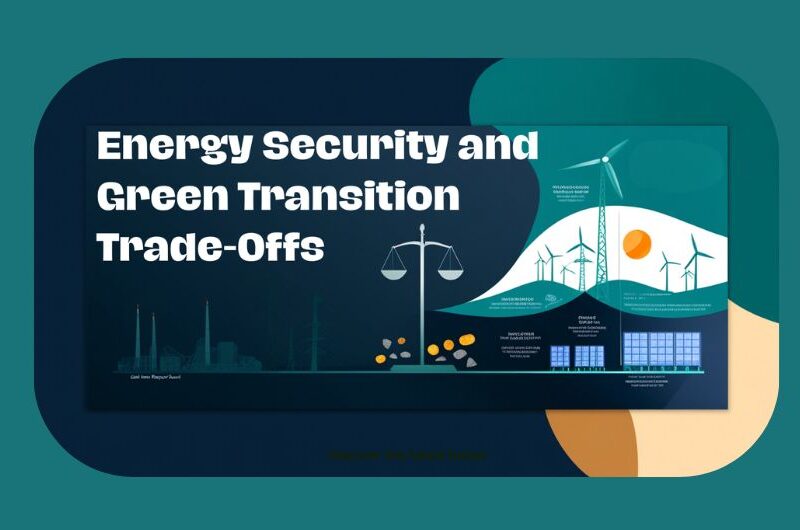
Energy Security and Green Transition Trade-Offs
1. India’s energy policy must balance three objectives: environmental sustainability, energy security and affordability. This is often described as the energy trilemma.
2. Environmental sustainability requires a transition towards clean, low-carbon and net-zero energy sources to reduce greenhouse-gas emissions and climate risks.
3. Energy security means ensuring a continuous, reliable and uninterrupted supply of energy for households, industry, transport and overall economic growth.
4. Energy affordability focuses on providing energy access at prices that remain economically viable for all sections of society.
5. Solar and wind energy are intermittent because their output depends on sunlight, wind patterns, seasons and time of day.
6. Industry and electricity grids require uninterrupted base-load power. Coal currently provides more than 70 percent of India’s electricity-grid stability, making a sudden withdrawal of thermal capacity risky.
7. Battery Energy Storage Systems (BESS) and Pumped Hydro Storage Projects (PSP) are essential for storing renewable power, managing peak demand and reducing the risk of grid instability or blackouts.
8. India has traditionally depended on imported crude oil and has had to manage price volatility and geopolitical risks related to West Asian oil markets.
9. The green-energy transition creates a new import dependence because electric vehicles, solar panels and batteries require lithium, cobalt, nickel and rare earth elements.
10. China has a dominant position in the processing and supply chains of several critical minerals, creating a strategic vulnerability for countries expanding clean-energy technologies.
11. Green infrastructure requires high capital expenditure for smart grids, offshore wind projects, storage systems and green-hydrogen hubs. This investment must be balanced with spending on poverty reduction, agricultural subsidies and healthcare.
12. Rapid closure of coal-based power plants can create stranded assets, as existing thermal infrastructure may lose value before the end of its useful life.
13. Public sector banks have significant lending exposure to thermal power plants and coal blocks. A rapid transition can increase the risk of Non-Performing Assets (NPAs) and financial stress.
14. Renewable projects need large land areas per megawatt. Mega solar parks can create conflicts with agricultural land, pastoral livelihoods, local ecosystems and migratory routes such as those of the Great Indian Bustard.
15. India is pursuing a just and ordered transition through natural gas as a bridge fuel, storage expansion, domestic BESS manufacturing under the Production Linked Incentive scheme, overseas mineral acquisition through Khanij Bidesh India Limited, participation in the Mineral Security Partnership, small modular nuclear reactors and the National Green Hydrogen Mission for sectors such as steel, refineries and fertilisers.
Must Know Terms :
1. Energy Trilemma
It refers to balancing environmental sustainability, energy security and energy affordability.
2. Battery Energy Storage System (BESS)
It stores electricity generated from renewable sources and supplies it when solar or wind output is low.
3. Pumped Hydro Storage Project (PSP)
It stores energy by pumping water to a higher reservoir and generates electricity during peak demand.
4. Stranded Assets
These are coal plants or other fossil-fuel infrastructure that lose economic value before completing their useful life.
5. Critical Minerals
Lithium, cobalt, nickel and rare earth elements are essential for batteries, electric vehicles, solar equipment and clean-energy technologies.
6. Green Hydrogen
It is hydrogen produced using renewable electricity and can reduce emissions in sectors such as steel, refineries and fertilisers.
MCQ :
1. The energy trilemma consists of which three objectives?
(a) Environmental sustainability, energy security and energy affordability
(b) Economic growth, food security and employment
(c) Coal production, oil imports and nuclear capacity
(d) Land acquisition, finance and mineral exploration
2. With reference to renewable energy, consider the following statements:
1. Solar power output depends on sunlight availability.
2. Wind power output varies with wind patterns and seasons.
3. Renewable energy intermittency can be fully eliminated without storage or grid balancing.
Which of the statements given above is/are correct?
(a) 1 only
(b) 1 and 2 only
(c) 2 and 3 only
(d) 1, 2 and 3
3. Battery Energy Storage Systems (BESS) are primarily used to:
(a) Extract coal from underground mines
(b) Refine crude oil into petroleum products
(c) Store electricity and supply it when renewable output is low or demand is high
(d) Produce rare earth elements from ores
4. Pumped Hydro Storage Projects generate electricity during peak demand by:
(a) Burning natural gas in turbines
(b) Converting coal into synthetic fuel
(c) Using solar panels to directly charge the grid
(d) Releasing stored water from an upper reservoir through turbines
5. A sudden retirement of coal-based power plants can create stranded assets because:
(a) Thermal infrastructure may lose economic value before completing its useful life
(b) Coal reserves automatically become renewable resources
(c) Electricity demand permanently disappears
(d) All thermal plants can be converted into solar parks without cost
6. Which one of the following is a major strategic concern associated with the green-energy transition?
(a) Elimination of all dependence on imported materials
(b) Dependence on critical minerals such as lithium, cobalt and nickel
(c) Complete replacement of electricity grids by oil pipelines
(d) End of geopolitical risks in energy markets
7. China’s role in critical-mineral supply chains is strategically significant mainly because it has a dominant position in:
(a) Global crude-oil shipping through West Asia
(b) Construction of all global nuclear reactors
(c) Processing and supply chains of several critical minerals
(d) Ownership of all offshore wind fields
8. With reference to India’s energy security, consider the following statements:
1. India has traditionally relied on imported crude oil.
2. West Asian geopolitical developments can affect India’s oil-import costs and supplies.
3. Transition to clean energy removes every form of import dependence.
Which of the statements given above is/are correct?
(a) 1 only
(b) 2 and 3 only
(c) 1 and 3 only
(d) 1 and 2 only
9. High capital expenditure in the green transition is required for all of the following except:
(a) Expansion of conventional coal blocks
(b) Smart electricity grids
(c) Energy-storage systems
(d) Green-hydrogen hubs
10. Rapid energy transition may increase financial stress on public sector banks when they have high lending exposure to:
(a) Only rooftop solar consumers
(b) Thermal power plants and coal blocks
(c) Only agricultural credit cooperatives
(d) Public hospitals using solar power
11. Mega solar parks can lead to ecological and livelihood conflicts because they may affect:
(a) Only deep-sea fisheries
(b) Only urban metro networks
(c) Agricultural land, pastoral livelihoods and migratory bird routes
(d) Only petroleum-refining capacity
12. The Great Indian Bustard is relevant to discussions on renewable-energy expansion because of concerns related to:
(a) Deep-sea mineral extraction
(b) Crude-oil refining in coastal areas
(c) Nuclear-waste disposal
(d) Habitat and migratory-route conflicts around large renewable projects
13. Natural gas is described as a bridge fuel because it can:
(a) Provide a relatively cleaner transitional source of dependable power
(b) Eliminate the need for all renewable-energy storage
(c) Replace the need for electricity grids
(d) Avoid all fuel-import risks
14. Khanij Bidesh India Limited (KABIL) is associated with:
(a) Management of domestic electricity distribution companies
(b) Securing overseas critical-mineral assets
(c) Operating India’s strategic petroleum reserves
(d) Regulating feed-in tariffs for solar power
15. Green hydrogen is especially important for reducing emissions in hard-to-abate sectors such as:
(a) Primary school education and retail trade
(b) Tourism and software services
(c) Steel, refineries and fertilisers
(d) Rainwater harvesting and afforestation




0 comment