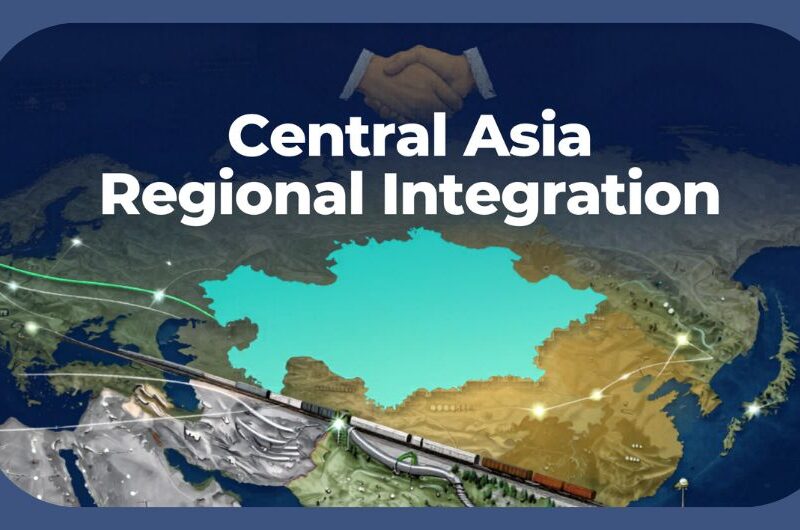
Central Asia Regional Integration
1. In 2025, Central Asian countries strengthened regional cooperation, economic diversification, and geopolitical balancing while emerging as a major Eurasian transit and energy hub.
2. The region continued following an intensified multi-vector foreign policy in 2025, balancing relations with Russia, China, the United States, the European Union, and other partners.
3. On 13 March 2025, Kyrgyzstan and Tajikistan signed a border agreement resolving a long-standing territorial dispute and reopening border crossings closed since 2021.
4. In March 2025, Uzbekistan, Kyrgyzstan, and Tajikistan signed the Khujand Declaration to resolve several territorial disputes and improve regional stability.
5. Tajikistan joined Kazakhstan, Uzbekistan, and Kyrgyzstan in signing the Treaty of Friendship, Good-Neighbourliness, and Cooperation for the Development of Central Asia in the 21st Century during 2025.
6. Central Asian leaders proposed creating a Community of Central Asia with an advanced institutional structure including a council of elders and rotating secretary.
7. Azerbaijan became the sixth member integrated into the consultative meetings format, creating the Central Asia Plus Azerbaijan platform in 2025.
8. The Second Russia–Central Asia Summit was held in Dushanbe in October 2025 and adopted a joint action plan for 2025–2027.
9. The second China–Central Asia Summit hosted by Kazakhstan resulted in a Treaty on Permanent Good-Neighbourliness, Friendship, and Cooperation.
10. Uzbekistan hosted the first-ever European Union–Central Asia Summit in April 2025, where the EU proposed €12 billion investment through the Global Gateway project.
11. A high-level United States–Central Asia C5+1 summit was held in Washington D.C. in November 2025, focusing on business deals and key minerals cooperation.
12. Construction began in 2025 on the China–Kyrgyzstan–Uzbekistan Railway, expected to significantly reduce freight transport time to Europe.
13. In July 2025, Uzbekistan, Afghanistan, and Pakistan signed a framework agreement in Kabul for feasibility studies related to the Trans-Afghan Railway project.
14. Azerbaijan, Kazakhstan, and Uzbekistan launched the Green Energy Corridor initiative in 2025 to facilitate electricity transmission toward Europe.
15. The 4th India–Central Asia Dialogue chaired by External Affairs Minister Dr S. Jaishankar was held in New Delhi on 6 June 2025.
Must Know Terms
1.KhujandDeclaration
KhujandDeclaration was signed in March 2025 by Uzbekistan, Kyrgyzstan, and Tajikistan to resolve persistent territorial disputes and improve regional stability. It followed the Kyrgyzstan-Tajikistan border agreement of 13 March 2025 and supported the reopening of border crossings. The declaration strengthened Central Asian regional integration by reducing border tensions, improving local connectivity, and supporting cooperative diplomacy.
2.MultiVectorPolicy
MultiVectorPolicy refers to Central Asia’s diplomatic approach of balancing relations with several major powers instead of depending on one partner. In 2025, the region engaged Russia, China, the United States, the European Union, and new European partners. This policy helped Central Asian states protect autonomy, attract investment, develop transport corridors, and position themselves as important Eurasian transit and energy hubs.
3.ChinaKyrgyzstanUzbekistanRailway
ChinaKyrgyzstanUzbekistanRailway is a long-pending connectivity project whose construction began in 2025. It is expected to significantly reduce freight time to Europe and strengthen Central Asia’s role in Eurasian transport networks. The railway supports China’s regional connectivity goals, helps Kyrgyzstan and Uzbekistan improve trade access, and complements the broader effort to diversify routes beyond traditional Russian-controlled corridors.
4.GreenEnergyCorridor
GreenEnergyCorridor is a trilateral initiative between Azerbaijan, Kazakhstan, and Uzbekistan established in 2025 to facilitate electricity transmission toward Europe. Its headquarters are located in Baku. The project reflects Central Asia’s growing focus on renewable energy, regional power connectivity, and export diversification. It also strengthens links between Central Asia, the Caspian region, and European energy markets.
5.IndiaCentralAsiaDialogue
IndiaCentralAsiaDialogue refers to India’s structured diplomatic engagement with the five Central Asian countries. The 4th dialogue was held in New Delhi on 6 June 2025 and chaired by External Affairs Minister Dr S. Jaishankar. The meeting addressed terrorism, drug trafficking, trade, connectivity, and regional stability, while also strongly condemning the April 2025 Pahalgam terrorist attack.
6.ChabaharINSTC
ChabaharINSTC refers to India’s connectivity strategy using Iran’s Chabahar Port and the International North-South Transport Corridor to reach Central Asia while bypassing Pakistan. In 2025, India and Central Asian partners again stressed these routes as important trade links. Chabahar was described as a “Golden Gate” for commerce, supporting regional connectivity, energy cooperation, and India’s wider Eurasian engagement.
MCQ :
1. In 2025, Central Asia emerged prominently as:
A. A NATO military hub
B. A Eurasian transit and energy hub
C. A closed economic bloc
D. An Arctic trade corridor
2. Central Asia’s 2025 diplomatic approach of balancing multiple powers is known as:
A. Strategic Isolation Policy
B. Continental Doctrine
C. Multi-Vector Policy
D. Eurasian Exclusivism
3. On 13 March 2025, which two countries signed a border agreement resolving a long-standing territorial dispute?
A. Kazakhstan and Uzbekistan
B. Kyrgyzstan and Tajikistan
C. Turkmenistan and Kazakhstan
D. Uzbekistan and Afghanistan
4. The Khujand Declaration of March 2025 was signed by:
A. Kazakhstan, Turkmenistan, and Tajikistan
B. China, Kyrgyzstan, and Uzbekistan
C. Uzbekistan, Kyrgyzstan, and Tajikistan
D. Russia, Kazakhstan, and Kyrgyzstan
5. Which country joined the Treaty of Friendship, Good-Neighbourliness, and Cooperation for the Development of Central Asia in 2025?
A. Turkmenistan
B. Azerbaijan
C. Tajikistan
D. Afghanistan
6. Central Asian leaders proposed creating which institutional platform in 2025?
A. Eurasian Defence Union
B. Community of Central Asia
C. Central Asian Monetary Union
D. Caspian Security Bloc
7. Azerbaijan became integrated into the consultative meetings as:
A. Observer member
B. Strategic partner
C. Rotational chair
D. Sixth member
8. The Second Russia–Central Asia Summit held in October 2025 took place in:
A. Astana
B. Tashkent
C. Dushanbe
D. Bishkek
9. The second China–Central Asia Summit hosted by Kazakhstan resulted in:
A. A military alliance treaty
B. Treaty on Permanent Good-Neighbourliness, Friendship, and Cooperation
C. Establishment of a common currency
D. Suspension of border controls
10. Uzbekistan hosted the first-ever EU–Central Asia Summit in:
A. January 2025
B. April 2025
C. July 2025
D. November 2025
11. Under the EU Global Gateway proposal, how much investment was proposed for Central Asia?
A. €5 billion
B. €8 billion
C. €10 billion
D. €12 billion
12. Construction began in 2025 on which major railway project?
A. Trans-Caspian Railway
B. China–Kyrgyzstan–Uzbekistan Railway
C. Moscow–Tashkent Corridor
D. Silk Route Freight Line
13. In July 2025, Uzbekistan, Afghanistan, and Pakistan signed a framework agreement related to:
A. TAPI Pipeline
B. Caspian Shipping Corridor
C. Trans-Afghan Railway
D. SCO Defence Grid
14. The Green Energy Corridor initiative launched in 2025 involved:
A. India, Iran, and Kazakhstan
B. Azerbaijan, Kazakhstan, and Uzbekistan
C. China, Russia, and Kyrgyzstan
D. Türkiye, Uzbekistan, and Tajikistan
15. The 4th India–Central Asia Dialogue held on 6 June 2025 was chaired by:
A. Narendra Modi
B. Rajnath Singh
C. Dr S. Jaishankar
D. Ajit Doval


0 comment