Women’s Financial Empowerment and Livelihood Transformation
1. Sukanya Samriddhi Yojana was launched on 22 January 2015 under Beti Bachao Beti Padhao to support long-term financial security of girls through savings for education and marriage.
2. Sukanya Samriddhi Yojana currently offers 8.2 percent annual interest, allows deposits from ₹250 to ₹1.5 lakh yearly, and provides tax-free interest and maturity benefits under Section 80C.
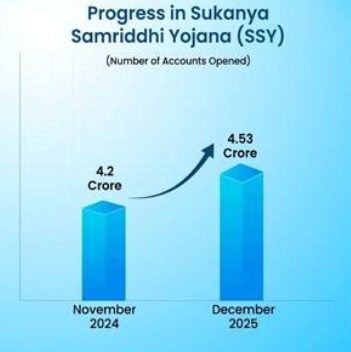
3. Under Sukanya Samriddhi Yojana, deposits can be made for 15 years, while the account matures after 21 years from opening, with partial withdrawal allowed after eighteen.
4. Total deposits under Sukanya Samriddhi Yojana exceeded ₹3.33 lakh crore by December 2025, showing large-scale participation by families investing early in daughters’ financial security and future aspirations.
5. DAY-NRLM has mobilised over 10.05 crore rural women households into more than 90.90 lakh Self-Help Groups, creating one of the world’s largest women-led community institution networks.
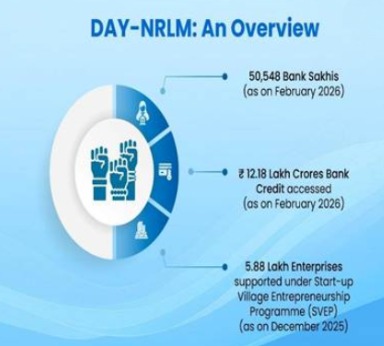
6. DAY-NRLM deploys Bank Sakhis for banking support and Krishi Sakhis and Pashu Sakhis for livelihood guidance, while its Self-Help Groups maintain a repayment rate above 98 percent.
7. More than 4.6 crore women farmers benefited under DAY-NRLM support by October 2025, and over 5.88 lakh enterprise units were assisted through Start-up Village Entrepreneurship Program.
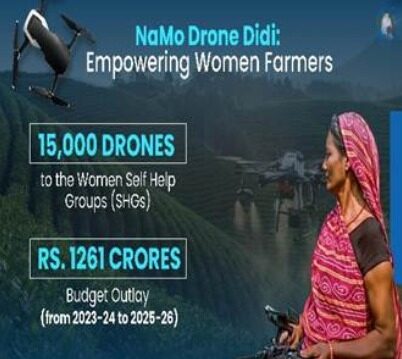
8. NaMo Drone Didi equips selected Women Self-Help Groups with drones for precision agriculture services, mainly spraying fertilisers and pesticides, while generating sustainable rental income opportunities.
9. Under NaMo Drone Didi, selected Self-Help Groups receive 80 percent Central Financial Assistance up to ₹8 lakh, plus pilot training for fifteen days and assistant training.
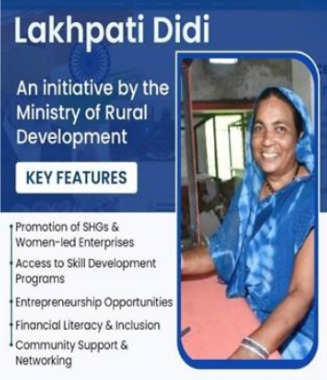
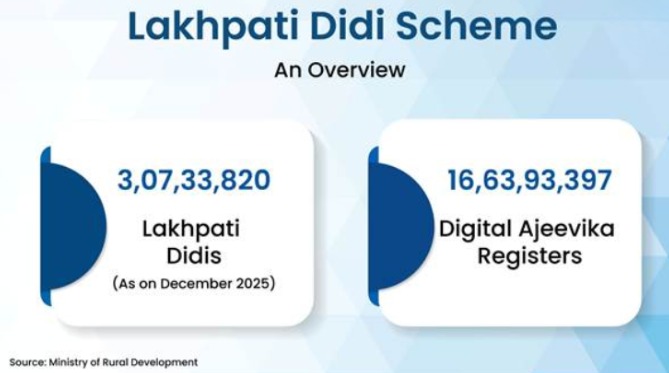
10. The government aims to create 6 crore Lakhpati Didis, and launched a January 2026 entrepreneurship campaign to train 50 lakh SHG members through 50,000 Community Resource Persons.
11. LokOS app and Digital Aajeevika Register digitise records and monitor real-time income data of potential Lakhpati Didis, supporting systematic identification, tracking, and entrepreneurship-focused livelihood progress nationwide.
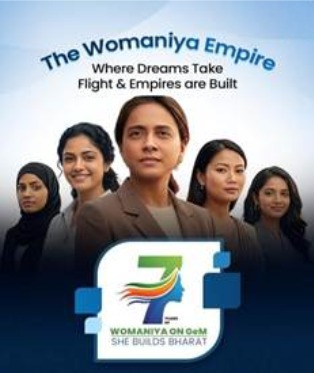
12. Womaniya Initiative, launched on 14 January 2019 through GeM, promotes participation of women-led Micro and Small Enterprises and Self-Help Groups in government public procurement systems.
13. By January 2026, over two lakh women-led Micro and Small Enterprises were registered under Womaniya, securing procurement orders worth more than ₹80,000 crore, exceeding mandated participation targets.
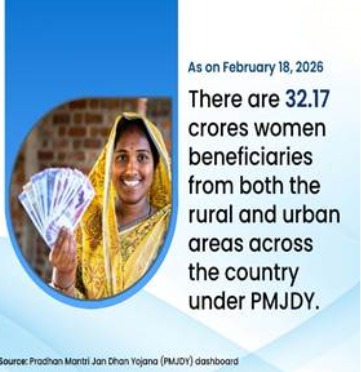
14. PMJDY, launched on 28 August 2014, provides zero-balance accounts, RuPay debit cards, accident insurance, overdraft eligibility, and direct access to formal banking services for women.
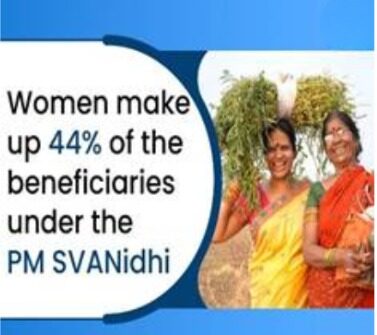
15. PM SVANidhi, launched in June 2020, was extended till March 2030 with ₹7,332 crore outlay, and more than 1.46 crore loans were sanctioned by December 2025.
Must Know Terms :
1. BankSakhi
BankSakhi is a trained woman deployed under DAY-NRLM at bank branches to support Self-Help Groups in formal banking access. She assists in opening savings accounts, credit and debit transactions, loan procedures, and other banking services. This role is part of DAY-NRLM, which has mobilised over 10.05 crore rural women households into more than 90.90 lakh Self-Help Groups with repayment above 98 percent.
2.KrishiSakhi
KrishiSakhi is a trained woman community resource person under DAY-NRLM who provides agriculture-related support to rural households and women farmers throughout the year. She helps promote better farming methods and livelihood improvement. Women farmers supported under the mission are identified as Mahila Kisans. As of October 2025, over 4.6 crore women had benefited under DAY-NRLM through agriculture-linked support and livelihood strengthening initiatives.
3.PashuSakhi
PashuSakhi is a trained woman resource person under DAY-NRLM who supports livestock-based livelihoods by advising rural households on animal-related activities. She works alongside other field-level women cadres to strengthen year-round income opportunities. This support structure is part of the wider DAY-NRLM network, which has created one of the world’s largest women-led community institution systems, covering over 10.05 crore rural women households across India.
4.LokOS
LokOS is a digital platform used in the Lakhpati Didi framework for digitising records and tracking real-time income data of potential beneficiaries. It is managed along with the Digital Aajeevika Register by Digital India Corporation. The platform supports identification and monitoring of women crossing the ₹1 lakh annual household income threshold. It gained importance after the January 2026 entrepreneurship campaign targeting 50 lakh SHG members.
5.Womaniya
Womaniya is a Government e-Marketplace programme launched on 14 January 2019 to increase participation of women-led Micro and Small Enterprises and Self-Help Groups in public procurement. By January 2026, over two lakh women-led MSEs were registered on GeM and had secured procurement orders worth more than ₹80,000 crore, amounting to 4.7 percent of GeM’s total order value, exceeding the mandated 3 percent target.
6.SVANidhi
SVANidhi refers to the Prime Minister Street Vendor’s AtmaNirbhar Nidhi scheme launched in June 2020 by the Ministry of Housing and Urban Affairs. It provides collateral-free working capital loans to street vendors. The restructured scheme runs till March 2030 with an outlay of ₹7,332 crore and targets 1.15 crore vendors, including 50 lakh new beneficiaries. By December 2025, over 1.46 crore loans had been sanctioned.
MCQ :
1. Sukanya Samriddhi Yojana was launched on:
A) 28 August 2014
B) 22 January 2015
C) 8 April 2015
D) 14 January 2019
2. Sukanya Samriddhi Yojana was launched under:
A) PMJDY
B) Stand-Up India
C) Beti Bachao Beti Padhao
D) PMMY
3. The current annual interest rate under Sukanya Samriddhi Yojana is:
A) 7.6%
B) 8.2%
C) 8.8%
D) 9.1%
4. Under Sukanya Samriddhi Yojana, the maximum annual deposit allowed is:
A) ₹50,000
B) ₹1 lakh
C) ₹1.25 lakh
D) ₹1.5 lakh
5. DAY-NRLM has mobilised over how many rural women households into Self-Help Groups?
A) 8.05 crore
B) 9.25 crore
C) 10.05 crore
D) 11.05 crore
6. The number of Self-Help Groups formed under DAY-NRLM is more than:
A) 70.90 lakh
B) 80.90 lakh
C) 85.90 lakh
D) 90.90 lakh
7. The repayment rate of DAY-NRLM Self-Help Groups is:
A) above 90%
B) above 95%
C) above 98%
D) above 99.5%
8. More than how many women farmers had benefited under DAY-NRLM support by October 2025?
A) 2.6 crore
B) 3.6 crore
C) 4.6 crore
D) 5.6 crore
9. Over how many enterprise units were supported under the Start-up Village Entrepreneurship Program?
A) 3.88 lakh
B) 4.88 lakh
C) 5.88 lakh
D) 6.88 lakh
10. NaMo Drone Didi mainly enables selected women SHGs to provide rental services for:
A) rural transport
B) precision agriculture
C) dairy logistics
D) village surveillance
11. Under NaMo Drone Didi, Central Financial Assistance for the drone package is:
A) 50% up to ₹5 lakh
B) 60% up to ₹6 lakh
C) 70% up to ₹7 lakh
D) 80% up to ₹8 lakh
12. The government target for creating Lakhpati Didis is:
A) 4 crore
B) 5 crore
C) 6 crore
D) 7 crore
13. In January 2026, a national campaign was launched to train how many SHG members for entrepreneurship?
A) 20 lakh
B) 30 lakh
C) 40 lakh
D) 50 lakh
14. Womaniya Initiative was launched through GeM on:
A) 14 January 2019
B) 22 January 2015
C) 8 April 2015
D) 28 August 2014
15. By January 2026, women-led MSEs under Womaniya had secured procurement orders worth:
A) more than ₹50,000 crore
B) more than ₹60,000 crore
C) more than ₹70,000 crore
D) more than ₹80,000 crore

0 comment