Best UPSC and MPPSC IAS Coaching Classes in Gwalior

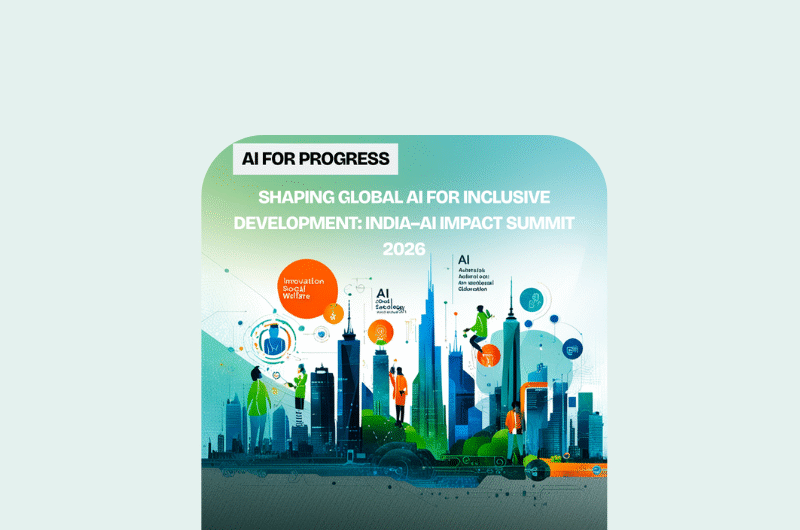
Shaping Global AI for Inclusive Development: India–AI Impact Summit 2026

Shaping Global AI for Inclusive Development: India–AI Impact Summit 2026   1. India AI Impact Summit 2026 is scheduled from 16–20 February 2026 at Bharat Mandapam, New Delhi, as a five-day programme spanning policy, research, industry, and public engagement. 2. The Summit is described as the first global AI summit to be hosted in the Global South, bringing leaders, policymakers, companies, innovators, and experts together. 3. The Summit is anchored on three foundational pillars called Sutras: People, Planet, and Progress, intended as guiding principles for impact-oriented cooperation. 4. The India AI Impact Expo 2026 is expected to feature over 300 exhibitors from 30 countries across more than 10 thematic pavilions; figures are tentative. 5. The Summit aligns with Viksit Bharat by 2047 and connects with the IndiaAI Mission and Digital India Initiative for development-focused AI outcomes. 6. The Summit outlines AI benefits for People, including telemedicine, diagnostics, adaptive education, and fraud detection, aiming to expand access and strengthen systems. 7. For the Planet, it highlights AI in agriculture through crop prediction, precision farming, drone monitoring, and advisory support using weather, pest, and irrigation data. 8. For Progress, it notes AI-assisted translation of court judgments, smart city optimisation, improved service delivery, and everyday efficiency in mobility services. 9. Pre-Summit Events are organised in India and abroad to facilitate consultations and thematic discussions involving governments, academia, industry, startups, and civil society.   10. Eight Regional AI Conferences were held between October 2025 and January 2026 across Meghalaya, Gujarat, Odisha, Madhya Pradesh, Uttar Pradesh, Rajasthan, Kerala, and Telangana. 11. The Main Summit sessions are structured around seven Chakras, and the programme reports receiving over 700 proposals, indicating strong global participation. 12. The AI Compendium will be released on 17 February 2026, presenting thematic casebooks on real-world AI applications across priority sectors. 13. The AI for ALL Global Impact Challenge is partnered with Startup India and the Digital India Bhashini Division, offering awards up to INR 2.50 crore. 14. The AI by HER Global Impact Challenge partners the NITI Aayog Women Entrepreneurship Platform, showcasing women-led AI solutions, with awards up to INR 2.50 crore. 15. The YUVAi Global Youth Challenge targets ages 13–21, partnered with MyBharat and NIELIT, offering prizes worth up to INR 85 lakh. India–AI Impact Summit 2026: Event Schedule and Key Programmes Date Event Venue 16–20 February 2026 AI Impact Expo Bharat Mandapam, New Delhi 16 February 2026 Keynotes, Panel Discussions, Roundtables Bharat Mandapam/ Sushma Swaraj Bhawan/ Ambedkar Bhawan, New Delhi 17 February 2026 Release of Knowledge Compendiums on AI in Health, Energy, Education, Agriculture, Gender Empowerment, Accessibility Bharat Mandapam, New Delhi Seminar on Applied AI AI by HER: Global Impact Challenge Sushma Swaraj Bhawan, New Delhi Keynotes, Panel Discussions, Roundtables Bharat Mandapam/ Sushma Swaraj Bhawan/ Ambedkar Bhawan, New Delhi 18 February 2026 Research Symposium Bharat Mandapam, New Delhi Industry Session AI by HER: Global Impact Challenge Sushma Swaraj Bhawan, New Delhi Keynotes, Panel Discussions, Roundtables Bharat Mandapam/ Sushma Swaraj Bhawan/ Ambedkar Bhawan, New Delhi Summit Dinner Convention Centre, New Delhi 19 February 2026 Opening Ceremony Bharat Mandapam, New Delhi   Leaders’ Plenary CEO Roundtable Keynotes / Panel Discussion/ Roundtables Bharat Mandapam / Sushma Swaraj Bhawan / Ambedkar Bhawan, New Delhi 20 February 2026 GPAI Council Meeting Bharat Mandapam, New Delhi Keynotes/ Panel Discussion/ Roundtables Bharat Mandapam / Sushma Swaraj Bhawan / Ambedkar Bhawan, New Delhi   MUST-KNOW TERMS 1. India–AI Impact Summit 2026: India–AI Impact Summit 2026 is a global artificial intelligence summit scheduled from 16–20 February 2026 at Bharat Mandapam, New Delhi. It is the first global AI summit hosted in the Global South and focuses on translating AI discussions into development outcomes aligned with national priorities, governance needs, and inclusive growth objectives under the IndiaAI Mission and Digital India. 2. IndiaAI Mission: IndiaAI Mission is a flagship national initiative aimed at building a robust, inclusive, and responsible artificial intelligence ecosystem in India. It focuses on AI compute infrastructure, indigenous AI models, datasets, skilling, startup support, and ethical deployment, ensuring AI adoption strengthens governance, economic growth, and public service delivery across sectors. 3. Three Sutras: The Three Sutras—People, Planet, and Progress—are the foundational pillars of the India–AI Impact Summit 2026. They guide AI deployment toward inclusive social outcomes, environmental sustainability, and governance efficiency. These principles emphasize people-centric AI, sustainable resource use, and technology-enabled institutional progress through multilateral cooperation. 4. Seven Chakras: Seven Chakras represent key areas of multilateral cooperation at the Summit, including Human Capital, Inclusion for Social Empowerment, Safe and Trusted AI, Resilience and Innovation, Science, Democratizing AI Resources, and AI for Economic Growth and Social Good. These Chakras structure discussions to align AI strategies with inclusive and sustainable development outcomes. 5. AI Impact Expo 2026: The India AI Impact Expo 2026 is a large-scale exhibition organised by MeitY with STPI as custodian. Spread over 70,000 square metres, it showcases AI transition from research to deployment, featuring innovators, startups, investors, and thematic pavilions demonstrating sector-specific AI solutions. 6. AI Compendium: The AI Compendium is a knowledge output of the Summit to be released on 17 February 2026. It contains thematic casebooks documenting real-world AI applications across priority sectors such as health, education, agriculture, energy, and governance, serving as a reference for practitioners and policymakers.     Key Takeaways The India–AI Impact Summit 2026will be the first global AI summit to be hosted in the Global South. It will be held from 16 to 20 February 2026 at Bharat Mandapam, New Delhi, as a five-day programme covering policy, research, industry, and public engagement. It will be anchored on 3 foundational pillars, or ‘Sutras’: People, Planet and Progress. The India AI Impact Expo is expected to feature over 300 exhibitors, from 30 Countries, across more than 10 thematic pavilions.                                                                                                                        MCQ     1. The India–AI Impact Summit 2026 will be held at which location? A. Vigyan Bhawan, New Delhi B. Bharat Mandapam, New Delhi C. Hyderabad International Convention Centre D. India Habitat Centre 2. The India–AI Impact Summit 2026 is described as: A. First AI summit hosted by

More Details
Electronics Development Fund

Electronics Development Fund   The Electronics Development Fund (EDF) is a flagship initiative launched by the Government of India on 15 February 2016 to strengthen India’s innovation ecosystem in electronics, nano-electronics, IT and emerging technologies. It was created under MeitY as a Fund of Funds to support early-stage startups through professionally managed venture and angel funds. EDF has become a key pillar of India’s Electronics System Design and Manufacturing (ESDM) strategy.   India’s electronics sector has grown rapidly in recent years due to policy reforms, industrial expansion and rising domestic demand. The EDF was conceptualised to accelerate this momentum by increasing risk-capital availability for high-technology entrepreneurs. By nurturing innovation at the seed and growth stage, EDF aims to reduce import dependence and enhance India’s capabilities in indigenous design and IP generation.   EDF invests in “Daughter Funds” such as Category I and II SEBI-registered Alternative Investment Funds (AIFs). These funds then provide capital to startups working on frontier technologies. This indirect investment model allows EDF to leverage professional fund management, attract private investors and expand overall investment in the sector.   The Ministry of Electronics and Information Technology (MeitY) is the anchor investor, while Canara Bank acts as Trustee and Sponsor. The Investment Manager is Canbank Venture Capital Funds Ltd. (CVCFL), responsible for evaluating Daughter Funds, conducting due diligence and ensuring alignment with EDF objectives.   The strategic goals of EDF include promoting innovation, creating a national pool of intellectual property, enhancing India’s ESDM design capabilities and supporting technology development driven by domestic needs. EDF also encourages acquisition of critical foreign technologies to reduce high-volume imports, strengthening national self-reliance.   EDF’s operational model is flexible. It participates in Daughter Funds on a non-exclusive basis, usually as a minority investor to stimulate greater private participation. It gives autonomy to fund managers to raise corpus, select investments and monitor portfolio companies. This ensures market-responsive decision-making.   As on 30 September 2025, EDF has invested ₹257.77 crore in eight Daughter Funds. These funds have further invested ₹1,335.77 crore across 128 startups nationwide. The supported ventures work in advanced domains such as IoT, robotics, drones, health technology, cyber security, AI and machine learning, contributing significantly to India’s tech innovation landscape.   The supported startups have created more than 23,600 high-technology jobs. A total of 368 Intellectual Properties (IPs) have been created or acquired, strengthening India’s innovation base. Daughter Funds have exited from 37 investments, and EDF has received cumulative returns of ₹173.88 crore, demonstrating financial viability alongside developmental impact.   Major Daughter Funds include Unicorn India Ventures, Aaruha Technology Fund, Endiya Seed Co-creation Fund, Karsemven Fund, pi Ventures, YourNest India VC Fund II, Ventureast Proactive Fund II and Exfinity Technology Fund. Their investments span early-stage product development, deep technology, and scalable digital solutions.   EDF contributes to national strategic capacity-building by supporting startups working on indigenous products relevant to defence, communication, healthcare and automation. Its efforts align with initiatives such as Make in India, Digital India and Atmanirbhar Bharat.   Overall, the Electronics Development Fund has emerged as a crucial enabler of India’s transition from an electronics-importing nation to a design-led manufacturing and innovation hub. With strong institutional design and measurable outcomes, EDF reinforces India’s long-term vision of technological self-reliance and global competitiveness.     MCQ: With reference to the Electronics Development Fund (EDF), consider the following statements: It was launched to strengthen innovation in electronics, nano-electronics and IT. It directly provides loans to startups developing new technologies. Which of the statements given above is/are correct? (a) I only (b) II only (c) Both I and II (d) Neither I nor II   EDF operates primarily as: (a) A direct lending agency under MeitY (b) A Fund of Funds investing in Daughter Funds (c) A public sector manufacturing enterprise (d) A sovereign wealth fund   The anchor investor of the Electronics Development Fund is: (a) NITI Aayog (b) Ministry of Electronics and IT (MeitY) (c) Reserve Bank of India (d) SIDBI   Under EDF, Daughter Funds must be registered as: (a) SEBI Category I or Category II AIFs (b) NBFC-MFIs (c) Public Trusts (d) FDI-approved financial entities   The trustee and settlor/sponsor of the EDF is: (a) State Bank of India (b) NABARD (c) Canara Bank (d) EXIM Bank   The investment manager for EDF is: (a) SIDBI Venture Capital Ltd. (b) Canbank Venture Capital Funds Ltd. (c) NITI Aayog Innovation Fund (d) Industrial Finance Corporation of India   One of the key goals of EDF is: (a) Increasing export subsidies for electronics (b) Building a strong national pool of intellectual property (c) Promoting agricultural mechanisation (d) Regulating foreign venture capital inflows   EDF generally maintains minority participation in Daughter Funds because: (a) It aims to encourage private co-investment (b) SEBI prohibits government majority ownership (c) Majority ownership reduces tax benefits (d) It lacks the mandate to invest higher equity   Which of the following sectors have received EDF-supported startup funding? Robotics Drones Cyber Security Power Transmission Lines Select the correct answer: (a) 1 and 2 only (b) 1, 2 and 3 only (c) 2, 3 and 4 only (d) 1, 2, 3 and 4   As per the report, total EDF investment in Daughter Funds is approximately: (a) ₹100 crore (b) ₹257.77 crore (c) ₹500 crore (d) ₹1,335 crore   The total number of startups funded through Daughter Funds under EDF is: (a) 37 (b) 128 (c) 256 (d) 368   The cumulative number of Intellectual Properties created or acquired by EDF-supported startups is: (a) 23 (b) 128 (c) 368 (d) 1,335   Which of the following is NOT one of the Daughter Funds supported by EDF? (a) pi Ventures Fund-1 (b) Unicorn India Ventures (c) Endiya Seed Co-creation Fund (d) National Investment and Infrastructure Fund   The cumulative returns received by EDF from exits and partial exits are closest to: (a) ₹25 crore (b) ₹75 crore (c) ₹174 crore (d) ₹500 crore   Which of the following best describes EDF’s strategic vision? (a) Promote low-technology mass manufacturing in India (b) Strengthen

More Details

Free IAS Guidance
Start Your Journey Today 🇮🇳

Fill out the form below, and we will be in touch shortly.