Best UPSC and MPPSC IAS Coaching Classes in Gwalior

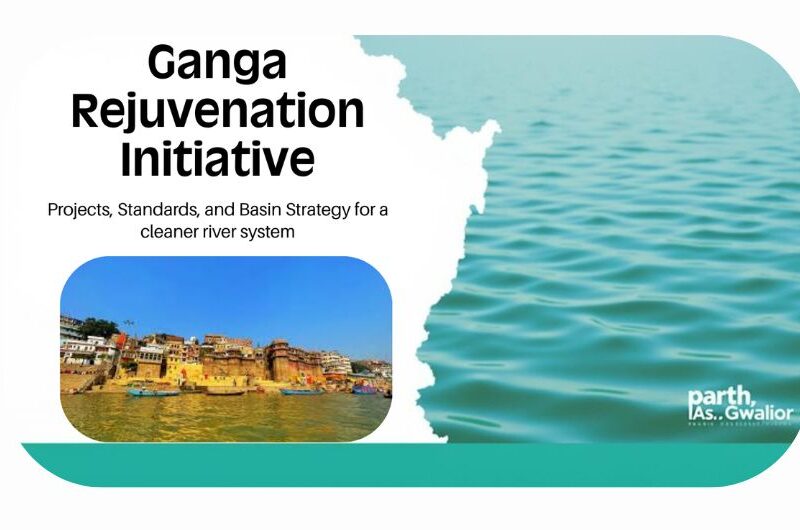
Ganga Rejuvenation: Projects, Standards, and Basin Strategy

Ganga Rejuvenation: Projects, Standards, and Basin Strategy     1. Namami Gange began in June 2014 as an integrated mission for pollution abatement, conservation, and rejuvenation of National River Ganga. 2. The programme originally had ₹20,000 crore outlay up to March 2021, later extended to March 2026 with ₹22,500 crore. 3. For 2025–26, the National Ganga Plan has an outlay of ₹3,400 crore to expand treatment and improve water quality. 4. The stated aim includes achieving prescribed bathing standards through stronger sewage treatment and industrial discharge regulation by 2025. 5. The Ganga basin is India’s largest, covering about 27% land area and supporting nearly 47% of the population. 6. The basin spans more than 11 states, with around 65.57% land under agriculture and 3.47% under water bodies. 7. Despite high precipitation share, the basin remains highly water-stressed, reflecting low per-capita rainwater availability. 8. Rejuvenation vision emphasizes Aviral Dhara, Nirmal Dhara, and protection of geological and ecological integrity. 9. Basin management planning follows an integrated river-basin approach with multi-sectoral and multi-agency interventions. 10. Four intervention pillars include pollution abatement, ecological flow improvement, people–river connect, and research-policy support. 11. By 31 January 2025, 492 projects worth ₹40,121.48 crore had been initiated under the mission framework. 12. Of these, 307 projects were completed and operational, indicating substantial progress across multiple intervention areas. 13. Sewage infrastructure remains central: 206 projects were initiated with ₹33,003.63 crore sanctioned for implementation. 14. Sewerage outcomes include 127 completed projects that directly reduce untreated sewage inflows into the river system. 15. Biodiversity and afforestation actions include 56 projects with over ₹905.62 crore committed, and 39 already completed.     MCQ   1. With reference to the Namami Gange programme, consider the following statements: 1. It was approved as an integrated conservation mission in June 2014. 2. It was approved as a flagship programme by the Union Government. 3. Its twin objectives include pollution abatement and rejuvenation of the Ganga. Which of the statements given above is/are correct? (a) 1 and 2 only (b) 2 and 3 only (c) 1 and 3 only (d) 1, 2 and 3 2. The extended budgetary outlay of the Namami Gange Programme up to March 2026 is: (a) ₹20,000 crore (b) ₹22,500 crore (c) ₹3,400 crore (d) ₹40,121.48 crore 3. The financial outlay mentioned for the National Ganga Plan for the year 2025–26 is: (a) ₹905.62 crore (b) ₹3,400 crore (c) ₹22,500 crore (d) ₹33,003.63 crore 4. The Ganga River Basin is described as: (a) Covering about 47% of India’s land mass and supporting 27% population (b) Covering about 27% of India’s land mass and supporting about 47% population (c) Covering about 11% of India’s land mass and supporting about 65.57% population (d) Covering about 27% of India’s land mass and supporting about 27% population 5. As per the given description, the majority share of the Ganga basin land-use is under: (a) Water bodies (b) Agriculture (c) Forests (d) Urban settlements 6. The trio of terms most directly linked to the stated vision of Ganga rejuvenation is: (a) Jal Shakti, Swachhata, Sanitation (b) Aviral Dhara, Nirmal Dhara, Ecological integrity (c) Carbon neutrality, Circularity, Climate resilience (d) Flood control, Inland navigation, Hydropower 7. The Ganga River Basin Management Plan (GRBMP) is stated to be developed by: (a) A consortium of seven IITs (b) A consortium of seven IIMs (c) A consortium of seven Central Universities (d) A consortium of seven national laboratories 8. Match the following intervention pillars: List-I A. Nirmal Ganga B. Aviral Ganga C. Jan Ganga D. Gyan Ganga List-II 1. Pollution abatement 2. Improving ecology and flow 3. People–river connect 4. Research and policy support Select the correct answer using the code given below: (a) A-2, B-1, C-3, D-4 (b) A-1, B-2, C-3, D-4 (c) A-1, B-3, C-2, D-4 (d) A-3, B-2, C-1, D-4 9. As of 31 January 2025, the total number of projects launched and their value were: (a) 307 projects worth ₹40,121.48 crore (b) 492 projects worth ₹40,121.48 crore (c) 492 projects worth ₹33,003.63 crore (d) 206 projects worth ₹40,121.48 crore 10. As of 31 January 2025, the number of completed and operational projects was: (a) 127 (b) 206 (c) 307 (d) 492 11. Consider the following statements: 1. Sewage infrastructure projects initiated were 206 in number. 2. Funds sanctioned for sewage infrastructure projects were ₹33,003.63 crore. 3. Completed sewerage projects were 127 in number. Which of the statements given above is/are correct? (a) 1 only (b) 1 and 2 only (c) 2 and 3 only (d) 1, 2 and 3 12. The recently approved project in Varanasi included interception and diversion of the Durga Drain and construction of a sewage treatment plant of: (a) 17 MLD (b) 60 MLD (c) 75 MLD (d) 127 MLD 13. The Varanasi project mentioned is stated to be based on: (a) DBOT model (b) EPC model (c) Hybrid annuity model (d) TOT model 14. The approved initiative to prevent untreated sewage from entering Varuna in Bhadohi includes STPs of capacities: (a) 60, 17 and 5 MLD (b) 20, 6.25 and 4.5 MLD (c) 17, 5 and 3 MLD (d) 75, 60 and 3 MLD 15. With reference to biodiversity and afforestation under the programme, consider the following statements: 1. 56 projects were undertaken with funding commitment over ₹905.62 crore. 2. 39 such projects have been successfully concluded. Which of the statements given above is/are correct? (a) 1 only (b) 2 only (c) Both 1 and 2 (d) Neither 1 nor 2        

More Details
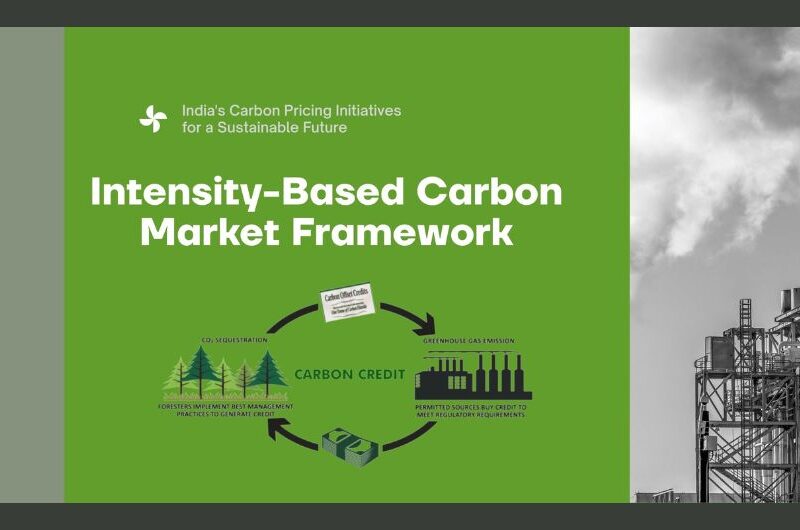
Intensity-Based Carbon Market Framework

Intensity-Based Carbon Market Framework     1. Carbon Market Buildout: India is developing a regulated carbon pricing ecosystem, combining a rate-based emissions trading system with voluntary crediting to support decarbonisation and climate-aligned growth. 2. Rate-Based ETS Concept: In a rate-based ETS, entities face benchmark emissions-intensity limits rather than absolute caps, allowing flexibility for growth while still rewarding improved efficiency and competitiveness. 3. CCTS Foundation: The Carbon Credit Trading Scheme, notified in July 2024, established the institutional framework for the Indian Carbon Market and links compliance obligations with voluntary offset participation. 4. Initial Sector Coverage: The national ETS is planned to begin with nine energy-intensive industrial sectors, focusing on emissions intensity metrics to drive performance improvements across major emitting value chains. 5. Credit Certificate Logic: Facilities outperforming benchmark emissions-intensity levels will receive credit certificates, creating an incentive structure where efficiency leaders can monetise surplus performance through market mechanisms. 6. Voluntary Methodologies: On 28 March 2025, the Ministry of Power approved eight crediting methodologies enabling voluntary carbon credits, including renewable energy, green hydrogen production, industrial efficiency, and mangrove restoration. 7. PAT Transition Path: India plans a gradual transition during 2025 from the Perform, Achieve and Trade scheme toward the new carbon market architecture, aligning efficiency trading with broader carbon pricing goals. 8. Legal Enabling Framework: The Energy Conservation (Amendment) Act, 2022 provides legal basis for carbon markets and empowers the central government to issue carbon credit certificates for compliant and credited entities. 9. Green Hydrogen Linkage: Carbon market methodologies support the National Green Hydrogen Mission, which targets production of five million metric tonnes annually by 2030, strengthening low-carbon industrial competitiveness. 10. PAT Performance Record: PAT, implemented by the Bureau of Energy Efficiency since 2012, is reported to have reduced emissions intensity in designated sectors by roughly fifteen to twenty-five percent. 11. Renewables Capacity Goal: India aims to install five hundred gigawatts of non-fossil fuel-based capacity by 2030, reinforcing carbon market signals with large-scale clean power expansion. 12. Governance Architecture: Market oversight includes the National Steering Committee for the Indian Carbon Market and the Bureau of Energy Efficiency under the Ministry of Power, supported by rules, procedures, and working groups. 13. Mission LiFE Agenda: Mission LiFE promotes sustainable lifestyles through behavioural change, aiming to mobilise one billion people globally by 2028 and mainstream pro-planet habits across communities and markets. 14. Green Credit Rules: Green Credit Rules notified on 12 October 2023 create a voluntary market mechanism for tree plantation on degraded forest lands, issuing credits via a digital registry with verification and audits. 15. Competitiveness and CBAM: As external pressures like carbon border measures grow, India’s intensity-based ETS offers a pragmatic path to preserve export competitiveness while advancing climate goals and net-zero by 2070.       MCQ:   1. With reference to a rate-based Emissions Trading System (ETS), consider the following statements: 1. Total national emissions are capped ex ante. 2. Entities are assessed against benchmark emissions-intensity levels. 3. It offers flexibility under uncertain growth conditions. Which of the statements given above is/are correct? A. 1 and 2 only B. 2 and 3 only C. 1 and 3 only D. 1, 2 and 3 2. India’s carbon pricing framework described here is best characterized by: A. Cap-and-trade with absolute sectoral caps from inception B. Intensity-focused trading with both compliance and voluntary elements C. Purely voluntary offsets without institutional backing D. Carbon tax with uniform rate across all fuels 3. Consider the following statements about the Carbon Credit Trading Scheme (CCTS): 1. It was adopted in July 2024. 2. It established an institutional framework for a domestic carbon market. 3. It contains a compliance mechanism and an offset mechanism. Which of the statements given above is/are correct? A. 1 and 2 only B. 2 and 3 only C. 1 and 3 only D. 1, 2 and 3 4. The credit certificates under the described system are issued primarily to: A. Entities that exceed benchmark emissions-intensity levels B. Facilities that outperform benchmark emissions-intensity levels C. Only renewable-energy generators, irrespective of benchmarks D. All obligated entities in equal quantities each year 5. The national ETS at the initial stage is stated to cover: A. Nine energy-intensive industrial sectors B. All sectors except agriculture C. Only the power sector D. Only transport and buildings 6. On 28 March 2025, approval was given for crediting methodologies intended for: A. Mandatory compliance credits only B. Voluntary carbon credit generation C. A carbon tax rate schedule D. Fossil-fuel subsidy rationalisation 7. Which of the following is included among the approved voluntary crediting areas mentioned? A. Nuclear power uprating B. Green hydrogen production C. Metro rail expansion D. Coal washing mandates 8. The planned shift in 2025 indicates a transition from which earlier market-based programme toward the new architecture? A. UDAY B. UJALA C. Perform, Achieve and Trade (PAT) D. KUSUM 9. The legal basis enabling issuance of carbon credit certificates is attributed to: A. Environment Protection Act, 1986 B. Energy Conservation (Amendment) Act, 2022 C. Forest (Conservation) Act, 1980 D. Electricity Act, 2003 10. The Bureau of Energy Efficiency (BEE), as described, is best understood as: A. A purely advisory NGO platform B. A quasi-regulatory body for energy efficiency under the Energy Conservation Act framework C. A state government department under agriculture D. An intergovernmental treaty organisation 11. The reported lifecycle outcome of PAT in designated sectors is a reduction in emissions intensity by: A. 1–5% B. 5–10% C. 15–25% D. 35–45% 12. The renewable capacity ambition cited for 2030 is: A. 200 GW of fossil capacity B. 300 GW of nuclear capacity C. 500 GW of non-fossil fuel-based capacity D. 750 GW of coal-based capacity 13. Mission LiFE, as described, primarily emphasizes: A. Technology-only decarbonisation through industrial CCS mandates B. Behavioural change and sustainable lifestyle practices at scale C. Trade sanctions against high emitters D. Mandatory rationing of household electricity 14. The Green Credit mechanism described is best represented by which sequence? A. Credits issued before planting; no verification required B. Plantation within two years; maintenance for

More Details

India’s Groundwater Revival: Recharge Gains, Quality Challenges, and Key Management Initiatives

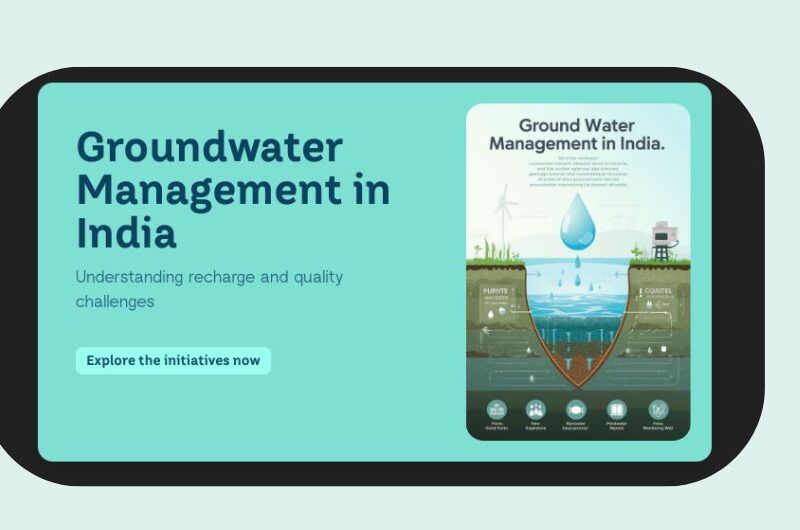
India’s Groundwater Revival: Recharge Gains, Quality Challenges, and Key Management Initiatives   “We must adopt the mantra of ‘Reduce, Reuse, Recharge, and Recycle’ to secure the nation’s water future” ~Prime Minister Shri Narendra Modi     1. Total annual groundwater recharge increased by 15 billion cubic meters in 2024, while annual extraction declined by 3 billion cubic meters compared with 2017. 2. Dynamic groundwater assessment 2024 estimates total annual recharge at 446.90 BCM, extractable resources at 406.19 BCM, and annual extraction at 245.64 BCM for planning. 3. Improved groundwater conditions were recorded in 128 assessment units compared with 2023, reflecting benefits from water bodies, tanks, conservation structures, and better management locally. 4. Recharge from tanks, ponds, and water control systems rose by 0.39 BCM in 2024 relative to 2023, continuing an upward trend nationwide for resilience. 5. Between 2017 and 2024, recharge from tanks, ponds and water control systems increased by 11.36 BCM, from 13.98 to 25.34 BCM overall over time. 6. Assessment units in the Safe category rose from 62.6% in 2017 to 73.4% in 2024, indicating broader sustainability gains across regions in many basins. 7. Over-exploited assessment units declined from 17.24% in 2017 to 11.13% in 2024, signalling reduced stress on aquifers nationwide and improving allocation for users sustainably. 8. Groundwater quality threats include arsenic, fluoride, chloride, uranium, and nitrate, creating serious health risks through direct toxicity and long-term exposure pathways in drinking supplies. 9. Elevated electrical conductivity can indicate agricultural runoff, industrial discharge, or saline intrusion, while iron contamination may cause gastrointestinal issues, requiring careful monitoring and treatment. 10. Groundwater quality assessment uses data from over 15,200 monitoring locations and 4,982 trend stations, supporting identification of critical contamination areas nationwide for timely action. 11. About 81% of groundwater samples are suitable for irrigation; in North-Eastern states, 100% samples were rated excellent for irrigation quality, supporting productivity and livelihoods. 12. MGNREGS includes water conservation and water harvesting works, strengthening rural water security and supporting recharge through community-built infrastructure assets across villages, fields, and commons. 13. Jal Shakti Abhiyan, launched in 2019, is in its fifth phase as Catch the Rain 2024, promoting rainwater harvesting via convergence in rural areas. 14. Atal Bhujal Yojana targets water-stressed gram panchayats in 80 districts across seven states, focusing on participatory groundwater management and demand-side measures with local plans. 15. Master Plan for Artificial Recharge to Groundwater proposes 1.42 crore recharge and rainwater harvesting structures to harness 185 BCM rainfall through interventions at scale. Ground Water Assessment and Management Initiatives These positive outcomes are the result of collaborative efforts between state and central governments. The Government of India has launched various initiatives to preserve water and ensure its availability for future generations. Key schemes include:   • Mahatma Gandhi National Rural Employment Guarantee Scheme (MGNREGS): Includes water conservation and water harvesting structures, enhancing rural water security. • 15th Finance Commission Grants: Provides financial assistance to states for rainwater harvesting and other water conservation activities. • Jal Shakti Abhiyan (JSA): Launched in 2019, now in its 5th phase (“Catch the Rain” 2024), focusing on rainwater harvesting and water conservation through convergence. • Atal Mission for Rejuvenation and Urban Transformation (AMRUT) 2.0: Supports rainwater harvesting via stormwater drains and promotes groundwater recharge through ‘Aquifer Management Plans’. • Ministry of Housing & Urban Affairs Guidelines: Promotes rainwater harvesting and water conservation through UBBL (Delhi, 2016), MBBL (2016), and URDPFI Guidelines (2014). • Atal Bhujal Yojana (2020): Targets water-stressed Gram Panchayats in 80 districts across 7 states, focusing on participatory groundwater management. • Pradhan Mantri Krishi Sinchai Yojana (PMKSY): Expands irrigation coverage and improves water use efficiency via Har Khet Ko Pani and water body rejuvenation components. • Bureau of Water Use Efficiency (BWUE): Set up under the National Water Mission on 20.10.2022 to promote improved water use efficiency across sectors. • Mission Amrit Sarovar (2022): Aims to create or rejuvenate 75 Amrit Sarovars in every district for water harvesting and conservation. • National Aquifer Mapping (NAQUIM): Completed for over 25 lakh sq. km, supporting groundwater recharge planning and conservation strategies. • Master Plan for Artificial Recharge to Groundwater (2020): Plans for 1.42 crore rainwater harvesting and recharge structures to harness 185 BCM of rainfall. • CGWB Demonstration Projects: Implements artificial recharge projects under regulation schemes to enable replication by states in suitable hydro-geological settings. • National Water Policy (2012): Advocates rainwater harvesting, water conservation, and augmentation of availability through direct use of rainfall. • Watershed Development Component of PMKSY (WDC-PMKSY): Focuses on rainfed and degraded lands with soil conservation, rainwater harvesting, and livelihoods development. • National Water Awards (2018): Recognizes contributions to water conservation and management; 6th National Water Awards application deadline extended to 31 January 2025.     MCQ:   1. With reference to groundwater trends in 2024, consider the following statements: 1. Total annual groundwater recharge increased compared to the 2017 assessment. 2. Annual groundwater extraction declined compared to the 2017 assessment. Which of the statements given above is/are correct? A. 1 only B. 2 only C. Both 1 and 2 D. Neither 1 nor 2 2. As per the dynamic groundwater assessment 2024, the total annual groundwater recharge is assessed at: A. 245.64 BCM B. 406.19 BCM C. 446.90 BCM D. 15 BCM 3. As per the dynamic groundwater assessment 2024, the extractable groundwater resource is assessed at: A. 245.64 BCM B. 406.19 BCM C. 446.90 BCM D. 128 BCM 4. As per the dynamic groundwater assessment 2024, the annual groundwater extraction is assessed at: A. 245.64 BCM B. 406.19 BCM C. 446.90 BCM D. 25.34 BCM 5. Improvements in groundwater conditions in 2024, compared to 2023, were recorded in how many assessment units? A. 73 units B. 81 units C. 128 units D. 185 units 6. Recharge from tanks, ponds and water control systems (WCS) in 2024 increased by how much compared to 2023? A. 0.39 BCM B. 3.90 BCM C. 11.36 BCM D. 15.00 BCM 7. Recharge from tanks, ponds and WCS increased from 13.98 BCM in 2017 to 25.34

More Details

Green Hydrogen Mission: Targets, Certification, Infrastructure, and Strategic Interventions

Green Hydrogen Mission: Targets, Certification, Infrastructure, and Strategic Interventions           Key Takeaways     India targets 5 MMT of Green Hydrogen production annually by 2030. A port-based Green Hydrogen pilot has been commissioned at V.O. Chidambaranar Port, and Deendayal Port Authority, Kandla has commissioned a megawatt-scale, indigenous Green Hydrogen Facility Hydrogen mobility pilots launched across 10 routes, involving 37 fuel cell and hydrogen internal combustion engine vehicles. The Mission is expected to attract over ₹8 lakh crore in investments and reduce fossil fuel imports by more than ₹1 lakh crore.         1. India aims to produce 5 million metric tonnes of green hydrogen annually by 2030, strengthening energy security, supporting industrial growth, and decarbonising hard-to-abate sectors nationwide. 2. Green hydrogen is produced through electrolysis powered by renewable electricity; it qualifies when lifecycle emissions remain within 2 kg CO2-equivalent per kilogram of hydrogen produced. 3. A national green hydrogen programme launched in 2023 with an initial outlay of ₹19,744 crore through 2029–30, covering incentives, pilots, research, and ecosystem development. 4. By 2030, around 125 GW of new renewable capacity is planned to support hydrogen, with investment exceeding ₹8 lakh crore and an estimated 6 lakh jobs. 5. The programme targets reducing fossil fuel imports by over ₹1 lakh crore and avoiding nearly 50 million tonnes of greenhouse emissions annually by 2030. 6. As of May 2025, nineteen companies received allocations totalling 862,000 tonnes per year of hydrogen capacity, while fifteen firms secured 3,000 MW electrolyser manufacturing capacity. 7. Strategic interventions provide financial incentives up to 2029–30, with ₹17,490 crore to scale domestic electrolyser manufacturing and accelerate deployment nationwide. 8. Three ports—Deendayal, V.O. Chidambaranar, and Paradip—were identified as hydrogen hubs to integrate production, consumption, logistics, and future export pathways. 9. A certification scheme launched in April 2025 verifies lifecycle emissions and renewable sourcing; a final certificate is required for subsidised or domestically sold hydrogen. 10. The Bureau of Energy Efficiency serves as nodal authority, accrediting agencies to monitor and certify projects, improving transparency, traceability, and market credibility. 11. A strategic innovation partnership promotes government–industry–academia collaboration through consortia across the value chain, leveraging national research and engineering institutions. 12. A ₹400 crore R&D scheme supports 23 projects on production, storage, safety, and end-use applications; a ₹100 crore call supports startups up to ₹5 crore. 13. In fertilisers, green ammonia can replace fossil-based feedstock; a long-term supply auction aggregated 7.24 lakh tonnes per year at ₹55.75 per kg delivered domestically. 14. Five road-transport pilots deploy 37 hydrogen vehicles and nine refuelling stations across ten routes, including fuel-cell buses and hydrogen internal combustion trucks. 15. Port pilots include a 10 Nm3 per hour plant for lighting and charging, along with green methanol bunkering to support a Kandla–Tuticorin coastal corridor.               MCQ: 1. With reference to green hydrogen, consider the following statements: 1. It is produced using electrolysis powered by renewable electricity. 2. Its “green” status may depend on lifecycle emissions per kilogram of hydrogen. Which of the statements given above is/are correct? a) 1 only b) 2 only c) Both 1 and 2 d) Neither 1 nor 2 2. Consider the following: 1. Annual green hydrogen production target 2. Year by which the target is to be achieved The correct pairing is: a) 5 million metric tonnes — 2027 b) 5 million metric tonnes — 2030 c) 50 million metric tonnes — 2030 d) 5 million metric tonnes — 2040 3. With reference to a national programme on green hydrogen, consider the following statements: 1. It includes support for incentives, pilots, and research activities. 2. Its implementation horizon extends beyond 2040. Which of the statements given above is/are correct? a) 1 only b) 2 only c) Both 1 and 2 d) Neither 1 nor 2 4. Consider the following statements about lifecycle emissions threshold used for certification: 1. The threshold is expressed as kg CO2-equivalent per kg of hydrogen. 2. The threshold value mentioned is 2 kg CO2-equivalent per kg hydrogen. Which of the statements given above is/are correct? a) 1 only b) 2 only c) Both 1 and 2 d) Neither 1 nor 2 5. Which of the following is the most direct policy purpose of a certification scheme for green hydrogen? a) Fixing consumer retail prices for hydrogen b) Establishing traceability of renewable sourcing and lifecycle emissions c) Mandating export quotas for hydrogen producers d) Replacing all safety standards with a single guideline 6. Consider the following pairs: 1. Nodal authority role — Accrediting agencies for monitoring and certification 2. Operational focus — Increasing transparency and market credibility Which of the pairs given above is/are correctly matched? a) 1 only b) 2 only c) Both 1 and 2 d) Neither 1 nor 2 7. With reference to manufacturing support under a strategic intervention, consider the following statements: 1. It aims to expand domestic electrolyser manufacturing capacity. 2. It provides financial incentives up to 2029–30. Which of the statements given above is/are correct? a) 1 only b) 2 only c) Both 1 and 2 d) Neither 1 nor 2 8. Consider the following: 1. Allocations for annual green hydrogen production capacity 2. Allocation for electrolyser manufacturing capacity Which of the following best matches the quantities mentioned? a) 862,000 tonnes per year; 3,000 MW b) 3,000 tonnes per year; 862,000 MW c) 862,000 MW; 3,000 tonnes per year d) 8,620,000 tonnes per year; 300 MW 9. Which of the following sets of locations was recognised as green hydrogen hubs among ports? a) Kandla, Mumbai, Chennai b) Deendayal, V.O. Chidambaranar, Paradip c) Visakhapatnam, Kochi, Kolkata d) JNPT, Mormugao, Haldia 10. Consider the following statements about renewable capacity addition linked with hydrogen scaling: 1. The plan indicates addition of about 125 GW of new renewable capacity. 2. The intent is to support hydrogen production requirements. Which of the statements given above is/are correct? a) 1 only b) 2 only c) Both 1 and 2 d) Neither 1 nor 2 11. With reference to

More Details

Project Cheetah: Reintroduction and Expansion in India

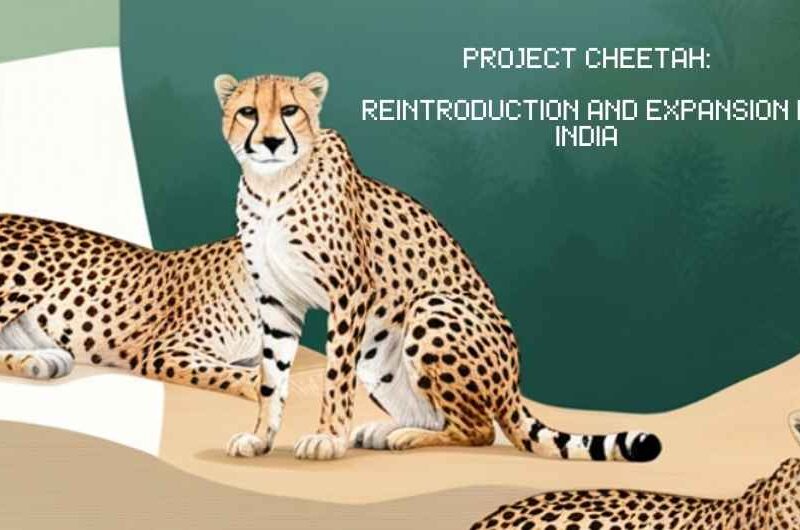
Project Cheetah: Reintroduction and Expansion in India   Snapshot   World’s first inter-continental translocation of a large carnivore successfully completed with 20 cheetahs from Namibia and South Africa (2022-23) coming to India. Prime Minister Shri Narendra Modi personally released the first eight cheetahs on 17 September 2022 As of December 2025, India has a total of 30 cheetahs – 12 adults, 9 sub-adults, and 9 cubs – comprising 11 founder animals and 19 India-born individuals. Mukhi, the first cheetah cub born on Indian soil, has herself become a mother to five healthy cubs. Over 450 Cheetah Mitras, 380 direct jobs, and 5% eco-tourism revenue share created for local communities around Kuno. India is on track to establish a self-sustaining metapopulation of 60–70 cheetahs across 17,000 km² by 2032, with Gandhi Sagar Wildlife Sanctuary ready for the next phase.         1.Project Cheetah began on 17 September 2022, reintroducing cheetahs to India at Kuno National Park through intercontinental wild-to-wild translocation as flagship grassland restoration programme. 2.Twenty cheetahs were brought during 2022–23: eight from Namibia and twelve from South Africa, establishing founder stock for population recovery efforts as founders. 3.As of December 2025, the Kuno population totals thirty cheetahs: twelve adults, nine sub-adults, and nine cubs, with nineteen India-born individuals within Kuno landscape. 4.The Asiatic cheetah was declared extinct in India in 1952, following severe hunting, poaching, habitat loss, prey decline, and low reproductive rates in landscapes. 5.The last confirmed wild cheetah sighting occurred in 1947, when three animals were shot in Koriya district forests in present-day Chhattisgarh in preindependence India. 6.Kuno was chosen after relocating twenty-four villages, moving 1,545 families and creating around 6,258 hectares of inviolate grassland habitat for cheetahs for future releases. 7.A phased approach uses quarantine, acclimatization bomas, and soft-release protocols, followed by monitored releases into open wilderness from 2024 onward guided by reintroduction standards. 8.The long-term target is a self-sustaining metapopulation of sixty to seventy cheetahs across about 17,000 square kilometres by 2032, linking multiple habitats nationally coordinated. 9.Gandhi Sagar Wildlife Sanctuary is planned as a second node, with 368 square kilometres sanctuary area and roughly 2,500 square kilometres potential habitat nearby. 10.Monitoring employs GPS collars, camera traps, and distance sampling on 734–816 kilometre transects to track prey, habitat conditions, movements, and survival regularly updated. 11.Early breeding indicates habitat suitability, with multiple litters recorded from 2023 onward, including second-generation births when an India-born female produced cubs with careful monitoring. 12.Mukhi, the first cub born on Indian soil, later delivered five cubs in November 2025, marking strengthened genetic continuity within the reintroduced population successfully. 13.Ranging data show large home ranges: Aasha covers 121 square kilometres, her male cubs 1,508, and the Agni–Vayu coalition 1,819 square kilometres also. 14.Community integration includes over 450 Cheetah Mitras across eighty villages, plus employment for trackers, patrol workers, and locally trained safari guides via local development. 15.The International Big Cat Alliance, launched 9 April 2023 and headquartered in India, has ₹150 crore support for five years till 2027–28 globally.     MCQ:   1. With reference to Project Cheetah, consider the following statements: 1. It began on 17 September 2022 at Kuno National Park. 2. It involved intercontinental wild-to-wild translocation. Which of the statements given above is/are correct? A. 1 only B. 2 only C. Both 1 and 2 D. Neither 1 nor 2 2. Consider the following: 1. Eight cheetahs were brought from Namibia. 2. Twelve cheetahs were brought from South Africa. The above numbers relate to cheetah translocations to India during: A. 2020–21 B. 2021–22 C. 2022–23 D. 2023–24 3. As of December 2025, the Kuno cheetah population totals 30, consisting of: A. 12 adults, 9 sub-adults, 9 cubs B. 9 adults, 12 sub-adults, 9 cubs C. 12 adults, 12 sub-adults, 6 cubs D. 10 adults, 10 sub-adults, 10 cubs 4. The Asiatic cheetah was declared extinct in India in: A. 1947 B. 1952 C. 1962 D. 1972 5. The last confirmed wild cheetah sighting in India (1947) is associated with: A. Gir forests in Gujarat B. Koriya district forests in present-day Chhattisgarh C. Sundarbans in West Bengal D. Corbett landscape in Uttarakhand 6. Kuno was selected after relocating: A. 12 villages and 750 families, creating about 3,000 hectares inviolate habitat B. 18 villages and 1,200 families, creating about 5,000 hectares inviolate habitat C. 24 villages and 1,545 families, creating about 6,258 hectares inviolate habitat D. 30 villages and 1,800 families, creating about 8,000 hectares inviolate habitat 7. Which of the following best describes the phased approach used in Project Cheetah? A. Immediate hard release without acclimatization or quarantine B. Quarantine, acclimatization bomas, soft-release, followed by monitored releases into wilderness C. Captive breeding in zoos first, then release after five generations D. Relocation only within India without any enclosure-based acclimatization 8. The long-term target under Project Cheetah is to establish: A. 30–40 cheetahs across 10,000 sq km by 2030 B. 60–70 cheetahs across about 17,000 sq km by 2032 C. 80–90 cheetahs across about 25,000 sq km by 2035 D. 100 cheetahs across 30,000 sq km by 2040 9. Gandhi Sagar Wildlife Sanctuary is planned primarily as: A. A third node with 700 sq km sanctuary and 5,000 sq km habitat B. A second node with 368 sq km sanctuary and ~2,500 sq km potential habitat C. A first node with 368 sq km sanctuary and 1,000 sq km habitat D. A corridor-only site without any sanctuary area 10. Monitoring under Project Cheetah includes which of the following? 1. GPS collars 2. Camera traps 3. Distance sampling on 734–816 km transects Select the correct answer using the code below: A. 1 and 2 only B. 2 and 3 only C. 1 and 3 only D. 1, 2 and 3 11. Evidence cited for habitat suitability at Kuno includes: A. Absence of predators and complete prey elimination B. Multiple litters recorded from 2023 onward, including second-generation births C. No dispersal outside bomas after release D. Zero mortality for all founders since introduction 12. Mukhi is known for which of the following? A. Being the first founder male from South Africa

More Details

SHANTI Bill, 2025: India’s Modern Nuclear Energy Framework

SHANTI Bill, 2025: India’s Modern Nuclear Energy Framework     Overview of Nuclear Energy Nuclear energy is generated through controlled atomic reactions, primarily nuclear fission, which releases heat used to produce electricity. This process generates large-scale power without emitting greenhouse gases, making it a dependable and low-carbon energy source that complements intermittent renewables such as solar and wind, while ensuring base-load electricity supply.   Context and Legislative Background India’s nuclear programme has evolved through a carefully regulated legal framework focused on peaceful use, national security, and safety. Earlier legislations laid the foundation for state control, gradual capacity expansion, and liability management. With technological advancement and rising clean-energy ambitions, the existing framework required consolidation and modernization to align with present and future energy needs.   Need for a Modern Nuclear Framework Growing electricity demand, decarbonisation commitments, and the requirement for round-the-clock power have increased the strategic importance of nuclear energy. Existing laws limited flexibility, investment scale, and innovation. A unified framework enables capacity expansion, technological advancement, and integration of nuclear power into long-term energy planning while maintaining strict safety and security oversight.   Present Status of Nuclear Energy Nuclear power currently contributes a modest but stable share to electricity generation. Installed capacity remains limited but is projected to rise significantly with new reactor technologies, indigenous designs, and international cooperation. Planned expansion reflects the intent to position nuclear energy as a long-term pillar of clean and reliable power supply.   Long-Term Nuclear Energy Vision A national mission outlines the objective of achieving large-scale nuclear capacity by mid-century. Emphasis is placed on advanced reactor technologies, particularly small modular reactors, to enhance flexibility, safety, and decentralised deployment. These initiatives also support non-power applications such as hydrogen generation and industrial processes.   Key Structural Features of the New Framework The framework permits limited private participation in nuclear operations under strict regulatory supervision, including power generation, manufacturing, and selected fuel-cycle activities. Sensitive domains such as high-level waste management, spent fuel processing, and strategic materials remain exclusively under sovereign control, ensuring national security and strategic autonomy.   Regulatory and Safety Architecture A strengthened licensing system governs all nuclear activities, supported by enhanced safety authorisation mechanisms. Statutory recognition of the nuclear regulatory authority reinforces institutional independence, oversight capability, and accountability. Comprehensive systems for security, safeguards, emergency preparedness, and quality assurance are embedded across the sector.   Liability and Dispute Resolution Mechanism A graded civil liability structure replaces uniform liability limits, allowing responsibility to vary according to installation type and risk profile. Dedicated mechanisms are established for claims adjudication, compensation management, dispute resolution, and appellate review, ensuring clarity, fairness, and timely redressal in nuclear-related incidents.   Strategic Safeguards and Governance The framework balances sectoral openness with firm sovereign control over critical functions. Coordinated oversight mechanisms, reinforced safeguards, and clear acquisition rights ensure that expansion does not compromise national security, regulatory discipline, or independent decision-making in strategic nuclear matters.   Conclusion The modernised nuclear framework represents a structural shift toward efficiency, innovation, and long-term energy security. By consolidating governance, enabling controlled participation, and strengthening safety oversight, it establishes a robust foundation for expanding clean, reliable nuclear energy while preserving strategic control and public safety.       MCQ:   1.Nuclear energy primarily generates electricity by:A. Burning fossil fuels at high temperaturesB. Controlled atomic fission releasing heatC. Chemical reactions between radioactive elementsD. Fusion of light nuclei under extreme pressure 2.One major advantage of nuclear power generation is that it:A. Requires very small land area compared to all renewablesB. Produces electricity without greenhouse gas emissionsC. Depends entirely on imported technologyD. Operates only during peak demand hours 3.The primary objective of the SHANTI Bill, 2025 is to:A. Privatise the entire nuclear sectorB. Replace renewable energy policiesC. Modernise and consolidate the nuclear legal frameworkD. Eliminate government control over atomic energy 4.India’s nuclear energy contribution to total electricity generation has remained close to:A. 1 percentB. 3 percentC. 7 percentD. 12 percent 5.The present installed nuclear power capacity of India is approximately:A. 4.5 GWB. 6.2 GWC. 8.78 GWD. 12.5 GW 6.Planned nuclear capacity expansion aims to reach about 22 GW by:A. 2027–28B. 2029–30C. 2031–32D. 2035–36 7.Small Modular Reactors are emphasised mainly because they:A. Eliminate the need for regulatory oversightB. Are suitable only for military purposesC. Offer flexible, scalable, and safer deploymentD. Replace conventional large reactors entirely 8.Under the new framework, private participation in nuclear energy is:A. Completely unrestrictedB. Allowed under strict regulatory supervisionC. Limited only to foreign companiesD. Prohibited in power generation 9.Which of the following activities remains exclusively under central government control?A. Nuclear equipment manufacturingB. Electricity distributionC. Spent fuel reprocessing and waste managementD. Reactor maintenance services 10.The graded liability framework implies that:A. Liability limits are uniform for all installationsB. Operators bear unlimited liabilityC. Liability varies based on installation characteristicsD. Liability applies only to private operators 11.Statutory recognition is granted to which body to strengthen nuclear regulation?A. Department of Atomic EnergyB. Nuclear Power CorporationC. Atomic Energy Regulatory BoardD. Central Electricity Authority 12.Non-power applications of nuclear technology include use in:A. Defence manufacturing onlyB. Healthcare, agriculture, and industryC. Space exploration exclusivelyD. Telecommunications infrastructure 13.The strengthened regulatory framework focuses strongly on:A. Rapid construction over safetyB. Security, safeguards, and emergency preparednessC. Reducing inspection requirementsD. Decentralising all oversight powers 14.Dispute resolution under the framework includes the establishment of:A. A Parliamentary Standing CommitteeB. A Constitutional BenchC. An Atomic Energy Redressal Advisory CouncilD. A State-level Energy Tribunal 15.The long-term vision for nuclear energy expansion targets achieving large capacity by:A. 2030B. 2035C. 2047D. 2070    

More Details

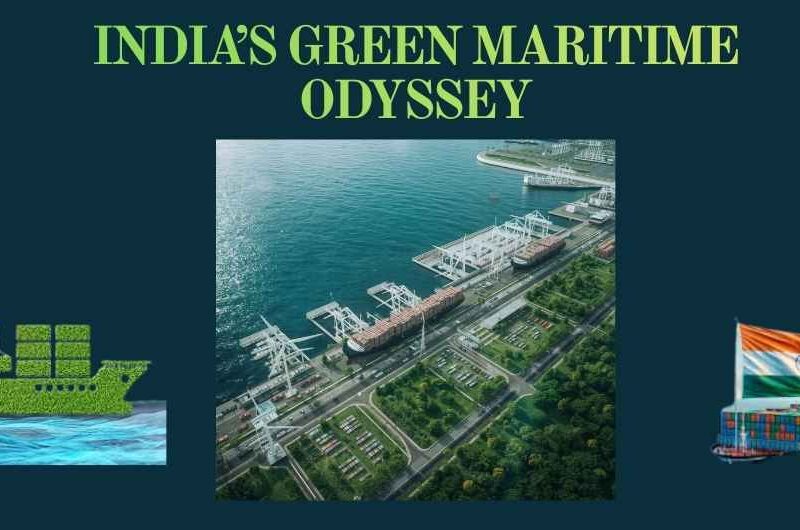
India’s Green Maritime Odyssey

India’s Green Maritime Odyssey     India is transitioning its maritime sector towards sustainability to balance economic growth with environmental protection. With a long coastline rich in mangroves, coral reefs, lagoons, and biodiversity, ports are increasingly required to operate in alignment with global health, safety, and environmental standards. Renewable energy adoption, pollution control, waste management, and ecosystem protection have become central to port development.   Strategic Vision and Investments Maritime India Vision 2030 acts as a growth catalyst, projecting ₹3–3.5 lakh crore investment across ports, shipping, and inland waterways. Maritime Amrit Kaal Vision 2047 outlines a long-term roadmap with nearly ₹80 lakh crore investment for ports, green shipping, shipbuilding, coastal shipping, and inland waterways. Cargo handling at major ports reached 855 million tonnes (FY 2024–25), with port capacity expanding by nearly 87% over a decade. Average ship turnaround time has reduced to 48 hours, matching global benchmarks. Green Energy and Clean Fuels Ports are mandated to increase renewable energy use under Renewable Purchase Obligations. Solar energy deployment includes rooftop installations, unused land, and floating solar plants. Wind energy expansion is planned through onshore, offshore, and breakwater-based projects. Pilot projects are planned for tidal energy (Gulf of Cambay/Kutch) and wave energy. Clean fuels such as green hydrogen, ammonia, biofuels, and LNG are identified as future maritime fuels. National Green Hydrogen Mission Targets 5 million tonnes annual green hydrogen production by 2030. Expected to attract ₹8 lakh crore investment, create 6 lakh jobs, and reduce fossil fuel imports. Kandla, Paradip, and Tuticorin ports identified as green hydrogen hubs. Key Flagship Initiatives Harit Sagar – Green Port Guidelines (2023): Framework for carbon neutrality, ecosystem protection, and sustainable port development. Green Tug Transition Programme (2024): Shifts harbour tugs from fossil fuels to cleaner alternatives with financial support. Harit Nauka Initiative: Promotes green technologies in inland waterway vessels. Coastal Green Shipping Corridor: First corridor planned between Kandla and Tuticorin. Sagarmala Programme: 840 projects worth ₹5.8 lakh crore targeted for completion by 2035 to reduce logistics costs and enhance trade efficiency. Cleaner Port Operations Target of 50% vehicle transition to CNG, LNG, or electric by 2030. Shore-to-ship power to reduce emissions during berthing. Electrification of port equipment in two phases covering cranes and cargo-handling vehicles. LNG bunkering promoted due to lower emissions, compliance with global sulphur norms, and cost advantages. Dust and air pollution monitoring systems being expanded across ports. Green Belts and Environmental Protection Green belts act as carbon sinks, noise barriers, and biodiversity support systems. Environmental regulations mandate 33% green cover around ports. Focus on groundwater recharge, erosion control, coastal protection, and pollution absorption. Legal and Institutional Reforms Indian Ports Bill, 2025 replaces the colonial-era framework with modern global standards. Emphasises disaster preparedness, sustainability, and international competitiveness. Nine Indian ports now feature in the World Bank Container Port Performance Index. Global Partnerships and Dialogues Platforms such as Sagarmanthan promote global cooperation on blue economy and sustainable logistics. Green & Digital Maritime Corridors Dialogue held at JNPA, Mumbai. Collaboration with Singapore on green and digital shipping corridors. Green Shipping Conclave, Mumbai focused on decarbonisation and sustainable ship recycling. Marine Pollution Control Robust oil-spill response systems with satellite monitoring. Sensitivity mapping of mangroves, corals, beaches, and aquaculture zones. Coordination with naval and environmental agencies for rapid response. Conclusion India’s maritime sector is undergoing a structural transformation driven by green technology, clean fuels, digital innovation, and modern governance. By integrating sustainability with trade efficiency and global cooperation, the country is positioning itself as a responsible maritime power and long-term steward of ocean ecosystems.         MCQ:   India’s Green Maritime strategy primarily aims to balance economic growth with which of the following? (a) Expansion of naval power (b) Environmental protection and sustainability (c) Inland industrialisation (d) Defence logistics only   Which long-term roadmap outlines nearly ₹80 lakh crore investment for India’s maritime sector? (a) Sagarmala Programme (b) Maritime India Vision 2030 (c) Maritime Amrit Kaal Vision 2047 (d) Coastal Regulation Framework   Maritime India Vision 2030 primarily functions as a catalyst for: (a) Coastal tourism only (b) Ship recycling activities (c) Trade, investment, and employment (d) Fisheries development   Which clean fuel is identified as a future cornerstone for zero-emission maritime transport? (a) Diesel (b) Furnace oil (c) Green hydrogen (d) Naphtha   Under the green energy strategy, which innovative solar installation method is proposed for ports? (a) Desert solar farms (b) Floating solar plants on calm waters (c) Nuclear-powered solar units (d) Offshore thermal plants   Which three ports have been identified as green hydrogen hubs? (a) Mumbai, Kochi, Chennai (b) Kandla, Paradip, Tuticorin (c) Visakhapatnam, Ennore, Haldia (d) Mormugao, New Mangalore, Kamarajar   The target year for producing 5 million tonnes of green hydrogen annually is: (a) 2027 (b) 2028 (c) 2030 (d) 2047   The Harit Sagar Green Port Guidelines primarily focus on: (a) Increasing port tariffs (b) Achieving carbon neutrality with ecosystem protection (c) Expanding private port ownership (d) Promoting inland shipping exclusively   The Green Tug Transition Programme aims to replace: (a) Cargo ships (b) Passenger ferries (c) Harbour tugs using conventional fuels (d) Fishing vessels   The first Coastal Green Shipping Corridor is planned between: (a) Mumbai–Kochi (b) Chennai–Kolkata (c) Kandla–Tuticorin (d) Visakhapatnam–Paradip   Under Sagarmala Programme, the total number of projects planned by 2035 is: (a) 500 (b) 620 (c) 740 (d) 840   Indian ports aim to switch at least what percentage of vehicles to cleaner fuels by 2030? (a) 30% (b) 40% (c) 50% (d) 75%   Shore-to-ship power is mainly introduced to reduce: (a) Noise pollution in cities (b) Emissions from ships at berth (c) Inland water salinity (d) Cargo handling delays   Environmental regulations mandate approximately what proportion of green cover around ports? (a) 20% (b) 25% (c) 30% (d) 33%   The Indian Ports Bill, 2025 primarily seeks to: (a) Privatise all major ports (b) Replace outdated legal frameworks with modern global standards (c) Restrict foreign investment (d) Reduce coastal shipping activity    

More Details

INDIA’S BIOSPHERE RESERVES

INDIA’S BIOSPHERE RESERVES   INTRODUCTION On November 3, the International Day for Biosphere Reserves is observed to promote harmony between nature and communities. These reserves act as “living laboratories” for sustainable development, biodiversity protection, and local welfare. India celebrates this day with pride, having a strong network of 18 biosphere reserves covering 91,425 sq. km — 13 of which are recognized by UNESCO under the Man and Biosphere (MAB) Programme.   KEY FACTS Centrally Sponsored Scheme (MoEFCC) with 60:40 funding; 90:10 for North-Eastern and Himalayan states. India ranks 9th in global forest area and 3rd in annual forest gain (FAO 2025). Cold Desert Biosphere Reserve added to UNESCO list in 2025. Biodiversity conservation budget increased from ₹5 crore (2024-25) to ₹10 crore (2025-26). Emphasizes coexistence of biodiversity conservation and community livelihood.   WHAT ARE BIOSPHERE RESERVES Biosphere Reserves are areas designated by governments to conserve biological diversity and promote sustainable use of natural resources. They are special regions where people and nature coexist responsibly. Each reserve includes terrestrial, coastal, or marine ecosystems and serves as a testing ground for reconciling conservation with development.   STRUCTURE OF A BIOSPHERE RESERVE Core Zone: Strictly protected area, free from human activity. Buffer Zone: Limited human use with eco-development projects. Transition Zone: Sustainable human settlements and livelihoods.   UNESCO MAN AND BIOSPHERE PROGRAMME The MAB Programme is a global initiative under UNESCO that recognizes and connects Biosphere Reserves as part of the World Network of Biosphere Reserves (WNBR). It integrates natural and social sciences to improve human livelihoods and environmental sustainability. The MAB Council, comprising 34 Member States, governs this network.   IMPLEMENTATION IN INDIA The Ministry of Environment, Forest and Climate Change (MoEFCC) manages the scheme under the CNRE programme. States receive financial and technical support to implement conservation projects through their Forest Departments. Focus areas include eco-development, community participation, and reducing dependence on forest resources.   IMPACT AND SIGNIFICANCE Biosphere Reserves enhance forest cover, protect species, and support climate resilience. They provide sustainable livelihood options to local and tribal populations, linking environmental protection with socio-economic progress. India’s efforts align with global goals such as climate action and biodiversity preservation.   RELATED NATIONAL PROGRAMMES Project Tiger (1973): Protection and management of tiger habitats. Project Elephant (1992): Conservation and welfare of elephants. Integrated Development of Wildlife Habitats (IDWH): Financial and technical aid for wildlife conservation. National Biodiversity Action Plan (NBAP): Framework for sustainable use and regulation of biological resources. Eco-Sensitive Zones (ESZs): Buffer areas around national parks and sanctuaries. Green India Mission (GIM): Expands forest cover and enhances carbon sequestration.   GLOBAL CONTEXT Over 260 million people live in biosphere reserves worldwide, protecting over 7 million sq. km—equal to Australia’s size. India’s 18 reserves represent its ecological diversity—mountains, forests, coasts, and islands—and showcase the country’s leadership in nature-human coexistence.   CONCLUSION India’s Biosphere Reserve network demonstrates that conservation and development can move together. By expanding protected areas, empowering local communities, and engaging with UNESCO frameworks, India sets a global example in environmental stewardship and sustainable living.     MCQs   Consider the following statements regarding Biosphere Reserves in India: Every Biosphere Reserve in India must be recognized by UNESCO. Biosphere Reserves include terrestrial, marine, and coastal ecosystems. They serve as models for balancing conservation and sustainable use. Which of the statements given above is/are correct? (a) 1 only (b) 2 and 3 only (c) 1 and 2 only (d) 1, 2 and 3   With reference to the UNESCO Man and Biosphere (MAB) Programme, consider the following: It was launched in the 1970s to integrate ecological and social sciences. Only countries from the Global South are eligible to participate. It operates through the World Network of Biosphere Reserves (WNBR). Which of the above statements is/are correct? (a) 1 and 3 only (b) 2 only (c) 1 only (d) 1, 2 and 3   The “core zone” of a Biosphere Reserve in India is primarily meant for: (a) Community-based livelihood promotion (b) Strict conservation with minimal human interference (c) Ecotourism and sustainable forestry (d) Research on agricultural productivity   Which of the following is correctly matched? (a) Nilgiri Biosphere Reserve – Himalayas (b) Gulf of Mannar Biosphere Reserve – Marine ecosystem (c) Nanda Devi Biosphere Reserve – Coastal region (d) Great Nicobar Biosphere Reserve – Desert ecosystem   In India, the Centrally Sponsored Scheme for Biosphere Reserves operates with which of the following cost-sharing ratios? (a) 70:30 for all States (b) 60:40 for all States; 90:10 for NE and Himalayan States (c) 50:50 uniformly (d) 75:25 for Union Territories and States   Consider the following pairs: Project Tiger – 1973 Project Elephant – 1992 Green India Mission – 2005 Which of the pairs given above is/are correctly matched? (a) 1 only (b) 1 and 2 only (c) 2 and 3 only (d) 1, 2 and 3   Which of the following organizations prepares the “Global Forest Resources Assessment”? (a) United Nations Environment Programme (b) Food and Agriculture Organization (c) World Wildlife Fund (d) World Bank   Which one of the following statements is NOT correct regarding India’s Biosphere Reserves? (a) They are notified by State Governments only. (b) They function under the Ministry of Environment, Forest and Climate Change. (c) They promote sustainable livelihoods for local communities. (d) They form part of India’s commitment under UNESCO’s MAB Programme.   Which of the following is the newest addition to UNESCO’s World Network of Biosphere Reserves from India? (a) Nilgiri (b) Cold Desert (c) Nanda Devi (d) Gulf of Mannar   In the context of India’s environmental governance, the CNRE Programme refers to: (a) Conservation of Natural Resources and Ecosystems (b) Climate Neutral Renewable Energy (c) Community Natural Resource Enhancement (d) Conservation of National Renewable Energy   Consider the following: Eco-Sensitive Zones Project Elephant Integrated Development of Wildlife Habitats Which of the above are linked directly with India’s Biosphere Reserve framework? (a) 1 and 3 only (b) 2 and 3 only (c) 1, 2 and 3 (d) 1 only   The MAB International Coordinating Council (MAB-ICC):

More Details

India’s Critical Mineral Mission: Securing the Minerals of Tomorrow

India’s Critical Mineral Mission: Securing the Minerals of Tomorrow   Introduction Launched in January 2025, the National Critical Mineral Mission (NCMM) is India’s 7-year strategic blueprint (2024–25 to 2030–31) to secure supply chains of essential minerals critical for clean energy, electronics, transport, and defense. With ₹16,300 crore in government expenditure and ₹18,000 crore expected from PSUs, it aims to ensure mineral self-reliance and technological independence.   What are Critical Minerals Critical minerals are essential for economic growth, clean energy, and national security, with supply chains vulnerable to disruption. India’s 2023 list identifies 30 critical minerals including lithium, cobalt, nickel, titanium, rare earth elements (REE), copper, tungsten, vanadium, and zirconium.   Importance for India’s Clean Energy Transition a) Solar Energy – Photovoltaic cells depend on silicon, indium, gallium, and tellurium; crucial for India’s 64 GW solar capacity. b) Wind Power – Magnets in turbines use neodymium and dysprosium; vital for the 2030 target of 140 GW wind capacity. c) Electric Vehicles – Batteries require lithium, nickel, and cobalt; with 30% EV penetration target by 2030. d) Energy Storage – Lithium-ion systems rely on lithium, cobalt, and nickel to store renewable power.   Policy and Institutional Framework The Mission is anchored under the amended Mines and Minerals (Development and Regulation) Act (MMDR Act), empowering the Centre to auction 24 of 30 critical minerals. It focuses on exploration, processing, recycling, R&D, and human resource development.   Recycling and Circular Economy A ₹1,500 crore Incentive Scheme supports recycling of critical minerals from e-waste, EV batteries, and vehicle scrap. Targets include: – 270 kilo ton annual recycling capacity – 40 kilo ton of mineral output – ₹8,000 crore investment – 70,000 new jobs   Innovation and Patent Targets NCMM aims for 1,000 patents by FY 2030–31 to advance mineral technologies. Between May–June 2025, 62 patents were filed and 10 granted, covering materials like lithium, tungsten, titanium, vanadium, and tantalum—crucial for defense, batteries, and electronics.   Centres of Excellence (CoEs) Seven premier institutions designated as CoEs: – IIT Bombay – IIT Hyderabad – IIT (ISM) Dhanbad – IIT Roorkee – CSIR–IMMT Bhubaneswar – CSIR–NML Jamshedpur – NFTDC Hyderabad These centres lead R&D, processing innovation, and mineral exploration under NCMM.   Strategic Initiatives – ₹100 crore pilot projects to extract minerals from non-traditional sources (fly ash, red mud, mine tailings) – Development of processing parks and mineral stockpiles – Encouraging global asset acquisitions by Indian PSUs and private firms – Workforce training and strategic reserves creation   Broader Vision India’s mineral strategy under NCMM aligns with its climate goals: – Reduce GDP emission intensity by 45% by 2030 (from 2005) – Achieve 50% non-fossil power capacity by 2030 – Reach net-zero emissions by 2070 NCMM thus positions India as a global hub for clean technology, supply chain security, and innovation in mineral processing.   Conclusion Critical minerals are the foundation of a green, secure, and industrially advanced India. Through the National Critical Mineral Mission, the country is moving toward energy self-sufficiency, technological innovation, and global leadership in the minerals of tomorrow.   MCQ The National Critical Mineral Mission (NCMM) was launched in which year? (a) 2024 (b) 2025 (c) 2023 (d) 2026   The proposed government expenditure for NCMM is approximately: (a) ₹10,000 crore (b) ₹16,300 crore (c) ₹18,000 crore (d) ₹20,000 crore   The expected investment from PSUs and other stakeholders under NCMM is: (a) ₹16,300 crore (b) ₹18,000 crore (c) ₹15,000 crore (d) ₹20,000 crore   NCMM is primarily designed to ensure: (a) Only mining growth (b) Energy security, industrial growth, and technological independence (c) Foreign mineral dependence (d) Only export promotion   Which of the following is NOT included in India’s list of 30 critical minerals? (a) Lithium (b) Titanium (c) Coal (d) Vanadium   Critical minerals are essential for: (a) Agriculture only (b) Economic development and national security (c) Textile industry (d) Tourism   The mineral vital for solar photovoltaic cells include: (a) Lithium and cobalt (b) Silicon, indium, gallium, tellurium (c) Nickel and copper (d) Neodymium and dysprosium   Which minerals are essential for wind turbine magnets? (a) Lithium and cobalt (b) Nickel and titanium (c) Neodymium and dysprosium (d) Silicon and tellurium   Which minerals are key for electric vehicle batteries? (a) Lithium, nickel, cobalt (b) Silicon, indium, tellurium (c) Copper, gallium (d) Zirconium, hafnium   Energy storage using lithium-ion batteries depends on: (a) Lithium, cobalt, nickel (b) Copper, gold, silver (c) Titanium, tungsten, vanadium (d) Graphite, bismuth, antimony   How many years is NCMM planned for? (a) 5 (b) 6 (c) 7 (d) 8   How many critical minerals can the Central Government auction under MMDR Act? (a) 30 (b) 24 (c) 20 (d) 15   The NCMM incentive scheme for recycling is worth: (a) ₹1,000 crore (b) ₹1,500 crore (c) ₹2,000 crore (d) ₹2,500 crore   The annual recycling capacity target under NCMM is: (a) 100 kilo ton (b) 270 kilo ton (c) 500 kilo ton (d) 350 kilo ton   How many kilo ton of critical minerals is NCMM expected to produce via recycling? (a) 20 (b) 30 (c) 40 (d) 50   Approximately how many jobs is NCMM recycling scheme expected to generate? (a) 50,000 (b) 60,000 (c) 70,000 (d) 80,000   NCMM targets how many patents by 2030–31? (a) 500 (b) 750 (c) 1,000 (d) 1,500   How many patents were filed in May 2025 in the critical mineral sector? (a) 21 (b) 31 (c) 41 (d) 51   How many patents were filed in June 2025? (a) 21 (b) 31 (c) 41 (d) 51   Centres of Excellence (CoEs) under NCMM include how many IITs? (a) 3 (b) 4 (c) 5 (d) 6   How many research laboratories are designated as CoEs under NCMM? (a) 2 (b) 3 (c) 4 (d) 5   Which of the following is NOT an NCMM CoE? (a) IIT Bombay (b) IIT Delhi (c) CSIR–NML Jamshedpur (d) NFTDC Hyderabad   Pilot projects under NCMM aim to extract minerals from: (a) Only traditional mines (b) Industrial byproducts like fly ash,

More Details

Free IAS Guidance
Start Your Journey Today 🇮🇳

Fill out the form below, and we will be in touch shortly.