Best UPSC and MPPSC IAS Coaching Classes in Gwalior

Tourism Push in Budget 2026–27: Pilgrimage Circuits, Eco-Trails, Skills and Heritage Sites

Tourism Push in Budget 2026–27: Pilgrimage Circuits, Eco-Trails, Skills and Heritage Sites     1) Union Budget 2026–27 treats tourism as a strategic growth driver; India Tourism Data Compendium 2025 shows total GDP impact 5.22% and direct share 2.72% from the tourism sector.   2) Tourism supports 13.34% of total employment in India, with direct tourism employment share at 5.82%, reflecting strong livelihood creation across hospitality, transport, handicrafts and services.   3) Budget proposes preserving temples and monasteries, creating pilgrimage centres, and improving connectivity and amenities in Arunachal Pradesh, Sikkim, Assam, Manipur, Mizoram, and Tripura.   4) A new Scheme for Development of Buddhist Circuits in the North-Eastern Region will develop and conserve monasteries, build interpretation centres, improve site connectivity, and create pilgrim amenities.   5) The scheme builds on Swadesh Darshan launched 2014–15, which developed theme-based circuits and tourism infrastructure to improve accessibility, amenities, and visitor experience.   6) Swadesh Darshan was revamped as Swadesh Darshan 2.0, focusing on responsible tourism, conservation of cultural and natural heritage, community participation, and improvement of local livelihoods.   7) As of date, 76 Swadesh Darshan projects are sanctioned with approved cost ₹5,290.33 crore; 75 projects are physically completed, showing near-full execution.   8) Budget proposes ecologically sustainable mountain and nature trails in Himachal Pradesh, Uttarakhand, Jammu & Kashmir, Araku Valley (Eastern Ghats) and Podhigai Malai (Western Ghats).   9) Eco-trails include turtle trails at nesting sites along Odisha, Karnataka and Kerala coasts, and bird-watching trails along Pulicat Lake in Andhra Pradesh, linking biodiversity with tourism.   10) India will host the first Global Big Cat Summit in 2026, inviting heads of governments and ministers from 95 big cat range countries for conservation and wildlife tourism strategy.   11) India is home to five of the world’s seven big cat species: tiger, lion, leopard, snow leopard and cheetah, strengthening its credibility in global big cat conservation leadership.   12) International Big Cat Alliance (IBCA) is a treaty-based intergovernmental organisation; its framework agreement was approved and ratified by multiple countries, with headquarters and secretariat hosted by India.   13) Budget upgrades National Council for Hotel Management and Catering Technology into a National Institute of Hospitality to improve curriculum, research, and international collaboration for tourism skills.   14) Pilot scheme will upskill 10,000 tourist guides across 20 iconic destinations using a 12-week hybrid model with classroom, field training and digital modules, in collaboration with an Indian Institute of Management (IIM).   15) Budget proposes developing 15 archaeological sites into experiential cultural destinations, including Lothal, Dholavira, Rakhigarhi, Adichanallur, Sarnath, Hastinapur and Leh Palace. Must Know Terms : 1) Tourism GDP Impact: Tourism contributes 5.22% to India’s total GDP (overall impact), while its direct share is 2.72%, as per India Tourism Data Compendium 2025. It also supports 13.34% of total employment, with 5.82% direct tourism jobs. This shows tourism has strong multiplier effects across transport, hotels, handicrafts, food services and local markets.   2) Swadesh Darshan 2.0: Revamped version of Swadesh Darshan launched earlier in 2014–15. It focuses on responsible and sustainable tourism, conservation of cultural and natural heritage, community participation, and livelihood improvement. So far, 76 projects worth ₹5,290.33 crore are sanctioned and 75 are completed, indicating near-full implementation of tourism infrastructure projects.   3) Buddhist Circuits Scheme: A new scheme for the North-Eastern Region to develop and conserve monasteries, create interpretation centres, improve connectivity, and build pilgrim facilities. It aims to promote religious tourism while preserving heritage. The scheme supports states like Arunachal Pradesh, Sikkim, Assam, Manipur, Mizoram and Tripura, strengthening regional tourism economy.   4) Eco-Tourism Trails: Budget proposes sustainable mountain and nature trails in Himachal Pradesh, Uttarakhand, Jammu & Kashmir, Araku Valley and Podhigai Malai. It also includes turtle nesting trails in Odisha, Karnataka, Kerala and bird-watching trails at Pulicat Lake. The focus is biodiversity-linked tourism with minimal ecological damage and local income generation.   5) International Big Cat Alliance: A treaty-based intergovernmental organisation focused on conservation of big cats. India hosts its headquarters and secretariat. India will also host the first Global Big Cat Summit in 2026, with participation from 95 big cat range countries. India has five of seven global big cat species, strengthening its leadership role.   6) Heritage Destination Development: Budget proposes developing 15 archaeological sites into experiential destinations. Sites include Lothal, Dholavira, Rakhigarhi, Adichanallur, Sarnath, Hastinapur and Leh Palace. The aim is to improve visitor facilities, interpretation, and connectivity so that heritage tourism generates higher cultural value and economic benefits locally.   MCQ : 1. Tourism’s total GDP impact is reported at: A) 2.72% B) 3.82% C) 5.22% D) 6.22% 2. Tourism’s direct GDP share is reported at: A) 1.72% B) 2.72% C) 3.72% D) 5.22% 3. Tourism supports what share of total employment in India? A) 5.82% B) 9.34% C) 13.34% D) 18.34% 4. Direct tourism employment share is: A) 2.72% B) 4.82% C) 5.82% D) 13.34% 5. Budget focus for preserving temples and monasteries and improving amenities is specifically highlighted for: A) Rajasthan, Gujarat, Maharashtra, Goa, Kerala, Tamil Nadu B) Arunachal Pradesh, Sikkim, Assam, Manipur, Mizoram, Tripura C) Punjab, Haryana, Uttar Pradesh, Bihar, Jharkhand, Chhattisgarh D) Himachal Pradesh, Uttarakhand, Jammu & Kashmir, Ladakh, Delhi, Chandigarh 6. The new Buddhist circuits scheme is designed for: A) Western India coastal belt B) North-Eastern Region C) Central India plateau region D) Indo-Gangetic plains 7. Swadesh Darshan was launched in: A) 2012–13 B) 2013–14 C) 2014–15 D) 2016–17 8. Swadesh Darshan 2.0 focuses on: A) Only luxury tourism and metropolitan branding B) Responsible tourism, heritage conservation, community participation, local livelihoods C) Only adventure sports and extreme tourism D) Only international inbound tourism campaigns 9. Number of Swadesh Darshan projects sanctioned is: A) 75 B) 76 C) 86 D) 90 10. Approved cost of sanctioned Swadesh Darshan projects is: A) ₹4,290.33 crore B) ₹5,290.33 crore C) ₹6,290.33 crore D) ₹7,290.33 crore 11. Number of Swadesh Darshan projects physically completed is: A) 70 B) 72 C) 75 D) 76 12. Budget proposes sustainable mountain and nature trails in Himachal Pradesh, Uttarakhand,

More Details
Somnath Swabhiman Parv: A Millennium of Resilience and Living Heritage

Somnath Swabhiman Parv: A Millennium of Resilience and Living Heritage     1. Somnath Swabhiman Parv (8–11 January 2026) marks 1,000 years since Mahmud of Ghazni’s first recorded assault on Somnath Temple in January 1026 at Prabhas Patan, Gujarat, Saurashtra, on western coastline. 2. Somnath is revered as the first among twelve Jyotirlingas, positioned at the start of India’s sacred spiritual geography, and remains a living symbol of civilisational continuity beside the Arabian Sea. 3. The commemoration emphasises resilience and civilisational self-respect, recalling cycles of destruction and rebuilding across centuries, and the unwavering faith of devotees who restored the shrine after each assault, repeatedly, again. 4. 2026 coincides with 75 years since the present Somnath Temple reopened on 11 May 1951 after Independence, linking medieval memory with modern reconstruction and strengthened national cultural confidence even today. 5. Across four days, Somnath became a centre of spiritual activity and cultural reflection, hosting discourses, devotional music, and programmes while pilgrims participated in rituals that reinforced shared remembrance and community. 6. A 72-hour Akhand Omkar chanting anchored the Parv; on 10 January 2026 the Prime Minister joined chanting and watched a drone show, then symbolically led Shaurya Yatra on 11 January. 7. Tradition associates Prabhas Tirtha with Chandra worshipping Shiva, relief from a curse, and enduring sanctity, situating Somnath within ancient sacred landscapes that shaped regional pilgrimage routes and memory over centuries. 8. Historical accounts describe successive temples erected with varied materials, reflecting evolving craftsmanship and resources, before the eleventh century introduced repeated raids, demolitions, and reconstructions that hardened Somnath’s lasting symbolic stature. 9. On 12 November 1947, Diwali day, Sardar Vallabhbhai Patel visited Somnath’s ruins and resolved to rebuild; reconstruction advanced through public contributions, reinforcing post-independence confidence and civic participation for national renewal. 10. The present temple, built in Kailash Mahameru Prasad architectural style, was consecrated on 11 May 1951 in the presence of President Rajendra Prasad, signifying reopening and reaffirmation of civilisational self-respect. 11. Somnath’s complex includes, in present form, Garbhagriha, Sabhamandap, and Nrityamandap, rising beside the Arabian Sea, crowned by a 150-foot shikhar and 10-tonne kalash, with a 27-foot dhwajdand flagpole marking identity. 12. Annual footfall stays around 92–97 lakh devotees; Bilva Pooja draws about 13.77 lakh, and Maha Shivratri 2025 saw about 3.56 lakh, indicating sustained ritual magnetism and capacity throughout the year. 13. Cultural outreach includes a Light and Sound Show launched in 2003, upgraded in 2017 with narration and 3D laser technology, drawing over 10 lakh visitors in three years, notably so. 14. Declared a Swachh Iconic Place in 2018, Somnath uses sustainability measures: flower vermicompost for 1,700 Bilva trees, plastic-to-paver blocks under Mission LiFE, about 4,700 produced monthly, plus sewage treatment systems. 15. Women’s employment is substantial: Somnath Temple Trust counts 262 women among 906 staff; about 363 women earn roughly ₹9 crore annually through Bilva Van management, prasad distribution, and dining services.   Key Takeaways Somnath Swabhiman Parv (8–11 January, 2026) commemorates 1,000 years since the first attack by Mahmud of Ghazni on the Somnath Temple in 1026. The Parv celebrates the enduring spirit of India’s civilisation and rich cultural and spiritual heritage. Prime Minister Narendra Modi to visit Somnath on 10–11 January, 2026 to participate in key commemorative events. Somnath temple draws 92–97 lakh devotees annually. Women play a central role at Somnath. The Somnath Temple Trust employs 262 women among 906 employees; in total around 363 women get employment generating about ₹9 crore annually through the temple   MCQ:   1. Somnath Swabhiman Parv (8–11 January 2026) primarily commemorates: A. 1,000 years since the first recorded attack on Somnath in January 1026 B. 1,000 years since the construction of the present temple in 1026 C. 75 years since the first Jyotirlinga was established at Prabhas Patan D. 500 years since the last reconstruction of Somnath in 1526 2. Which of the following pairs is correctly matched? A. Present temple reopened to devotees — 11 May 1950 B. Consecration of present temple — 11 May 1951 C. Diwali-day Patel visit — 12 November 1951 D. Light and Sound Show launched — 2017 3. Consider the following statements: 1. Somnath is associated with Prabhas Tirtha near Veraval in Gujarat. 2. Somnath is described as the first among the twelve Jyotirlingas. 3. The Parv is conceived mainly as a remembrance of destruction. Which of the statements given above are correct? A. 1 and 2 only B. 2 and 3 only C. 1 and 3 only D. 1, 2 and 3 4. The core symbolic practice highlighted during the Parv is: A. 72-hour Akhand Omkar chanting B. 72-day continuous Bilva Pooja C. 24-hour Akhand Damru recital D. 108-hour continuous recitation of Dwadasha Jyotirlinga Stotram 5. The Prime Minister’s participation during 10–11 January 2026 includes: A. Leading Shaurya Yatra on 10 January and drone show on 11 January B. Joining Omkar chanting and witnessing a drone show on 10 January C. Addressing the gathering before offering prayers on 10 January only D. Performing consecration rituals of the present temple on 11 January 6. Assertion (A): The Somnath narrative is presented as an unbroken cycle of revival. Reason (R): The temple was rebuilt after repeated demolitions through collective resolve of devotees. A. Both A and R are true, and R is the correct explanation of A B. Both A and R are true, but R is not the correct explanation of A C. A is true, but R is false D. A is false, but R is true 7. The architectural style explicitly mentioned for the present Somnath Temple is: A. Dravida Vimana B. Vesara Nagara C. Kailash Mahameru Prasad D. Maru-Gurjara Solanki 8. Which of the following correctly describes the temple’s vertical elements? A. Shikhar 150-foot; Kalash 10-tonne; Dhwajdand 27-foot B. Shikhar 27-foot; Kalash 10-tonne; Dhwajdand 150-foot C. Shikhar 150-foot; Kalash 27-tonne; Dhwajdand 10-foot D. Shikhar 10-foot; Kalash 150-tonne; Dhwajdand 27-foot 9. The present temple complex is stated to comprise: A. Garbhagriha, Sabhamandap, Nrityamandap B. Garbhagriha, Mahamandap, Antarala C. Sabhamandap, Pradakshinapath, Vimana D. Nrityamandap, Gopuram, Kalyanamandap 10.

More Details

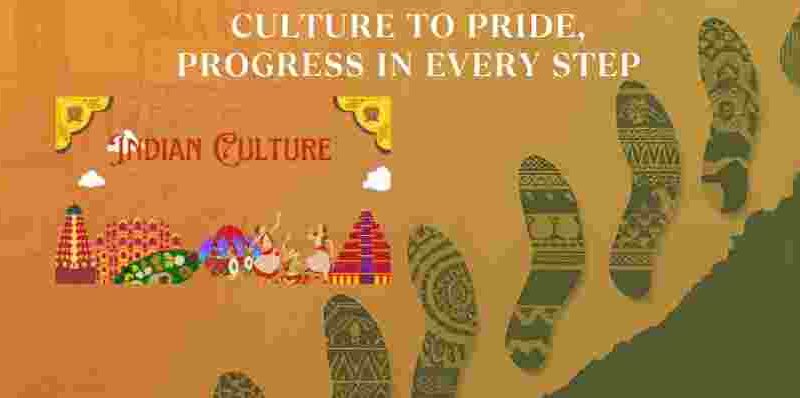
Culture to Pride, Progress in Every Step

Culture to Pride, Progress in Every Step     Core Vision Over the last 11 years, India has pursued a culture-led development model that combines heritage conservation, spiritual revival, infrastructure expansion, inclusivity, and global cultural outreach, while integrating modern technology, tourism, and economic growth.   Heritage Revival & Temple Infrastructure Major temple corridors and pilgrimage sites have been redeveloped to enhance access, safety, and spiritual ambience. Key projects include Kashi Vishwanath Corridor, Mahakaal Lok (Ujjain), Ram Mandir (Ayodhya), Kedarnath redevelopment, Kamakhya Temple, and Somnath–Parvati Mandir complex. These projects combine heritage conservation with urban renewal, crowd management, and pilgrim facilities.   Pilgrimage Connectivity & Religious Circuits Char Dham Highway Project: 825 km network; 616 km completed (as of July 2024). Hemkund Sahib Ropeway: 12.4 km, ₹2,730.13 crore, approved by CCEA. Buddhist Circuit developed across multiple states with focused investments: Bihar, Uttar Pradesh, Madhya Pradesh, Andhra Pradesh, Gujarat. Kartarpur Sahib Corridor inaugurated on 9 November 2019 enabling Sikh pilgrimage access.   Inclusive Heritage Development Schemes PRASHAD Scheme: Nearly ₹1,900 crore invested for multi-faith pilgrimage rejuvenation. Swadesh Darshan: ₹5,292.91 crore for 76 projects; Swadesh Darshan 2.0 approved 34 projects (2023–25). HRIDAY Scheme: Development of 12 heritage cities. Focus on inclusivity across temples, mosques, churches, shrines, and sacred landscapes.   Tourism & Economic Impact Foreign Tourist Arrivals (2024): 9.66 million. Foreign Exchange Earnings: ₹2,77,842 crore. Cultural infrastructure upgrades have directly supported tourism growth and local livelihoods.   Repatriation of Cultural Artefacts Pre-2013: Only 13 antiquities returned. Since 2014: 642 antiquities traced. USA alone returned 578 artefacts since 2016, the highest by any country. Major returns occurred during PM visits in 2016, 2021, and 2023.   Recognition of Nation Builders Azadi Ka Amrit Mahotsav (12 March 2021 – 15 August 2022): Nationwide commemoration of 75 years of Independence. Creation of museums, statues, memorials, and cultural spaces celebrating diverse contributors.   National Memorials & Cultural Landmarks Pradhan Mantri Sangrahalaya (2022). National War Memorial (2019). National Police Memorial (2018). Jallianwala Bagh Memorial (2019). Tribal Freedom Fighter Museums: 11 museums. Bharat Mandapam (2023): World’s tallest Ashtadhatu Nataraja statue. New Parliament House (2023): Sengol installation, Constitution Hall, sustainable design.   Cultural Integration & Spiritual Unity Ek Bharat Shreshtha Bharat launched on 31 October 2016. Kashi Tamil Sangamam (1.0, 2.0, 3.0) strengthened civilisational ties. Large-scale observances of Sikh Guru Prakash Parvs. Global Buddhist Summit highlighted relevance of the Eightfold Path. Mahakumbh 2025: Over 66 crore participants.   Legal & Governance Reform Waqf (Amendment) Act, 2025: Centralised digitisation. Online portal. Enhanced transparency and accountability.   Media, Innovation & Soft Power WAVES 2025 (Mumbai): Delegates from 100+ countries. ₹1,300 crore business deals. ₹8,000 crore MoUs (Maharashtra). WAVEX startup platform; global tech partnerships (Adobe, Google, NVIDIA).   Yoga & Ayurveda as Global Connectors International Day of Yoga Proposed at UNGA: 27 Sept 2014. First observed: 21 June 2015. 2023 participation: ~23.4 crore globally. 2025 Theme: “Yoga for One Earth, One Health”. Ayurveda Globalisation WHO Global Traditional Medicine Centre at Jamnagar. Traditional medicine included in ICD-11. 24 country-level & 48 institute-level MoUs. Ayush Information Cells in 35 countries. Ayush Visa and Heal in India initiatives. Ayurveda Day 2024 celebrated in 150 countries.   UNESCO Heritage Expansion India now has 43 World Heritage Sites and 62 tentative sites. Latest addition (2024): Moidams of Ahom Dynasty (Assam). Heritage preservation linked with education, tourism, and identity-building.   Conclusion India’s cultural policy over the last decade integrates heritage revival, infrastructure, inclusivity, tourism economics, global soft power, and civilisational confidence. Culture has been positioned not as a static legacy but as a dynamic driver of national unity, global engagement, and sustainable development.   MCQ:     Q1. With reference to India’s culture-led development approach over the last 11 years, consider the following components: Heritage conservation Spiritual revival Infrastructure expansion Global cultural outreach Which of the above are included in the core vision? (a) 1 and 2 only (b) 1, 2 and 3 only (c) 1, 2, 3 and 4 (d) 2 and 4 only   Q2. Which of the following projects are examples of redevelopment of major temple corridors? Kashi Vishwanath Corridor Mahakaal Lok, Ujjain Ram Mandir, Ayodhya Somnath–Parvati Mandir complex Select the correct answer: (a) 1 and 2 only (b) 1, 2 and 3 only (c) 1, 3 and 4 only (d) 1, 2, 3 and 4   Q3. The Char Dham Highway Project aims to improve connectivity to which of the following pilgrimage sites? Yamunotri Gangotri Kedarnath Badrinath Select the correct answer: (a) 1 and 2 only (b) 2 and 3 only (c) 1, 3 and 4 only (d) 1, 2, 3 and 4   Q4. The Hemkund Sahib Ropeway project is best described by which of the following features? (a) 8.6 km length and PPP model (b) 12.4 km length approved by CCEA (c) 15 km length under Swadesh Darshan (d) 10 km length funded under PRASHAD   Q5. The Buddhist Circuit development programme has received focused investments in which of the following states? Bihar Madhya Pradesh Kerala Andhra Pradesh Select the correct answer: (a) 1 and 2 only (b) 1, 2 and 4 only (c) 2 and 3 only (d) 1, 3 and 4 only   Q6. The Kartarpur Sahib Corridor is significant because it: (a) Connects India to Nepal for Buddhist pilgrims (b) Enables Sikh pilgrims to access Gurdwara Darbar Sahib (c) Is part of the Char Dham Highway Project (d) Was developed under the HRIDAY scheme   Q7. With reference to PRASHAD and Swadesh Darshan schemes, consider the following statements: PRASHAD focuses on rejuvenation of pilgrimage destinations. Swadesh Darshan supports thematic tourism circuits. HRIDAY focuses exclusively on rural pilgrimage sites. Which of the statements given above are correct? (a) 1 and 2 only (b) 2 and 3 only (c) 1 and 3 only (d) 1, 2 and 3   Q8. Which of the following correctly represents tourism outcomes in 2024? (a) 6.5 million foreign tourists and ₹1.9 lakh crore earnings (b) 9.66 million foreign tourists and ₹2,77,842 crore earnings (c) 12 million foreign tourists and ₹3.5 lakh crore earnings (d) 7.8 million

More Details

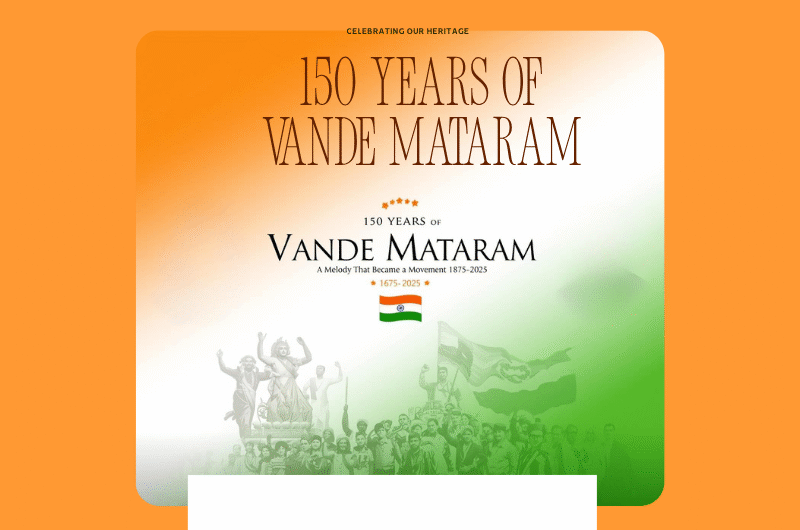
150 YEARS OF VANDE MATARAM

150 YEARS OF VANDE MATARAM   INTRODUCTION 7 November 2025 marks the 150th anniversary of India’s National Song “Vande Mataram,” composed by Bankim Chandra Chatterjee. First published in *Bangadarshan* (1875) and later included in *Anandamath* (1882). Set to music by Rabindranath Tagore; symbolizes unity, devotion, and nationalism.   HISTORICAL BACKGROUND First sung by Rabindranath Tagore at the 1896 Congress Session, Calcutta. Used as a political slogan on 7 August 1905 during the anti-partition movement. Inspired by Bengal’s awakening against colonial rule; mentioned by Sri Aurobindo (1907). Madam Bhikaji Cama’s 1907 tricolour in Stuttgart bore “Vande Mataram.”   ANANDAMATH AND THE RELIGION OF PATRIOTISM Novel’s monks (Santanas) worshipped the motherland as a goddess in three forms: past glory, present suffering, future resurgence. Represented spiritual patriotism — devotion to the motherland as divine duty.   BANKIM CHANDRA CHATTERJEE (1838–1894) Pioneer of modern Bengali prose and nationalism. Key works: *Anandamath*, *Durgeshnandini*, *Kapalkundala*, *Devi Chaudhurani*. Through “Vande Mataram,” he envisioned the motherland as sacred and invincible.   SONG OF RESISTANCE 1905–08: British bans on singing Vande Mataram in schools and public gatherings. Processions (Barisal, Calcutta, Rangpur, Tuticorin, Belgaum) defied prohibitions. Bipin Chandra Pal & Aurobindo’s *Bande Mataram* newspaper (1906) spread nationalism. Became the anthem of Swadeshi, uniting all communities under one cause.   GLOBAL IMPACT 1907: Tricolour with “Vande Mataram” raised abroad by Bhikaji Cama. 1909: Madan Lal Dhingra’s last words — “Bande Mataram.” Indian patriots in Europe published *Bande Mataram* (Geneva).   NATIONAL STATUS Constituent Assembly (24 Jan 1950): Dr. Rajendra Prasad declared “Vande Mataram” to be honoured equally with “Jana Gana Mana.” Both symbolize India’s cultural and political unity.   150-YEAR COMMEMORATION (2025) National inaugural event in Delhi (Indira Gandhi Stadium). Release of commemorative stamp & coin. Cultural programs, exhibitions, global music festival, and “Vande Mataram – Salute to Mother Earth” plantation drive. Campaigns linked with “Har Ghar Tiranga.”   CONCLUSION “Vande Mataram” remains a timeless emblem of India’s freedom struggle and cultural pride. It represents the synthesis of spirituality and nationalism — the soul of India’s collective identity.           MCQ Q1. Consider the following statements regarding *Vande Mataram*: It was first published in the 1882 edition of *Anandamath*. Its earliest musical composition was by Rabindranath Tagore. It was first publicly sung at the Calcutta Congress Session of 1896. How many of the above statements are correct? (a) Only one (b) Only two (c) All three (d) None   Q2. The term “Religion of Patriotism,” associated with *Vande Mataram*, refers to: (a) The blending of devotional worship with political awakening. (b) The replacement of religious rituals by national service. (c) The rejection of foreign faiths in favour of Vedic traditions. (d) A sect founded by Bankim Chandra to revive Hinduism.   Q3. Which of the following correctly matches the year with the related event of *Vande Mataram*? 1905 – Used as slogan during the Swadeshi Movement. 1906 – Launch of the newspaper *Bande Mataram*. 1907 – Tricolour flag with “Vande Mataram” raised in Stuttgart. Select the correct code: (a) 1 and 2 only (b) 2 and 3 only (c) 1 and 3 only (d) 1, 2 and 3   Q4. In the context of *Anandamath*, the three representations of the Mother Goddess signify: (a) Past, Present, and Future of Indian civilisation. (b) Knowledge, Power, and Wealth. (c) Dharma, Artha, and Karma. (d) Freedom, Faith, and Federation.   Q5. Which of the following best explains why “Vande Mataram” was controversial during colonial rule? (a) It called for violent revolution. (b) It was seen as invoking a religious image in nationalist politics. (c) It was banned for being written in Bengali script. (d) It criticised the British Crown by name.   Q6. With reference to the *Bande Mataram* daily (1906), consider the following: It was published from Lahore. Bipin Chandra Pal was its first editor. It later had Sri Aurobindo as co-editor. Which of the statements given above is/are correct? (a) 1 and 2 only (b) 2 and 3 only (c) 3 only (d) 1 and 3 only   Q7. The earliest known ban on singing “Vande Mataram” in educational institutions was imposed by: (a) Bengal Presidency Government (b) Madras Presidency Government (c) Government of Eastern Bengal and Assam (d) Central Legislative Council   Q8. “The Mother of his vision held trenchant steel in her twice seventy million hands” — this quotation reflects: (a) Sri Aurobindo’s interpretation of Vande Mataram as militant patriotism. (b) Bankim’s description of divine motherhood in Durgeshnandini. (c) Tagore’s critique of religious nationalism. (d) Tilak’s call for Swaraj through Karma Yoga.   Q9. Which one of the following events did **not** feature the chanting of “Vande Mataram”? (a) Tuticorin labour strike (1908) (b) Tilak’s trial in Bombay (1908) (c) Lahore protest against Rawalpindi arrests (1907) (d) Quit India Movement rally in 1942   Q10. In 1950, while conferring national status to “Vande Mataram,” Dr. Rajendra Prasad’s statement implied that: (a) It would be sung as an alternate National Anthem on official occasions. (b) It holds equal honour but is distinct from the National Anthem. (c) Its use would be restricted to cultural events only. (d) It would replace Jana Gana Mana after independence celebrations.   Q11. With reference to *Vande Mataram* in India’s national identity, consider the following: It appears in the Constitution’s Eighth Schedule. It was adopted by the Constituent Assembly without debate. It was set to tune originally by Rabindranath Tagore. How many of the statements given above are correct? (a) One only (b) Two only (c) All three (d) None   Q12. During the 150-year commemoration (2025), which of the following initiatives directly link cultural revival with environmental awareness? (a) “Vande Mataram: Salute to Mother Earth” plantation drive (b) Global Music Festival on Indian soil (c) Release of commemorative coin and stamp (d) Murals on national highways   Q13. The phrase “Mother, I bow to thee” in *Vande Mataram* symbolically denotes: (a) Territorial nationalism rooted in devotion to land. (b) Ethnic unity among linguistic groups. (c) Political allegiance to the Indian National

More Details

Free IAS Guidance
Start Your Journey Today 🇮🇳

Fill out the form below, and we will be in touch shortly.