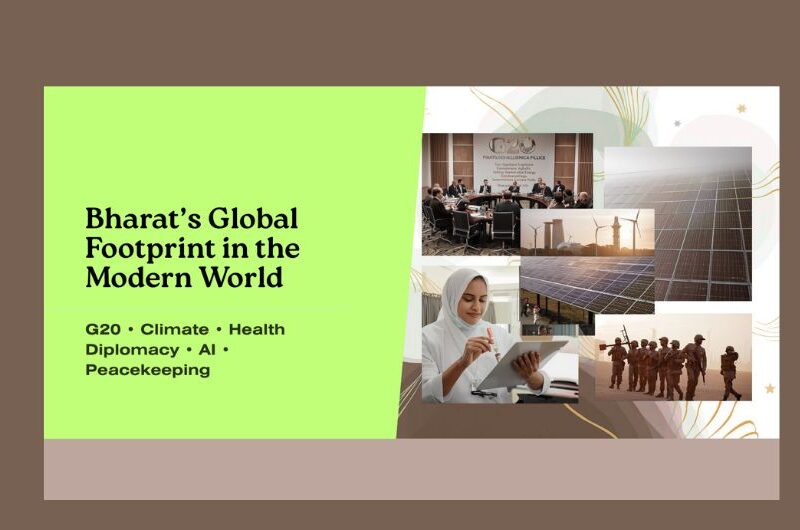
India’s Expanding Global Influence
1. Over the past 11 years, India has expanded global influence through climate leadership, AI governance, public health diplomacy, humanitarian assistance, and strategic defence, aligning international engagement with national interest and inclusivity.
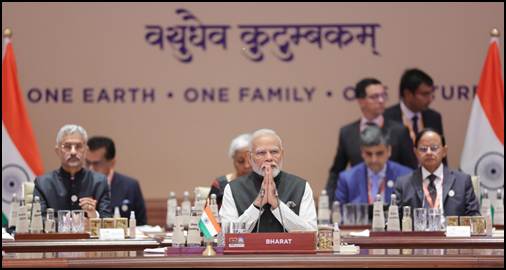
2. India’s G20 Presidency (Dec 2022–Nov 2023) spotlighted the Global South, hosted 200+ meetings in 60 cities, and convened the 18th Leaders’ Summit at Bharat Mandapam.


3. The New Delhi Leaders’ Declaration was adopted unanimously despite major geopolitical divisions, highlighting India’s growing role as a consensus-builder able to deliver outcomes during global uncertainty and competing priorities.
4. The Global Biofuels Alliance was launched during the G20 Summit period, reflecting India’s leadership in energy transition coalitions and practical pathways for cleaner fuels, resilience, and sustainable growth.
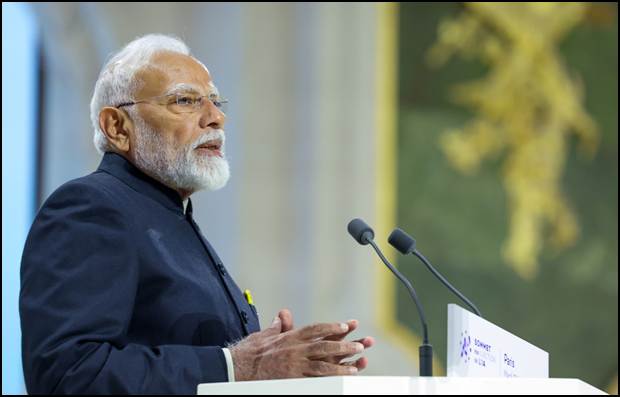
5. India co-chaired the AI Action Summit in Paris on 10 February 2024, advancing discussions on responsible, inclusive AI and reinforcing India’s role in setting norms for emerging technologies.
6. Vaccine Maitri supplied 30.12 crore COVID vaccine doses to 99 countries and two UN bodies, including 1.51 crore as grants and 5.2 crore through the COVAX mechanism.
7. The International Solar Alliance, launched at COP21 on 30 November 2015, has 120 members/signatories, targets mobilising over USD 1,000 billion for solar by 2030, and is headquartered at Gurugram.
8. At the ISA 7th Session held in New Delhi (3–6 November 2024), emphasis was placed on faster solar deployment in underserved regions through innovation, financing mechanisms, and cross-border cooperation.

9. India provided humanitarian assistance and disaster relief to 150+ countries in five years and created a Rapid Response Cell in July 2021 to coordinate crisis support with agencies and foreign governments.

10. Neighbourhood First policy prioritises stronger physical, digital, and cultural connectivity with neighbouring countries, guided by respect, dialogue, peace, and prosperity, using consultative, outcome-focused, non-reciprocal cooperation.
11. Act East Policy, upgraded in 2014, deepens engagement with Southeast Asia and the Indo-Pacific, with ASEAN at its core, and emphasises connectivity plus participation in EAS, QUAD, and ADMM-Plus.
12. India’s Voice of Global South Summit held three editions (Jan 2023, Nov 2023, Aug 2024) with 100+ countries each, strengthening India’s credibility as an amplifier of developing-world priorities.
13. In March 2025, MAHASAGAR doctrine was launched in Mauritius, projecting Mutual and Holistic Advancement for Security and Growth Across Regions, aligning oceanic cooperation with development partnerships.
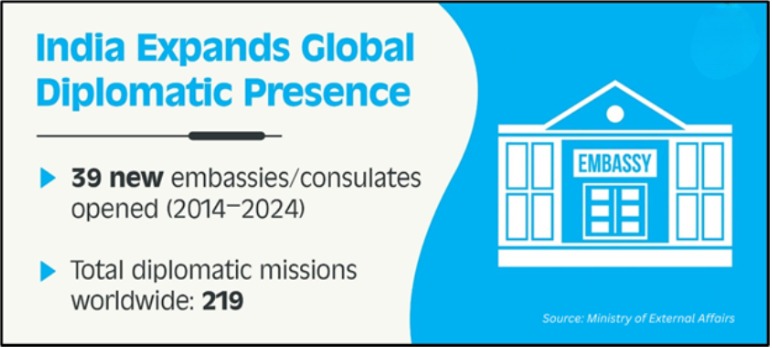
14. India expanded diplomatic presence by opening 39 new embassies and consulates between 2014 and 2024, taking the total to 219, strengthening trade outreach, partnerships, and citizen support abroad.
15. Relief operations include Vande Bharat Mission facilitating 3.20 crore movements, evacuations from Wuhan, and missions like Devi Shakti, Ganga, Kaveri, Ajay, and Indravati, reflecting people-first crisis response.



Key Takeaways
1.India hosted 200 G20 meetings; New Delhi Declaration adopted unanimously.
2.Sent 30.12 crore COVID-19 vaccine doses to 99 countries under Vaccine Maitri.
3.Opened 39 new embassies and consulates between 2014-24
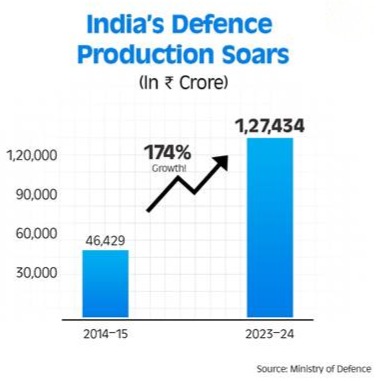
| Defence Production | ₹46,429 (2014–15) | ₹1.27 Lakh crore (2023–24) |
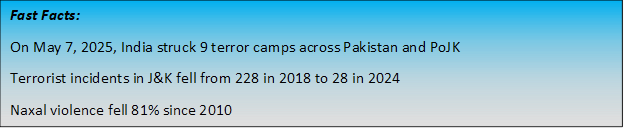
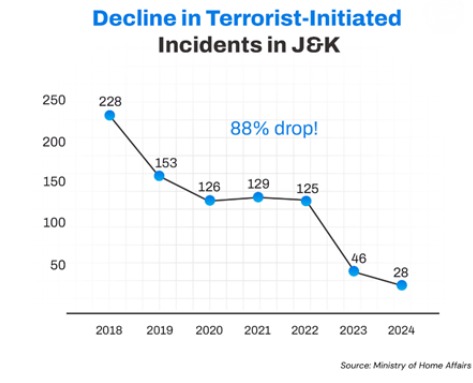
| Terror incidents in J&K | 228 (2018) | 28 (2024) |
Must Know Terms :
1) G20 Presidency (1 Dec 2022–30 Nov 2023): India chaired G20 for a full year and hosted 200+ meetings across 60 cities with 1 lakh+ delegates, culminating in the 18th Leaders’ Summit at Bharat Mandapam, New Delhi (9–10 Sept 2023). The theme “One Earth, One Family, One Future” framed priorities like inclusive growth, resilient supply chains, climate action, and Global South concerns.
2) New Delhi Leaders’ Declaration (2023): The G20 declaration at New Delhi was adopted unanimously despite sharp divisions among members on geopolitical issues, including the Ukraine conflict. It is significant as an example of consensus diplomacy—getting all members to agree on common language, shared commitments, and deliverables. For prelims, treat it as a landmark outcome that enhanced India’s image as a consensus-builder.
3) Global Biofuels Alliance (GBA): Announced during the G20 Summit period, GBA is presented as a concrete deliverable to accelerate biofuel adoption through cooperation on standards, supply chains, technology pathways, and best practices. It links energy transition with rural income opportunities and fuel diversification. For objective questions, remember it is highlighted as a G20-era initiative associated with India’s presidency outcomes.
4) Vaccine Maitri: Launched from January 2021 during COVID-19, Vaccine Maitri supplied over 30.12 crore vaccine doses to 99 countries and two UN bodies, including 1.51 crore doses as grants and 5.2 crore doses via the COVAX mechanism. It is tested as an example of health diplomacy and “Humanity First” outreach, strengthening India’s credibility as a reliable Global South partner.
5) International Solar Alliance (ISA): ISA was launched at COP21, Paris, on 30 November 2015 by India and France, and is headquartered in Gurugram. It has 120 members/signatories and aims to mobilise over USD 1,000 billion in solar investments by 2030. It is a major climate institution led by India and is often asked via year, place, HQ, and target figures.
6) MAHASAGAR Doctrine (March 2025): Launched in Mauritius, MAHASAGAR stands for “Mutual and Holistic Advancement for Security and Growth Across Regions.” It is used to frame India’s ocean-focused cooperation—security, connectivity, and development partnerships—especially in the Indian Ocean Region. For students, remember the acronym expansion, launch location (Mauritius), and its positioning as a maritime cooperation doctrine aligned with wider regional growth.
MCQ
1. With reference to India’s G20 Presidency, consider the following statements:
1. It ran from December 1, 2022 to November 30, 2023.
2. India hosted over 200 meetings in 60 cities with more than one lakh delegates.
Which of the statements given above is/are correct?
(a) 1 only
(b) 2 only
(c) Both 1 and 2
(d) Neither 1 nor 2
2. India’s G20 Leaders’ Summit in 2023 was held at:
(a) Bharat Mandapam, New Delhi
(b) Vigyan Bhawan, New Delhi
(c) Hyderabad International Convention Centre
(d) Jaipur Convention Centre
3. Consider the following statements regarding the New Delhi Leaders’ Declaration:
1. It was adopted unanimously.
2. It was adopted despite deep divides on issues such as the Ukraine conflict.
Which of the statements given above is/are correct?
(a) 1 only
(b) 2 only
(c) Both 1 and 2
(d) Neither 1 nor 2
4. Which of the following was launched as a concrete outcome highlighted during India’s G20 Presidency?
(a) International Solar Alliance
(b) Global Biofuels Alliance
(c) International North–South Transport Corridor
(d) Coalition for Disaster Resilient Infrastructure
5. With reference to the AI Action Summit, consider the following statements:
1. It was co-chaired in Paris by India and France.
2. It concluded a week-long series of events including Science Days and a Cultural Weekend.
Which of the statements given above is/are correct?
(a) 1 only
(b) 2 only
(c) Both 1 and 2
(d) Neither 1 nor 2
6. Vaccine Maitri is associated with:
(a) Disaster relief supply chains for coastal states
(b) India’s overseas supply of COVID-19 vaccine doses
(c) Agricultural input support to neighbouring countries
(d) Export of generic medicines under a UN mandate only
7. Consider the following statements about Vaccine Maitri:
1. India supplied over 30.12 crore vaccine doses since January 2021.
2. The supplies covered 99 countries and two UN bodies.
Which of the statements given above is/are correct?
(a) 1 only
(b) 2 only
(c) Both 1 and 2
(d) Neither 1 nor 2
8. With reference to the International Solar Alliance (ISA), consider the following statements:
1. It was launched at COP21 in Paris on 30 November 2015.
2. It is headquartered in Gurugram.
Which of the statements given above is/are correct?
(a) 1 only
(b) 2 only
(c) Both 1 and 2
(d) Neither 1 nor 2
9. The ISA is stated to aim at mobilising solar investments of over:
(a) USD 100 billion by 2030
(b) USD 500 billion by 2030
(c) USD 1,000 billion by 2030
(d) USD 2,000 billion by 2030
10. At the 7th Session of ISA held in New Delhi (3–6 November 2024), the focus included:
(a) Phasing out hydropower projects
(b) Rapid deployment of solar energy in underserved regions
(c) Replacing international climate finance with domestic funds only
(d) Creating a single global electricity regulator
11. Consider the following statements regarding India as a first responder:
1. India provided humanitarian assistance and disaster relief to over 150 countries in the past five years.
2. A Rapid Response Cell was set up in July 2021 to coordinate crisis response.
Which of the statements given above is/are correct?
(a) 1 only
(b) 2 only
(c) Both 1 and 2
(d) Neither 1 nor 2
12. India’s ‘Neighbourhood First’ policy prioritises stronger linkages with neighbours through:
(a) Only trade concessions without development projects
(b) Physical, digital and cultural connectivity
(c) Military alliances as the primary tool
(d) Exclusively multilateral engagement without bilateral projects
13. Act East Policy was upgraded in 2014 from the earlier:
(a) Westward Policy
(b) Look East Policy
(c) Continental Policy
(d) Global South Policy
14. Consider the following statements regarding the Voice of Global South Summit:
1. Three editions were held in January 2023, November 2023, and August 2024.
2. Participation exceeded 100 countries in each edition.
Which of the statements given above is/are correct?
(a) 1 only
(b) 2 only
(c) Both 1 and 2
(d) Neither 1 nor 2
15. With reference to diplomatic expansion, consider the following statements:
1. India opened 39 new embassies and consulates between 2014 and 2024.
2. The total number of Indian missions is stated to stand at 219.
Which of the statements given above is/are correct?
(a) 1 only
(b) 2 only
(c) Both 1 and 2
(d) Neither 1 nor 2

0 comment