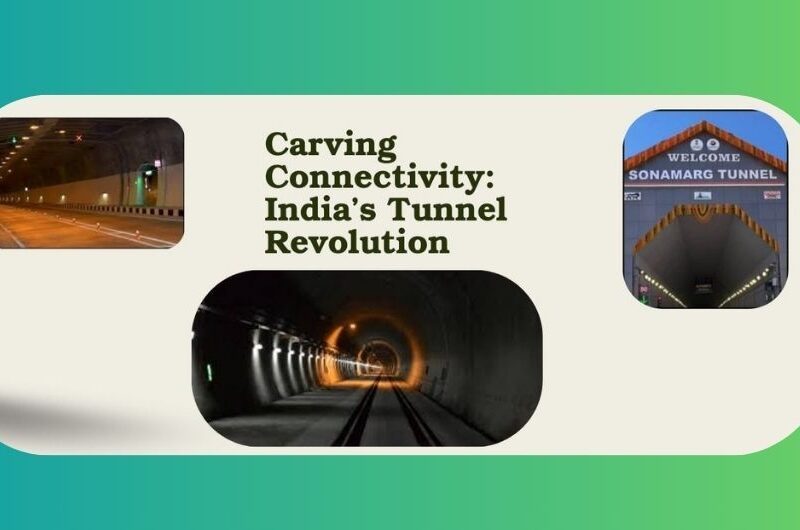
Carving Connectivity: India’s Tunnel Revolution
1. India’s tunnelling boom is driven by highways, strategic border roads, metros, rail corridors, bullet train plans, and all weather connectivity, strengthening mobility, security, and regional growth.
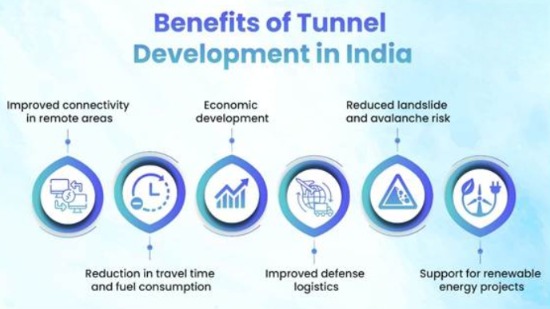
2. Atal Tunnel, 9.02 km under Pir Panjal, bypasses Rohtang Pass, enables year round Manali Lahaul Spiti travel, cuts distance 46 km, saving 4 to 5 hours.
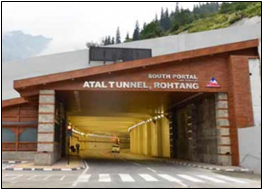
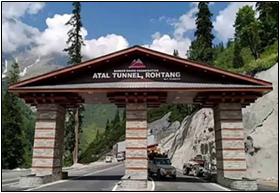
3. World Book of Records UK recognised Atal Tunnel in 2022 as longest highway tunnel above 10,000 feet; builders overcame fragile geology, seepage, overburden, and intense snowfall.
4. Sonamarg Z Morh tunnel costs ₹2,700 crore, includes 6.4 km main tube plus egress, provides all weather Srinagar to Sonamarg access, designed for 1,000 vehicles hourly.

5. Built using NATM, Sonamarg tunnel uses integrated management systems, radio rebroadcast and information panels; with Zojila by 2028, distance drops to 43 km for faster travel.
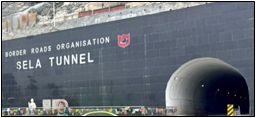
6. Sela Tunnel on Tezpur Tawang route sits near 13,000 feet, built by BRO at ₹825 crore, ensures all weather connectivity, boosts defence reach and border livelihoods.
7. Banihal Qazigund road tunnel is 8.45 km twin tube, costs over ₹3,100 crore, reduces distance 16 km, saves about 1.5 hours, cross passages every 500 metres.

8. Dr Syama Prasad Mookerjee tunnel is 9 km twin tube, cuts Jammu Srinagar time nearly two hours, bypasses 41 km, uses integrated safety systems with automation.


9. Tunnel T50, 12.77 km under USBRL, connects Khari and Sumber; NATM construction tackled water ingress, landslides and shear zones; escape tubes link every 375 metres safely.

10. Tunnel T50 uses CCTV cameras every 50 metres, monitored from a central control room, improving security and oversight for seamless rail operations in difficult Himalayan geology.
11. In 2024, India opened its first underwater metro tunnel in Kolkata, linking Esplanade and Howrah Maidan beneath the Hooghly River, redefining mobility in a demand corridor.
12. India’s tunnelling shifted from drill and blast to advanced mapping and real time monitoring, enabling longer, deeper projects with better reliability, safety, and disaster readiness nationwide.
13. Modern tunnels include ventilation, emergency escape routes, fire suppression, LED lighting, CCTV surveillance, and centralised control rooms, integrating safety engineering into everyday operations for users daily.
14. TBMs deliver precision with reduced vibration for metros and long tunnels; NATM adapts supports in fragile Himalayan rock; integrated control systems manage ventilation, fire, and communications.
15. Zojila Tunnel, planned for 2028, uses SCADA smart systems and semi transverse ventilation; technology adoption saved over ₹5,000 crore, aiming to become India’s longest road tunnel.
Key Takeaways
• With landmark projects like the Atal Tunnel, India is rapidly expanding its tunnel infrastructure.
• Record-breaking rail links led by the 12.77-km Tunnel T50 are reshaping India’s freight and connectivity network.
• Upcoming mega-tunnels like Zojila will provide all-weather access to Ladakh, boosting mobility, defence reach, and regional growth.
Must-Know Terms :
1. Tunnel Infrastructure: Tunnel infrastructure is expanding across highways, border roads, metros, and new rail corridors to shorten routes, reduce gradients, and ensure all-weather mobility. Modern tunnels add ventilation, lighting, fire suppression, escape passages, CCTV, and control rooms for safety. By cutting travel time and stabilising logistics in difficult terrain, tunnelling supports regional markets, tourism, and strategic preparedness for communities and national integration.
2. Atal Tunnel: Atal Tunnel is a 9.02-km high-altitude road tunnel under the Pir Panjal range that bypasses Rohtang Pass. It enables year-round travel between Manali and Lahaul–Spiti, cutting the Manali–Sarchu route by 46 km and saving about four to five hours. Construction faced fragile geology, heavy snowfall, and major water seepage at Seri Nala. It gained record recognition for altitude-highway tunnelling globally.
3. Zojila Tunnel: Zojila Tunnel is being built as an all-weather road link on the Srinagar–Kargil–Leh highway, strengthening civilian access and defence mobility to Ladakh. The project runs at about 11,578 feet and spans over 30 km, with around 12 km reported completed. It uses NATM, SCADA-based smart systems, CCTV, UPS, and semi-transverse ventilation for steady airflow and targets completion in 2028 overall.
4. New Austrian Tunnelling Method (NATM): New Austrian Tunnelling Method (NATM) is an observational approach where rock itself becomes a load-bearing ring after controlled excavation. Engineers adjust support—shotcrete, rock bolts, steel ribs—based on real-time deformation monitoring, making it suitable for variable, fractured Himalayan geology. Many strategic mountain tunnels use NATM because it allows flexible staging, faster corrections, and safer progress under uncertain ground conditions for operations.
5. Tunnel Boring Machine (TBM): Tunnel Boring Machines (TBMs) excavate circular tunnels using a rotating cutterhead, while erecting segmental linings to stabilise the ground immediately. TBMs reduce vibration and surface disruption, making them preferred for dense cities and sensitive zones such as metro corridors. Precision guidance, slurry or earth-pressure balancing, and continuous muck removal enable long drives, consistent geometry, and improved worker safety at scale.
6. Integrated Tunnel Control Systems (ITCS): Integrated Tunnel Control Systems (ITCS) link ventilation control, smoke extraction, fire detection, emergency telephony, public address, variable message signs, CCTV, and incident management into a single control room. Sensors track air quality and visibility, automatically triggering fans, alarms, lane closures, and evacuation guidance during accidents. Continuous monitoring improves reliability, reduces response time, and supports safe operation of high-traffic road tunnels.
Multiple Choice Questions:
- 1. Assertion (A): Atal Tunnel reduced the Manali–Sarchu distance by 46 km and travel time by about 4–5 hours.
Reason (R): It bypasses Rohtang Pass and enables year-round travel between Manali and Lahaul–Spiti.
A. Both A and R are true, and R is the correct explanation of A
B. Both A and R are true, but R is not the correct explanation of A
C. A is true, but R is false
D. A is false, but R is true2. With reference to the Sonamarg (Z-Morh) Tunnel, consider the following statements:
1. It is built at a cost of ₹2,700 crore.
2. It includes a 6.4-km main tunnel and an egress tunnel.
3. It is constructed using Tunnel Boring Machines (TBMs) for Himalayan geology.
4. It is designed to handle about 1,000 vehicles per hour.
Which of the statements given above is/are correct?
A. 1 and 2 only
B. 3 and 4 only
C. 1, 2 and 4 only
D. 1, 2, 3 and 43. Match List-I with List-II:
List-I: A. TBM B. NATM C. ITCS
List-II:
1. Adaptive excavation support in variable/fragile rock
2. High-precision tunnelling with reduced vibration in dense urban settings
3. Centralised integration of ventilation, fire detection, CCTV, communication and emergency response
Choose the correct answer:
A. A-1, B-2, C-3
B. A-2, B-1, C-3
C. A-3, B-1, C-2
D. A-2, B-3, C-14. With reference to the Banihal–Qazigund Road Tunnel, consider the following statements:
1. It is an 8.45-km-long twin-tube road tunnel.
2. It is interconnected by cross passages at every 500 metres.
3. It reduced Banihal–Qazigund road distance by 16 km.
4. It reduced travel time by about four to five hours.
Which of the statements given above is/are correct?
A. 1 and 2 only
B. 1, 2 and 3 only
C. 2 and 4 only
D. 1, 3 and 4 only5. Assertion (A): The Dr Syama Prasad Mookerjee Tunnel project generated employment for over 2,000 local workers, with nearly 94% workforce drawn from Jammu & Kashmir.
Reason (R): The project was developed in line with Make in India and Skill India initiatives, improving local skills and engaging local labour.
A. Both A and R are true, and R is the correct explanation of A
B. Both A and R are true, but R is not the correct explanation of A
C. A is true, but R is false
D. A is false, but R is true6. With reference to Tunnel T50 under the USBRL project, consider the following statements:
1. It is a 12.77-km tunnel connecting Khari and Sumber in Jammu & Kashmir.
2. It features a main tube with a parallel escape tunnel linked every 375 metres.
3. It is enhanced with CCTV cameras placed every 50 metres and monitored from a central control room.
4. It was constructed using the New Austrian Tunnelling Method (NATM).
Which of the statements given above is/are correct?
A. 1 and 2 only
B. 1, 2 and 3 only
C. 2, 3 and 4 only
D. 1, 2, 3 and 47. Which tunnel was recognised in 2022 by the World Book of Records UK as the world’s longest highway tunnel above 10,000 feet?
A. Sela Tunnel
B. Atal Tunnel
C. Sonamarg (Z-Morh) Tunnel
D. Zojila Tunnel8. Which of the following is the longest tunnel, as stated?
A. Banihal–Qazigund Road Tunnel (8.45 km)
B. Dr Syama Prasad Mookerjee Tunnel (9 km)
C. Atal Tunnel (9.02 km)
D. Tunnel T50 (12.77 km)9. With reference to the Zojila Tunnel, which of the following is NOT stated?
A. It incorporates a Smart Tunnel (SCADA) system.
B. Adoption of modern technology resulted in savings of over ₹5,000 crore.
C. It is a twin-tube road tunnel interconnected by cross passages every 500 metres.
D. It is on track for completion by 2028.10. India’s first underwater metro tunnel launched in 2024 in Kolkata passes beneath which river?
A. Ganga
B. Hooghly
C. Mahanadi
D. Godavari11. For modern road tunnels, which technology is described as integrating ventilation control, fire detection, communication networks, CCTV and emergency management into a centralised platform?
A. NATM
B. TBM
C. ITCS
D. OCP12. Assertion (A): Contemporary tunnels are designed as safety-integrated corridors with ventilation, escape routes, fire-suppression, LED lighting, CCTV and centralised control rooms.
Reason (R): These features improve operational reliability and strengthen disaster readiness in complex terrain and high-traffic corridors.
A. Both A and R are true, and R is the correct explanation of A
B. Both A and R are true, but R is not the correct explanation of A
C. A is true, but R is false
D. A is false, but R is true13. Consider the following pairs:
1. Sela Tunnel — Built by BRO
2. Sonamarg (Z-Morh) Tunnel — Cost ₹2,700 crore
3. Banihal–Qazigund Road Tunnel — Cost over ₹3,100 crore
4. Dr Syama Prasad Mookerjee Tunnel — Formerly Chenani–Nashri Tunnel
Which of the pairs given above are correctly matched?
A. 1 and 4 only
B. 2 and 3 only
C. 1, 2 and 3 only
D. 1, 2, 3 and 414. With reference to the Srinagar–Sonamarg route, consider the following statements:
1. Once paired with the upcoming Zojila Tunnel, the journey is stated to shrink from 49 km to 43 km.
2. Speeds are stated to rise from 30 km/hr to 70 km/hr.
Which of the statements given above is/are correct?
A. 1 only
B. 2 only
C. Both 1 and 2
D. Neither 1 nor 215. With reference to the Rishikesh–Karnaprayag rail line project tunnels, consider the following statements:
1. The alignment spans about 125 km and is predominantly tunnel-based.
2. It comprises 16 main line tunnels with cumulative length of about 105 km.
3. It has 12 parallel escape tunnels totaling about 98 km.
4. A TBM was deployed in Himalayan geology for the first time in Indian Railways for the 14.8 km Tunnel T-8, with a successful breakthrough achieved.
Which of the statements given above is/are correct?
A. 1 and 2 only
B. 1, 2 and 3 only
C. 2, 3 and 4 only
D. 1, 2, 3 and 4



0 comment