Mission Amrit Sarovar: Restoring Traditional Ponds, Recharging Groundwater
Background and Vision
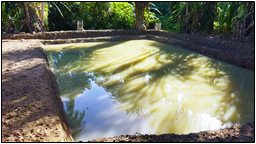
Amrit Sarovars plays an important role in increasing the availability of water, both on surface and under-ground. Development of Amrit Sarovars is also an important symbol of constructive actions, dedicated to the country on the occasion of Azadi Ka Amrit Mahotsav, that create sustainable and long-term productive assets, beneficial to both the living beings and environment.
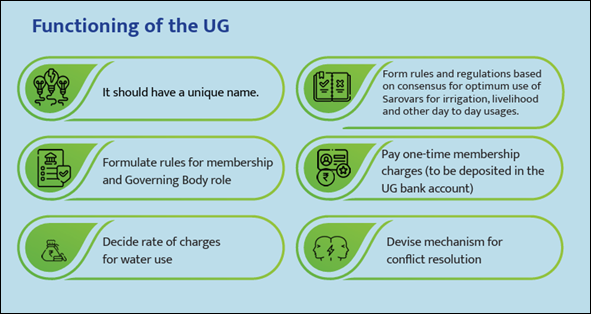
Different types of user groups could be formed based on the usage:
1. Village Water and Sanitation Committee (VWSC) / Pani Samiti (Department of Drinking Water and Sanitation, GoI)
2. Self Help Groups (NRLM)
3. Fishermen group (Department of Fisheries, GoI)
4. Van Samiti (Forest Department)
5. Aquaculture practitioners
6. Water chestnut cultivators
7. Lotus cultivators
8. Makhana cultivators
9. Duckery
10. Water for Livestock users
11. Domestic water users
12. Any other depending on the socio-economic importance of local lakes
1. Mission Amrit Sarovar was launched in 2022 to construct and rejuvenate at least 75 water bodies in every district, strengthening surface storage, groundwater recharge, and local water security.
2. The initial vision targeted creation of 50,000 Amrit Sarovars by 15 August 2023; the milestone was achieved ahead of schedule, indicating fast execution through district-level planning.3. By March 2025, over 68,000 Sarovars had been completed, expanding community water assets across regions and improving availability for domestic use, livestock, and productive activities.
4. More than 46,000 Sarovars were constructed or rejuvenated under Mahatma Gandhi NREGS, linking water conservation with wage employment and durable rural asset creation.
5. The mission was announced on 24 April 2022 during National Panchayati Raj Day at Palli Gram Panchayat, Samba district, Jammu, giving it strong Panchayat-centered positioning.
State-Wise Performance Highlights
The top 5 performing states under the Mission Amrit Sarovar initiative as of March 2025, ranked by the number of Amrit Sarovars completed, are:
| Rank | State | Number of Amrit Sarovars Completed |
| 1 | Uttar Pradesh | 16,630 |
| 2 | Madhya Pradesh | 5,839 |
| 3 | Karnataka | 4,056 |
| 4 | Rajasthan | 3,138 |
| 5 | Maharashtra | 3,055 |
6. The programme is anchored by the Ministry of Rural Development and implemented through convergence involving seven ministries to improve coordination, funding efficiency, and outcomes.
7. Each Amrit Sarovar is designed with a minimum pondage area of 1 acre (0.4 hectare) and about 10,000 cubic metres water holding capacity, creating a standardised asset specification.
8. Technology support includes extensive use of remote sensing and geospatial tools from site selection to completion, improving credibility, monitoring, and timely course-correction.
9. A centralised digital tracking system enables granular, real-time progress reporting, improving transparency and inter-departmental coordination at district and state levels.
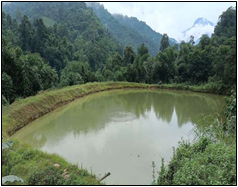
10. Convergence funding draws from ongoing schemes such as Mahatma Gandhi NREGS, 15th Finance Commission grants, and Pradhan Mantri Krishi Sinchayee Yojana sub-components, plus state schemes.
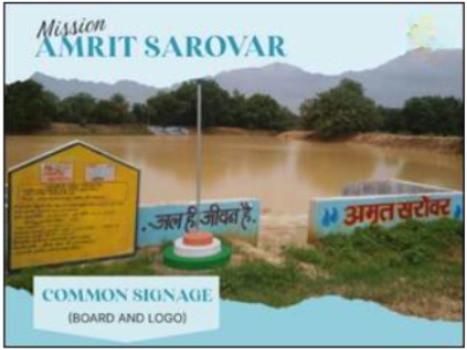
11. Monitoring at Panchayat level includes two dedicated prabharis per Sarovar: a Panchayat Pratinidhi as citizen supervisor and a Panchayat-level officer for progress reporting with photos and videos.
12. Sustainability is built through mapped user groups, largely drawn from SHG members, with women and weaker sections represented to ensure equitable use and maintenance responsibility.
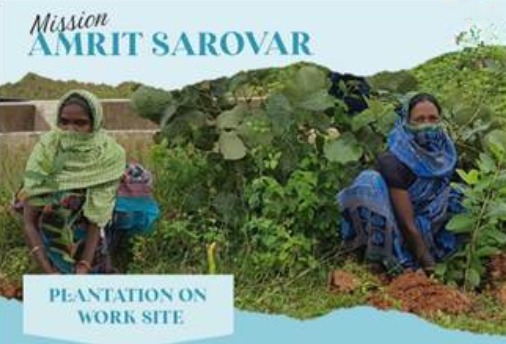
13. User groups handle ongoing upkeep, including plantation and voluntary silt removal from catchments after every monsoon, supporting long-term pond capacity and functionality.
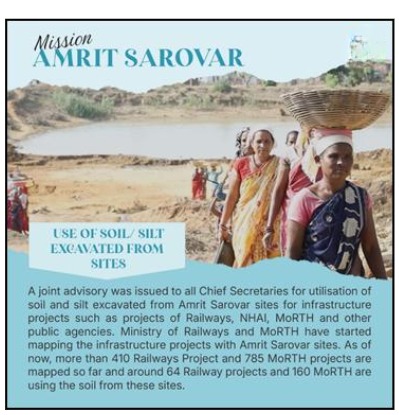
14. Phase I (April 2022–August 2023) completed 59,492 Sarovars by May 2023; community participation included freedom fighters’ families, martyrs’ families, and Padma awardees.
15. Groundwater recharge from tanks, ponds, and water conservation structures rose from 13.98 BCM (2017) to 25.34 BCM (2024), reflecting strengthened recharge outcomes.
Must-Know Terms :
1. Mission Amrit Sarovar: A nationwide initiative launched in 2022 to build and rejuvenate community water bodies at scale, targeting 75 ponds per district. It standardises pond size (minimum 1 acre) and capacity (~10,000 m³), blends heritage revival with water security, and uses convergence funding plus community-led maintenance to create long-life rural water assets.
2. Jan Bhagidari: The community-participation approach that drives the mission’s credibility and sustainability. It enables local ownership through shramdaan, local donations, and public involvement in planning, execution, utilisation, and upkeep. It also promotes celebrating national events at Sarovar sites, strengthening collective responsibility and improving protection of the asset from neglect or encroachment.
3. Convergence Mechanism: A financing-and-execution model that pools resources from multiple schemes and departments to avoid duplication and accelerate delivery. Works are taken up by states and districts using channels such as rural employment funds, finance commission grants, irrigation sub-schemes, and state programmes, enabling faster completion, better cost efficiency, and stronger alignment between water conservation and livelihoods.
4. Panchayat Pratinidhi: The citizen supervisor nominated by the Gram Panchayat for each Sarovar. This role protects community interest, monitors faithful execution, and strengthens accountability at the local level. It complements official supervision by ensuring the work remains aligned with local needs, fair implementation, and shared ownership, thereby reducing the risk of poor-quality assets or elite capture.
5. User Group: A voluntary, representative body linked to each Sarovar, largely drawn from SHG members, with adequate inclusion of women and weaker sections. The group manages efficient use, resolves local coordination issues, supports plantation, and undertakes routine maintenance such as post-monsoon silt removal. User groups can vary by use-case, including sanitation committees, fishermen, aquaculture, livestock users, and cultivators.
6. Remote Sensing and Geospatial Monitoring: A technology layer used from site selection to completion to ensure appropriate siting, credible measurement, and effective progress monitoring. By using mapping and imagery-based assessment, it improves transparency, enables early identification of delays or design issues, and supports evidence-based reporting at district and state levels, strengthening quality control and long-term outcomes.
MCQ
1. Mission Amrit Sarovar was launched in:
(a) 2019
(b) 2020
(c) 2022
(d) 2024
2. The mission’s district-level objective is to construct/rejuvenate at least:
(a) 25 water bodies per district
(b) 50 water bodies per district
(c) 75 water bodies per district
(d) 100 water bodies per district
3. The initial nationwide target was to build 50,000 Sarovars by:
(a) 26 January 2023
(b) 15 August 2023
(c) 2 October 2023
(d) 31 March 2024
4. As on March 2025, the number of completed Sarovars exceeded:
(a) 25,000
(b) 50,000
(c) 68,000
(d) 90,000
5. Under Mahatma Gandhi NREGS, Sarovars constructed/rejuvenated were over:
(a) 16,000
(b) 30,000
(c) 46,000
(d) 70,000
6. Mission Amrit Sarovar was announced on:
(a) 24 April 2022
(b) 15 August 2022
(c) 2 October 2022
(d) 26 January 2023
7. The mission is anchored by:
(a) Ministry of Jal Shakti
(b) Ministry of Rural Development
(c) Ministry of Environment, Forest and Climate Change
(d) Ministry of Panchayati Raj
8. Each Sarovar is designed to have a minimum pondage area of:
(a) 0.1 acre
(b) 0.5 acre
(c) 1 acre
(d) 2 acres
9. The water holding capacity per Sarovar is about:
(a) 1,000 cubic metres
(b) 5,000 cubic metres
(c) 10,000 cubic metres
(d) 50,000 cubic metres
10. Monitoring at Panchayat level includes:
(a) Only district engineers
(b) Only state auditors
(c) Panchayat Pratinidhi and Panchayat-level officer
(d) Only members of fishermen cooperatives
11. Phase I of the mission covered:
(a) April 2022 to August 2023
(b) January 2022 to December 2022
(c) September 2023 to April 2025
(d) April 2023 to March 2024
12. Phase II has been ongoing since:
(a) January 2023
(b) April 2023
(c) September 2023
(d) January 2024
13. As of April 17, 2025, sites identified under Phase II were:
(a) 318
(b) 3,182
(c) 31,820
(d) 38,210
14. The top-performing state by completed Sarovars (as of March 2025) was:
(a) Madhya Pradesh
(b) Rajasthan
(c) Karnataka
(d) Uttar Pradesh
15. Recharge from tanks, ponds and water conservation structures increased from 13.98 BCM (2017) to:
(a) 18.34 BCM (2024)
(b) 21.10 BCM (2024)
(c) 25.34 BCM (2024)
(d) 35.24 BCM (2024)


0 comment