
Forests, Food Security, and Community Livelihoods
1. International Day of Forests is observed on March 21 to celebrate all forest types, highlight benefits like oxygen, food, medicine, and livelihoods, and mobilize protection actions worldwide annually for awareness.
2. United Nations designated March 21 as International Day of Forests in 2012, and each year a theme is selected by the Collaborative Partnership on Forests to guide outreach and engagement.
3. The 2025 theme, “Forests and Food,” stresses forests’ role in food security through fruits, seeds, roots, and wild meat, supporting indigenous and rural communities, nutrition diversity, and resilience for families.
4. India links forest protection with culture, economy, and biodiversity, treating conservation as a responsibility and aligning schemes with nutrition, livelihoods, and sustainable resource use across districts, landscapes, and communities locally.
5. National Agroforestry Policy 2014 promotes integrating trees with crops to raise productivity, improve soils, diversify income, and build climate resilience through tree planting on farmland and sustainable farm planning systems.
6. Agroforestry implementation emphasizes quality planting material via nurseries and tissue culture units, with ICAR-CAFRI as nodal body for technical support, certification, training, coordination, and nationwide farmer advisory services, field extension.
7. Economic support includes price guarantees, buy-back options, and private participation for marketing and processing agroforestry products, while linking millet promotion with local enterprises, processing clusters, and integrated rural value chains.
8. Green India Mission under the National Action Plan on Climate Change began activities in 2015-16, aiming to protect, restore, and enhance forest cover while improving biodiversity and water resources nationally.

9. GIM targets expanding forest and tree cover by five million hectares and improving another five million hectares, while enhancing ecosystem services and raising incomes for three million rural households sustainably.
10. GIM operational design includes five sub-missions: forest cover enhancement, ecosystem restoration, urban greening, agroforestry and social forestry, and wetland restoration to create biomass, carbon sinks, and livelihood co-benefits at scale.
11. Ecosystem Services Improvement Project under GIM is World Bank-backed in Chhattisgarh and Madhya Pradesh, supporting plantation and eco-restoration actions within targeted landscapes for improved services, monitoring, and community stewardship innovation.
12. As of July 2024, ₹909.82 crore was allocated to 17 states and one Union Territory for plantation and eco-restoration over 155,130 hectares, including work in Palghar, Maharashtra, and Dahanu Division.
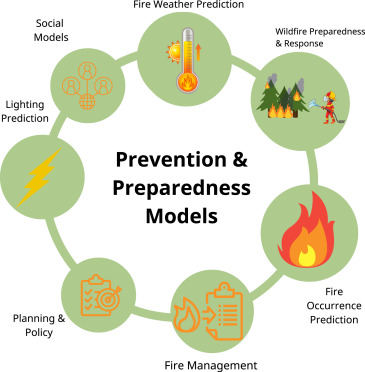
13. Forest Fire Prevention and Management scheme supports states and Union Territories with financial assistance, community involvement, technology use, and productivity restoration in fire-affected forest areas, strengthening preparedness and response capacities.
14. Forest Survey of India runs near real-time fire detection using remote sensing, plus a satellite-based monitoring and alert system sending SMS and email to registered users for rapid response coordination.

15. Pradhan Mantri Van Dhan Yojana, launched 2018 by Tribal Affairs and TRIFED, builds tribal livelihoods through value addition of minor forest produce via Van Dhan Vikas Kendras and market linkages.
Must-Know Terms :
- Agroforestry integrates trees with crops and/or livestock on the same land to raise productivity and resilience. India adopted the National Agroforestry Policy in February 2014, aiming to expand trees on farms, ease felling/transport rules, improve quality planting material, credit and insurance, and build value chains for timber, fuelwood, fodder and fruit. It also strengthens soils, biodiversity and carbon storage notably.
- Green India Mission (GIM) is one of eight missions under India’s National Action Plan on Climate Change. Launched by MoEFCC in 2011, it seeks to protect, restore and enhance forest and tree cover through adaptation and mitigation. Targets include increasing cover on 5 million hectares and improving quality on another 5 million hectares, strengthening biodiversity, water services and carbon sequestration.
- Forest fire management combines prevention, preparedness, early warning, rapid response and post-fire rehabilitation. In India, the Forest Fire Prevention and Management (FPM) scheme (MoEFCC) supports states for fire lines, equipment, training, awareness and community participation, with funding patterns that vary by state category. Remote sensing, danger-rating and real-time alerts improve detection, while restoration reduces erosion, invasive spread and habitat loss.
- Pradhan Mantri Van Dhan Vikas Yojana is a Ministry of Tribal Affairs initiative implemented through TRIFED, launched on 14 April 2018. It organises forest-produce gatherers into Van Dhan Vikas Kendra clusters (typically 15 SHGs, 300 members) to provide processing, packaging, quality control, branding and market linkages for minor forest produce. The model raises incomes, builds enterprises and encourages sustainable harvesting.
- Food security exists when all people, at all times, have physical access to sufficient, safe and nutritious food for an active, healthy life. Its pillars are availability, access, utilisation and stability. Forests support food security by supplying wild foods and medicines, sustaining pollinators, regulating water and soils, buffering climate shocks, and providing fuelwood and income options during crop failures reliably.
MCQ
1. International Day of Forests is observed on:
A. March 3
B. March 21
C. April 22
D. June 5
2. March 21 was declared as International Day of Forests by the United Nations in:
A. 2009
B. 2010
C. 2012
D. 2014
3. The theme highlighted for 2025 is:
A. Forests and Water
B. Forests and Food
C. Forests and Energy
D. Forests and Cities
4. In the given framework, the central policy explicitly promoting trees on farmland is dated:
A. 2002
B. 2012
C. 2014
D. 2018
5. The nodal technical institution named for agroforestry support, certification, and training is:
A. FSI, Dehradun
B. ICAR-CAFRI
C. TRIFED
D. NDMA
6. Activities under the Green India Mission started in:
A. FY 2012-13
B. FY 2014-15
C. FY 2015-16
D. FY 2018-19
7. With reference to GIM targets, consider the following:
1. Expand forest/tree cover by 5 million hectares.
2. Improve the quality of another 5 million hectares.
Which is correct?
A. 1 only
B. 2 only
C. Both 1 and 2
D. Neither 1 nor 2
8. Which of the following is NOT listed among the five sub-missions under GIM?
A. Urban Greening
B. Wetland Restoration
C. Coastal Shipping Modernisation
D. Ecosystem Restoration
9. ESIP under GIM is described as operating in:
A. Assam and Meghalaya
B. Chhattisgarh and Madhya Pradesh
C. Kerala and Tamil Nadu
D. Gujarat and Rajasthan
10. Consider the following statements:
1. ₹909.82 crore was allocated as of July 2024.
2. Coverage included 17 states and one Union Territory.
3. The area covered was 155,130 hectares.
Which is/are correct?
A. 1 and 2 only
B. 2 and 3 only
C. 1 and 3 only
D. 1, 2 and 3
11. The near real-time forest fire detection system is described as using:
A. Ocean buoys and sonar
B. Remote sensing and satellite monitoring
C. Manual watchtowers only
D. River gauges and radar altimetry
12. Fire alerts from the monitoring and alert system are sent to registered users via:
A. Post and courier
B. Fax and telex
C. SMS and email
D. Radio broadcasts only
13. Pradhan Mantri Van Dhan Yojana is associated with:
A. Value addition of minor forest produce for tribal livelihoods
B. Urban metro station greening mandates
C. Ethanol blending compliance targets
D. Offshore wind leasing reforms
14. A Van Dhan Vikas Kendra (VDVK) is described as consisting of:
A. 150 members from 10 SHGs
B. 200 members from 20 SHGs
C. 300 members from 15 SHGs
D. 500 members from 25 SHGs
15. With reference to the Van Dhan model described, which is correct?
A. ₹15 lakh support per Kendra, plus member contribution of ₹1,000 each
B. ₹1 crore support per Kendra, with zero community contribution
C. Only revolving credit is provided, with no processing infrastructure
D. Kendras are restricted to non-tribal districts exclusively

0 comment