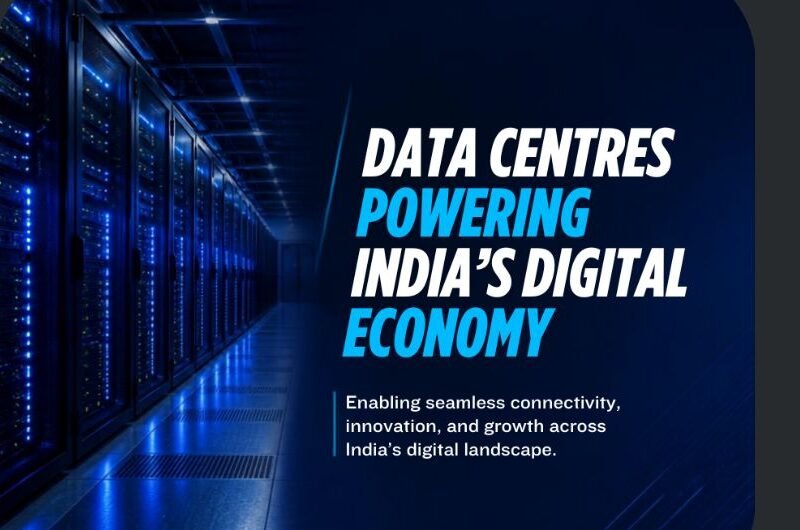
Data Centres Powering India’s Digital Economy
1. A data centre is a secure facility that houses computing, storage and networking equipment for processing, managing, storing and distributing digital information.
2. Data centres support services such as online banking, digital payments, e-Governance, cloud computing and Artificial Intelligence (AI).
3. Uninterruptible Power Supplies (UPS) provide immediate backup during power interruptions, while generators support operations during prolonged outages.
4. Heating, Ventilation and Air Conditioning (HVAC) systems regulate temperature and airflow to protect computing equipment from excessive heat.
5. Servers process information and run applications, while Hard Disk Drives (HDDs) and Solid-State Drives (SSDs) store digital data.
6. Virtualisation allows multiple virtual machines to operate on a single physical server, improving the use of computing resources.
7. A load balancer distributes incoming digital requests among available servers to prevent any single server from becoming overloaded.
8. An Application Programming Interface (API) enables an application server to communicate with other applications and digital services.
9. The National Informatics Centre (NIC) operates National Data Centres in Delhi, Pune, Hyderabad and Bhubaneswar, along with 37 smaller data centres in State capitals.
10. India’s installed data-centre power capacity increased from around 375 megawatts in 2020 to 1.57 gigawatts in August 2026.
11. India’s data-centre capacity is projected to reach nearly 8 gigawatts by 2030, while its electricity demand could reach 17 gigawatts by 2031–32.
12. The Union Budget 2022–23 included data centres in the Harmonized List of Infrastructure, improving their access to long-term institutional credit.
13. The Union Budget 2026–27 introduced a tax holiday until 2047 for eligible foreign cloud-service providers using India-based data-centre infrastructure.
14. The Bureau of Indian Standards (BIS) has developed data-centre standards covering Power Usage Effectiveness, Water Usage Effectiveness, Carbon Usage Effectiveness and Cooling Efficiency Ratio.
15. Advanced cooling systems used by data centres include direct-to-chip liquid cooling, adiabatic cooling, immersion cooling and closed-loop liquid cooling.
Must know Terms :
1. Data Centre
A secure facility that houses servers, storage systems and networking equipment. It processes, stores and distributes digital information for services such as online banking, digital payments, cloud computing and e-Governance.
2. Infrastructure Status
Data centres were included in the Harmonized List of Infrastructure in the Union Budget 2022–23. This status improves their access to cheaper and longer-term institutional credit.
3. Uninterruptible Power Supply (UPS)
A backup power system that provides immediate electricity during a power interruption. It prevents servers and other critical data-centre equipment from shutting down suddenly.
4. Virtualisation
A technology that allows multiple virtual machines to operate on a single physical server. It improves computing efficiency and reduces the need for separate physical machines.
5. Power Usage Effectiveness (PUE)
A measure of a data centre’s energy efficiency. It compares the facility’s total electricity consumption with the electricity used directly by its computing equipment; a lower value indicates better efficiency.
6. Water Usage Effectiveness (WUE)
A measure of the water consumed by a data centre in relation to its computing activity. It is used to evaluate the efficiency and sustainability of cooling and water-management systems.
MCQ :
1. Which one of the following best describes a data centre?
(a) A facility used exclusively for manufacturing computer hardware
(b) A secure facility housing computing, storage and networking equipment
(c) A centre that provides only internet connections to households
(d) A facility used exclusively for storing government documents
2. Data centres support which of the following services?
1. Online banking
2. Digital payments
3. Cloud computing
4. Artificial Intelligence applications
Select the correct answer using the code given below.
(a) 1 and 2 only
(b) 2 and 3 only
(c) 1, 2, 3 and 4
(d) 1, 3 and 4 only
3. What is the primary function of an Uninterruptible Power Supply (UPS) in a data centre?
(a) Providing immediate backup during a power interruption
(b) Regulating the temperature inside the facility
(c) Distributing incoming requests among servers
(d) Connecting the data centre with external networks
4. Heating, Ventilation and Air Conditioning (HVAC) systems are used in data centres to:
(a) Store digital information
(b) Protect networks from cyberattacks
(c) Generate electricity during prolonged outages
(d) Regulate temperature and airflow
5. With reference to data-centre components, consider the following statements:
1. Servers process information and run digital applications.
2. Hard Disk Drives and Solid-State Drives are used to store data.
3. Routers and switches are used only to cool computing equipment.
Which of the statements given above are correct?
(a) 1 only
(b) 1 and 2 only
(c) 2 and 3 only
(d) 1, 2 and 3
6. Virtualisation enables a data centre to:
(a) Operate without physical servers
(b) Eliminate the need for digital storage
(c) Run multiple virtual machines on a single physical server
(d) Generate renewable electricity within the facility
7. What is the main function of a load balancer?
(a) Distributing digital requests among available servers
(b) Providing emergency electricity to servers
(c) Measuring the water consumption of a facility
(d) Protecting equipment from excessive heat
8. An Application Programming Interface (API) enables:
(a) Long-term storage of digital information
(b) Physical security of data-centre buildings
(c) Cooling of high-performance servers
(d) Communication between applications and digital services
9. The National Informatics Centre operates National Data Centres at which of the following locations?
1. Delhi
2. Pune
3. Hyderabad
4. Bhubaneswar
Select the correct answer using the code given below.
(a) 1 and 2 only
(b) 1, 2, 3 and 4
(c) 2, 3 and 4 only
(d) 1 and 4 only
10. India’s installed data-centre power capacity increased from approximately 375 megawatts in 2020 to:
(a) 8 gigawatts in August 2026
(b) 17 gigawatts in August 2026
(c) 1.57 gigawatts in August 2026
(d) 3.75 gigawatts in August 2026
11. India’s data-centre capacity is projected to reach nearly:
(a) 8 gigawatts by 2030
(b) 1.57 gigawatts by 2030
(c) 17 gigawatts by 2030
(d) 37 gigawatts by 2030
12. Data centres were included in the Harmonized List of Infrastructure through:
(a) Union Budget 2020–21
(b) Union Budget 2021–22
(c) Union Budget 2026–27
(d) Union Budget 2022–23
13. What is a major benefit of granting infrastructure status to data centres?
(a) Exemption from all environmental standards
(b) Better access to long-term institutional credit
(c) Elimination of electricity expenses
(d) Complete exemption from cybersecurity regulations
14. With reference to data-centre efficiency standards, consider the following pairs:
1. PUE — Power Usage Effectiveness
2. WUE — Water Usage Effectiveness
3. CUE — Carbon Usage Effectiveness
4. CER — Cooling Efficiency Ratio
How many of the pairs given above are correctly matched?
(a) Only one
(b) Only two
(c) All four
(d) Only three
15. Which of the following are advanced cooling technologies used in data centres?
1. Direct-to-chip liquid cooling
2. Adiabatic cooling
3. Immersion cooling
4. Closed-loop liquid cooling
Select the correct answer using the code given below.
(a) 1 and 2 only
(b) 2 and 3 only
(c) 1, 3 and 4 only
(d) 1, 2, 3 and 4




0 comment